
Signal Detected: Elon Musk Drops Bombshell Roadmap Across Four Fronts Simultaneously
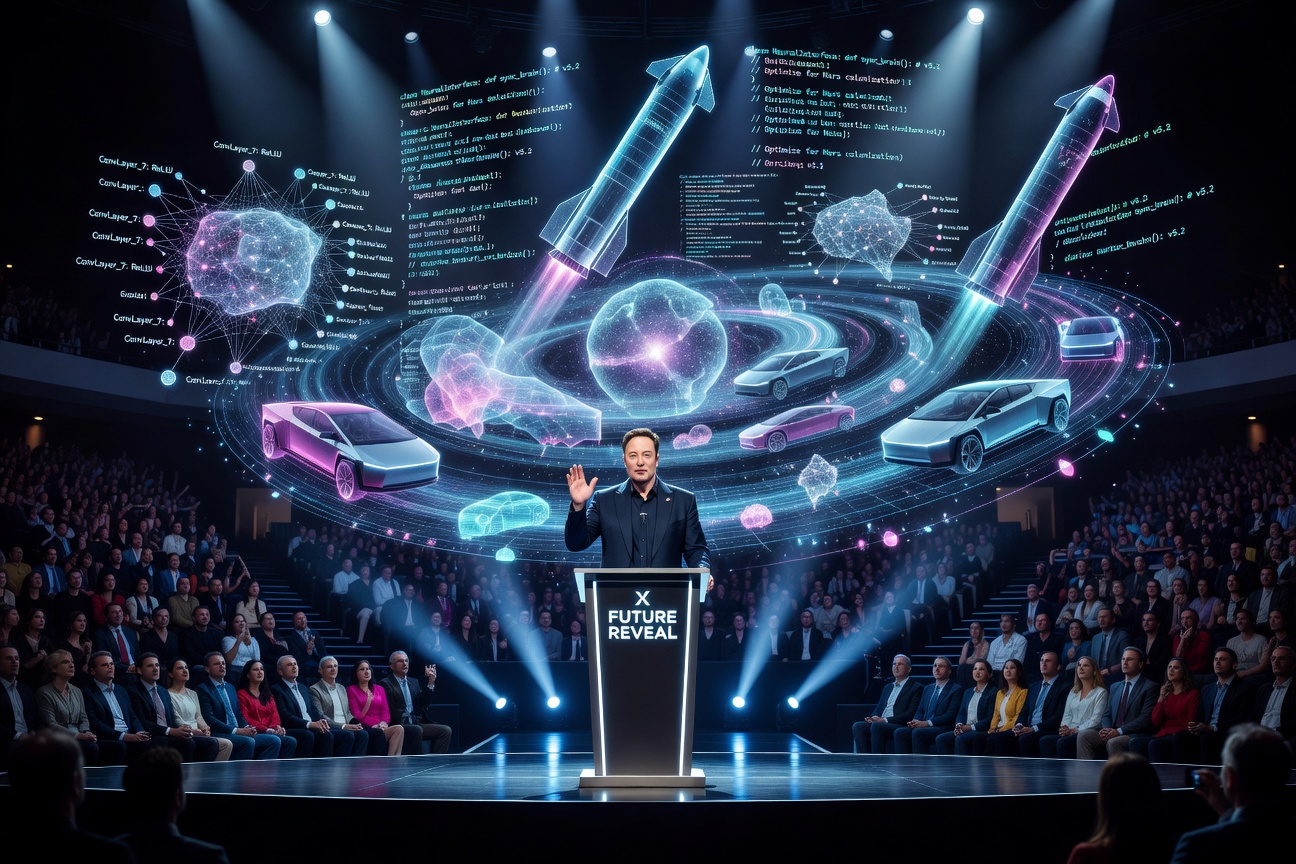
The week started like a thunderclap. Within 72 hours, Elon Musk had posted over 40 times on his own platform X, granted a rare extended interview touching on artificial general intelligence timelines, teased a Tesla product that sent the EV community into overdrive, and confirmed that Neuralink's second human patient is demonstrating results that exceed all internal benchmarks. This is not a slow news cycle. This is a detonation.
For observers who track the Musk industrial complex — the interlocking constellation of SpaceX, Tesla, xAI, Neuralink, X, and The Boring Company — moments like these are rare but unmistakable. They carry the distinct texture of a pivot point, a compression of months of behind-the-scenes work suddenly breaking the surface all at once. Right now, every front is moving simultaneously, and the implications are staggering.
Starship: The Next Launch Window Is Not a Drill
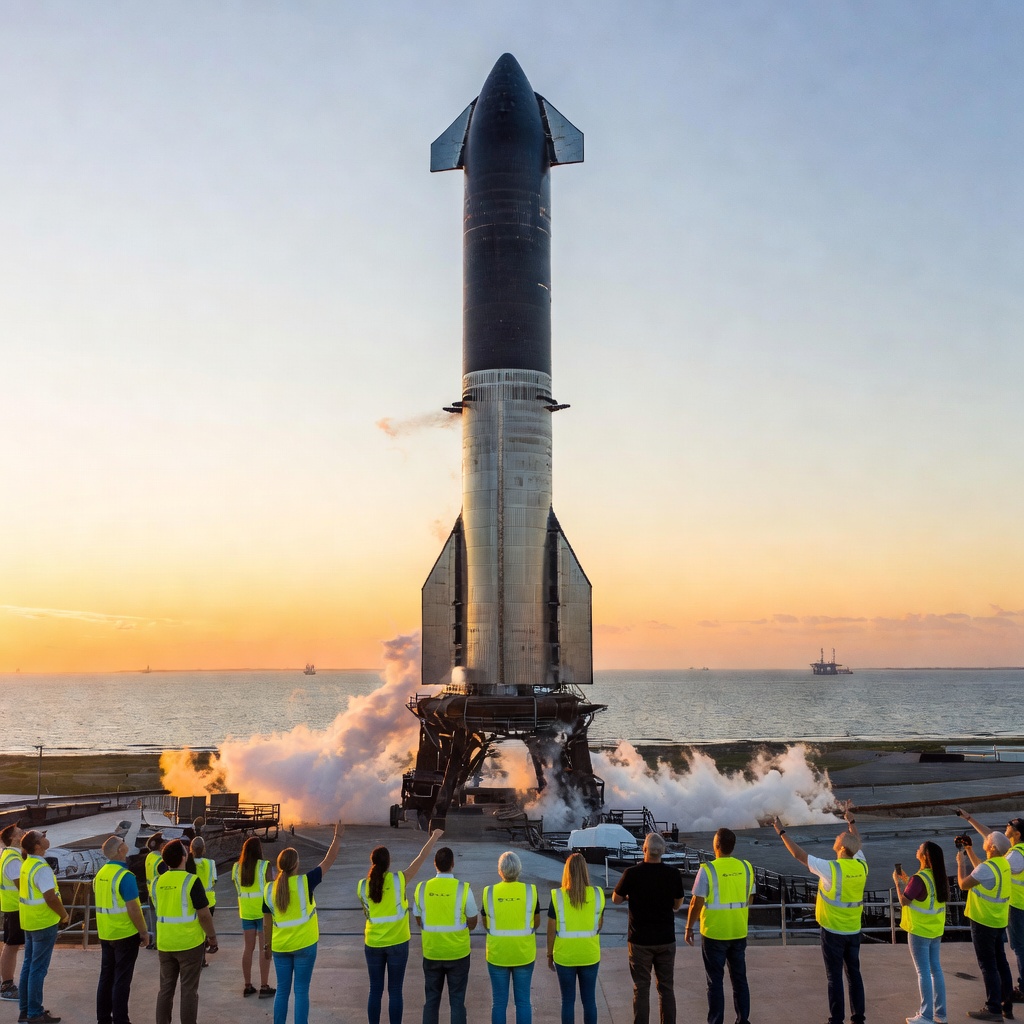
SpaceX is preparing what engineers inside the program describe as the most technically ambitious Starship flight yet. Following the extraordinary success of the eighth integrated flight test, which saw both the Super Heavy booster and the Starship upper stage execute controlled splashdowns with a precision that left aerospace veterans visibly shaken, the next mission is targeting a partial orbital insertion profile with reentry thermal stress loads previously untested at this vehicle scale.
Musk, posting on X with characteristic bluntness, described the upcoming test as the one that will determine whether Starship's heat shield architecture is truly ready for the reusability cadence required for Mars missions. "We either prove the tiles or we learn fast," he wrote, adding that the internal team has already war-gamed every known failure mode. The post accumulated over 800,000 impressions within three hours. That is not enthusiasm — that is the market paying attention.
Industry analysts at firms tracking the commercial launch sector note that no competitor is within five years of matching Starship's payload-to-orbit economics. The ripple effects for satellite deployment, lunar logistics, and eventual interplanetary transport are not theoretical anymore. They are contractual. NASA's Artemis lunar lander program depends on Starship delivering astronauts to the lunar surface, and the timeline pressure is real.
Grok's Leap: xAI Closes the Gap Faster Than Anyone Predicted
Simultaneously, xAI dropped an update to Grok that the AI research community spent the better part of 48 hours stress-testing and debating. The new model's performance on graduate-level reasoning benchmarks has drawn pointed commentary from researchers who, months ago, dismissed xAI as a vanity project. It is no longer that.
Musk was direct in a recent interview segment circulating across tech forums: he believes xAI will reach what he calls "genuinely useful AGI" before the end of this decade, and he was careful to define the term not by academic convention but by practical utility — a system capable of accelerating scientific discovery at a pace no human team can match. He specifically cited drug discovery and materials science as the domains where the payoff will be most visible and most verifiable.
What makes Musk's AI ambitions structurally different from those of competitors is the data pipeline feeding Grok. With X serving as a real-time river of human expression, opinion, and technical discourse, xAI has a training signal that is both vast and extraordinarily current. Critics argue this raises serious questions about consent and data governance. Musk's counterargument, stated publicly, is that a less capable AI ecosystem poses greater civilizational risk than an accelerated one with imperfect governance. It is a provocative position, and it is driving policy conversations in Brussels, Washington, and Beijing whether those capitals want to engage or not.
Tesla's Next Move: The Robovan Arrives and Autonomy Gets a Deadline
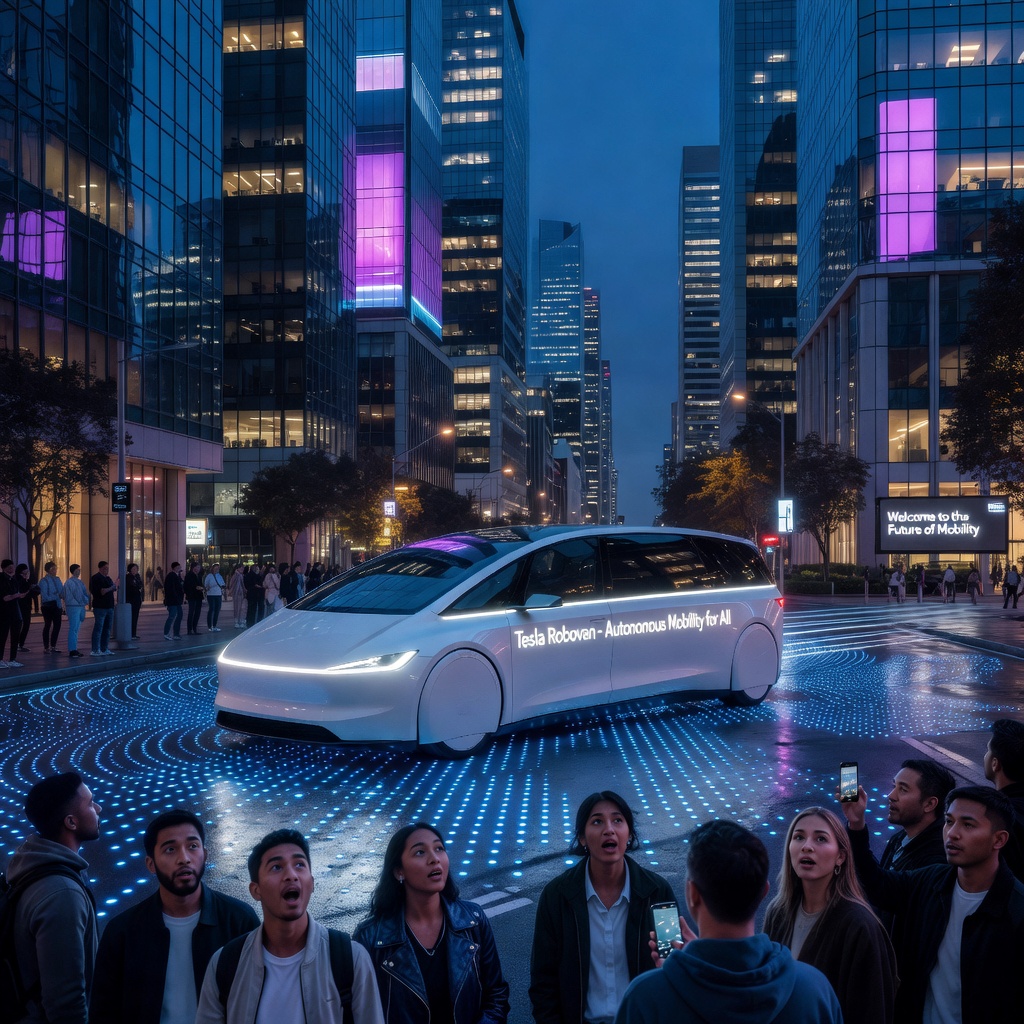
Tesla's product pipeline cracked open this week in ways that caught even seasoned watchers off guard. Musk confirmed that the Robovan — Tesla's autonomous, high-capacity people-mover concept first glimpsed at the "We, Robot" event — is on a production engineering timeline that he described as "alarmingly close" to real-world deployment trials in controlled urban corridors. The word "alarmingly" was deliberate. Musk uses language precisely when precision serves his purpose, and the purpose here is signaling to regulators, competitors, and potential municipal partners that this vehicle is not a concept car.
The broader context is Tesla's Full Self-Driving software, now rebranded internally around the Cybercab deployment architecture. Musk stated plainly that he expects unsupervised FSD in specific geofenced markets within months, not years. The regulatory hurdles are real, but Musk's track record of treating regulatory timelines as negotiating positions rather than fixed constraints is well-documented. Multiple U.S. cities are reportedly in active discussions with Tesla's deployment team.
For Tesla shareholders, the week delivered a clarity injection. The stock's identity crisis — is it a car company or a technology platform? — is being answered operationally. Revenue from energy storage and software is growing as a percentage of the total business, and the autonomous fleet ambition, if it executes, represents a recurring-revenue model that traditional automotive margins cannot compete with.
Neuralink's Second Patient Changes the Conversation
Perhaps the most quietly explosive disclosure of the week came not from a rocket or a software model but from a human brain. Musk confirmed in a post, and elaborated in remarks at a technology forum, that Neuralink's second patient implanted with the N1 chip is demonstrating bandwidth and signal fidelity metrics that the company's internal models had not projected achieving until a later device generation. The subject, who has a degenerative neurological condition, is reportedly controlling multiple digital interfaces simultaneously and communicating at speeds that exceed the typing rates of non-impaired users.
The medical and ethical communities are processing this carefully. Neuralink's clinical trial is authorized for a narrow patient population, and the path from compassionate use to broad approval is long and deliberately slow by design. But the engineering signal is impossible to ignore. If the device's electrode stability holds over the 12-month monitoring window that regulators are tracking, the next device generation and an expanded trial cohort become significantly more likely on an accelerated schedule.
Musk's stated north star for Neuralink has never been limited to medical restoration. He has been consistent, sometimes to the discomfort of bioethicists, in articulating a long-term vision of symbiotic human-AI cognition — a bandwidth upgrade for the human mind to prevent what he sees as the existential risk of biological intelligence being rendered obsolete by machine intelligence. Whether one finds that vision inspiring or unsettling, the clinical data is now providing the first hard evidence that the foundational technology is real and functional.
The Pattern That Demands Attention
Step back from any single announcement and the pattern is unmistakable: Musk is not running parallel companies so much as he is assembling parallel load-bearing columns of a single structure. Starship provides the physical infrastructure to extend human civilization off-planet. Tesla and the Robovan provide the ground-level autonomous mobility network. xAI and Grok provide the cognitive acceleration layer. Neuralink provides the human integration point. X provides the communication and coordination substrate binding all of it in real time.
Critics will note the execution risks are enormous, the timelines frequently slip, and the regulatory, political, and social friction across all these domains is intensifying rather than easing. Those criticisms are fair and deserve to be part of any honest accounting. But the honest accounting also has to include what has already been delivered: orbital-class rockets landing themselves, electric vehicles that route-plan on neural networks, an AI chatbot closing benchmark gaps in months not years, and a paralyzed human typing faster than most people can with full motor function.
The scale of what is being attempted, across four fronts, simultaneously, by overlapping teams operating under relentless delivery pressure, has no real historical precedent in the private sector. That is either the most exciting sentence in technology journalism right now, or the most terrifying one, depending entirely on what you believe about what comes next.
The signal is not faint. It is overwhelming. And it is getting louder.
George Russell
Tech journalist covering Elon Musk’s companies for over 10 years.