One Acre of Batteries: How the Megapack Revolution Is Turning Dead Land Into Living Power
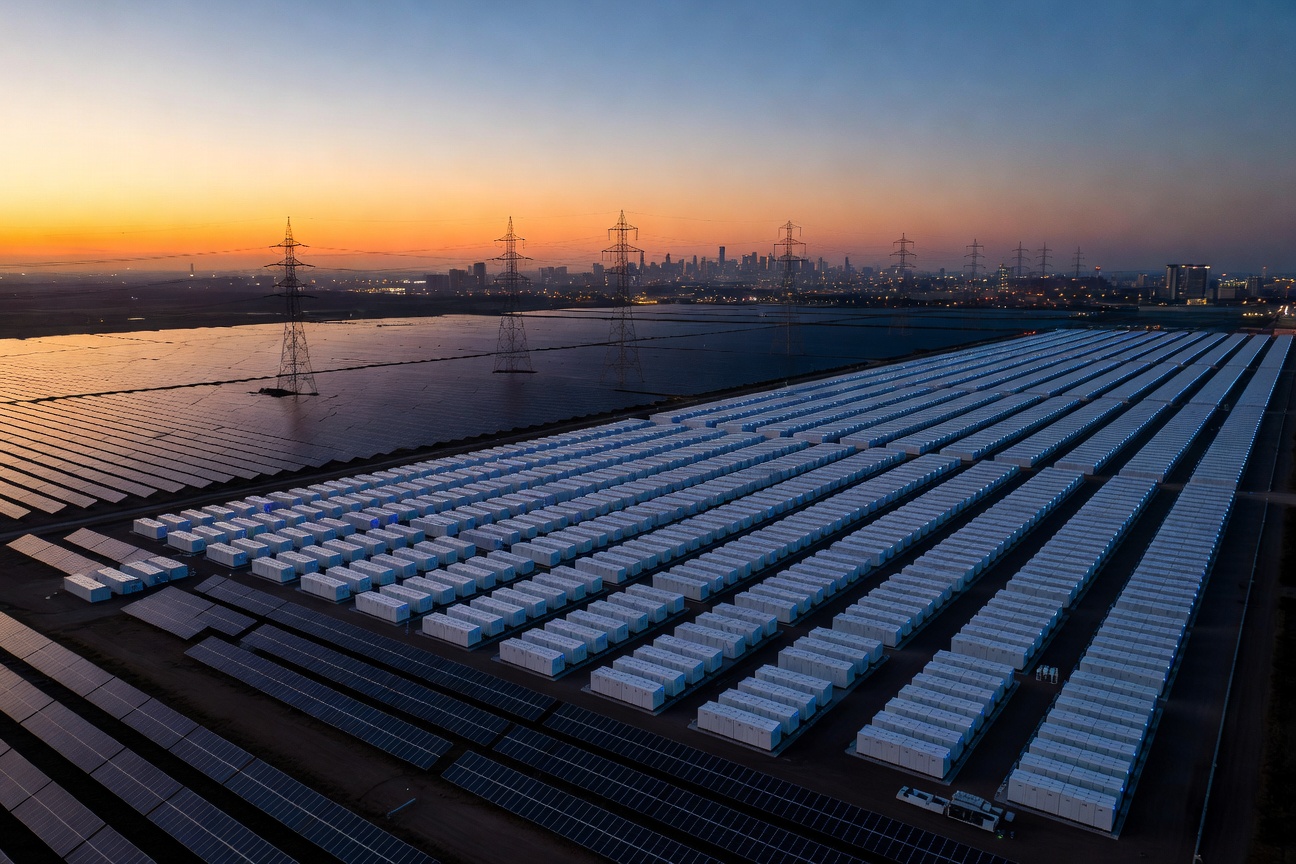
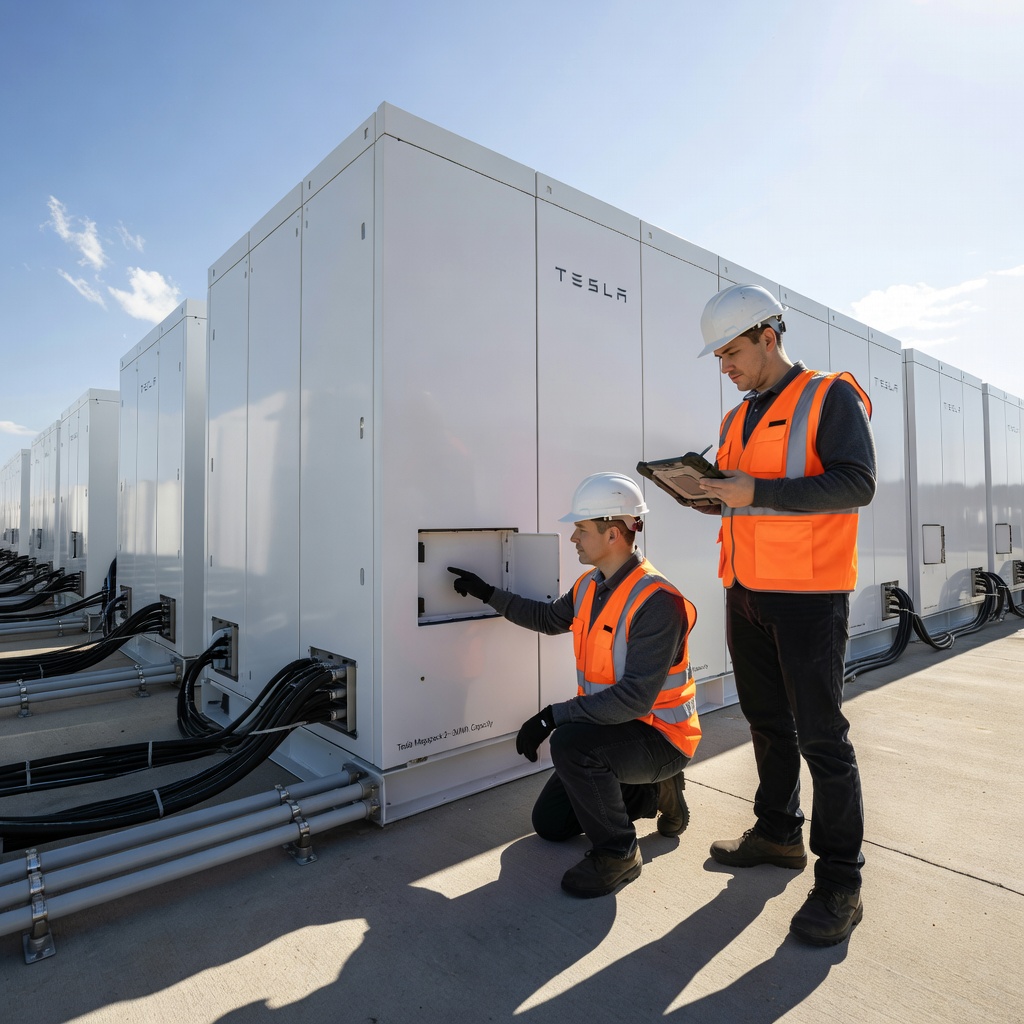
Sixty-two megawatt-hours. That is the amount of energy a single Tesla Megapack XL unit can store and dispatch — enough to power approximately 6,000 homes for a full hour, drawn entirely from a steel cabinet roughly the size of a shipping container. "We have crossed a threshold," said Dr. Leah Mukherjee, senior grid integration engineer at the Rocky Mountain Institute, in remarks delivered at the GridEdge Summit earlier this year. "The question is no longer whether battery storage can compete with fossil-fuel peakers. The question is how fast we can manufacture and site these systems before the grid collapses under its own growing demand." That urgency, once confined to climate advocacy circles, has now migrated into the spreadsheets of utilities, the briefing rooms of national energy ministries, and the quarterly earnings calls of companies racing to own the infrastructure layer of the post-carbon economy.
The Geometry of a New Grid
To understand what is actually changing, it helps to abandon the conventional mental image of electricity as something that flows from a large central plant outward through passive wires to passive consumers. That model is dissolving. In its place, engineers are assembling something far stranger and more resilient: a bidirectional, software-orchestrated web of generation and storage nodes that can shrink, expand, reroute, and self-heal in real time. Megapacks are the anchor nodes of this web at the utility scale. But they do not operate alone.
Tesla's Autobidder platform, the artificial intelligence layer that sits atop its storage hardware, continuously scans wholesale electricity markets, weather forecasts, and grid frequency signals to decide when to charge the batteries and when to release their stored energy for maximum financial return and grid stability. At the Elkhorn Battery project in Monterey County, California — still among the largest operational storage sites in the world — Autobidder executes hundreds of market transactions per day with no human intervention. The financial returns fund further expansion. The grid gets firmer. The math compounds.
Solar's Silent Partner
Photovoltaic solar panels have become the cheapest source of new electricity generation in history — cheaper, per kilowatt-hour, than running an already-built coal plant in most of the world. Yet solar carries an inherent liability: the sun sets. For years, this intermittency was the primary argument wielded against a solar-dominant grid. Battery storage has not merely answered that argument. It has rendered it archaic.
The pairing of large-scale solar arrays with co-located Megapack installations is now the default configuration for new utility projects in the United States, Australia, Chile, and across the Gulf states. These hybrid facilities generate power during daylight hours, charge their battery arrays simultaneously, and then continue dispatching stored electricity through the evening demand peak — the 6 p.m. to 10 p.m. window that once belonged exclusively to natural gas peaker plants. In California, battery storage has already displaced the need for multiple planned gas peaker facilities. The state's grid operator, CAISO, now regularly logs evenings where storage assets provide over 3,000 megawatts of discharge capacity during the critical peak window.
What makes this pairing particularly potent is the cost trajectory. The levelized cost of a solar-plus-storage project has fallen by over 85 percent in the past decade. Project developers who locked in long-term power purchase agreements at current prices are positioned to deliver electricity below the variable cost of natural gas for the next 20 years. Utilities signing these contracts are not making environmental statements. They are making actuarial ones.
Virtual Power Plants: The Distributed Insurgency
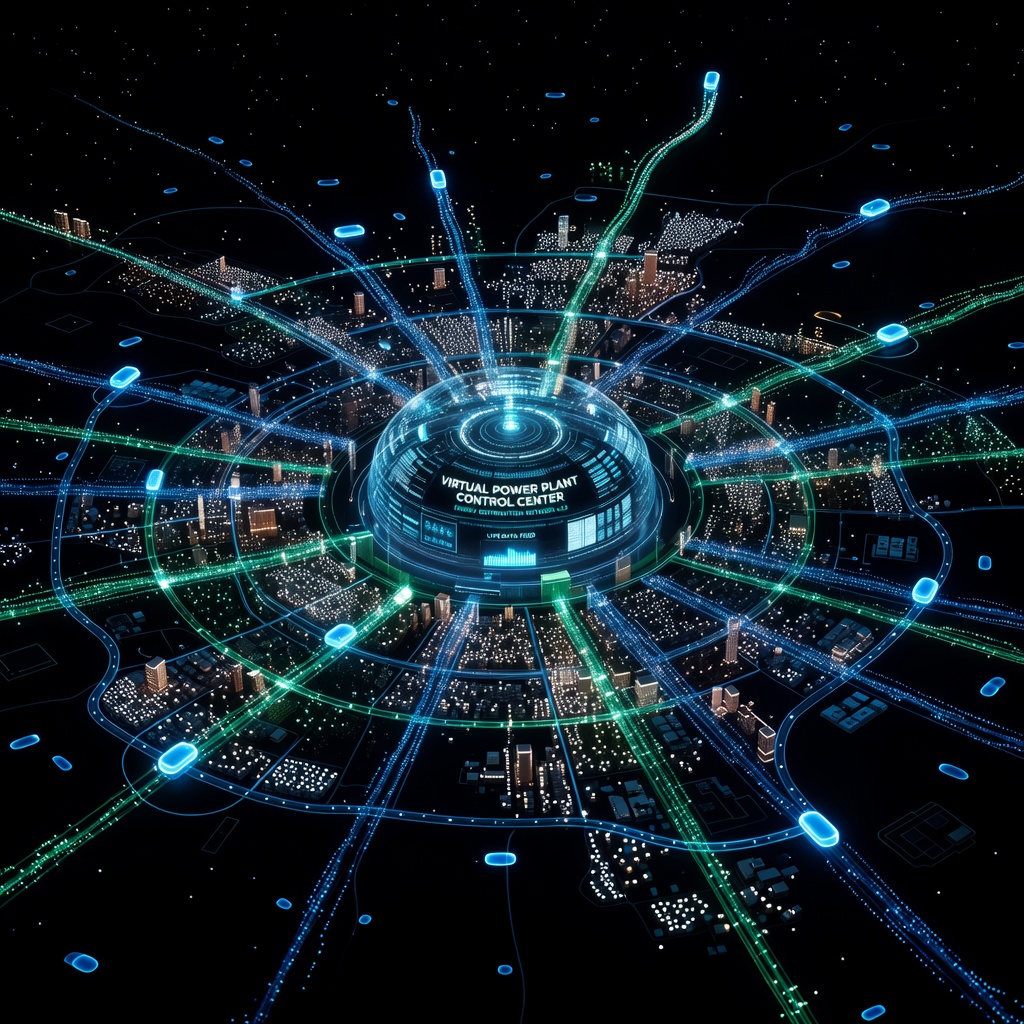
If Megapacks represent the heavy artillery of grid transformation, virtual power plants are the distributed insurgency operating behind every roofline. A virtual power plant, or VPP, is not a physical facility at all. It is a software-defined aggregation of thousands — sometimes millions — of individual distributed energy assets: residential solar panels, home battery systems like the Tesla Powerwall, electric vehicle chargers, and smart thermostats, all enrolled in a coordinated dispatch network managed by a central platform.
The concept sounds almost implausibly elegant: your home battery, sitting in your garage, participates in stabilizing the regional grid during a heat wave, earns you a credit on your electricity bill, and does so invisibly while you sleep. Yet this is precisely what is happening at scale in markets like Texas, South Australia, New England, and Puerto Rico. Tesla's VPP program in California has enrolled tens of thousands of Powerwall owners. During critical grid events, the aggregated output of enrolled homes has exceeded 50 megawatts — comparable to a small conventional power plant, assembled from nothing but suburban garages.
The implications for grid resilience are profound. A conventional power plant is a single point of failure. A virtual power plant comprising 80,000 home batteries distributed across a metropolitan region is, by contrast, nearly indestructible. Hurricanes, wildfires, and cyberattacks that would black out a centralized facility cannot simultaneously reach every node in a distributed network. Resilience is baked into the architecture.
Manufacturing at the Speed of Urgency
The bottleneck, as Dr. Mukherjee and others have noted, is not technology. The physics are settled. The economics are settled. The remaining constraint is manufacturing velocity and supply chain depth. Tesla's Megafactory in Lathrop, California has been optimized to produce Megapack units at a rate exceeding 40 gigawatt-hours per year — a figure that would have seemed fantastical a decade ago but now represents merely the opening bid in a global capacity race.
Competitors are not standing still. CATL, the Chinese battery giant, is commissioning gigafactories across Europe and Southeast Asia. LG Energy Solution, BYD, and a cluster of well-capitalized American startups are collectively adding hundreds of gigawatt-hours of annual production capacity to the global pipeline. The International Energy Agency projects that global grid-scale battery storage capacity must reach 1,500 gigawatt-hours by 2030 to keep the 1.5-degree climate pathway viable. Current installed capacity sits at roughly 300 gigawatt-hours. The gap is enormous. The trajectory, for the first time, looks sufficient to close it.
The Land Question Nobody Talks About
There is one underappreciated dimension to the Megapack and solar build-out that deserves more scrutiny than it typically receives: land use. A utility-scale solar-plus-storage facility requires significant acreage, and in densely populated regions, site acquisition has become as competitive and contentious as any other scarce resource. Developers are increasingly targeting brownfields — former industrial sites, capped landfills, decommissioned coal mines — for solar and storage deployment. This dual-purpose reclamation strategy converts ecological liabilities into productive energy infrastructure, generating tax revenue for communities long dependent on fossil fuel extraction while remediating land that would otherwise sit idle for decades.
In Appalachia, several former mountaintop removal mining sites are now under active development as solar farms with co-located storage. In the Midwest, closed coal ash ponds are being evaluated for battery facility siting. The symbolism is unmistakable. The economics are equally compelling: brownfield sites often carry pre-existing grid interconnection infrastructure, reducing one of the most significant cost and timeline barriers for new energy projects.
What the Grid Looks Like in 2035
Extrapolate the current trajectory forward a decade and the picture that emerges is not incremental. It is categorical. A grid anchored by Megapack installations at the transmission level, virtual power plants aggregating millions of distributed assets at the distribution level, and solar providing the dominant source of daytime generation does not merely resemble today's grid with cleaner inputs. It operates on fundamentally different principles: decentralized, software-optimized, financially self-reinforcing, and structurally resistant to the single-point failures that have defined grid vulnerability for a century.
The carbon arithmetic is similarly transformative. The United States grid currently emits roughly 400 grams of carbon dioxide per kilowatt-hour of electricity delivered. Credible modeling from national laboratories and independent research groups suggests that a fully built-out storage-anchored renewable grid could reduce that figure below 30 grams per kilowatt-hour by the mid-2030s. That is not a marginal improvement. That is the elimination of one of the largest single sources of greenhouse gas emissions in the industrial economy.
One acre of batteries, paired with one acre of panels, managed by software that never sleeps: this is the unglamorous, unsexy, and utterly indispensable machinery of the energy transition. It is being bolted together right now, in fields and parking lots and former mine sites across six continents. The grid is not waiting for a revolution. The revolution is already being installed.