
Engineering the Impossible: Inside Elon Musk's Technical Blueprint for 2025 and Beyond
When engineers talk about systems architecture, they tend to speak in tradeoffs: mass versus strength, precision versus throughput, ambition versus schedule. Elon Musk, unusually, tends to collapse those tradeoffs by redefining what the baseline assumptions actually are. In 2025, that approach is producing engineering outputs that the aerospace, automotive, and neurotechnology communities are actively scrambling to understand, replicate, or rebut. This is a tour through the mechanical and computational guts of the most consequential engineering programs on the planet right now.
Starship: The Mechanical Reusability Problem, Finally Being Solved
The core engineering thesis behind SpaceX's Starship is deceptively simple: if you can catch a 70-meter, 300-metric-ton booster with a pair of mechanical arms rather than landing it on legs, you eliminate a significant mass penalty and radically compress turnaround time. The "mechazilla" chopstick catch mechanism, successfully demonstrated on Booster 12 in late 2024, is not a parlor trick. It is a systems decision with profound downstream consequences. Landing legs add dead mass to a vehicle that is already fighting gravity on every ascent. Removing them means the booster arrives back at the launch site structurally lighter, structurally simpler, and theoretically ready for re-stacking within hours rather than weeks.
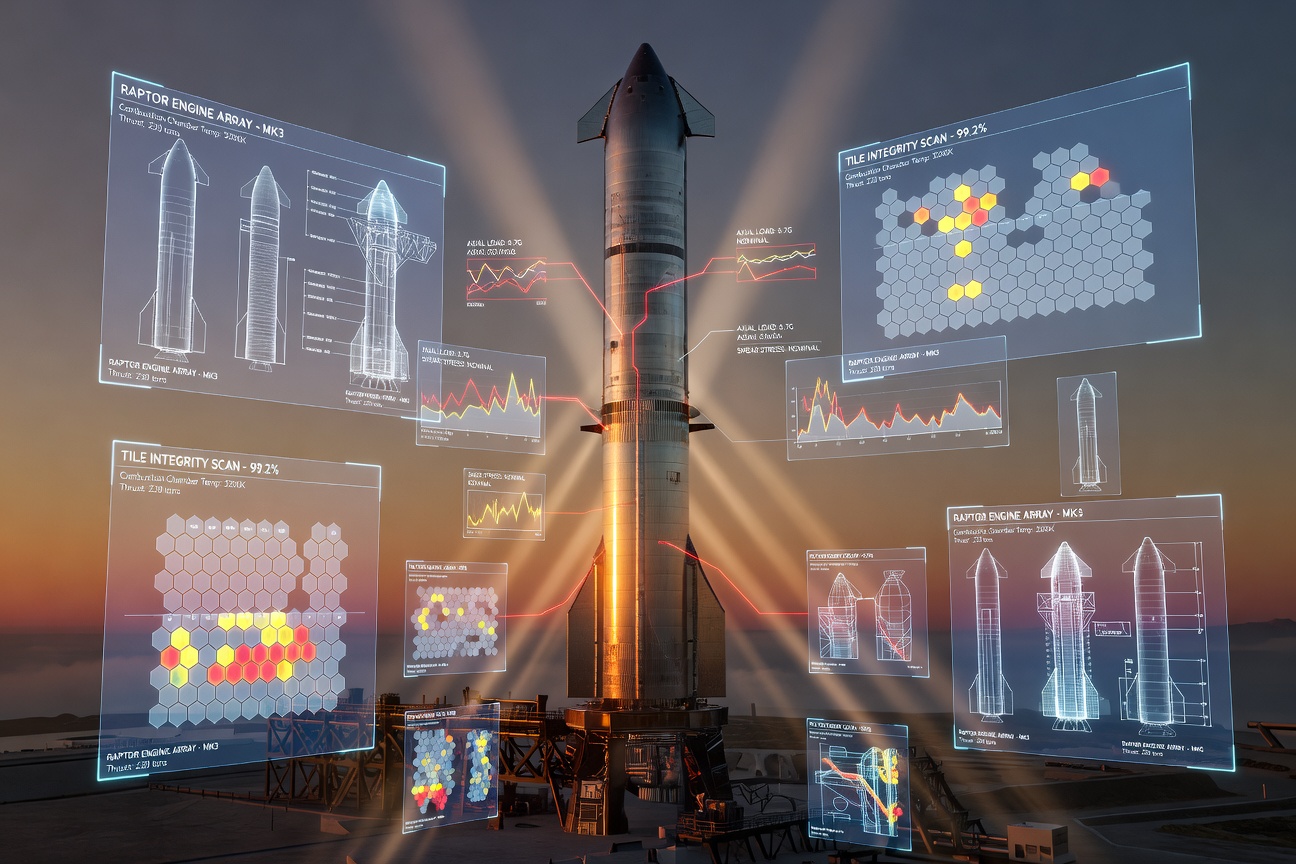
The harder problem is the Ship stage. Starship's upper stage must survive reentry with a thermal protection system built from hexagonal ceramic tiles bonded to a stainless steel skin. The choice of 304L stainless steel over carbon fiber composites was itself a first-principles decision. Stainless maintains strength at cryogenic temperatures, which suits it for liquid oxygen and methane propellant containment, and it has adequate high-temperature properties during reentry if the tile system does its job. The tiles, each individually designed using computational fluid dynamics models of reentry heating profiles, must protect the underlying structure through temperatures exceeding 1,400 degrees Celsius at leading edges. SpaceX has been iterating tile bonding methods and tile geometry following partial failures observed on earlier test flights. The belly-flop deceleration maneuver, which uses aerodynamic drag from the ship's broad fuselage rather than propulsive braking alone, is an exercise in controlled instability, held together by a flight computer running attitude control algorithms at update rates measured in milliseconds.
Raptor 3: The Engine Architecture Behind the Numbers
The Raptor engine family underpins everything Starship does. Raptor 3, currently in production and flight qualification phases, represents a significant departure from Raptor 2 not just in thrust figures but in manufacturing philosophy. SpaceX has progressively eliminated external plumbing and insulation by integrating those functions into the engine's primary structure itself. The result is a cleaner external profile, reduced part count, and a meaningful reduction in points of potential failure.
Raptor operates on a full-flow staged combustion cycle, which means both propellant streams, fuel-rich and oxidizer-rich, pass through preburners before entering the main combustion chamber. This maximizes thermodynamic efficiency but also generates extraordinarily demanding conditions inside the engine. The oxygen-rich preburner operates in an environment that would ignite almost any metal, requiring precise alloy selection and surface treatment. SpaceX has achieved chamber pressures exceeding 300 bar, placing Raptor among the highest-pressure combustion engines ever flown. Musk has stated in recent technical discussions that Raptor 3 targets sustained specific impulse improvements over its predecessors while also improving the engine's reuse interval between inspections. Getting an engine rated for dozens of flights without teardown is as much a materials science problem as it is a thermodynamics one.
Tesla's Optimus: Actuator Torque Density and the Manipulation Problem
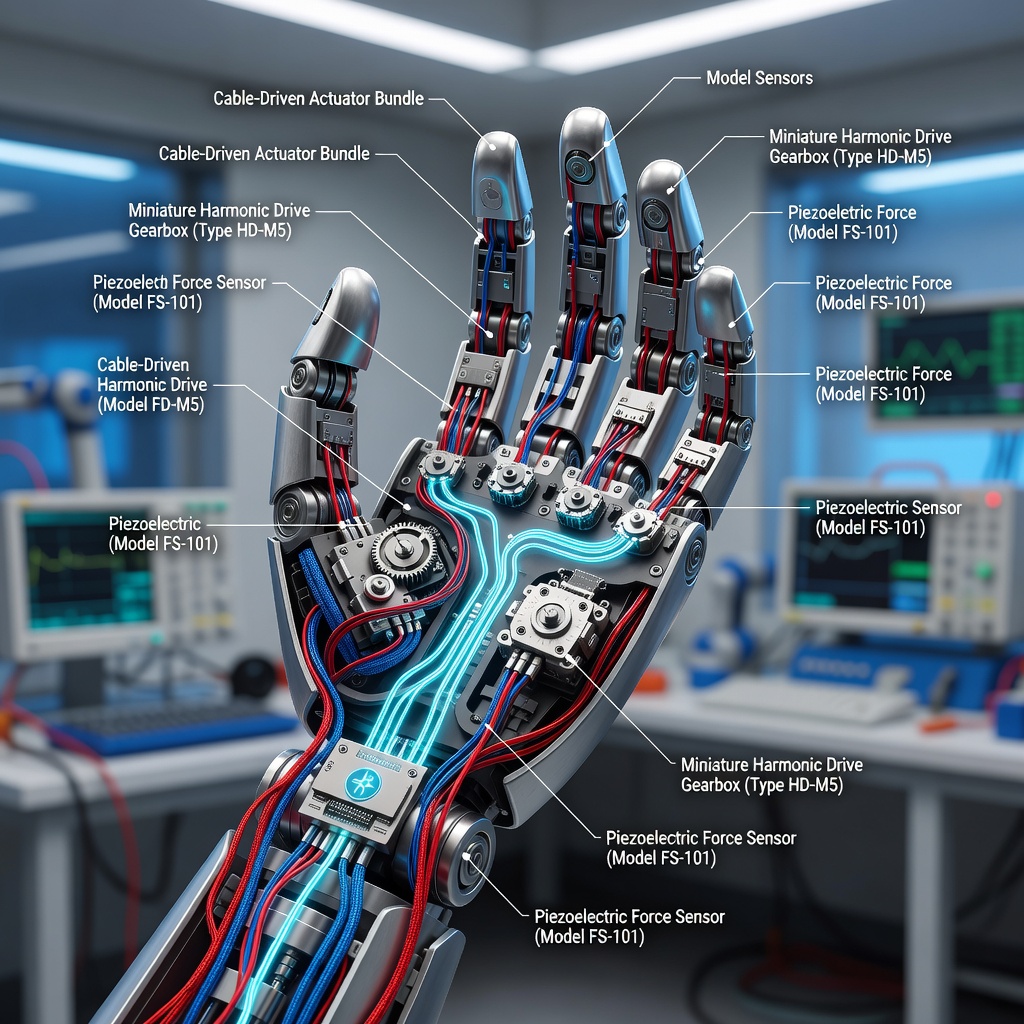
Optimus, Tesla's humanoid robot program, sits at a peculiar intersection of mechanical engineering and machine learning infrastructure. Musk has been specific in recent interviews about the engineering bottlenecks. The hands are hard. Dexterous manipulation requires actuators with high torque density packed into geometries constrained by the size of a human hand. Tesla has developed proprietary linear actuators using custom motor windings and harmonic drive gearing arrangements to achieve the force-to-weight ratios required. The current generation of Optimus hands reportedly features 22 degrees of freedom, each driven by a tendon-like cable routing system that mimics the architecture of biological flexors and extensors.
The locomotion system uses a six-axis force-torque sensor at each ankle, feeding real-time ground reaction data into a model predictive control loop that adjusts gait parameters at millisecond timescales. This is the same class of control problem that Boston Dynamics has explored with hydraulic actuation, but Tesla has deliberately chosen electric actuation throughout, arguing that electric systems offer better energy efficiency, simpler maintenance, and easier integration with Tesla's existing motor manufacturing supply chain. The tradeoff is bandwidth: hydraulic actuators can deliver very high forces very quickly, while electric actuators require careful control system design to avoid instability at high-speed maneuvers.
Training Optimus relies heavily on the same neural network infrastructure Tesla built for Full Self-Driving. The implication is architectural: Tesla's video-in, action-out transformer models, trained on vast datasets of human demonstration, are being adapted for robotic policy learning. Musk has suggested that the same data engine approach, continuous fleet data collection feeding model retraining, will apply to Optimus at scale. Whether that analogy fully holds for 3D physical manipulation versus 2D driving scenarios remains an open engineering question, and a genuinely contested one within the robotics research community.
FSD: The Occupancy Network Shift and What It Actually Means
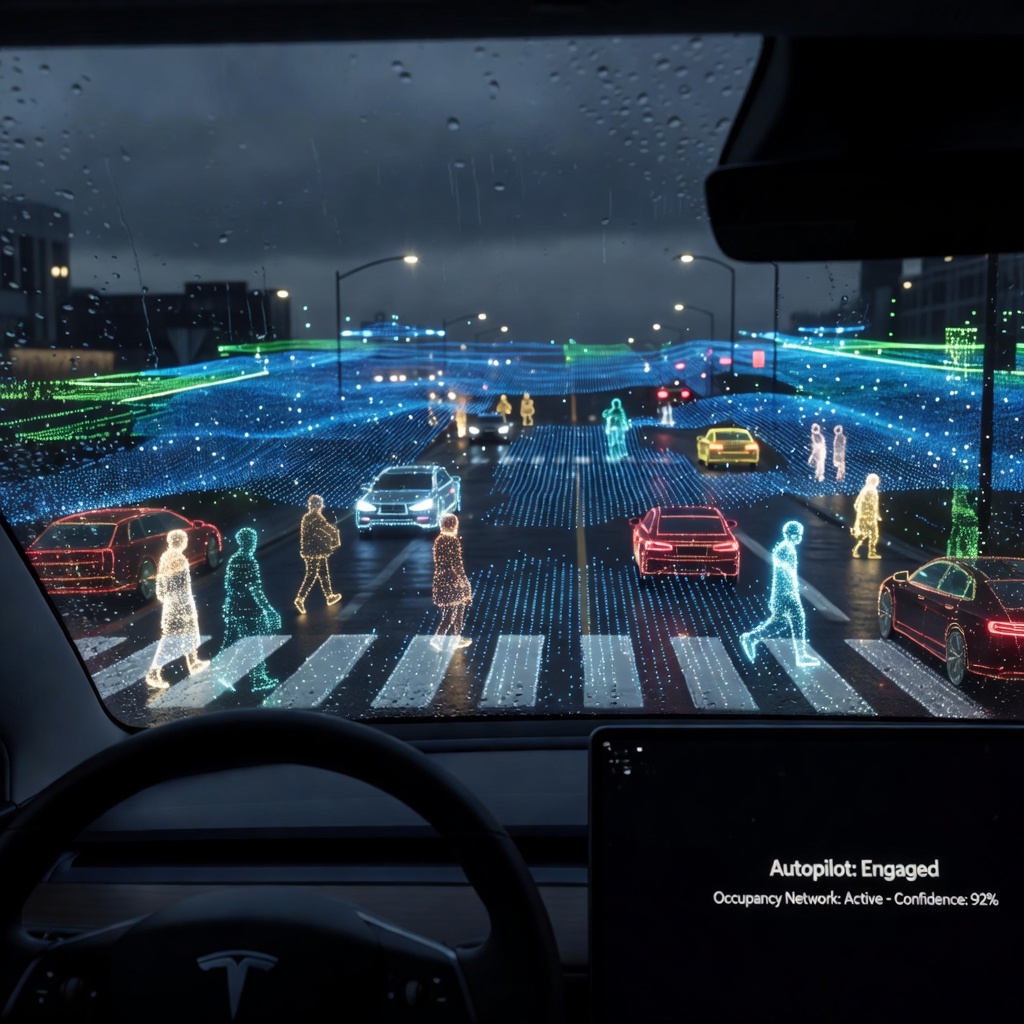
Tesla's Full Self-Driving software, now deployed on a subscription basis and approaching broader supervised autonomy capability, underwent a foundational architectural change with the introduction of occupancy networks. Rather than relying on object detection pipelines that classify discrete entities like cars, pedestrians, and cyclists, occupancy networks generate a volumetric representation of the space around the vehicle, assigning probability values to each voxel in 3D space regarding whether it is occupied by any physical matter. This matters enormously for edge cases. A construction barrier made of orange plastic mesh, a child crouching behind a parked car, an unusual trailer configuration: all of these are scenarios where a classification-based system may fail to assign the right label and therefore behave unexpectedly. An occupancy network simply asks whether space is occupied, without needing to know what is occupying it.
The computational cost of running occupancy networks at inference speeds suitable for real-time driving is non-trivial. Tesla's custom Hardware 4 inference chip, present in current production vehicles, was specifically designed to handle the matrix multiplication throughput this approach demands. The chip's neural processing unit architecture prioritizes sustained throughput over peak compute, which suits the continuous inference workload of autonomous driving better than a chip optimized for burst performance.
Neuralink: Electrode Density, Signal Fidelity, and the Biocompatibility Clock
Neuralink's N1 implant, now in human clinical trials following FDA Investigational Device Exemption approval, uses a flexible polymer thread array carrying 1,024 electrodes inserted by a purpose-built surgical robot with micron-level precision. The engineering problem Neuralink is solving is signal fidelity over time. Brain tissue responds to implanted foreign objects with glial scarring, which progressively degrades electrode contact and raises impedance, reducing signal quality over months and years. Neuralink's approach involves thread geometries thin enough to minimize mechanical mismatch with brain tissue, alongside electrode surface chemistry designed to reduce inflammatory response. Musk has discussed ongoing work on next-generation electrode coatings that may further extend viable implant lifetimes beyond current benchmarks.
The first human patient demonstrated the ability to control a computer cursor using neural signals decoded by the N1 chip, which performs on-device spike sorting and data compression before transmitting wirelessly. Doing this computation at the implant rather than externally reduces the wireless data bandwidth requirement from terabytes to kilobytes per second, a critical constraint given the strict power limits imposed by inductively charged implantable devices. The next engineering milestone Musk has outlined is expanding the electrode count and improving the decoding algorithms to enable higher-bandwidth communication interfaces, eventually targeting text input speeds comparable to a fast typist.
Across every one of these programs, the through-line is not simply ambition. It is a specific engineering methodology: attack the dominant constraint directly, rethink the system from materials and physics upward, and instrument everything to generate data that closes the feedback loop. Whether every bet pays off is genuinely uncertain. But the technical decisions being made right now, in Boca Chica, Fremont, Austin, and San Francisco, are reshaping the frontier of what human engineering can accomplish.

George Russell
Tech journalist covering Elon Musk’s companies for over 10 years.