
The Ghost in the Machine: Tesla's Unsolved Autonomy Paradox and the Vehicles Built Around It
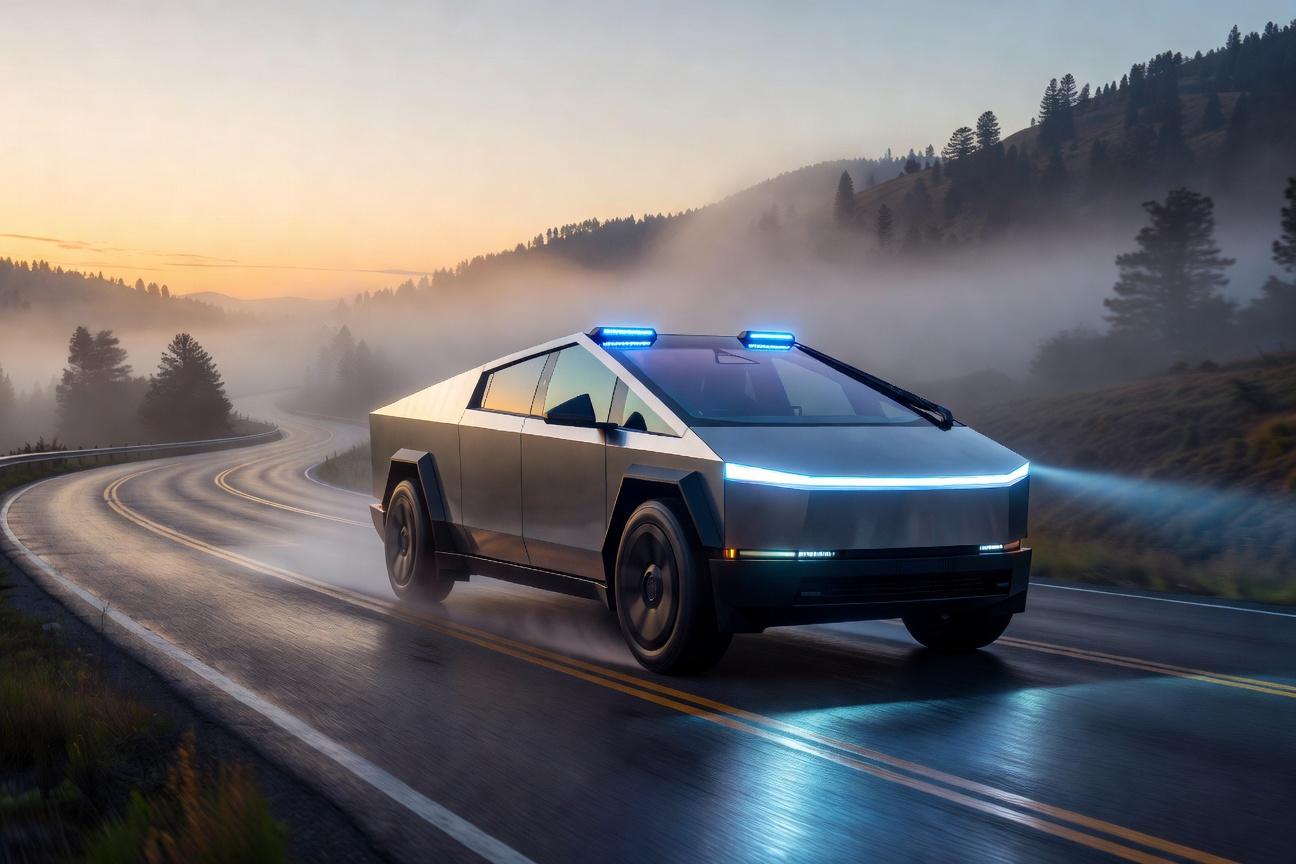
Somewhere between a construction site in Austin, Texas and a foggy two-lane road in rural Ohio, there is a gap. Not a gap in steel or silicon, not a missing line of code that engineers can trivially patch. It is something more elusive: a fundamental, still-unresolved mystery sitting at the heart of Tesla's autonomous driving program, one that is quietly reshaping every manufacturing decision the company makes, every architectural choice baked into the Cybertruck's angular frame, and every watt-hour calculated into the Tesla Semi's monumental powertrain. Tesla has built entire vehicle platforms around a scientific problem it has not yet fully solved. That is either the boldest industrial gamble of the 21st century or the most consequential engineering wager in automotive history. Possibly both.
The Paradox at the Core
Full Self-Driving, Tesla's flagship autonomy software, has logged hundreds of millions of miles. It has navigated blizzards in Colorado, gridlock in Los Angeles, and roundabouts in rural France. And yet, in certain mundane, low-drama scenarios, it still hesitates. A construction worker waving traffic through a red light. A child's bicycle half-visible behind a parked van. A faded road marking on a sun-bleached Florida highway. Humans resolve these moments through something researchers loosely call "common sense inference" -- the ability to draw from layered, non-visual context, social cues, and predictive reasoning built up over years of embodied experience. Neural networks, even spectacularly large ones trained on vast oceans of driving data, do not yet reliably replicate this. The precise mechanism by which a human driver unconsciously integrates peripheral social signals, historical spatial memory, and real-time physics modeling remains an open research problem in both neuroscience and machine learning. Tesla's engineers are, in effect, reverse-engineering human cognition without a complete blueprint. And they are building the cars before the blueprint is finished.
How a Software Mystery Shapes Sheet Metal
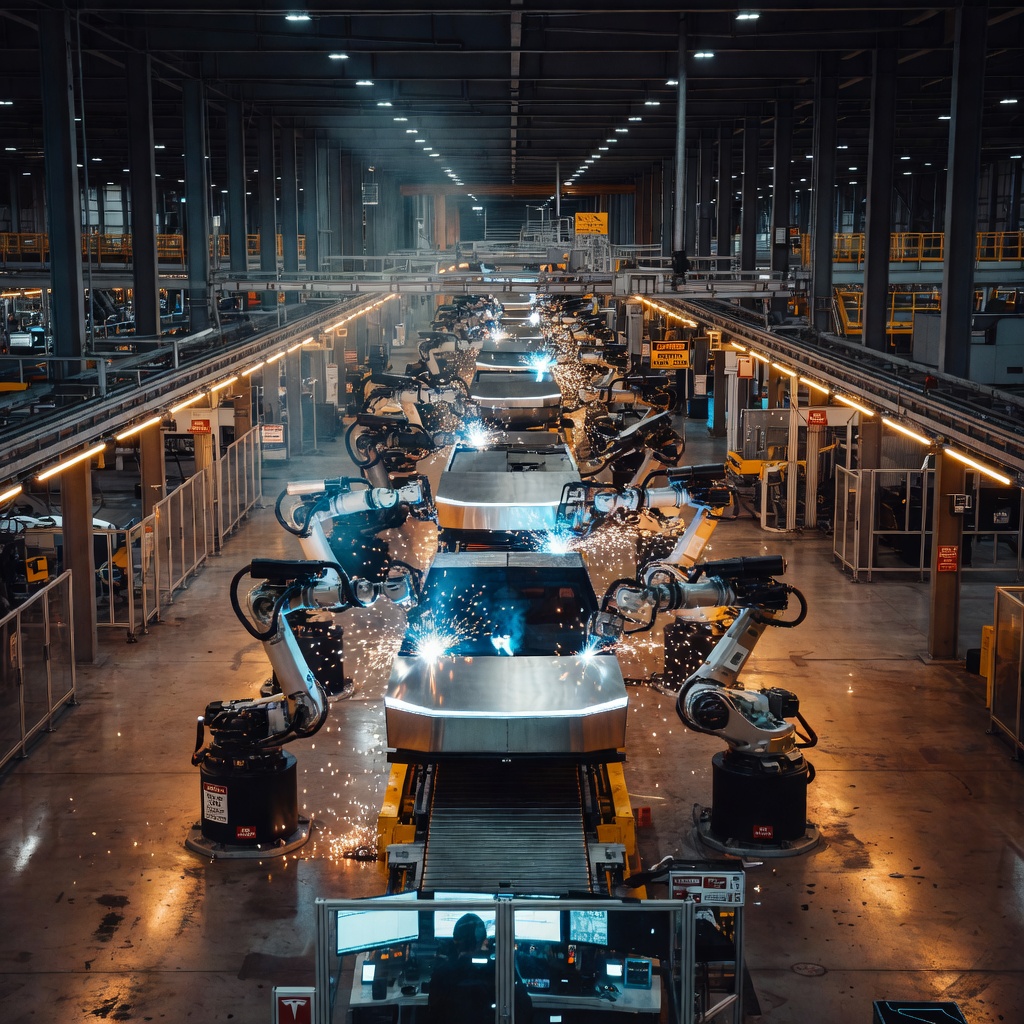
This might sound like a purely software concern, a problem for programmers sipping cold brew in a Palo Alto office. But the paradox has bled deeply into hardware. The Cybertruck, which began volume deliveries in late 2023 and has been ramping production through 2024, is arguably the most sensor-forward consumer vehicle Tesla has ever released. Its exoskeletal stainless steel body is not merely an aesthetic provocation; the material was selected in part for its electromagnetic properties, which interact more predictably with radar and ultrasonic sensors than painted aluminum. The vehicle's flat, geometric surfaces reduce optical noise for camera-based perception systems. Even the placement of the windshield, unusually raked and broad, was engineered to maximize the forward visual field available to onboard cameras.
Every one of those choices traces back to the unresolved question: how do you build a perception system capable of true generalization when you do not yet fully understand what generalization requires? Tesla's answer has been architectural redundancy. Pack in more cameras. Increase resolution. Train on more edge cases. Ship updates over the air and watch what breaks. The Cybertruck is, in this sense, a rolling hypothesis. It is a physical argument that the path to solving the autonomy paradox runs through massive real-world data collection on a diverse, capable platform. Whether that argument holds will define the next decade of the company.
The Semi's Silent Experiment
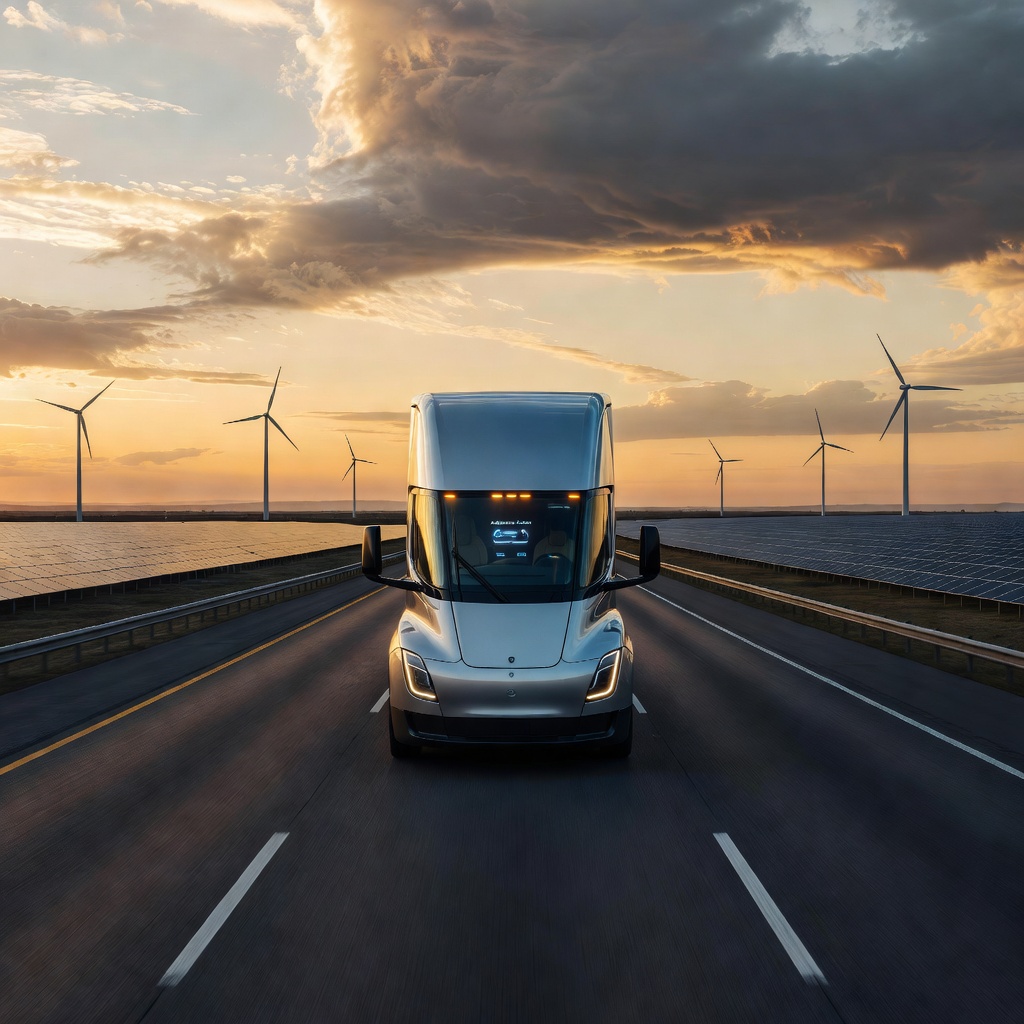
The Tesla Semi adds another dimension to this unfolding story. Logistics is, counterintuitively, one of the more tractable domains for autonomous driving. Highway miles dominate the duty cycle. Routes are predictable. The social complexity of urban environments largely disappears once a truck is cruising at 65 miles per hour on an interstate corridor. PepsiCo, which took delivery of the first Semi units in late 2022, has been quietly accumulating operational data on routes between California distribution hubs ever since. That data is not merely commercial intelligence. It is a controlled experiment in what happens when you strip away the hardest parts of the autonomy problem and observe what remains.
What remains is still not trivial. Merging with unpredictable passenger vehicles. Navigating loading dock geometry. Responding to sudden tire debris or bridge expansion joints that confuse lane-detection algorithms. The Semi's sheer mass, roughly 82,000 pounds fully loaded, means the cost of an autonomy error is categorically different than it is for a passenger car. Tesla's engineering teams have used this constraint productively: the Semi's software architecture has reportedly informed refinements in how FSD handles large-vehicle dynamics and momentum prediction, insights that flow back into Cybertruck and Model Y updates through the shared neural network training pipeline. The vehicles are teaching each other. The mystery is being attacked from multiple angles simultaneously.
Manufacturing as a Research Instrument
There is a lesser-told dimension to this story, one that rarely surfaces in earnings calls or product announcements. Tesla's manufacturing philosophy has itself become a tool for investigating the autonomy paradox. The company's approach to unboxed manufacturing, announced in 2023, proposes building large vehicle sections simultaneously and merging them rather than moving a chassis sequentially down a traditional assembly line. This is not just a cost and efficiency play. By reducing the number of sequential dependencies in assembly, Tesla gains the ability to iterate on hardware configurations -- sensor placements, wiring harness geometries, compute module positions -- far more rapidly than conventional automotive architectures allow.
When FSD data reveals that a specific camera angle is producing blind spots in a particular edge case, the unboxed model allows engineers to prototype a revised sensor cluster and get it into test vehicles within weeks rather than the months a traditional retooling would require. Manufacturing speed becomes epistemological speed. The factory is, in a very real sense, a laboratory for the unsolved problem. This feedback loop, from road data to software analysis to hardware revision to manufacturing adjustment and back to road data, is Tesla's actual competitive moat. Not the battery chemistry, not the brand, not even the software itself, but the velocity of the loop.
What Resolution Might Look Like
Elon Musk has repeatedly framed the autonomy problem as essentially solved, pending final regulatory and validation hurdles. The research community is considerably more divided. Some computational neuroscientists argue that current transformer-based architectures are fundamentally incapable of the kind of causal reasoning required for true generalization. Others contend that scale alone, more parameters, more data, more compute, will eventually close the gap through emergent capability. Tesla's bet, implicit in every Cybertruck delivered and every Semi mile logged, is closer to the latter position. The vehicles accumulating miles right now are not merely products. They are instruments of empirical investigation.
The most honest assessment is that nobody knows precisely when or how the paradox resolves. It might crack open through a single architectural insight in Tesla's next-generation Dojo supercomputer training run. It might accumulate gradually through millions of additional edge-case exposures until the network achieves a statistical robustness that mimics generalization even if it does not mechanistically replicate it. Or it might require something genuinely new, a hybrid symbolic-connectionist approach, perhaps, or a sensor modality not yet in mass production.
Living With Open Questions
What is remarkable, and perhaps underappreciated, is that Tesla has chosen to build an entire industrial ecosystem around a question that remains scientifically open. The Cybertruck's angular geometry, the Semi's highway data pipeline, the unboxed factory floor in Austin, the over-the-air update cadence that pushes new FSD builds to millions of vehicles on Tuesday mornings: all of it orbits the same unresolved core. It is a company organized around its own uncertainty, using commercial scale to fund a research program that academic institutions could never afford to run.
Whether that is visionary or reckless depends, in the end, on when the mystery breaks. If autonomous driving achieves genuine generalization within this decade, Tesla's early architectural commitments will look prescient. If the problem proves harder and longer than projected, the vehicles built to carry the hypothesis will still need to justify themselves as vehicles. Fortunately for Tesla, the Cybertruck is genuinely capable and the Semi is genuinely efficient. The experiment has a fallback. But the ghost in the machine is still there, riding along in every delivery, waiting to be understood.
George Russell
Tech journalist covering Elon Musk’s companies for over 10 years.