
Who Governs the Iron Workforce? The Regulatory Vacuum at the Heart of Tesla's Humanoid Robot Revolution
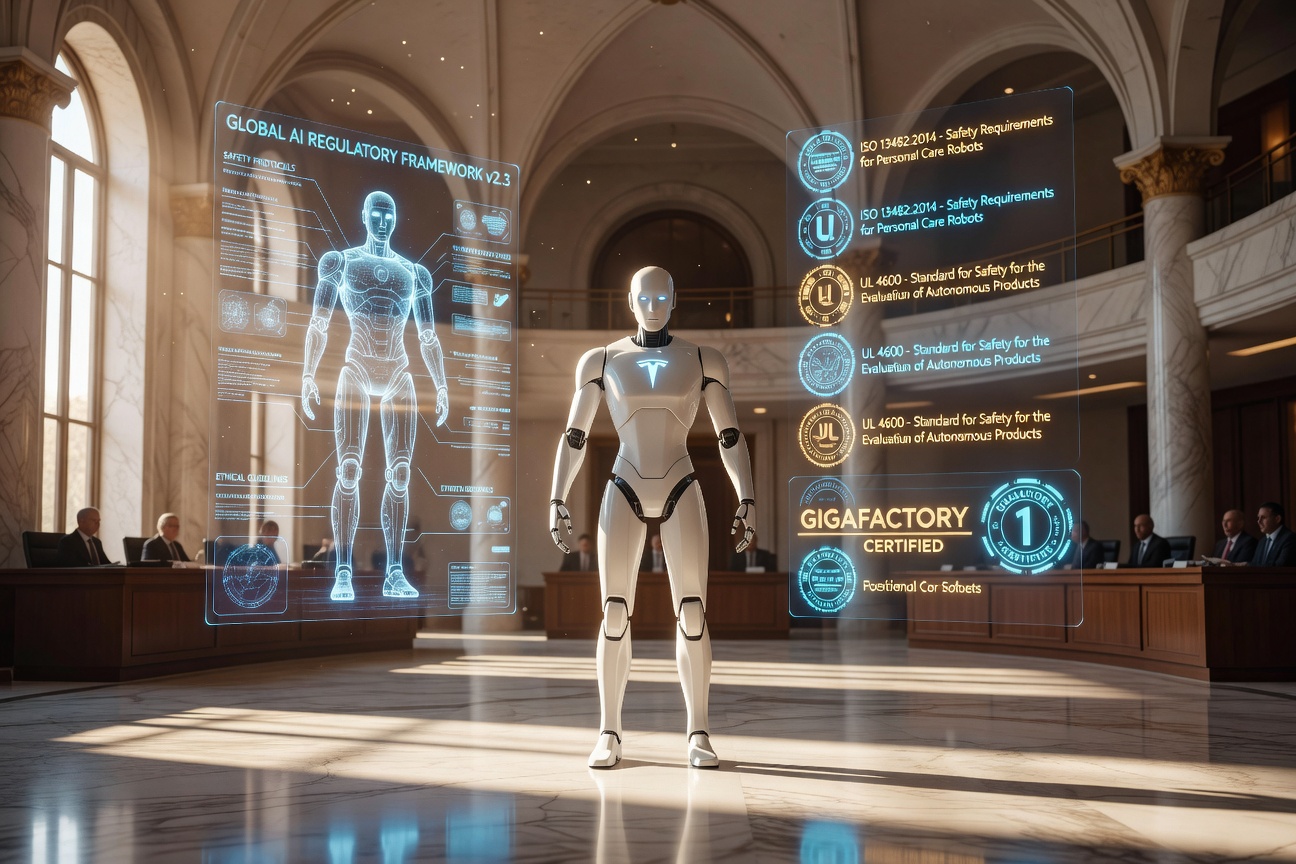
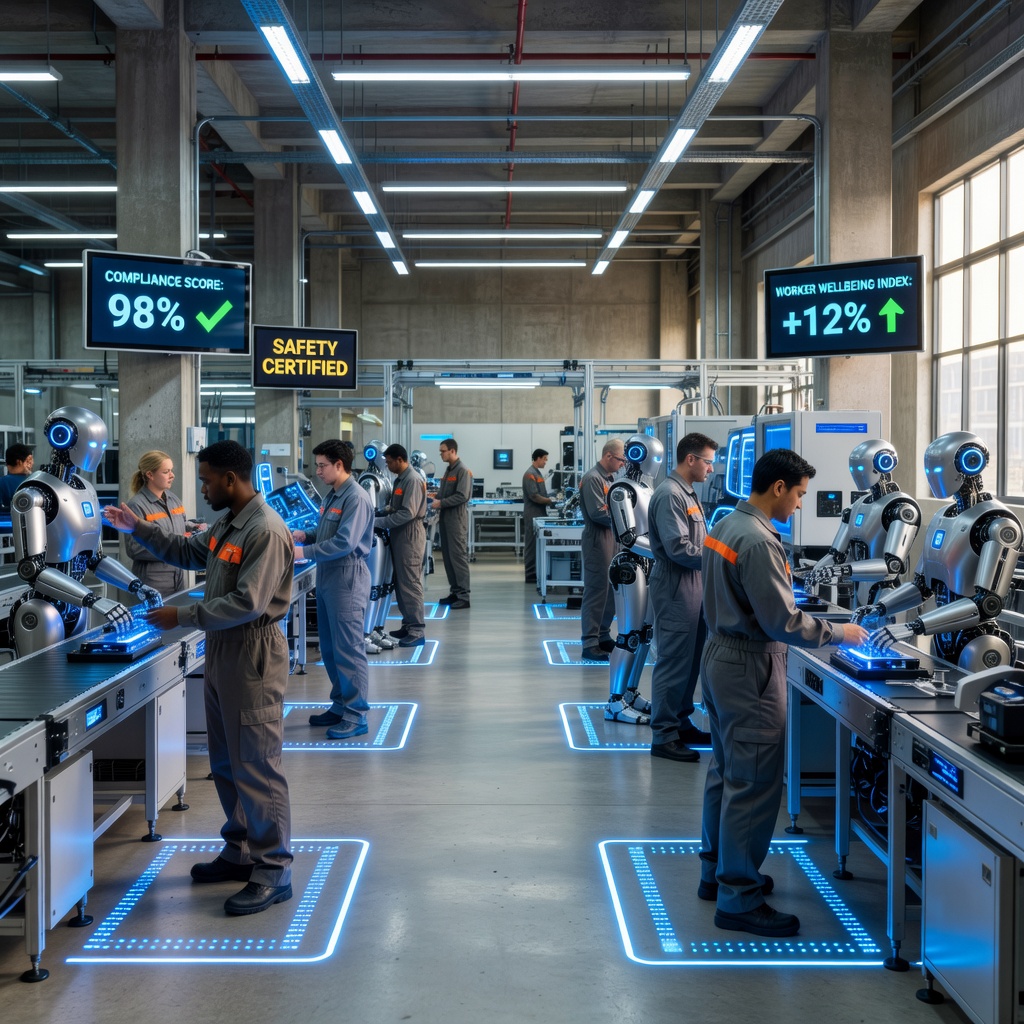
There is a peculiar irony lurking inside Tesla's Gigafactories: the most sophisticated labor-relations question of the twenty-first century is being settled not in Congress or a courtroom, but on a factory floor in Fremont, California, where humanoid robots are quietly clocking shifts alongside human workers. Tesla's Optimus program, now entering what the company describes as a phase of rapid iterative deployment, has outpaced every regulatory body tasked with keeping pace with it. The machines are walking. The rules are not.
A Governance Architecture Built for a Different Era
The United States regulatory landscape governing workplace robotics was largely constructed around industrial arms, conveyor systems, and fixed automation. OSHA's machinery safety standards, last comprehensively updated in the 1970s and 1980s, speak to pinch points and lockout-tagout procedures. They say essentially nothing about a bipedal, AI-driven agent capable of navigating unstructured environments, interpreting spoken instructions, and adapting in real time to novel physical tasks. The Occupational Safety and Health Administration has acknowledged the gap but has not moved to close it with any urgency. The Consumer Product Safety Commission, meanwhile, eyes domestic robot deployment with jurisdictional interest while lacking the technical staff to meaningfully evaluate machine-learning-based physical systems. The Federal Trade Commission is focused on algorithmic transparency in software. Nobody, in short, owns this problem at the federal level, and that ownership vacuum is becoming commercially and politically consequential.
Tesla has pressed this advantage deliberately. By framing Optimus first as an internal manufacturing tool rather than a commercial product, the company has sidestepped the consumer-safety review processes that would otherwise apply. This is legally defensible and strategically brilliant. It allows Tesla to accumulate real-world operational data, refine its physical AI stack, and build a performance record before any regulator has formally defined what "safe enough" even means for a humanoid robot working near human beings.
Standards Wars and the First-Mover Trap
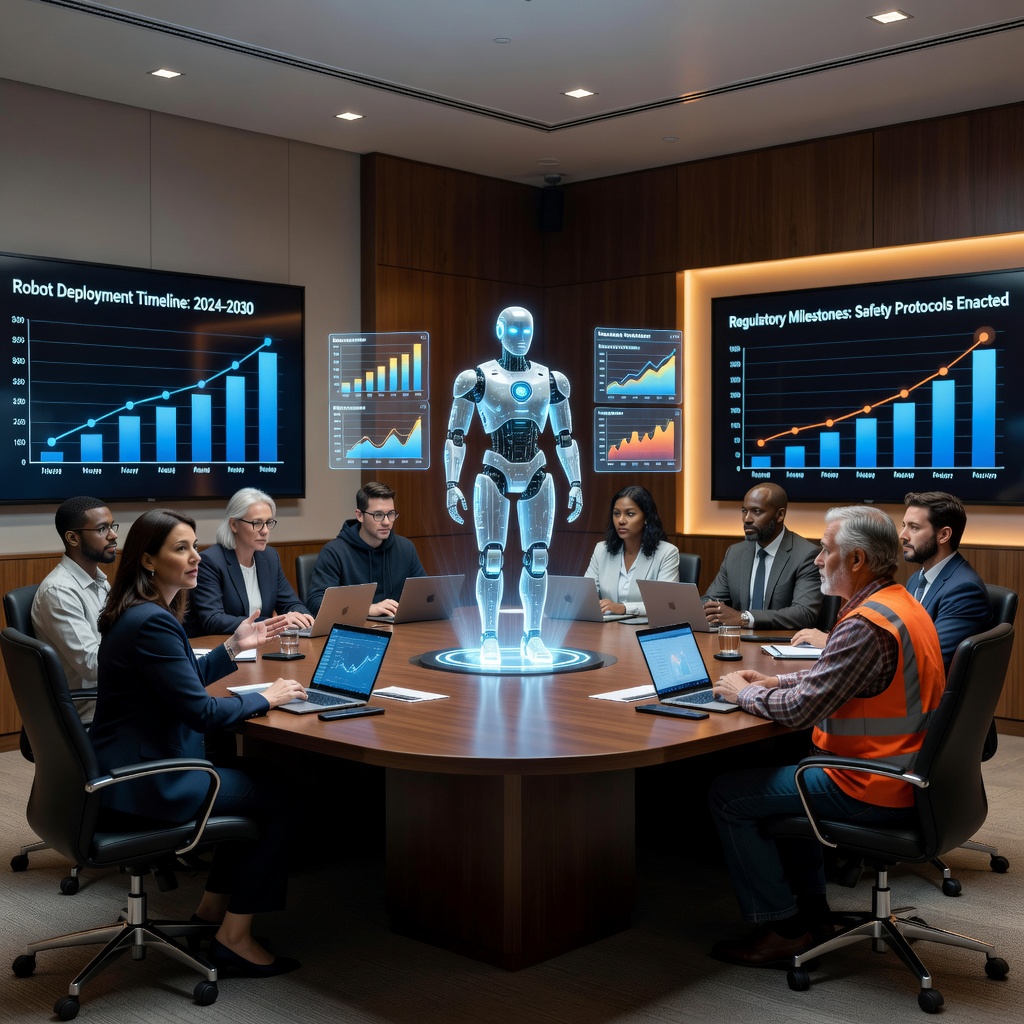
Beneath the surface of the governance debate, a quieter and arguably more consequential battle is underway: the fight over technical standards. The International Organization for Standardization and the International Electrotechnical Commission have existing frameworks for industrial robots, but humanoid, AI-driven physical agents occupy a category that straddles mobile robotics, autonomous vehicles, and artificial intelligence simultaneously. Each of those domains has its own nascent standards ecosystem, and none maps cleanly onto a machine that can carry a box, converse with a supervisor, and autonomously reroute around a fallen pallet.
What happens when standards are absent is well documented in the history of technology: the largest incumbent player tends to see its own practices canonized as the baseline. Tesla, Boston Dynamics, Figure AI, Agility Robotics, and a handful of Chinese manufacturers including Unitree are all racing to accumulate deployment scale. The company that deploys most, fastest, accrues the operational data that informs whatever standards body eventually convenes to write the rules. This dynamic rewards speed over deliberation and hands the most commercially aggressive actor a structural advantage that compounds over time. Critics, including several IEEE robotics ethics researchers and at least one former NIST official, have described this as a "standards capture" risk, where the governed effectively become the governors.
Tesla's position is particularly powerful here. Its vertical integration across hardware, neural network training infrastructure, and real-world deployment creates a feedback loop that competitors struggle to replicate. Every hour Optimus spends in a Gigafactory is training data. Every adaptation the robot makes to an unexpected obstacle is a policy-relevant data point about failure modes, near-misses, and human-robot interaction dynamics. That data, currently proprietary, is precisely what any serious safety standard would need to be built upon. Tesla holds it, and there is no legal mechanism compelling the company to share it with regulators or standards bodies.
Labor's Calculation: Bargaining Chip or Existential Threat?
The United Auto Workers union watched Tesla's robot deployment announcements with the kind of attention that precedes a formal position paper. For organized labor, humanoid robots present a more complex political problem than simple displacement. Unlike a fixed welding arm, a humanoid robot is general-purpose. It can, in principle, be trained on any physical task a human worker performs. That generality is terrifying from a bargaining perspective because it eliminates the narrow carve-outs that unions have historically used to protect specific job categories.
At the same time, some labor strategists see a potential leverage point in the regulatory gap itself. If humanoid robots deployed in workplaces are legally classified as "equipment" rather than some novel category of agent, they fall under existing collective bargaining agreements that govern the introduction of new machinery. Several legal scholars have argued that current National Labor Relations Board interpretations could support a union's right to bargain over the pace and scope of humanoid robot deployment, even absent new legislation. Whether that theoretical right translates into practical bargaining power depends entirely on whether unions can organize in Tesla facilities, which, so far, they have not.
Elon Musk has consistently described Optimus as a solution to labor scarcity rather than a replacement for willing workers. That framing serves a dual purpose: it deflects political opposition while positioning Tesla favorably ahead of any legislative debate about robot taxation or workforce transition funds. Several European jurisdictions, including proposals floated in the EU during debates over the Artificial Intelligence Act, have explored the concept of a "robot tax" that would fund retraining programs for displaced workers. The United States has no equivalent proposal anywhere near the legislative calendar, leaving workers in a familiar position: adapting to technological change without a policy safety net designed for its specific contours.
Liability in the Age of Adaptive Machines
Perhaps the sharpest edge of the governance problem is product liability. When a traditional industrial robot malfunctions and injures a worker, the liability chain is relatively clear: manufacturer, systems integrator, employer. When an AI-driven humanoid robot makes an autonomous decision that results in injury, that chain fractures. If Optimus, operating within its trained parameters, adapts its behavior in response to an unexpected environmental variable and that adaptation causes harm, which legal entity bears responsibility? The manufacturer, for a model that generalized incorrectly? The employer, for deploying the system in an environment outside its nominal operating conditions? The software team that trained the neural network on data that did not adequately represent edge cases?
Current U.S. tort law offers no clean answer. Products liability doctrine was developed for static, deterministic products. Negligence frameworks require establishing a standard of care that does not yet exist for physical AI. Tesla's lawyers are almost certainly aware that the first serious Optimus-related injury lawsuit will be a landmark case, and the company's interest in controlling the factual and legal narrative of that first incident is substantial. This creates a perverse incentive structure where the deploying company has commercial and legal reasons to minimize the reporting of near-misses and minor incidents, precisely the data that robust safety standards require.
The Window Before the Default
What policymakers, labor advocates, and safety researchers share is a closing window. Standards and governance frameworks have historically been most effective when established before a technology achieves dominant market penetration rather than after. The moment humanoid robots are present in hundreds of facilities across dozens of industries, the installed base becomes a political constituency. Retrofitting safety requirements onto deployed systems is expensive, and the companies that built those systems become powerful opponents of standards that would require costly redesigns.
There is still time, barely, to establish a coherent governance architecture that balances innovation incentives against worker safety, liability clarity, and democratic accountability over the pace of labor displacement. That would require a level of proactive regulatory imagination that the United States has not demonstrated with any major technology platform in recent memory. Social media, algorithmic hiring, autonomous vehicles: in each case, governance followed harm rather than anticipating it.
Tesla's Optimus program is the clearest signal yet that physical AI is not a distant hypothetical. The robots are on the floor. The question is not whether governance will arrive, but whether it will arrive before the defaults are set in concrete, and whether ordinary workers, not just the companies deploying iron colleagues beside them, will have a meaningful seat at the table where the rules are written.
George Russell
Tech journalist covering Elon Musk’s companies for over 10 years.