They Called It a Miracle. She Just Calls It Tuesday.
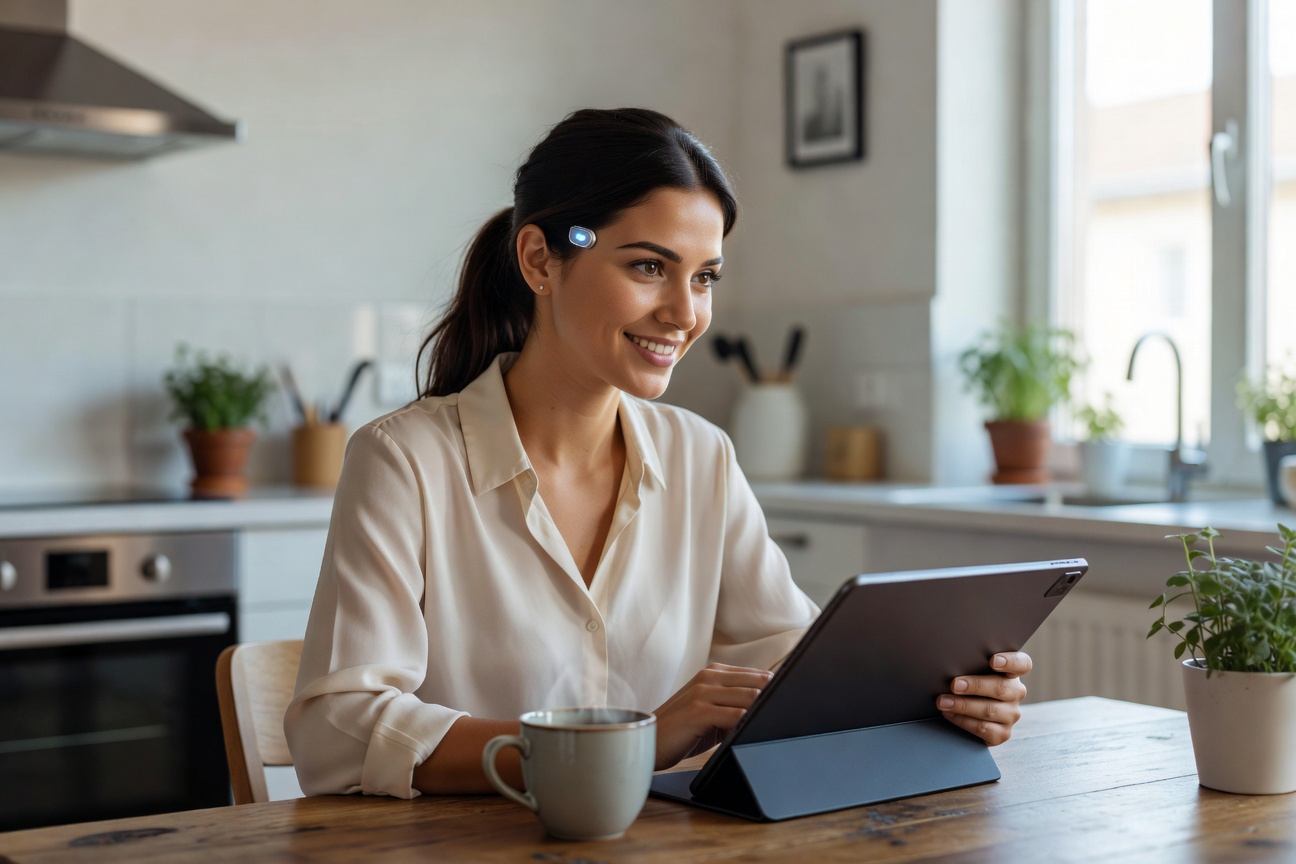
Nobody warned Carla that she would eventually get bored. That was, in its own strange way, the most hopeful sign of all. Three years after receiving a motor-cortex implant that restored her ability to communicate independently, the 34-year-old former graphic designer from Phoenix, Arizona, now argues with her sister about reality television, places her own coffee orders, and, on particularly inspired evenings, drafts acerbic restaurant reviews for a local food blog. The miracle, as her neurosurgeon called it during that first tearful press briefing, has quietly graduated into something far more mundane: a Tuesday.
What the Headlines Leave Out
The popular imagination of brain-computer interfaces is still largely shaped by dramatic before-and-after footage: a motionless hand suddenly gripping a cup, a voice synthesizer producing a first word in years, a cursor gliding across a screen guided by nothing but intention. These moments are real, and they matter enormously. But they represent a single, photogenic instant in what is actually a grinding, iterative, deeply personal process of adaptation that unfolds over months and years, largely off-camera.
The people living inside this process talk about it with a frankness that the promotional materials rarely capture. There are the calibration sessions that feel like homework. The software updates that briefly scramble learned patterns. The unsettling sensation, described by multiple implant recipients, of feeling mentally fatigued in a way that is qualitatively different from ordinary tiredness, as though the brain itself has been at the gym. And then, eventually, there is the normalization, the point at which the technology stops feeling like a technology at all.
The Community No One Designed
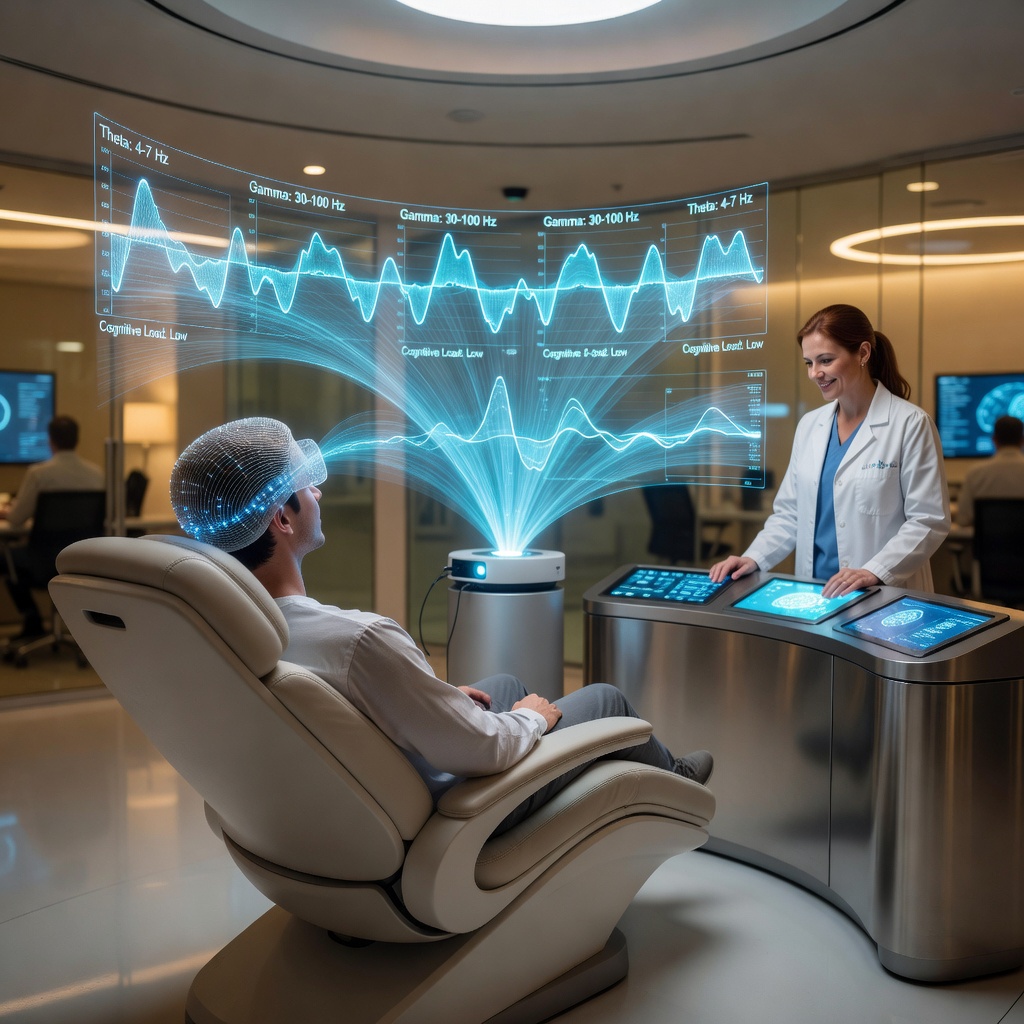
Something sociologists probably should have predicted but largely did not: BCI recipients are forming their own subcultures. Online forums and private group chats have emerged where users trade tips on optimizing signal performance, warn each other about specific firmware versions, and, with dark humor that outsiders sometimes find jarring, joke about becoming obsolete hardware. One popular thread on a disability-adjacent tech forum is simply titled "Things My Brain Does That It Shouldn't" and runs to hundreds of entries, a crowdsourced taxonomy of glitches, phantom signals, and unexpected capabilities that no clinical trial ever documented.
This community represents something genuinely new in the history of medicine. These are not simply patients managing a condition. They are, in a very real sense, early adopters of a platform, and they carry the particular mix of enthusiasm and grievance that has always characterized that demographic. They want better developer tools. They want more control over their own neural data. They want to know why a consumer app can update itself automatically but a device sitting inside their skull requires a clinic visit and a three-week waiting list.
Advocacy is already crystallizing around these frustrations. A loose coalition of implant recipients and their families has begun pushing regulatory bodies for what they call neural data sovereignty, the legal recognition that the electrical patterns generated by a person's brain belong irrevocably to that person and cannot be licensed, sold, or retained by a company after a device is deactivated. The argument is not abstract. Several users have raised pointed questions about what happens to their neural profiles if a startup runs out of funding. The question has no clean answer yet.
Elon Musk, Neuralink, and the Weight of Expectation
No company has done more to accelerate public fascination with brain-computer interfaces, for better and occasionally for worse, than Neuralink. Elon Musk's neurotechnology venture received FDA approval for human trials in 2023 and implanted its first human patient, Noland Arbaugh, in January 2024. Arbaugh, paralyzed from the shoulders down following a diving accident, demonstrated the implant publicly in a livestreamed session that racked up millions of views, showing him playing chess and navigating a laptop using only his thoughts.
The footage was remarkable. The follow-up was complicated. Neuralink subsequently disclosed that a portion of the implant's electrode threads had retracted from Arbaugh's brain tissue in the weeks after surgery, reducing the number of effective recording channels. The company said it adapted its software algorithms to compensate and that Arbaugh retained meaningful function. But the episode underscored a truth that engineers in the field have long known and the public is only beginning to absorb: the brain is not a static substrate. It moves, it breathes with the body's pulse, it responds to the presence of foreign objects with an immune reaction that can slowly isolate electrodes over time. Building a durable interface with living neural tissue is a materials science challenge as much as a computational one.
Musk, characteristically, responded to the setback with public optimism, framing it as a learning moment and pointing toward second-generation devices with improved thread anchoring. Neuralink has indicated that subsequent implantations have incorporated lessons from the first. The company's stated long-term ambition, restoring full-body motor function and eventually enabling what Musk has described as a "general input/output" link between human cognition and computing systems, remains unchanged in scope and, to its critics, unchanged in its tendency to outpace what the science can currently support.
The Spectrum Nobody Talks About
Public discourse about BCIs tends to collapse a remarkably wide spectrum of devices and experiences into a single category. At one end sit fully invasive cortical implants like those developed by Neuralink and BrainGate, requiring neurosurgery and offering high signal fidelity. At the other end are non-invasive consumer headsets that measure broad brainwave patterns through the scalp, useful for some attention and meditation applications but operating at a resolution roughly equivalent to listening to a symphony through a concrete wall.
Between these poles lies a growing middle ground: electrocorticography arrays placed on the brain's surface without penetrating tissue, stentrode devices threaded into blood vessels near the motor cortex, and ultrasound-based systems still in early development. Each represents a different negotiation between invasiveness and capability. Each attracts a different population of potential users with different risk tolerances, different medical needs, and different ideas about what augmentation is actually for.
A teenager with treatment-resistant epilepsy seeking seizure prediction has almost nothing in common, experientially or motivationally, with a healthy early adopter curious about cognitive enhancement. Lumping their experiences into the same BCI narrative flattens a human reality that is genuinely varied and deserves to be understood on its own terms.
What Ordinary Looks Like
Back in Phoenix, Carla has opinions about the restaurant reviews she publishes. She thinks the food critic consensus on a particular local taco spot is badly wrong and has said so, in print, under her own byline. She negotiated the spelling of her byline with the blog's editor entirely via her BCI, which she notes with the dry satisfaction of someone who has earned the right to find that unremarkable.
Asked what she wishes the public understood about her experience, she doesn't talk about the surgery, or the recovery, or the calibration sessions. She talks about the moment, roughly eight months after activation, when she stopped thinking about the device at all. When intention became action without the intermediary awareness of a technology translating one into the other. That vanishing act, she says, is the whole point. The best tool is the one you forget you're holding.
This is the destination that researchers, engineers, ethicists, and investors are all, by very different routes, trying to reach: not a world of visibly augmented humans trailing wires and wonder, but a world where the gap between thought and capability has quietly, unremarkably closed, and people are free to argue about tacos.
The miracle, it turns out, looks a lot like Tuesday. That's not a diminishment. That's the whole dream.