Dawn of the Grid Brain: How Tesla's Megapacks and Solar Farms Are Building an Invisible Power Network
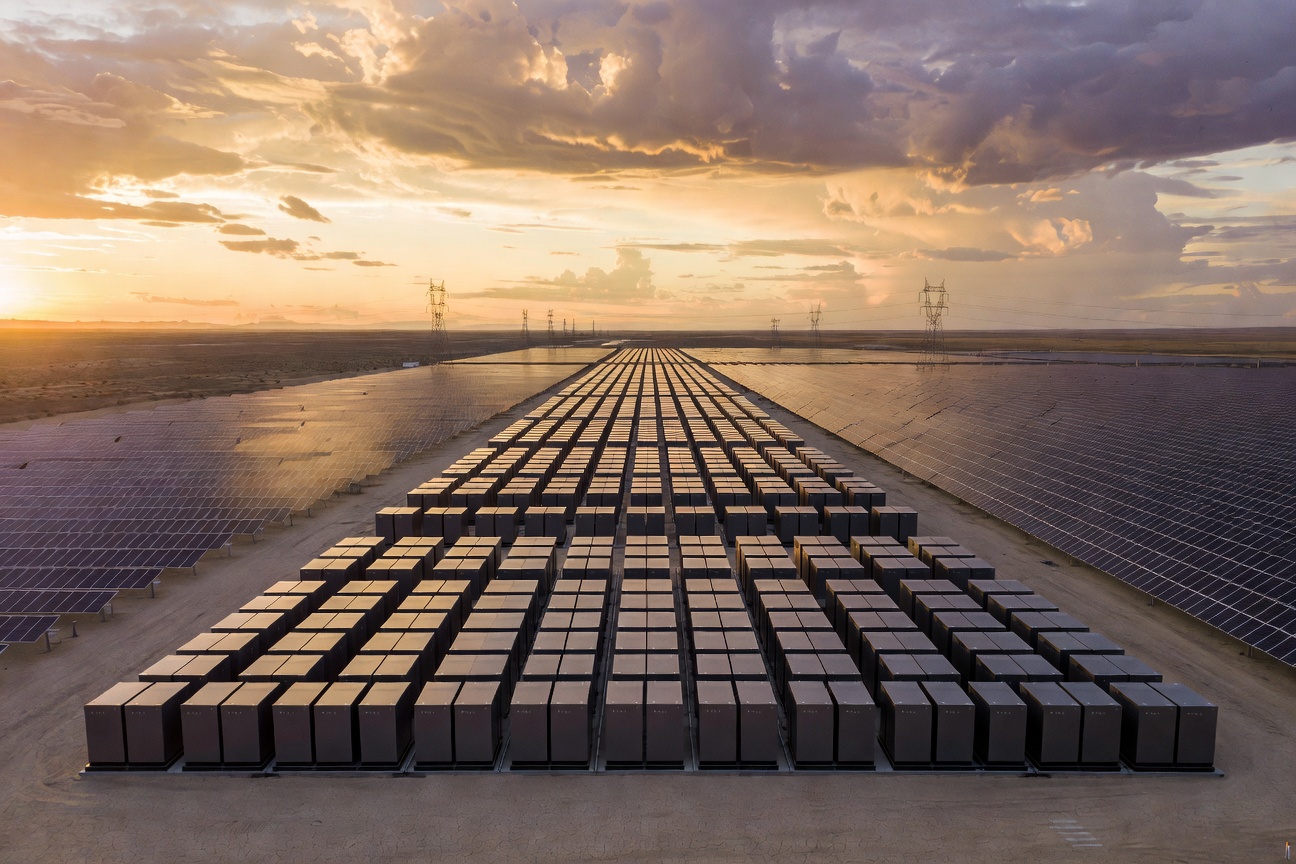
Picture a control room in the Mojave Desert, sometime in the next eighteen months. A lone engineer sips cold coffee and watches a wall of screens that flicker with real-time data streams: cloud-cover forecasts, spot-market electricity prices, transformer temperatures, and the rolling charge states of hundreds of Tesla Megapacks stacked like enormous graphite bricks across an adjacent lot. She does not touch a single dial. The system is already three moves ahead, pre-charging the batteries before a morning demand spike, selling surplus electrons into the wholesale market at the precise millisecond prices peak, and quietly negotiating with forty thousand residential solar inverters scattered across the Los Angeles basin to shed a whisper of load here, contribute a pulse of stored power there. The grid, in every meaningful sense, is thinking for itself.
This is not science fiction rendered in optimistic pastels. It is the operational direction of projects already commissioned, already earning revenue, already rewriting textbook assumptions about how electricity systems must work.
The Megapack as Industrial Muscle
Tesla's Megapack has quietly graduated from curiosity to cornerstone. A single unit stores up to 3.9 megawatt-hours of energy and can discharge at 1.9 megawatts, but the real power of the product is modularity. Utilities are no longer buying one or two units as pilots; they are ordering them by the hundreds, assembling what the industry now calls grid-scale battery energy storage systems, or BESS, that collectively rival the output of mid-sized gas peaker plants. The Lathrop Megafactory in California, Tesla's dedicated Megapack production facility, was engineered specifically to keep pace with this appetite, targeting an annual production rate of 40 gigawatt-hours, enough to power millions of homes for an hour or, more practically, to buffer the volatility of entire regional grids for meaningful stretches of time.
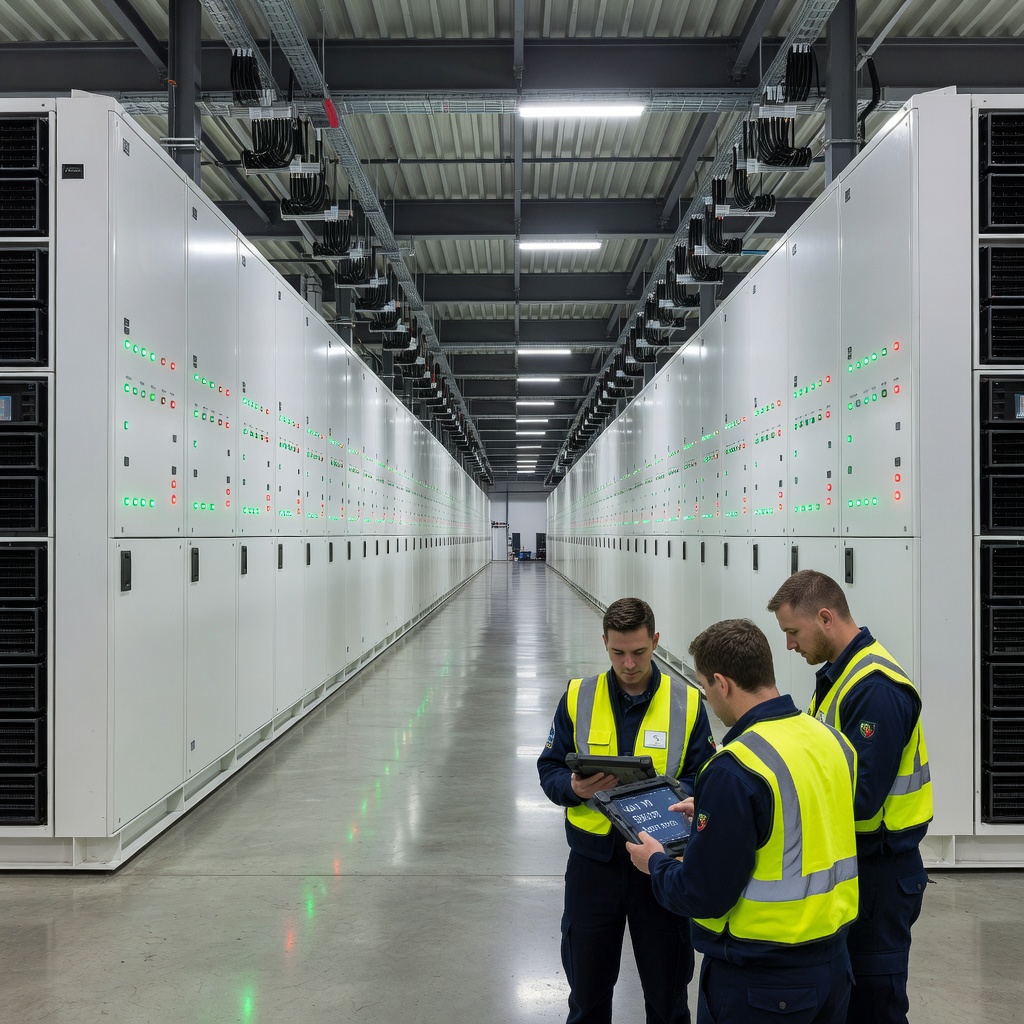
What separates Megapacks from earlier grid-storage experiments is integration depth. Each unit ships with Tesla's proprietary energy management software baked in, capable of communicating latency figures measured in milliseconds with grid operators. That speed matters enormously. Frequency regulation, the invisible task of keeping alternating current cycling at exactly 60 hertz in North America, used to be the exclusive domain of spinning turbines whose mechanical inertia absorbed shocks automatically. Batteries can respond faster than any turbine, and when thousands of Megapacks act in concert, they replicate and then exceed that inertial buffer with pure software precision.
Solar's Uncomfortable Truth and the Storage Solution
For all its triumphant cost declines, solar energy has always carried an embarrassing secret: it generates power precisely when many grids need it least and goes dark exactly when demand peaks. California's infamous duck curve, that graph shaped like a waterfowl's silhouette showing midday overgeneration followed by a steep evening ramp, became the symbol of solar's adolescent growing pains. Storage was always the theoretical answer. What is changing now is that storage has become the economic answer as well.
The levelized cost of battery storage has dropped roughly 90 percent over the past decade, tracking a trajectory that mirrors solar's own stunning price collapse in the 2010s. Pairing solar farms directly with co-located Megapack installations, a configuration the industry labels solar-plus-storage, transforms a weather-dependent generator into something closer to a dispatchable power plant. The solar array charges the batteries during daylight hours; the batteries discharge during the evening ramp or during a summer heat emergency. Developers have discovered that this combination can undercut the operating cost of natural gas peakers in an expanding number of markets, and regulators are noticing.
In Australia, a country that has become an unlikely global laboratory for grid innovation, the Hornsdale Power Reserve proved the concept at scale years ago. That installation, also built on Tesla technology, famously responded to a grid emergency faster than any fossil-fuel plant in the network. It was the proof-of-concept that cracked open procurement processes around the world and gave utilities the political cover to sign larger and larger contracts.
Virtual Power Plants: The Distributed Intelligence Layer
If Megapacks are the muscle of the new grid, virtual power plants are the nervous system. A virtual power plant, or VPP, aggregates thousands of distributed energy resources, residential solar panels, home batteries, smart thermostats, electric vehicle chargers, and even commercial refrigeration systems, into a single coordinated entity that can be dispatched like a conventional generator. The physics of electrons flowing through wires has not changed. What has changed is the software layer that treats a suburb as a single controllable asset.
Tesla's own VPP program, initially launched in South Australia and later expanded to Texas and parts of California, enrolls Powerwall owners into a network that can collectively export or absorb electricity on command. Participants earn credits on their utility bills; the grid operator gets a flexible resource that costs a fraction of building new transmission lines or gas capacity. The math is compelling on every side of the ledger.
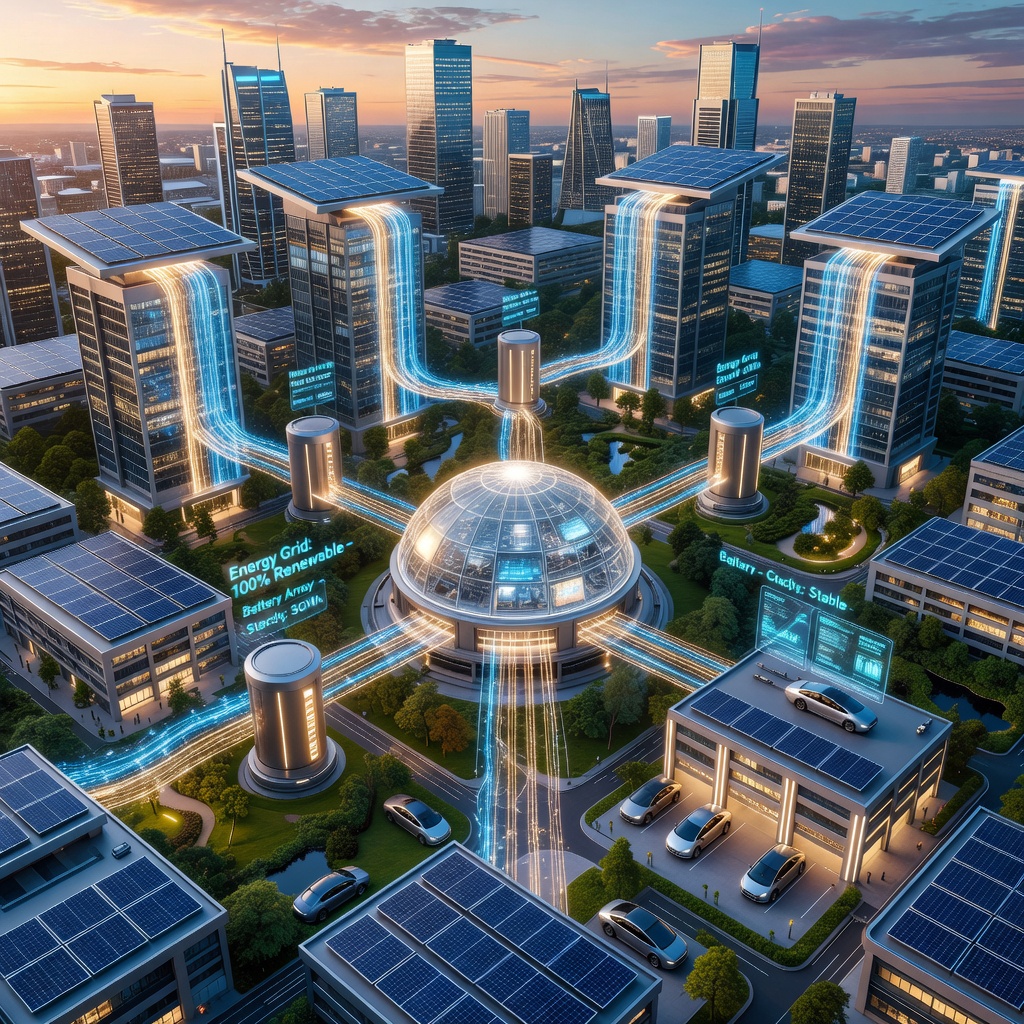
What is emerging now is a second generation of VPP architecture that goes considerably further. Instead of simply aggregating existing assets, developers are designing entire communities, sometimes called energy campuses, with VPP participation baked in from the permitting stage. Solar canopies over parking lots feed shared battery banks. New apartment buildings are wired so that every tenant's EV charger can be modulated in real time. The individual household never notices a flicker, but the grid sees a resource that can swing by tens of megawatts in seconds.
The AI Conductor Nobody Sees
Coordinating all of this, the megawatt-scale batteries, the gigawatts of solar, and the millions of distributed endpoints, demands a level of computational sophistication that was simply unavailable to grid planners a decade ago. Modern energy management platforms now ingest satellite cloud-cover imagery, weather-model outputs, real-time wholesale price signals, and historical demand patterns simultaneously, running optimization algorithms that would have required a supercomputer in the 1990s on commodity cloud hardware today.
Tesla's Autobidder platform, which manages automated energy trading for Megapack installations, operates exactly in this space. It evaluates market conditions and battery state-of-charge continuously, executing buy and sell decisions faster than any human trader. Early deployments have demonstrated that AI-driven dispatch can meaningfully outperform manual or rule-based approaches in revenue generation, which in turn improves the economics of building storage in the first place. This is a self-reinforcing loop: better software economics fund more hardware deployment, which creates more data to train better software.
What the Numbers Actually Say
Global grid-scale battery storage capacity crossed 100 gigawatt-hours of installed energy in 2024, roughly doubling from just two years prior. Analysts tracking the sector project that figure to reach somewhere between 500 and 700 gigawatt-hours by the end of the decade, a range that represents a fundamental shift in grid architecture rather than a marginal supplement to it. The United States alone has several hundred gigawatt-hours of storage in active development pipelines, with interconnection queues now carrying more battery storage capacity than natural gas.
Texas, despite its reputation as fossil-fuel country, has become one of the fastest-growing battery storage markets in the world, driven partly by the ERCOT grid's isolation from neighboring systems and its vulnerability to weather extremes. After the catastrophic 2021 winter storm exposed the fragility of thermal generation in cold conditions, grid operators and developers alike accelerated storage procurement as a hedge. Megapacks are now a visible presence in the Texas landscape, standing sentinel beside wind and solar installations across the Panhandle and West Texas desert.
The Horizon Problem
The trajectory is not without friction. Interconnection queues remain clogged, permitting timelines stretch years in many jurisdictions, and the supply of battery-grade lithium, while improving, still demands careful attention as deployment scales toward terawatt-hour territory. Transmission infrastructure, the actual high-voltage wires carrying electrons between regions, has been chronically underinvested for decades and represents a genuine bottleneck that software alone cannot route around.
There are also questions about the long-duration gap: Megapacks and their competitors excel at four-hour or even eight-hour discharge windows, but seasonal storage, the ability to bank summer solar surplus for winter demand, requires chemistry or physics that the lithium-ion paradigm cannot economically provide at scale. Iron-air batteries, compressed air systems, green hydrogen, and pumped hydro all compete for that longer-duration role, with no clear winner yet declared.
But measured against where grid storage stood even five years ago, the progress is staggering. The engineer in that Mojave control room, calmly watching the AI optimize a system of breathtaking complexity, represents something genuinely new in the history of electricity. The grid is no longer purely a delivery mechanism. It is becoming an intelligence, one that learns, anticipates, and adapts. Elon Musk has described energy storage as potentially Tesla's largest business, larger even than vehicles. Looking at the installation rates, the software sophistication, and the structural need baked into every grid on earth, that prediction is beginning to look less like ambition and more like arithmetic.