
Voices From the Edge: The Real People Whose Lives Hinge on Elon Musk's Boldest Bets
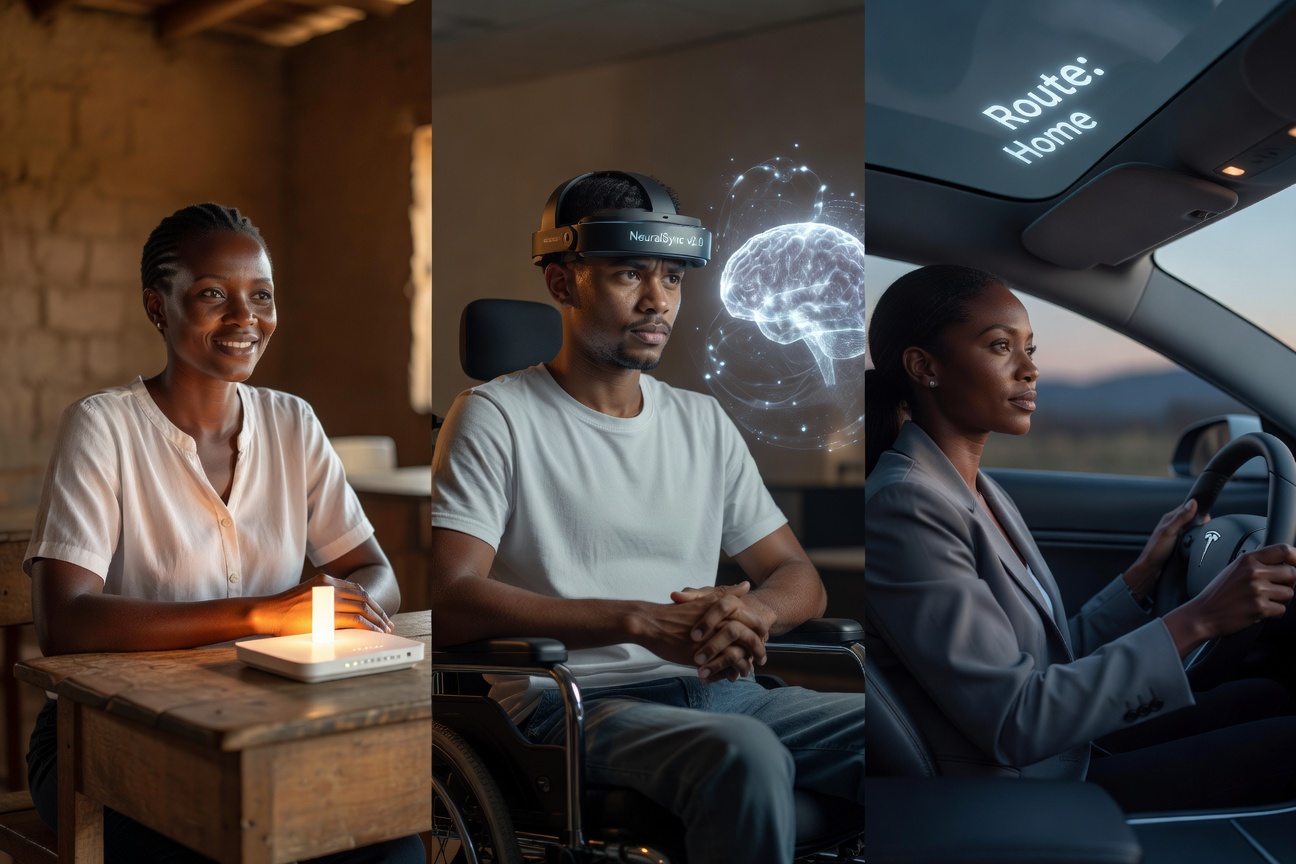
Somewhere in rural Zambia, a schoolteacher named Chanda Mutale is grading papers at 10 PM under proper electric light for the first time in her career, her classroom router blinking a quiet blue thanks to a Starlink dish bolted to the corrugated roof. In a rehabilitation clinic outside Columbus, Ohio, a 34-year-old Army veteran named Marcus Elroy is learning to move a cursor across a screen using only his thoughts, a chip the size of a coin embedded beneath his skull. And in a suburb of Phoenix, a single mother named Denise Arroyo is no longer terrified of her morning commute because her Tesla's collision avoidance system has already, on three documented occasions, stopped the car before she could react. These are not case studies manufactured by a PR department. They are the understory of the Elon Musk story — the human soil in which his technological experiments are either flowering or failing.
The Connectivity Revolution Hitting Where It Hurts Most
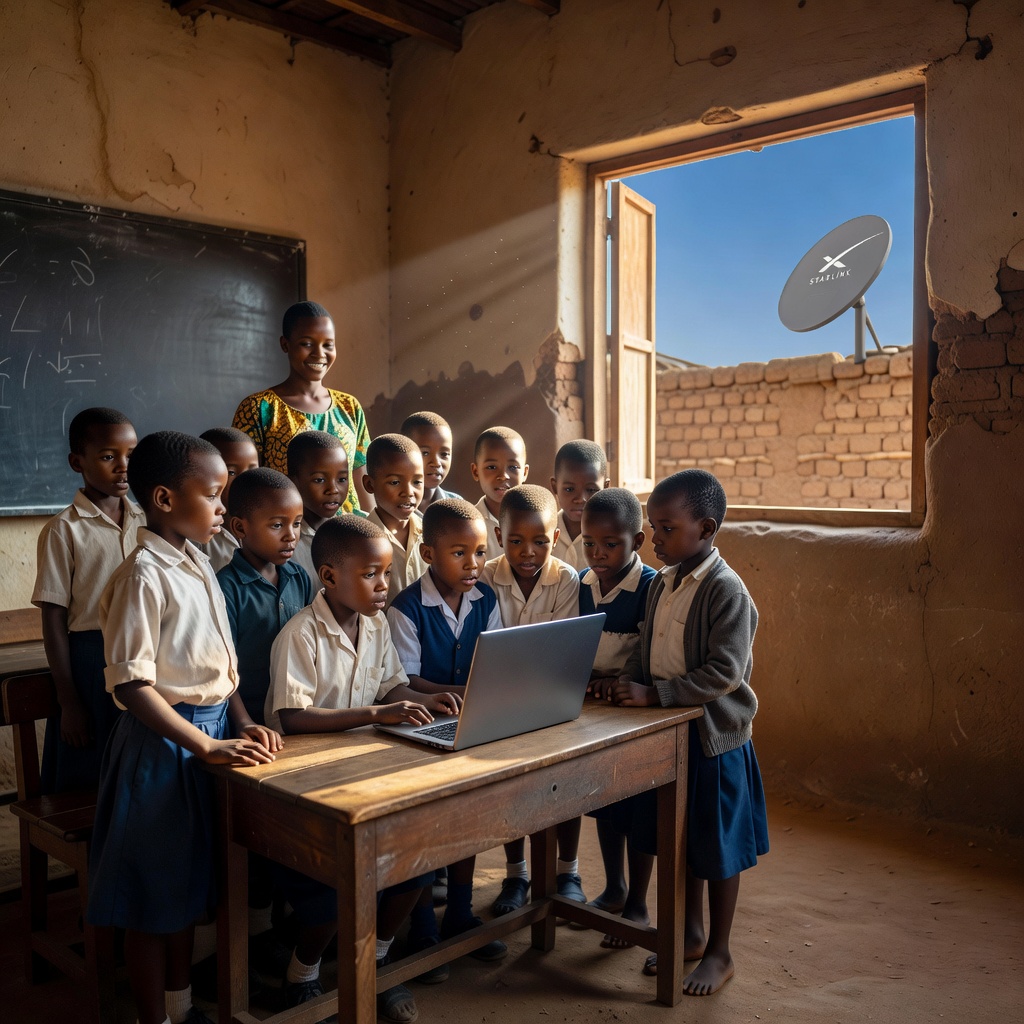
Starlink, SpaceX's low-Earth-orbit internet constellation, now serves more than four million customers across over 100 countries. The aggregate user statistics are impressive enough on paper, but the lived testimony is where the real weight resides. In interviews conducted by humanitarian organizations across sub-Saharan Africa and the Amazon basin, a recurring phrase surfaces: "It changed what was possible." Remote medical clinics are uploading patient data to urban hospitals in real time. Indigenous language teachers in northern Canada are video-calling elders in distant settlements. Fishing cooperatives off the coast of Indonesia are receiving storm warnings twelve hours earlier than before.
Musk himself, speaking at a satellite industry forum earlier this year, framed Starlink not primarily as a consumer broadband product but as an infrastructure correction — an attempt to patch the "enormous gap" between connected and unconnected humanity that fiber-optic economics could never close. "The geography of poverty and the geography of bad internet access overlap almost perfectly," he observed. "That's not a coincidence." Critics have noted the irony: a billionaire deploying capital-intensive orbital hardware to solve a problem that better public policy might address. But for Chanda Mutale, the philosophical debate is considerably less urgent than the lesson plan due Friday.
Neuralink and the Patients Who Volunteered to Be First
Few developments in Musk's portfolio carry the existential weight of Neuralink. The brain-computer interface company completed its first human implantation in January 2024, inserting its N1 chip into Noland Arbaugh, a 29-year-old who had been paralyzed from the shoulders down following a diving accident. Within weeks, Arbaugh was playing chess and video games via neural signal alone, a capability that had previously existed only in science fiction. The footage of him navigating a cursor with his mind, grinning with the particular delight of someone who had given up expecting miracles, circulated widely and generated the kind of visceral empathy that no product demonstration could manufacture.
Musk has described Neuralink's near-term mission with characteristic bluntness: restore mobility and communication to people with devastating neurological conditions. He has spoken about a future in which the device could return speech to ALS patients who have lost it, restore vision to those blinded by cortical damage, and eventually allow seamless human-AI cognitive collaboration. "We want to make sure that even in a world with very powerful AI, humans can still be meaningful participants," he told a neuroscience conference audience, a framing that simultaneously positions Neuralink as a therapeutic device and a hedge against human obsolescence.
The community of potential Neuralink recipients is not an abstraction. There are approximately 5.4 million people living with paralysis in the United States alone, plus millions more affected by locked-in syndrome, ALS, and severe stroke. For families living with these conditions, the prospect of a chip-based communication interface is not a transhumanist fantasy — it is a practical question about whether their loved one will be able to say "I love you" again. The ethical landscape is genuinely complex: questions about data privacy, the long-term biocompatibility of implanted electronics, and equitable access remain unresolved. But for Marcus Elroy, whose trial enrollment was preceded by years of occupational therapy, speech-generating devices, and quiet grief, the experiment is worth every known risk.
Tesla's Safety Culture and the People Who Rely On It
The Autopilot and Full Self-Driving debate has consumed enormous journalistic bandwidth, most of it organized around accident statistics, regulatory battles, and Musk's famously optimistic timelines. Less examined is what Tesla's active safety features — not FSD, but the more prosaic Automatic Emergency Braking, Lane Departure Warning, and Blind Spot Monitoring systems — have already done for ordinary drivers navigating ordinary roads.
Insurance industry actuarial data and independent safety researchers have consistently found that Tesla vehicles have among the lowest occupant fatality rates in their size categories. The National Highway Traffic Safety Administration's own figures suggest active safety technology broadly prevents tens of thousands of collisions annually. For Denise Arroyo, a home health aide whose daily route crosses six busy Phoenix intersections, this is not a statistic. It is the difference between picking up her daughter from school and not. She bought a used Model 3 eighteen months ago after seeing an AEB demonstration online. She has never had to think analytically about sensor fusion or computer vision. She has only experienced the car stopping, cleanly, in time.
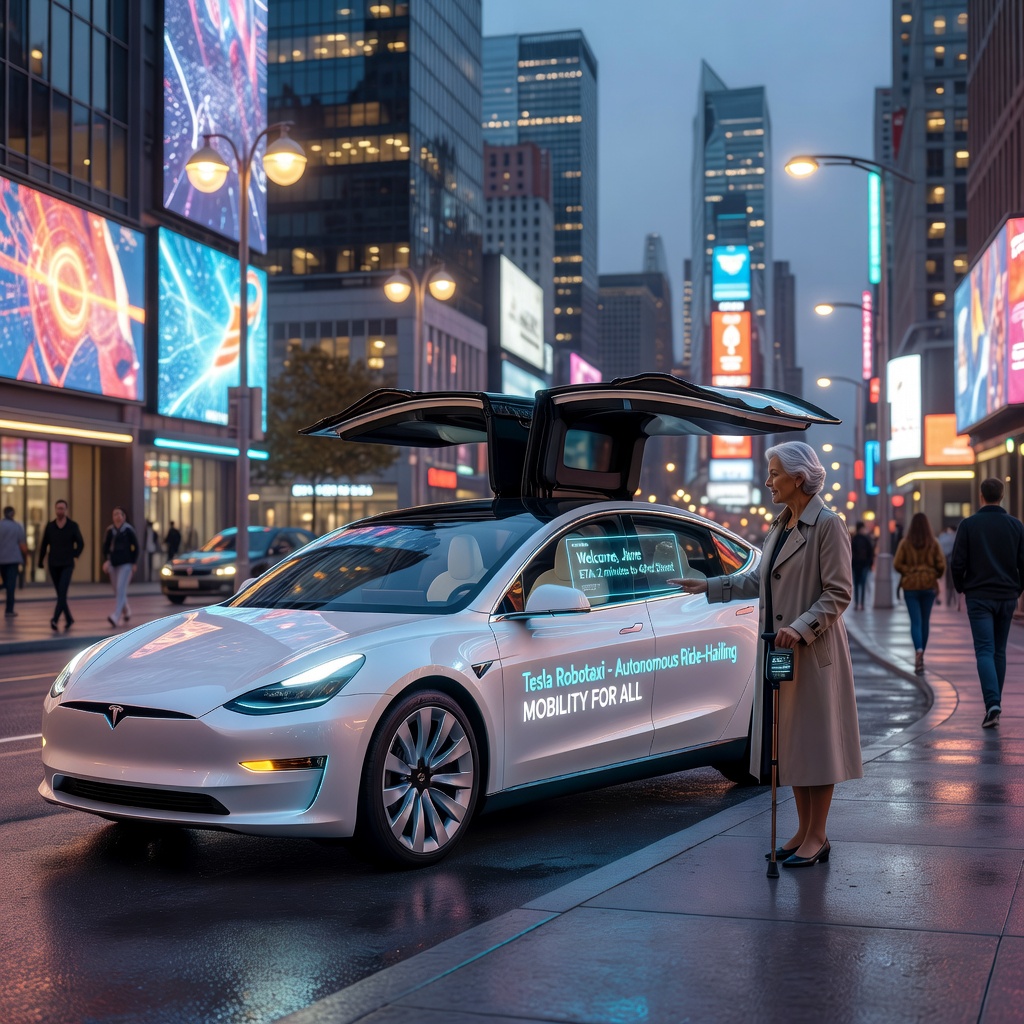
Musk's vision for Tesla has increasingly centered on the robotaxi concept: a fleet of autonomous vehicles that owners can monetize when not in use, theoretically democratizing transportation income. He has predicted, repeatedly and with characteristic certainty, that fully autonomous Tesla robotaxis will operate in specific cities within the year — timelines that have historically stretched. But even with deadline skepticism priced in, the underlying ambition speaks to a genuine human need: affordable, accessible, on-demand transportation for elderly people who can no longer drive, for people with disabilities excluded from conventional vehicle ownership, for low-income households spending disproportionate income on car payments and fuel.
The People Musk Doesn't Talk About
Honest human-centered journalism demands acknowledging the communities for whom Musk's enterprises have brought friction, displacement, or unresolved concern. Astronomers and astrophotographers have documented real interference from Starlink's satellite trails, particularly affecting long-exposure sky surveys crucial to detecting near-Earth asteroids. Dark sky communities in the American Southwest and in Chile's Atacama Desert have organized to document the impact. SpaceX has made genuine engineering concessions, including sunshade experiments and orbital altitude adjustments, but the tension between orbital commerce and terrestrial science remains active.
Workers at Tesla's Gigafactories have filed complaints with labor regulators about injury rates and workplace conditions in several documented instances. And the communities near SpaceX's Starbase facility in South Texas have navigated an evolving relationship with a company that brought economic activity and infrastructure investment alongside noise, restricted access, and rocket debris incidents. Musk's tendency to dismiss concern with breezy futurism can land differently depending on whether you are a venture capitalist or a beekeeper in Boca Chica.
A Shared Future, Unevenly Distributed
The philosopher William Gibson's observation that the future is already here, just not evenly distributed, has never felt more literally applicable. Musk's technologies are not arriving uniformly. They are arriving first for those who can afford early adoption, who live in regulatory environments tolerant of experimentation, who have the health profiles and clinical access to join trials, who occupy the geographic zones of satellite coverage with reliable power for a dish. The gap between who benefits first and who benefits eventually is a real gap, measured in years and in lives.
What Musk himself says about this, in his more reflective moments, is that the trajectory matters more than the starting point. He invokes the smartphone: in 1997 a mobile phone cost thousands and served a tiny elite; by 2015 a billion people in developing nations owned one, and it had become a tool of microfinance, medical diagnosis, and political organization. The analogy is imperfect but not dishonest. The question is whether the institutions, incentives, and timelines surrounding his current ventures will allow a similar democratization, and whether the communities bearing the early costs will still be present to share the eventual benefits.
For now, the schoolteacher is grading papers under electric light. The veteran is moving a cursor with his mind. The mother is driving home safely. Whatever one believes about Elon Musk — his motives, his politics, his management style, his relationship with truth — their realities are real. And in the end, those realities are the only honest measure of what any of this is actually worth.
George Russell
Tech journalist covering Elon Musk’s companies for over 10 years.