Sun, Silicon, and Software: The Invisible Architecture Replacing the Power Grid You Never Knew Was Broken
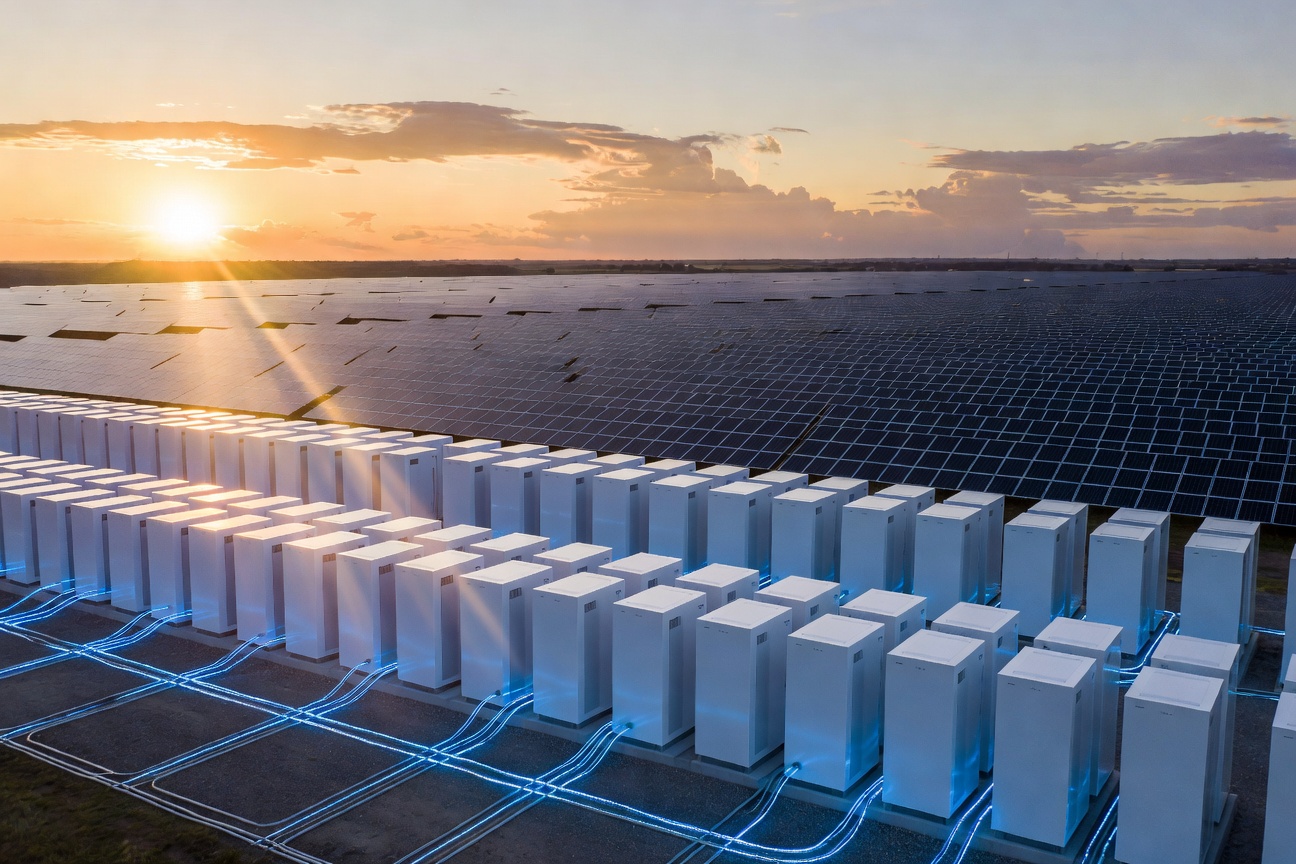
Seventy-two seconds. That is precisely how long a Tesla Megapack cluster in Monterey County, California, took to respond to a sudden frequency drop on the Western Interconnection grid last spring — a grid event that, under conventional fossil-fuel dispatch protocols, would have taken upward of ten minutes to stabilize. The speed difference is not incremental. It is categorical. And according to Dr. Audrey Mehnert, a senior grid architect at the National Renewable Energy Laboratory, it signals something far more profound than a hardware upgrade. "We are not optimizing the old grid," she told a gathering of energy engineers in Denver earlier this year. "We are watching a parallel system grow inside it, like new bone forming around a fracture."
The Fracture Nobody Advertised
The electrical grid most developed nations rely upon was not designed for the twenty-first century. It was designed for the nineteenth, then patched continuously through the twentieth. Centralized generation — coal, gas, nuclear — flows in one direction: from massive, geographically fixed plants down through transmission lines to passive consumers. That architecture made sense when electricity was expensive to move and impossible to store affordably. Both of those constraints have now dissolved, with a speed that has caught even optimistic analysts off guard.
Solar photovoltaic costs have plummeted more than 89 percent over the past decade. Lithium iron phosphate battery cells, the chemistry underpinning Tesla's Megapack platform, have followed a similar downward trajectory. The combination produces a genuinely disruptive arithmetic: distributed generation plus local storage plus networked software now rivals, and in specific scenarios bests, the economics of building new gas peaker plants. Peaker plants, for context, are the most expensive and dirtiest units on any grid, switched on only during demand spikes and sitting idle the rest of the year. They are, in the bluntest terms, a $200 billion global insurance policy against a problem that storage is beginning to solve for less.
Megapacks: The Quiet Workhorses
Tesla's Megapack has become something of a benchmark in utility-scale storage, though the company rarely broadcasts individual project details with the fanfare reserved for its vehicle launches. Each unit contains roughly 3.9 megawatt-hours of usable capacity, ships as a pre-assembled module, and connects to the grid with dramatically fewer labor hours than earlier battery installations required. The Lathrop Megafactory in California now produces enough Megapack units to deploy approximately 10,000 megawatt-hours of storage capacity annually, a figure that represents more grid-scale battery capacity than the entire world installed as recently as 2016.
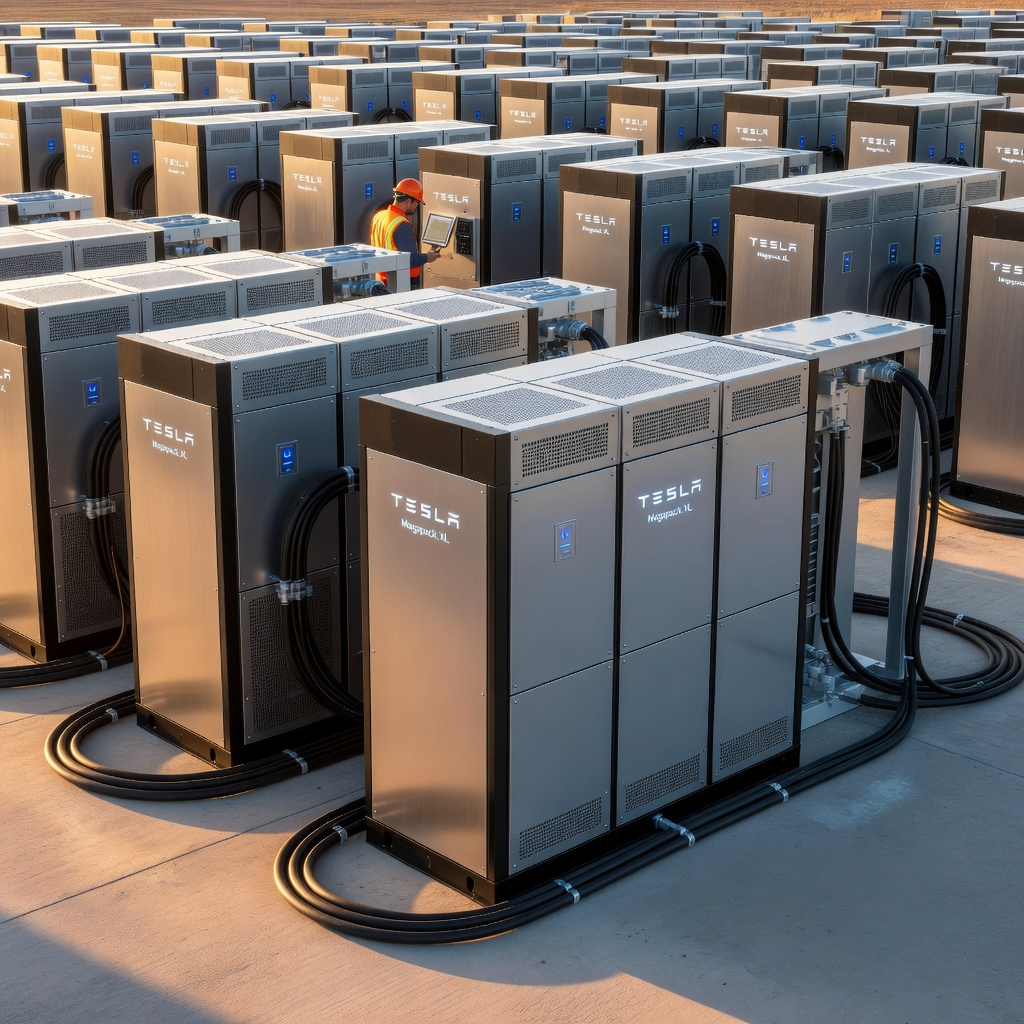
Projects deploying these systems have multiplied across every inhabited continent. A 1.4-gigawatt-hour installation in Queensland, Australia serves as a stabilizing anchor for a state grid that obtains more than 60 percent of its energy from renewables on many days. Projects in Chile, Texas, the UK, and Taiwan are following similar blueprints. The pattern is consistent: pair substantial solar generation with large-scale storage, integrate software that can bid energy into wholesale markets, and the financial case closes without subsidy dependency in a growing number of jurisdictions.
What makes Megapacks particularly interesting from a systems perspective is not the hardware alone — competitors including BYD, Fluence, and CATL offer comparable chemistry — but the software layer Tesla wraps around them. Autobidder, Tesla's real-time energy trading platform, allows Megapack installations to participate autonomously in electricity markets, shifting charge and discharge cycles to capture price arbitrage opportunities while simultaneously providing grid services like frequency regulation and voltage support. The machine, in effect, learns the rhythms of the grid it inhabits.
Solar's Underrated Second Act
Rooftop solar has long been framed as a feel-good consumer choice, a way for environmentally conscious homeowners to trim their utility bills and display their values on their shingles. That framing has consistently undersold the aggregate power of distributed generation. In California alone, rooftop and small commercial solar installations collectively represent over 14 gigawatts of generation capacity. On a mild spring afternoon, that fleet produces more electricity than several nuclear plants combined. The problem — and it is a real, grid-destabilizing problem — is that all of it arrives at roughly the same time, floods the distribution system, and then vanishes as the sun sets, creating the infamous "duck curve" of demand that utilities have struggled to manage for years.
Storage closes that curve. And the economics of pairing residential solar with home batteries, particularly as programs aggregate those batteries into virtual power plants, have reached an inflection point that deserves more mainstream attention than it currently receives. Virtual power plants, or VPPs, are perhaps the most conceptually radical development in this space, and the least visually dramatic, which may explain the relative media indifference.
Virtual Power Plants: The Grid's Invisible Muscle
A virtual power plant has no smokestack. It has no cooling tower, no turbine hall, no security fence around a central facility. It is, by definition, a coordinated network of distributed assets — home batteries, commercial storage systems, controllable loads, EV chargers — that behave, from the grid's perspective, as though they were a single dispatchable generator. The coordination happens in software, in real time, across thousands of endpoints simultaneously.
Tesla's VPP program in California enrolled more than 50,000 Powerwall-equipped homes by the end of last year. During a heat emergency in September, those homes collectively discharged stored solar energy back into the grid during the critical evening hours, contributing tens of megawatts at precisely the moment they were most needed. Participants were compensated. The grid avoided rolling blackouts. No new infrastructure was built. The episode illustrated, in concrete terms, what energy theorists had been modeling for years: that the demand side of the grid, historically passive and invisible, could become an active and responsive resource.
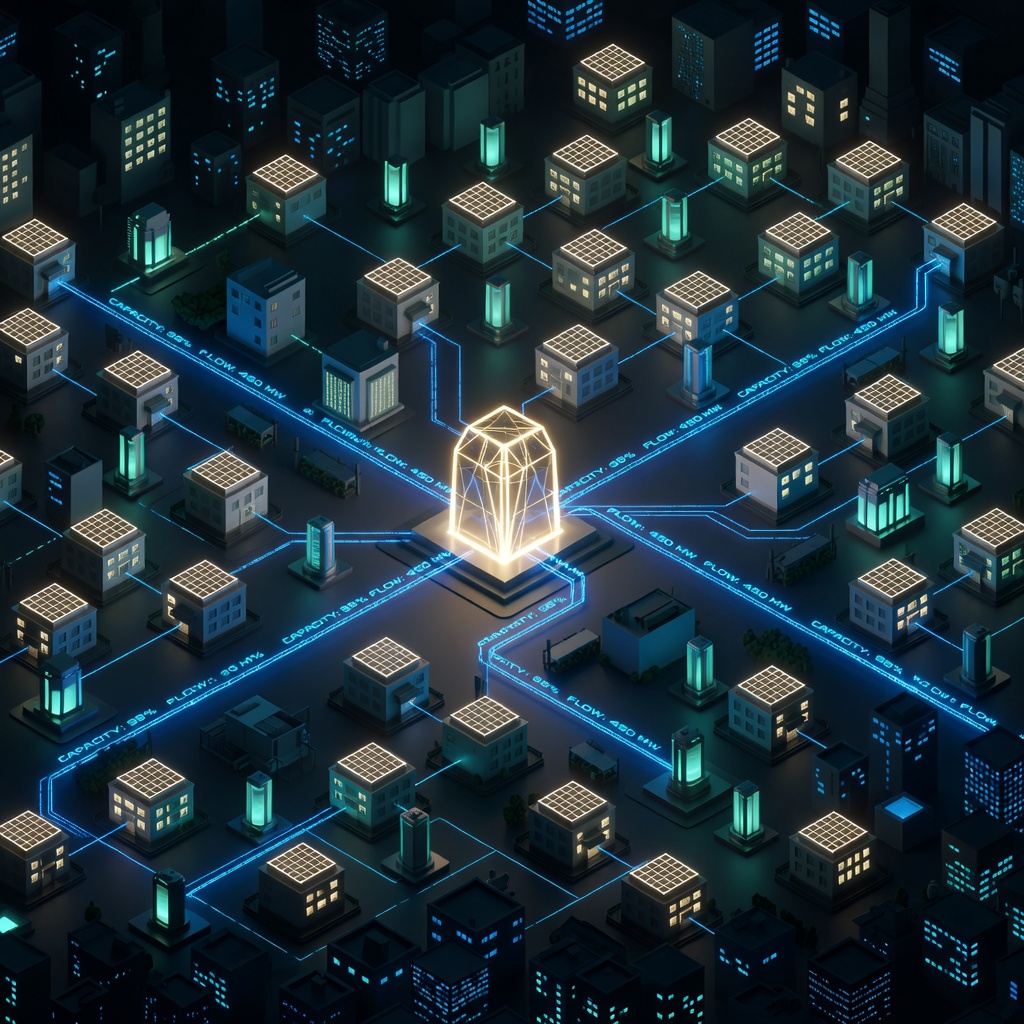
South Australia's VPP, operated through a partnership involving Tesla and the state government, has gone further still. The network now encompasses thousands of households and has demonstrated dispatchable capacity that explicitly replaces what gas peaker plants previously provided. Regulators in that state now count VPP resources in their reliability planning with the same confidence they once reserved for thermal generation. That shift in regulatory posture may ultimately matter as much as any technical milestone.
The Compounding Logic of the New Grid
What makes the current trajectory particularly compelling is the self-reinforcing nature of the transition. More solar deployment increases the value of storage, because excess midday generation needs somewhere to go. More storage deployment increases the value of solar, because curtailment risk decreases and the generation asset becomes fully dispatchable. More VPP enrollment increases grid reliability, which builds regulatory confidence, which opens additional revenue streams for storage assets, which improves project economics, which accelerates deployment. The feedback loops run in one direction.
Elon Musk has described energy storage, not solar panels or electric vehicles, as the most critical product Tesla makes for the long-term health of the energy transition. The Megapack business generated approximately $3 billion in revenue in 2024, growing faster on a percentage basis than the vehicle division. Analysts at several investment banks now model the energy division as the primary driver of Tesla's long-term enterprise value, a framing that would have seemed eccentric as recently as three years ago.
What the Wires Cannot Tell You
The most important thing about the grid transformation underway is precisely how little of it is visible to most people. Substations still look like substations. Transmission lines still look like transmission lines. The revolution is happening in firmware updates delivered overnight, in market bids executed in milliseconds, in policy filings at obscure regulatory commissions, and in the quiet hum of battery cabinets in industrial parks and suburban garages alike.
The grid you see is a historical artifact. The grid that is actually managing your electricity right now, in real time, is something different: faster, softer, more distributed, and considerably smarter than the infrastructure it is gradually, methodically, and somewhat inexorably replacing. The fracture that Dr. Mehnert described is healing. The new bone is forming. And the power flowing through your home this evening may have been generated on a rooftop three miles away, stored in a battery module the size of a filing cabinet, and dispatched by an algorithm that has never once consulted a human being for permission.
That is not a warning. That is, by almost any measure, genuinely good news.