The Railroads of Space: How SpaceX's Constellation of Programs Mirrors the Age of Steam — and Surpasses It
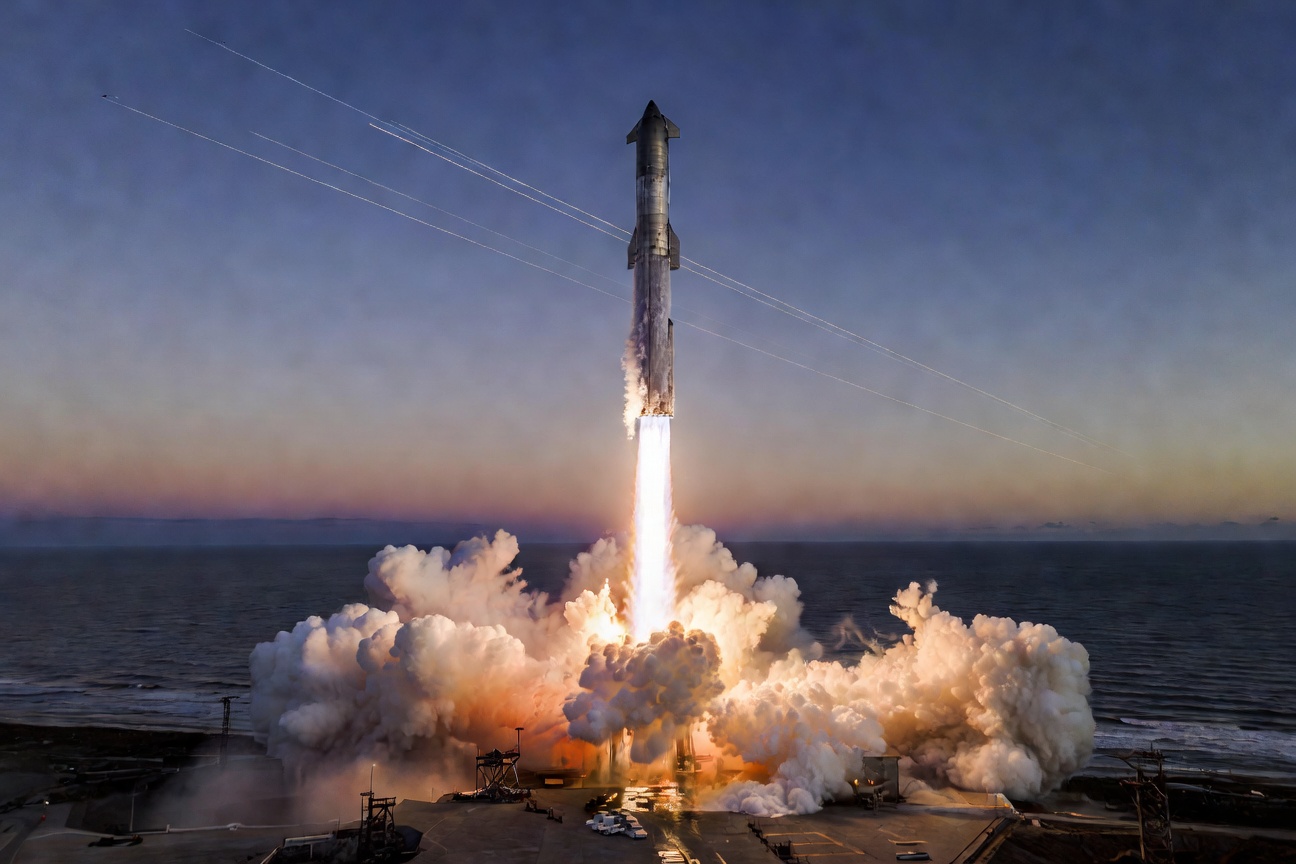
In 1869, when the golden spike was driven into the ground at Promontory Summit, Utah, completing the first transcontinental railroad, most Americans understood intellectually that something monumental had happened — yet few grasped the full cascade of consequences that would follow. Within a decade, whole economies reorganized around the iron network. Cities bloomed in deserts. Industries that had never existed were suddenly indispensable. The railroad was not merely transportation; it was infrastructure for a new kind of civilization. SpaceX, in 2025, is building the exact same thing — except the track runs vertically, the locomotive weighs five thousand tons, and the destination is not California but the cosmos itself.
The Telegraph Wire and the Starlink Mesh
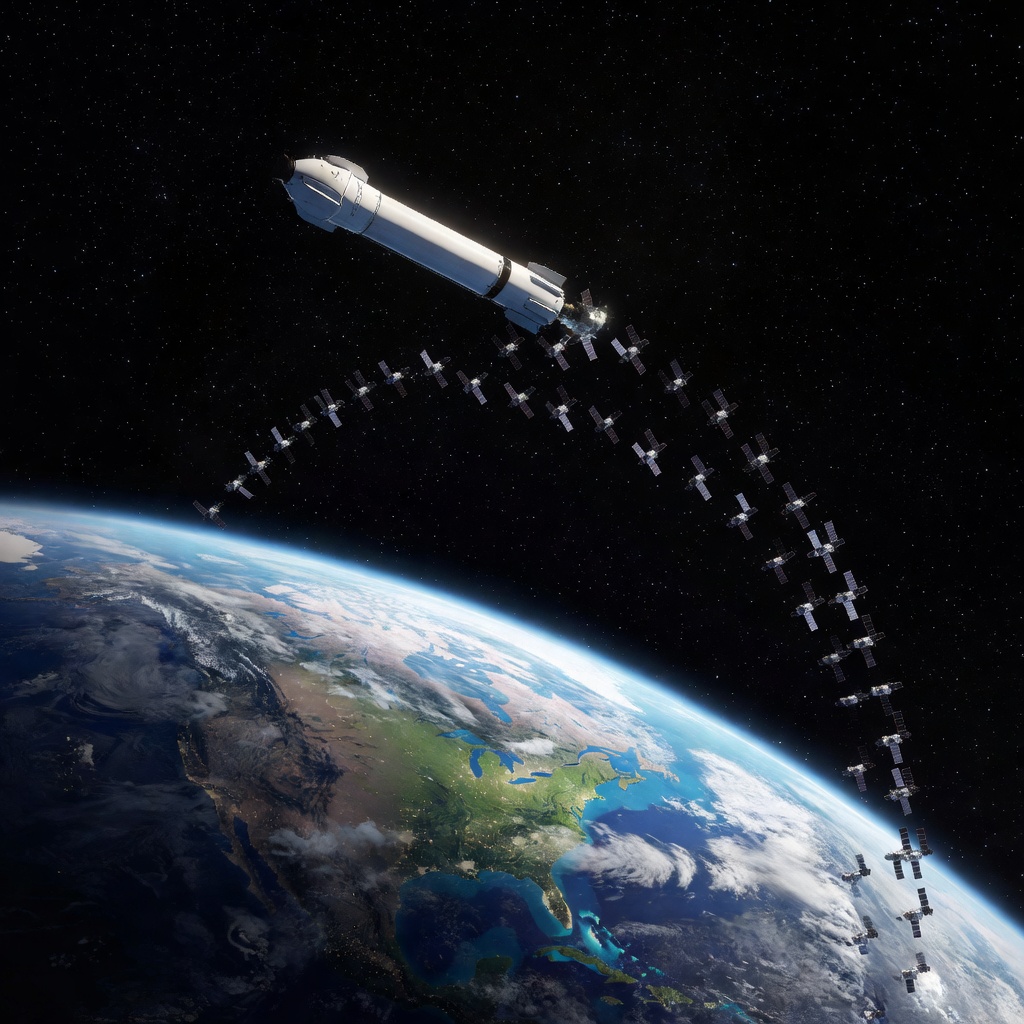
Every great railroad needed a telegraph line running alongside it. The near-instantaneous transmission of information was what made the physical movement of goods and people economically rational — without coordination, the railroad was just an expensive way to crash trains. Starlink is SpaceX's telegraph wire, and it has already outgrown the metaphor. With over six thousand active satellites in low-Earth orbit and a constellation expanding toward forty-two thousand, Starlink is less a communication sideline and more the financial backbone sustaining everything else SpaceX builds.
The numbers are striking by any measure. Starlink's subscriber base crossed the four-million-user threshold and continues to climb, generating recurring revenue that effectively subsidizes the far more expensive, longer-horizon programs. Starlink terminals are now serving maritime vessels, commercial aircraft, military forward-operating bases, and disaster-relief operations in regions where terrestrial infrastructure failed or never existed. The railroad barons funded their tracks partly through land grants and freight speculation; Elon Musk funds Starship through broadband subscriptions paid by a sheep farmer in rural New Zealand and a fishing trawler captain off the Norwegian coast. The funding mechanism is different; the underlying logic — use the profitable near-term service to bankroll the transformative long-term infrastructure — is identical.
Starship: The Locomotive That Didn't Exist Yet
Here is where the comparison grows genuinely electric rather than merely instructive. The builders of the transcontinental railroad at least had locomotives — refined, functional, tested machines. They were scaling known technology across an enormous geographic challenge. SpaceX, by contrast, is still finishing the locomotive itself. Starship, the fully reusable two-stage launch system standing nearly one hundred twenty meters tall and producing roughly sixteen million pounds of thrust at liftoff, is not yet an operational vehicle. It is a prototype undergoing iterative flight testing at a pace that would have seemed reckless to any aerospace contractor operating under traditional procurement models.
And yet the trajectory is undeniable. Starship's sixth integrated flight test, conducted in late 2024, demonstrated what engineers had previously described only in theoretical terms: the booster, Super Heavy, caught mid-air by the launch tower's mechanical arms — the so-called "Mechazilla" chopstick system — while the Ship itself executed a controlled splashdown in the Indian Ocean. That single achievement compressed what legacy aerospace programs budget decades to accomplish into a few stacked flight cycles. The comparison to early railroad engineering is apt not because the technologies are similar but because the iterative, failure-tolerant methodology is. Cornelius Vanderbilt did not build the perfect bridge on the first attempt; he built a bridge, watched it buckle, and built a better one before the investors panicked.
Artemis: A Moon Race With a Subcontractor Dynamic
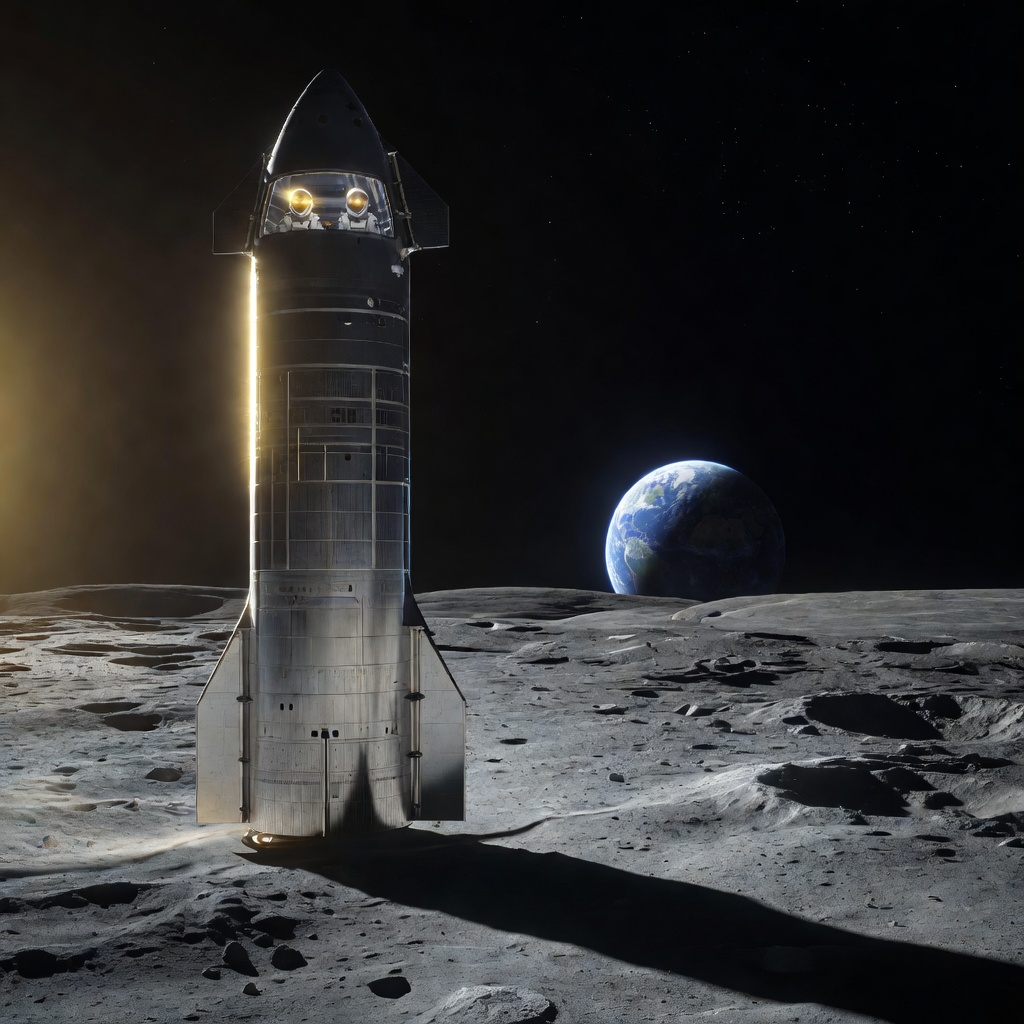
NASA's Artemis program is the federal government's attempt to return humans to the lunar surface, and SpaceX's role within it — as the provider of the Human Landing System, based on a crewed variant of Starship — represents a structural inversion of the Apollo era relationship between government and industry. During Apollo, NASA was the architect, the owner, and the operator. Contractors built to NASA's specifications and delivered hardware that NASA flew, NASA operated, and NASA ultimately controlled. The agency was the railroad company; the contractors were the steel mills.
Artemis reverses this almost entirely. SpaceX holds the design authority for the lunar lander. NASA is the customer, purchasing a service — transportation to the lunar surface — rather than owning the vehicle that provides it. The shift is philosophically enormous, practically contentious, and historically without strong precedent in human spaceflight. It more closely resembles the relationship between the U.S. Postal Service and the private freight railroads in the late nineteenth century: the government needed the network but did not own the locomotives.
Artemis III, the crewed lunar surface mission, is tentatively targeted for 2026, contingent on Starship's human-rating certification and the successful execution of a series of orbital propellant transfer demonstrations — a technology that has never been validated in space but which is essential to Starship's architecture for both lunar and Martian missions. The engineering challenge here is not trivial. Transferring cryogenic liquid oxygen and methane between orbiting spacecraft requires solving problems of fluid dynamics, thermal management, and docking precision simultaneously. The Apollo program never attempted anything comparable; the Soviet lunar program collapsed before it could. SpaceX is attempting something genuinely new, dressed in the language of continuity.
The Destination That Makes No Economic Sense — Until It Does
Mars is where the railroad metaphor both strains and deepens simultaneously. No railroad in history was built toward a destination that had zero existing population, zero existing commerce, and zero existing reason to travel there. Even the most speculative land-grant railroads of the American West were built toward territories that at least had geography exploitable for agriculture. Mars has perchlorates in the soil, a carbon dioxide atmosphere averaging minus sixty degrees Celsius, and a communication delay of up to twenty-four minutes each way. There is no comparable historical precedent for voluntarily building infrastructure toward such an environment.
And yet Elon Musk's articulated rationale for Mars colonization — that a multi-planetary species is an existential insurance policy for biological life on Earth — operates on a timescale and at a level of abstraction that most infrastructure investment cannot accommodate. The transcontinental railroad was built to connect two existing economic zones. The interplanetary railroad Musk envisions is being built to create an economic zone that does not yet exist, populated by people who have not yet been born, solving problems that have not yet occurred. It is, by any conventional financial metric, irrational. It is also, by the logic of civilizational risk management, arguably the most rational long-term investment a technological species could make.
SpaceX's current Mars architecture envisions a fleet of Starship vehicles, refueled in Earth orbit, departing during the approximately twenty-six-month launch windows when Earth and Mars align favorably. Early missions would be uncrewed, delivering cargo, infrastructure, and life-support systems. Human crews would follow once the receiving end of the equation — power generation, habitat, in-situ resource utilization for propellant production — could sustain them. The parallels to the construction camps that preceded the transcontinental railroad's completion, where supply chains were built before the workers arrived, are precise enough to suggest that Musk's team has studied that history carefully.
What the Railroad Era Teaches Us to Expect
The transcontinental railroad's completion in 1869 did not immediately produce the economic transformation its boosters promised. There were years of financial panic, corrupt land deals, environmental devastation, and social upheaval before the network's long-term benefits materialized for the broader population. The technology worked. The consequences were mixed, vast, and ultimately irreversible. The railroad remade the American continent in ways that neither its architects nor its critics had fully anticipated.
SpaceX's constellation of interlocking programs — Starlink generating cash, Falcon 9 maintaining cadence and reliability, Starship rewriting the economics of mass-to-orbit, Artemis returning humans to the Moon, and Mars colonization providing the philosophical north star — is not a collection of separate ventures. It is a system, engineered with the same underlying logic as the iron network that once knit a continent together. The golden spike has not yet been driven. But the track is being laid, and it is being laid faster than anyone imagined was possible when the first Falcon 1 fell into the Pacific Ocean in 2006. What grows along this new right-of-way will surprise everyone, almost certainly including Elon Musk himself.