From Apollo's Ashes to Starship's Fire: How SpaceX Is Rewriting the Oldest Playbook in Human History
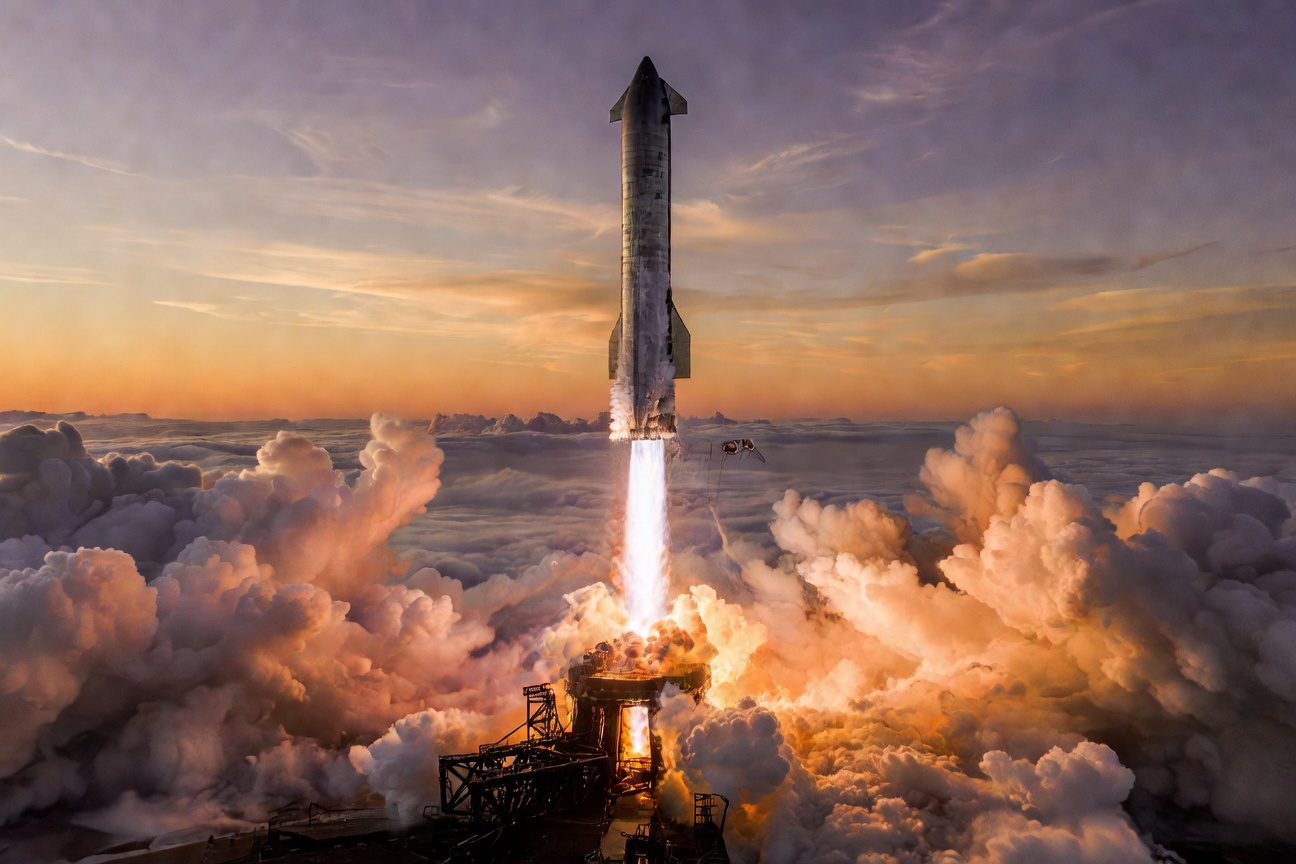
When the Saturn V first shook the Florida marshlands in November 1967, the shockwave cracked windows two miles away and briefly convinced a NASA engineer that the launch had failed catastrophically. It hadn't. It was simply the loudest machine humanity had ever ignited. More than half a century later, SpaceX's Starship surpassed that benchmark on its third integrated flight test, generating approximately 16.7 million pounds of thrust, making Saturn V look, by comparison, like a particularly enthusiastic bottle rocket. The numbers are staggering. But numbers alone have never been the real story of spaceflight. The real story is always about the civilization doing the reaching, and what it reveals about itself in the attempt.
The Architecture of Ambition: Then and Now
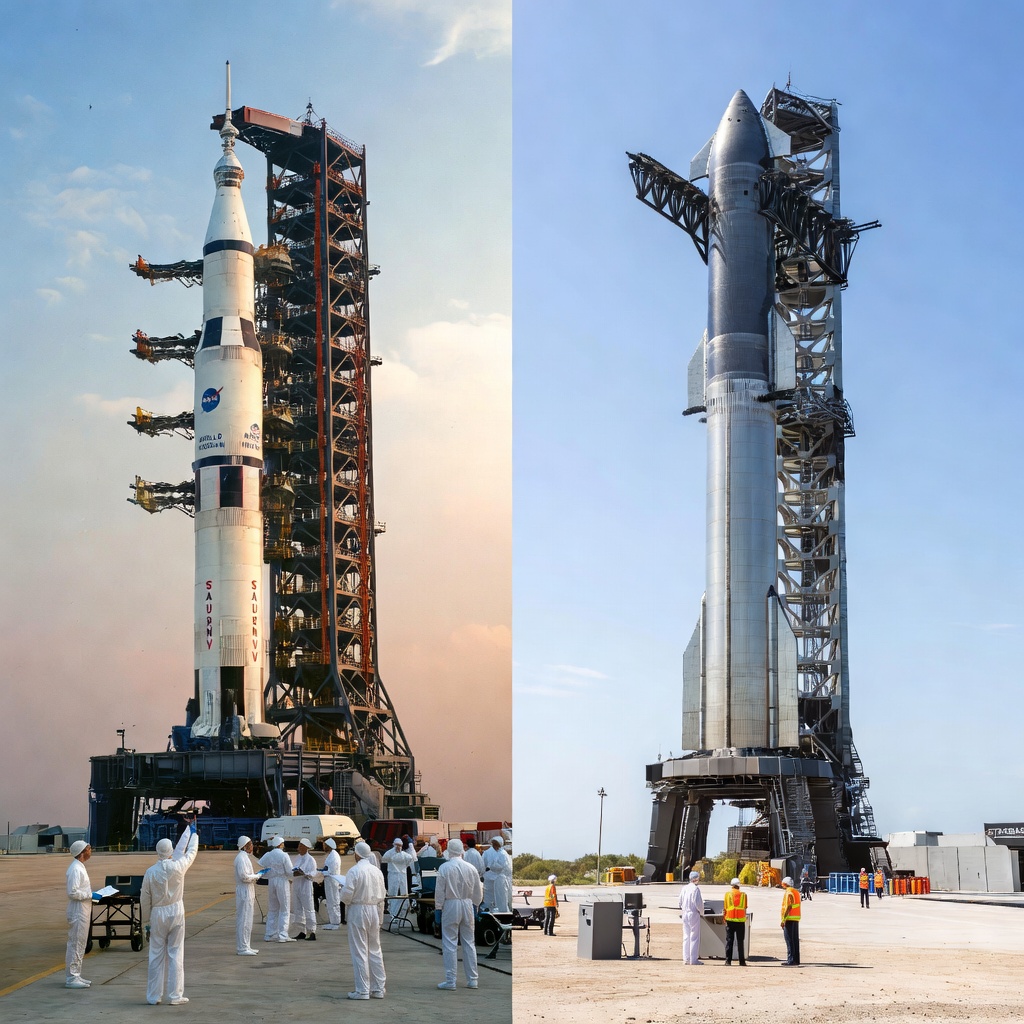
The Apollo program was, at its core, a geopolitical weapon built from engineering genius. It consumed roughly 4% of the entire U.S. federal budget at its peak, employed 400,000 people, and was answerable to a government that treated cost as a secondary variable to national prestige. The hardware was spectacular and entirely disposable. Each Saturn V that thundered skyward was a one-way miracle, manufactured to be abandoned in the Atlantic Ocean, lunar orbit, or the void between worlds. That model worked magnificently for planting flags and winning arguments. It was never designed to build a future.
SpaceX's architecture inverts every one of those assumptions. Starship, the company's 400-foot-tall fully-reusable launch system, is predicated on the same economic logic that transformed commercial aviation: the vehicle must fly again, and again, and again, until the cost per flight collapses to something approaching a utility bill. The Super Heavy booster, which was caught mid-air by the launch tower's mechanical arms in a maneuver that stunned even veteran aerospace engineers, is designed for rapid turnaround and reuse. NASA's own accountants have estimated that a fully expendable Starship flight might cost around $100 million. A reused, frequently-flown Starship could, according to SpaceX projections, bring that figure down by an order of magnitude. Apollo's legacy was a monument. Starship's legacy, if the engineering holds, could be infrastructure.
Starlink: The Invisible Empire Funding the Dream
Apollo had Congress. SpaceX has Starlink. The comparison is more instructive than it might first appear. The Apollo program required perpetual political will, subject to budget cycles, election outcomes, and the whims of legislators who had no personal stake in orbital mechanics. Starlink, SpaceX's constellation of low-Earth orbit broadband satellites, now numbering well over 6,000 active spacecraft and growing steadily, generates recurring commercial revenue that is functionally independent of any single government's enthusiasm for space exploration.
The program has already demonstrated that it can alter geopolitical outcomes, having provided internet connectivity in conflict zones and disaster-struck regions where terrestrial infrastructure collapsed. But from a purely corporate standpoint, Starlink is the revenue engine that lets SpaceX treat Mars as a business plan rather than a wish list. Each Falcon 9 launch that carries a fresh batch of Starlink satellites is simultaneously a commercial transaction, a flight test for reusability techniques, and a capital injection into research programs that would otherwise require government patronage. The Apollo administrators had to beg for their budgets annually. SpaceX is building its own treasury from orbit.
Artemis and the New Moon Race: Deja Vu with a Twist
NASA's Artemis program, which selected Starship as the Human Landing System for returning astronauts to the lunar surface, represents one of the stranger institutional ironies in aerospace history. The agency that built Apollo, that represents the direct lineage of government-funded human spaceflight, has now contracted a private company's unproven-but-promising rocket to carry its astronauts to the Moon. The relationship mirrors, in fascinating ways, the early days of airmail contracts in the 1920s, when the U.S. government essentially subsidized private aviation companies to build an industry that the government itself lacked the flexibility to create.
Artemis faces the same political headwinds that periodically threatened Apollo. Budget overruns on the Space Launch System, the government-built rocket that will carry Orion capsules to lunar orbit, have drawn pointed comparisons to the worst excesses of cost-plus contracting. SLS remains essentially expendable, built by the same legacy contractors whose institutional DNA stretches back to Saturn V, and it costs roughly $4 billion per launch. The juxtaposition with Starship's intended economics is almost uncomfortable. Yet Artemis persists, buoyed by international partnerships with the European Space Agency, JAXA, and others, all of whom have signed onto the Artemis Accords framework governing responsible behavior in cislunar space. Whether Starship's lunar variant will be ready when Artemis III needs it remains one of the most consequential open questions in contemporary spaceflight.
Mars: The Target That Changes Everything
Here is where the Apollo analogy breaks down entirely, and productively so. Apollo's finish line was the Moon, 240,000 miles away, reachable in three days, close enough that real-time radio communication remained possible. Mars, at its nearest approach, sits 140 times farther away. A radio signal takes up to 24 minutes to travel one direction. A crew on Mars cannot phone home for help with a checklist anomaly the way Jim Lovell could during Apollo 13.
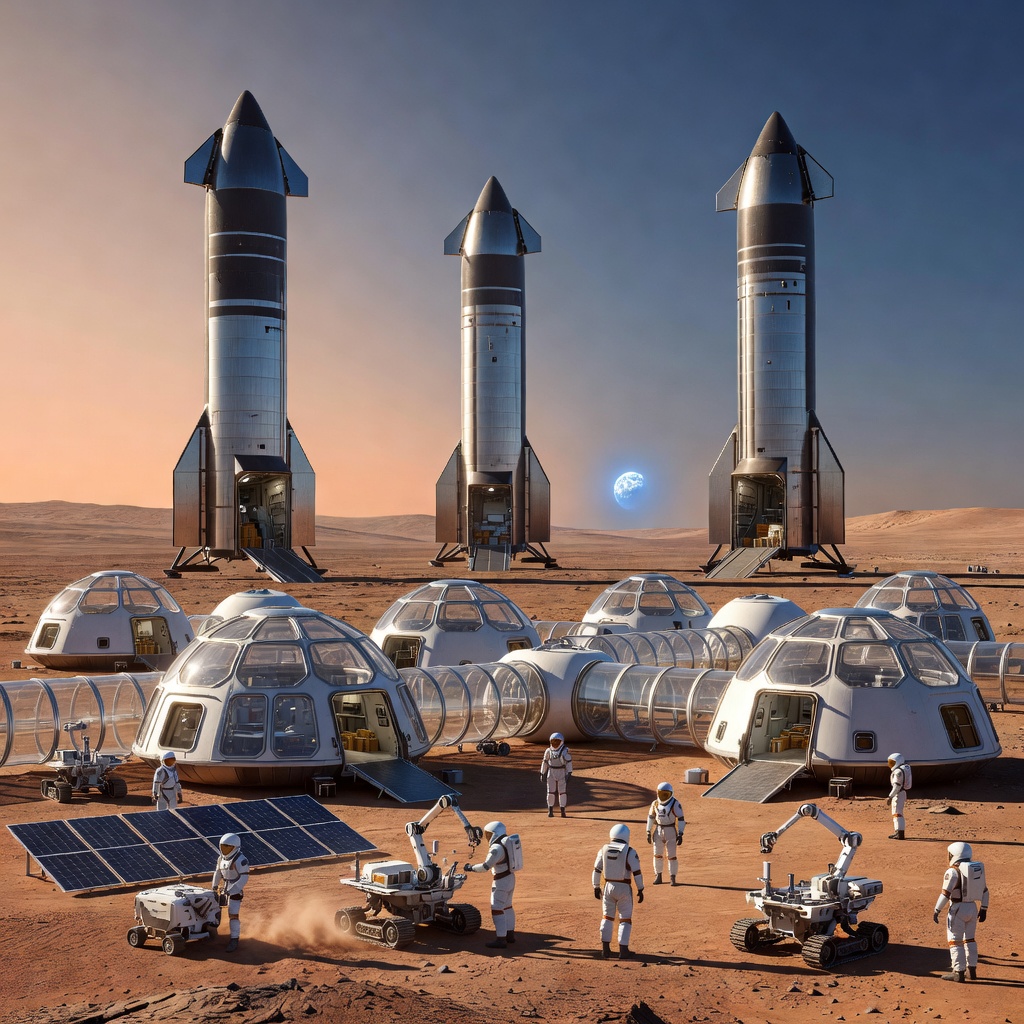
Elon Musk has stated, with characteristic directness, that his founding motivation for SpaceX was always Mars colonization, specifically the creation of a self-sustaining city capable of surviving independently of Earth. The number he cites with regularity is one million people. That figure is not a poetic flourish; it derives from his published estimates of what population threshold would allow a Martian civilization to maintain technological complexity without resupply from Earth. To transport that many people, SpaceX has calculated it would need a fleet of roughly 1,000 Starships making regular transit windows, which occur approximately every 26 months when Earth and Mars align favorably. The math demands a production rate and operational cadence that makes the Apollo program look like a prototype run.
The Continuity Beneath the Contrast
Strip away the reusability, the satellite constellations, the private financing, and the Martian ambitions, and something older persists at the core of what SpaceX is attempting. The same fundamental human calculus that sent Armstrong and Aldrin to the Sea of Tranquility is operating here: the conviction that the risks of staying put, of remaining a single-planet species, outweigh the enormous costs and dangers of leaving. Wernher von Braun, the German-American engineer who made Saturn V possible, sketched Mars missions in the 1950s with a detail that would not embarrass a modern mission planner. The dream predates the technology by generations, as it always does.
What SpaceX has contributed, beyond raw engineering achievement, is a compressed timeline and a commercial proof-of-concept that earlier visionaries never possessed. Falcon 9 has now completed more than 300 successful flights, many with the same booster core reflown a dozen times or more. That track record does not exist in a vacuum. It represents accumulated knowledge about metal fatigue, propellant behavior, reentry heating, and landing dynamics that simply could not have been purchased any other way. It was bought with early failures, with the Falcon 1 that almost bankrupted the company in 2008 before a last-gasp fourth launch succeeded, a moment Musk has described as the most difficult of his professional life.
What the Next Decade Decides
The Apollo comparison ultimately serves as both inspiration and warning. The Moon landings ended not because humanity lost interest in principle, but because the political and financial architecture supporting them was never designed to sustain itself past the geopolitical moment that created it. SpaceX has constructed a different architecture, one grounded in commercial feedback loops, reusable hardware, and a publicly stated mission that explicitly extends past any single administration's term in office. Whether that architecture survives its own growth pressures, regulatory scrutiny, the inherent dangers of deep-space human flight, and the possibility that Mars colonization proves even harder than the most pessimistic projections suggest, will determine whether the 2020s are remembered as the decade humanity finally committed to becoming a spacefaring civilization, or as another spectacular, temporary surge that the history books will bracket with a period of silence.
The Saturn V roared for twelve missions and then fell quiet. The question Starship poses, with every flight test and every Starlink launch and every Artemis planning document, is whether this time the machinery of ambition is finally durable enough to outlast the moment that built it.