The Battery Whisperers: Meet the Engineers Quietly Reinventing How the World Stores Power
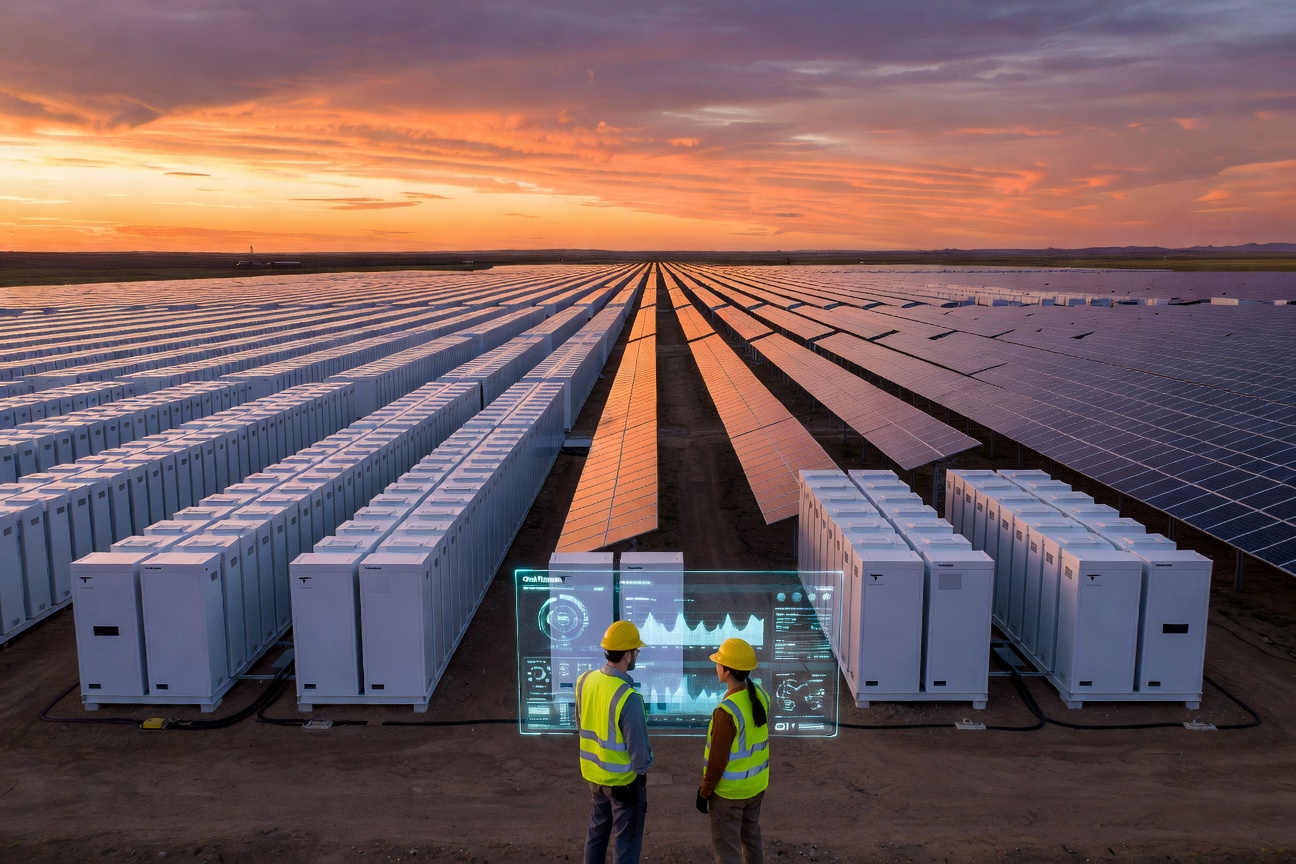
Step inside any major Tesla Megapack facility and you will find something that looks less like a power plant and more like a cathedral of mathematics. Row upon row of steel-clad battery modules hum at frequencies imperceptible to the human ear, managed by software that makes millions of micro-decisions every second. Somewhere behind all of it, usually hunched over a laptop in a temporary site office or dialing into a video call from a continent away, is a small tribe of engineers who chose, deliberately and passionately, to make this their life's work.
The Quiet Obsessives
They do not fit the archetype of the rock-star inventor. They are electrochemists who moonlight as grid operators, software architects who read FERC regulatory filings for fun, and thermal engineers who lose sleep over the precise temperature differential inside a lithium iron phosphate cell during a peak discharge event. What unites them is a shared conviction that the energy grid, that vast, aging, invisibly critical nervous system of modern civilization, is the most consequential engineering problem of this generation, and that battery storage is the linchpin holding the entire clean-energy transition together.
Tesla Energy, the division responsible for Megapack deployments globally, has quietly assembled one of the most formidable such teams on the planet. But the story of grid storage engineering extends well beyond any single company. Across universities, national laboratories, grid operators, and a constellation of startups orbiting the larger players, a generation of specialists has emerged who are rewriting the rules of how electricity is produced, stored, and delivered.

From Cell Chemistry to Continent-Scale Systems
The engineering challenge of a grid-scale battery system is almost comically layered. At the smallest scale, it is a chemistry problem: how do you coax a lithium ion to shuttle back and forth across an electrolyte interface hundreds of thousands of times without degrading the electrode material that receives it? One rung up, it becomes a thermal problem: how do you keep ten thousand cells in a single Megapack unit operating within a narrow temperature band when ambient conditions swing from desert heat to arctic frost? Climb further and it transforms into a power electronics problem, then a software problem, then a regulatory and market-design problem. The engineers who thrive in this field are, by necessity, comfortable living at all of these levels simultaneously.
Tesla's Megapack represents one of the most scaled expressions of this multi-layered discipline. Each unit stores up to four megawatt-hours of energy and can discharge at rates calibrated to the millisecond demands of frequency regulation markets. When hundreds of these units are arrayed together, as they are at installations like Moss Landing in California and the Elkol facility in Victoria, Australia, the aggregate system becomes something genuinely novel in the history of power engineering: a dispatchable, software-controlled asset that can respond to grid signals faster than any gas turbine ever could.
The engineers who designed those response algorithms did not simply borrow from existing grid-control theory. They had to invent new frameworks, blending techniques from model-predictive control, reinforcement learning, and classical power systems analysis into something the industry had no prior name for.
The Virtual Power Plant Architects
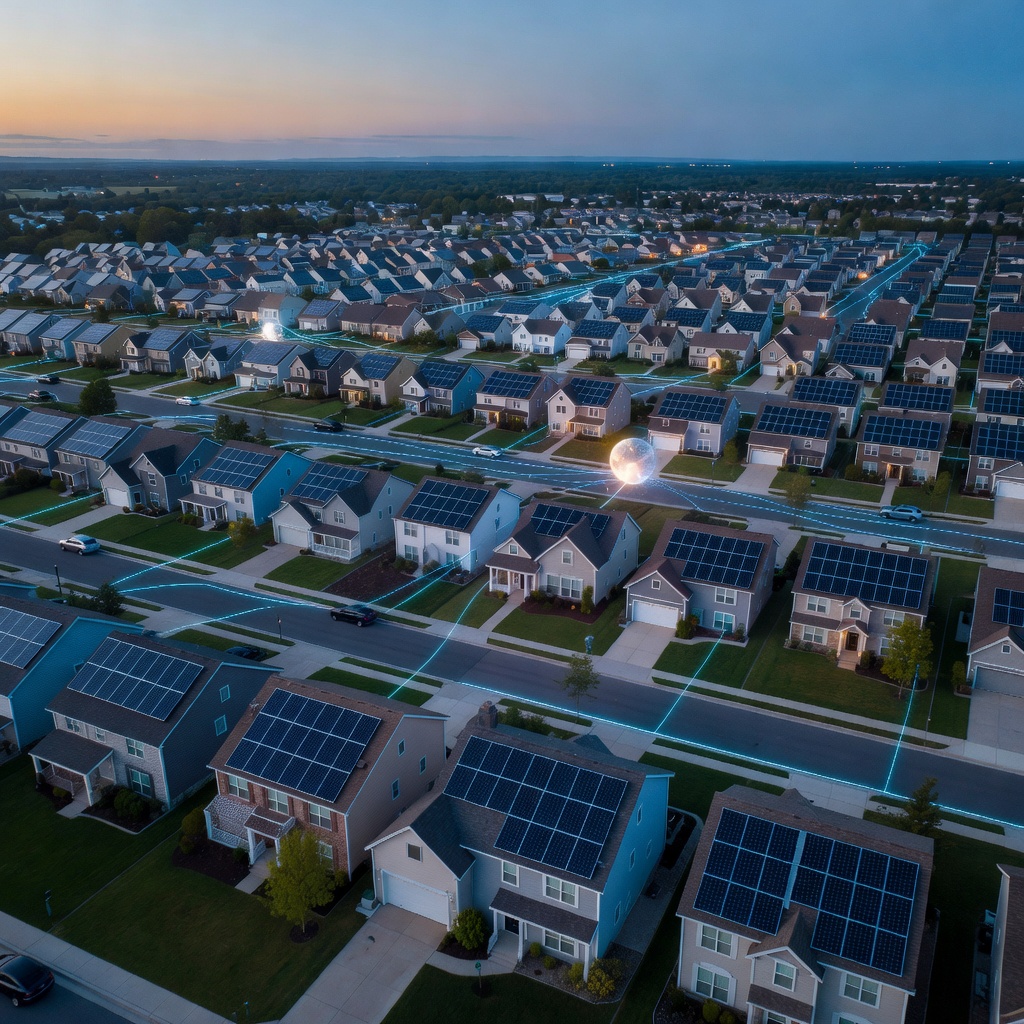
If Megapack engineers operate at the scale of the substation, then the architects of virtual power plants are working at the scale of the neighborhood, the city, and ultimately the regional grid. A virtual power plant, or VPP, aggregates distributed energy resources, rooftop solar panels, home batteries, electric vehicle chargers, smart thermostats, and commercial demand-response systems, into a coordinated pool that can be dispatched like a conventional generator. The engineering required to make this work is, if anything, even more complex than building a standalone battery installation.
Consider the communications infrastructure alone. A VPP enrolling fifty thousand homes must maintain real-time data links to each participating device, reconcile the heterogeneous protocols used by dozens of different hardware manufacturers, predict the behavioral patterns of thousands of individual households, and translate all of that messy human reality into a clean, reliable power signal that a grid operator can actually bid into an energy market. The engineers building these systems describe it as operating an orchestra where every musician is improvising and none of them have read the same score.
Tesla's VPP program in South Australia, which aggregates Powerwall home batteries into a coordinated grid asset, has become one of the most closely studied examples of this architecture in operation. The engineers running it have had to navigate not only the technical complexity of device coordination but also the social dynamics of customer participation, the legal intricacies of energy market access rules, and the physical constraints of a grid that was originally designed for one-way power flow from large centralized generators to passive consumers.
Solar's Unsung Integration Problem
Solar generation has, by most measures, already won the economics argument. The cost of utility-scale photovoltaic power has fallen by more than ninety percent over the past fifteen years, making it the cheapest source of new electricity generation in most of the world. But cheap generation and reliable power are not the same thing, and the engineers who work at the intersection of solar and storage know this better than anyone.
The fundamental tension is temporal. Solar panels produce electricity when the sun shines; human demand for electricity peaks in the early evening when the sun is already declining. Bridging that gap with battery storage sounds straightforward until you are responsible for designing a system that must perform this feat reliably for twenty years across a wide range of weather conditions, grid configurations, and market price signals. The optimization problem has so many variables that even the most powerful computational tools struggle to find provably optimal solutions. In practice, engineering teams rely on a combination of simulation, heuristic rules developed from operational experience, and increasingly, machine learning models trained on years of real dispatch data.
What makes the current moment particularly interesting is that the feedback loop between simulation and reality is tightening rapidly. As more Megapack installations and solar-plus-storage projects accumulate operating hours, the engineering teams managing them are building datasets of unprecedented richness. Every charge cycle, every thermal anomaly, every grid disturbance and the system's response to it, becomes training data for the next generation of control algorithms. The engineers are, in a very real sense, teaching the grid to learn from itself.
A Generation Choosing Batteries Over Algorithms
There is a cultural dimension to this story that deserves acknowledgment. For the better part of the past two decades, the most coveted engineering talent in the technology sector flowed almost exclusively toward consumer software: social platforms, search engines, mobile applications. Grid storage was, by comparison, an unglamorous backwater, associated in the popular imagination with lead-acid batteries in the basements of telephone exchanges.
That perception has shifted dramatically. A new cohort of engineers, many of them drawn from software and machine learning backgrounds, has discovered that the grid offers something that consumer apps rarely do: the satisfaction of solving a problem with genuine physical stakes. When a Megapack system successfully buffers a sudden drop in wind generation, preventing a blackout for hundreds of thousands of people, the engineers responsible can measure the impact in a way that is utterly concrete. That tangibility is, by many accounts, addictive.
Elon Musk has consistently framed Tesla Energy not as a sideline to the automotive business but as a co-equal pillar of the company's mission. His public statements have increasingly emphasized that stationary storage, the Megapack and Powerwall product lines, may ultimately prove more consequential than electric vehicles in the long arc of energy transition. Whether or not that framing is accurate, it has had a measurable effect on recruitment. Engineers who might once have defaulted to a software career are now actively choosing to work on grid storage, virtual power plants, and solar integration systems, drawn by the combination of technical depth, mission clarity, and the quiet thrill of working on infrastructure that the world depends on but rarely thinks about.
The Problem Is the Point
Ask any of the engineers in this field what keeps them motivated through the inevitable frustrations of regulatory delay, hardware failure, and market complexity, and you will hear variations on the same answer. The problem is extraordinarily hard, and the stakes are extraordinarily high. Those two facts together create a kind of professional gravity that is difficult to escape once you have felt its pull.
The grid is not a solved system waiting to be optimized. It is a living, evolving, continent-spanning machine being fundamentally redesigned while it continues to operate. The engineers doing that redesigning, the battery whisperers working on Megapacks in Nevada, virtual power plants in South Australia, and solar integration projects from Texas to Taiwan, are arguably among the most consequential technical workers alive today. They are just not particularly interested in being famous about it.