The Dirt Beneath the Hype: What 68 Miles of Pending Tunnel Contracts Reveal About America's Underground Transit Gamble
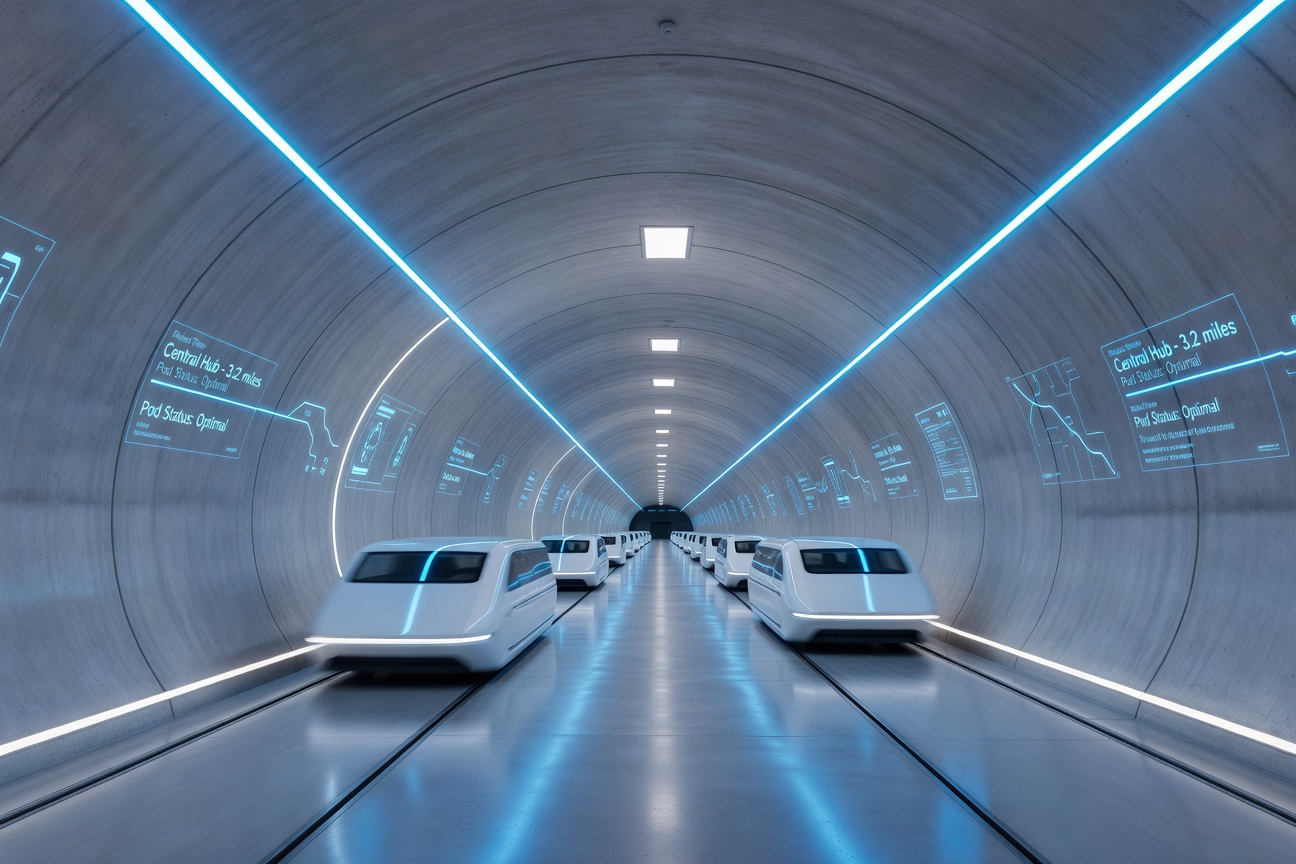
Seventy-three percent of all proposed urban rail projects in the United States launched since 2018 are already over budget before a single shovel breaks ground. Against that backdrop, a private company quietly digging electric-vehicle tunnels beneath Las Vegas at roughly one-tenth the per-mile cost of conventional subway construction looks less like a novelty and more like an indictment of everything the public transit establishment has accepted as normal. "The real disruption isn't the tunnel itself," said one senior infrastructure engineer who has consulted on both traditional subway builds and Boring Company feasibility studies. "It's the audacity of treating cost reduction as an engineering problem instead of a political one."
A Network Born From a Convention Center Parking Problem
It would be easy to dismiss the Las Vegas Convention Center Loop — the original seed of what has since sprouted into a 29-station, 1.7-mile public network — as a solution built for a problem only a billionaire would notice. In 2018, the Las Vegas Convention and Visitors Authority was struggling with a straightforward nuisance: attendees at the world's largest convention center couldn't efficiently move between halls spread across a sprawling campus. The Boring Company's answer was a pair of single-lane tunnels running Tesla vehicles in loops beneath the property. What followed was not a quiet infrastructure pilot. It became, almost accidentally, the most-watched urban transit experiment in American history.
The Loop today is not the same creature it was at its 2021 opening. The original proof-of-concept carried passengers in Tesla Model 3s driven by human operators across roughly 0.8 miles. The current system has expanded substantially, with tunnels threading beneath the Resorts World complex, Allegiant Stadium, and a growing web of Strip-adjacent properties. The Las Vegas Convention and Visitors Authority has publicly committed to an even broader expansion targeting Harry Reid International Airport connectivity — a routing that, if completed, would transform the Loop from a convention-district amenity into something resembling actual urban mass transit.
The 68-Mile Number Nobody Is Talking About
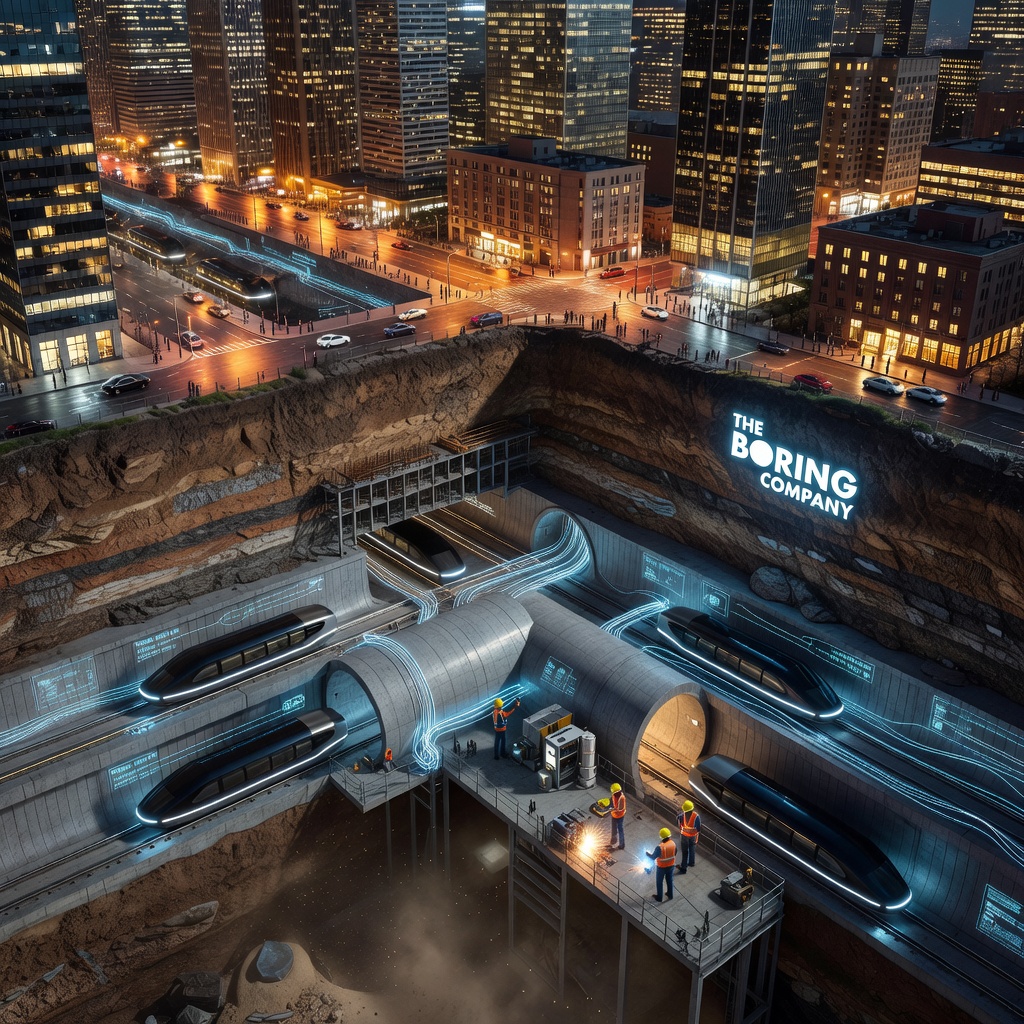
Here is where the statistics start doing uncomfortable work. According to public disclosures, memoranda of understanding, and municipal planning documents accumulated across more than a dozen American cities, The Boring Company currently has approximately 68 miles of tunnel infrastructure in some stage of formal negotiation, environmental review, or approved feasibility study. That figure does not count speculative proposals. It counts only projects where a government entity has signed a document committing public resources — staff time, legal review, or direct funding — to evaluation.
The cities represented in that pipeline span a remarkable geographic and demographic range: Fort Lauderdale, San Antonio, San Jose, Chicago's lakefront corridor, and several master-planned communities in Texas and Arizona. Each of these engagements is at a different stage of maturity, and most will never produce a single foot of completed tunnel. But the aggregated pipeline reveals something critical: this is no longer a Las Vegas story. It is a story about whether American cities, exhausted by the financial hemorrhaging of traditional transit megaprojects, are willing to place a calculated bet on a fundamentally different model.
That model rests on three pillars that diverge sharply from conventional subway orthodoxy. First, tunnel diameter: Boring Company bores run at approximately 14 feet wide, compared to the 20-to-28-foot standard bore of most urban subway tunnels. Smaller diameter means dramatically less excavated material, smaller boring machines, and lower upfront capital costs. Second, vehicle type: by designing the system around existing Tesla electric vehicles rather than bespoke rail cars, the company sidesteps the custom-manufacturing overhead that inflates transit project timelines and costs. Third, operating model: rather than requiring municipal operating agencies with unionized workforces and legacy pension obligations, the current Vegas Loop operates under a private management structure, shifting long-term financial risk away from city balance sheets.
The Throughput Debate That Won't Quit
Critics — and there are many, concentrated primarily in transit advocacy circles and academic urban planning departments — have long targeted the Loop's capacity as its fatal flaw. A traditional subway car carries 150 to 200 passengers. A Tesla Model Y, the vehicle now most commonly used in Loop tunnels, carries five. Even with autonomous vehicle operation — which The Boring Company has consistently stated is the system's intended end state — the throughput ceiling of a single-lane tunnel is determined by safe following distance, not passenger configuration. At theoretical maximum autonomous density, some independent modeling suggests a single Loop tunnel lane could move between 4,000 and 6,000 passengers per hour in one direction. A modern light rail line in a comparable corridor moves roughly 3,000. A heavy rail subway line moves 30,000.
That gap is not closable by software updates. It is a physical constraint baked into the single-lane architecture. Boring Company executives have acknowledged the limitation directly, arguing that the system is not designed to replace subway-density corridors but to serve medium-density point-to-point routing where surface traffic congestion makes above-ground alternatives slow and unreliable. Las Vegas's resort district, with its peculiar geometry of massive destination nodes separated by heavily congested surface streets, happens to be nearly a perfect fit for that use case. Most American cities are not Las Vegas.
Autonomy as the Lurking Variable
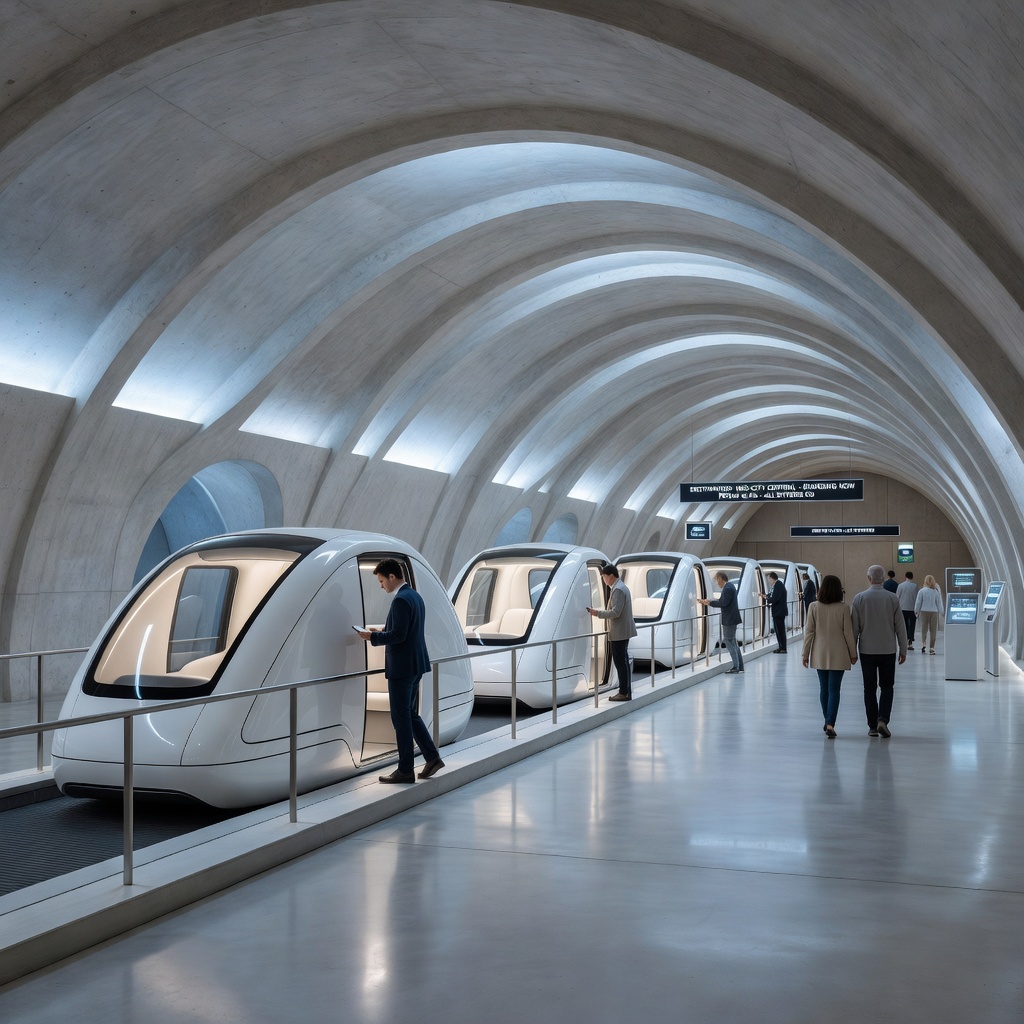
Every serious analysis of the Loop's long-term viability collides with the same unknown: when, exactly, does full autonomous operation arrive, and what does it do to the unit economics of the system when it does? Right now, Loop vehicles in Las Vegas are driven by human operators — a labor cost that fundamentally undermines the per-passenger economics that make the project theoretically attractive to other cities. The company has been clear that autonomous operation is not a feature addition but a foundational assumption of the business model. Without it, the Loop is an expensive novelty. With it, the calculus changes profoundly.
Tesla's Full Self-Driving technology, the software stack most likely to power future autonomous Loop operation, has made measurable progress over the past 24 months by most technical assessments. The controlled, GPS-mapped, obstacle-limited environment of a Loop tunnel is dramatically simpler than open-road autonomy. Tunnel walls don't generate unexpected pedestrian crossings. Weather is irrelevant. Intersections don't exist. If any environment on Earth is likely to see reliable autonomous vehicle operation before public roads, a dedicated underground tunnel corridor is the obvious candidate.
The regulatory pathway, however, remains genuinely murky. Nevada has among the most permissive autonomous vehicle frameworks in the country, which partly explains why Las Vegas was the natural first deployment site. Other states in the pipeline present far more complex approval landscapes, and federal transit funding eligibility for privately operated autonomous vehicle systems sits in a legal gray zone that no city attorney has successfully mapped to completion.
What the Next 24 Months Will Actually Reveal
The transit establishment's standard critique of the Loop has always carried an implicit expiration date. Either the system scales, demonstrates meaningful throughput at lower cost than alternatives, and achieves autonomous operation — or it doesn't, and the experiment joins the graveyard of promising transit innovations that failed to survive contact with real-world complexity. The next 24 months are, by any reasonable reading of the project pipeline, the period in which that verdict begins to crystallize.
The proposed Loop expansion to Harry Reid International Airport is the most consequential near-term milestone. Airport-to-city-center connectivity is the single routing type that most clearly demonstrates whether an underground vehicle network can compete with light rail on legitimately high-demand corridors, not just convention center campuses. If that project reaches construction approval and delivers on its projected cost and timeline, The Boring Company's pipeline of 68 miles in negotiation becomes a very different conversation. If it stalls or balloons in cost, the counterargument writes itself.
Beneath all of the engineering debates and throughput calculations, however, something stranger and more interesting is happening. For the first time in decades, American cities are actually arguing about whether a genuinely different approach to urban underground transit might work. That argument itself — messy, unresolved, financially fraught, and technically contested — is more valuable than any single tunnel mile. The dirt beneath the hype is, at minimum, worth digging into.