One Tunnel, Many Cities: Why the Vegas Loop Is a Mirror, Not a Map
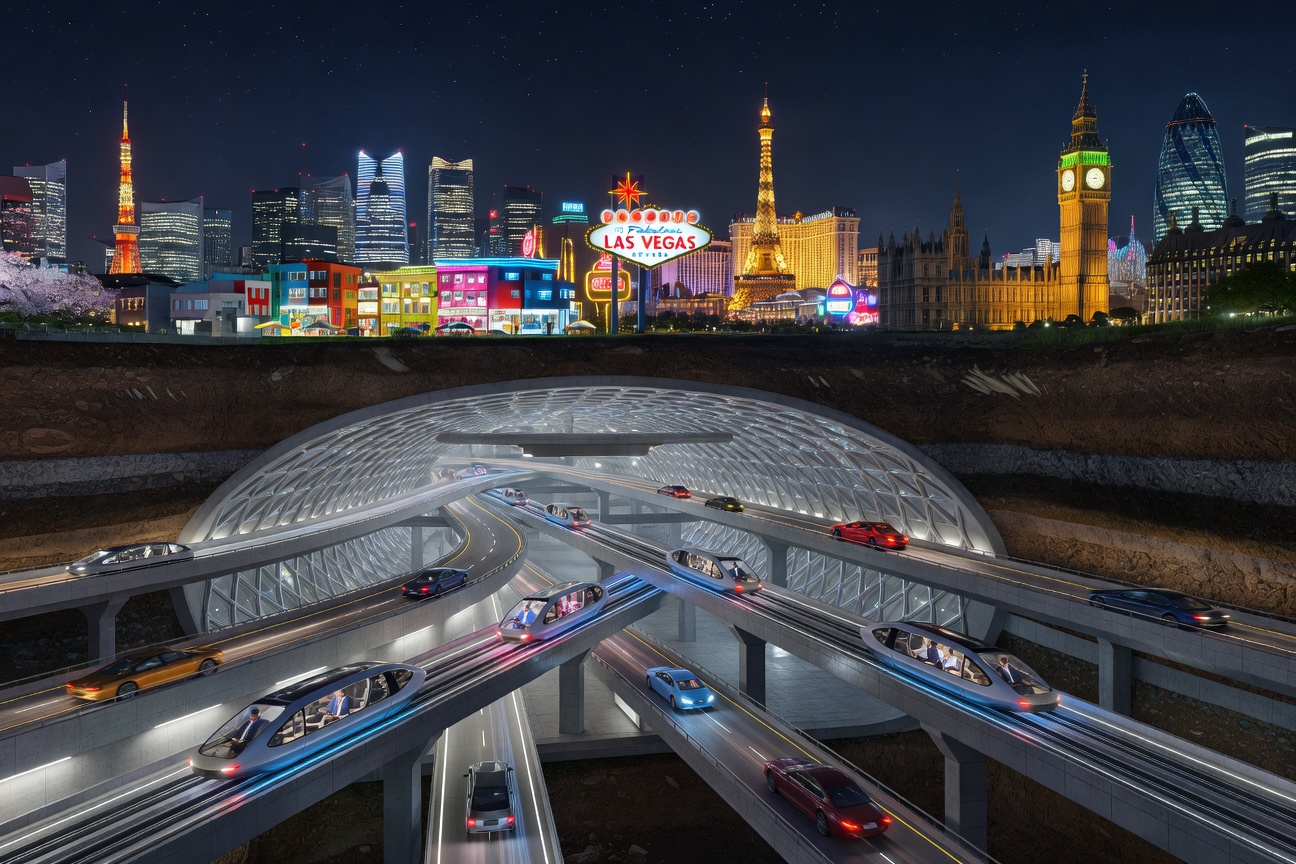
Ask a city planner in Las Vegas whether the Loop is a success and you will likely hear an enthusiastic yes. Ask the same question in Mumbai, Helsinki, or Nairobi, and the concept itself starts to dissolve into something more complicated, more culturally specific, and far more revealing about what urban mobility actually means when the ground beneath your feet belongs to a different world.
The Boring Company's Las Vegas Convention Center Loop, now expanded into an ambitious web of tunnels threading beneath the Strip and surrounding districts, is not simply a transit project. It is an argument, and different cities are rebutting it in very different ways. Understanding those rebuttals tells us more about the future of underground transit than any single tunnel ever could.
What Vegas Actually Built, and Why It Works There
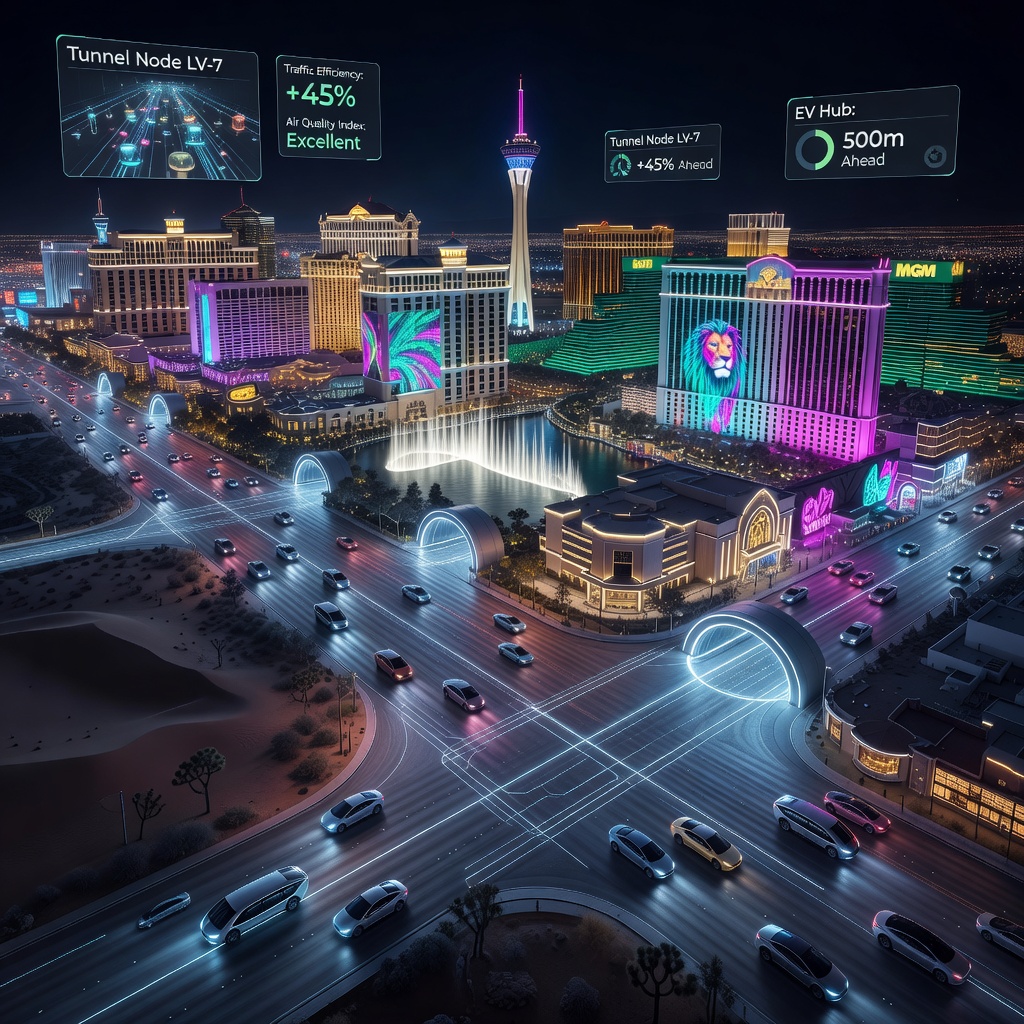
Strip away the hype and what Elon Musk's tunneling company delivered in Las Vegas is essentially a point-to-point electric vehicle shuttle operating inside a bored concrete tube. Teslas, driven by human operators, carry passengers between convention halls, hotels, and eventually the airport. The system avoids the city's notorious surface traffic, keeps fares accessible, and performs well within a geography that is unusually forgiving: low population density above ground, no legacy subway infrastructure below, flat desert terrain, and a visitor economy that practically demands novel experiences as a selling point.
Those conditions are not a coincidence. They are almost perfectly unique to Las Vegas, which is precisely what makes the Loop so fascinating to study from the outside. Cities that rush to copy the blueprint without copying the conditions are setting themselves up for an expensive lesson in context.
Tokyo Does Not Need a Loop. It Already Has Forty of Them.
In Japan, the underground is not a frontier to be conquered. It is already civilization. Tokyo's subway system carries more than eight million passengers daily, operates with punctuality measured in seconds rather than minutes, and includes subterranean shopping districts, art galleries, and food halls that would comfortably accommodate an entire Boring Company tunnel network inside a single station complex.
The Loop's core value proposition, reducing surface congestion by routing passengers underground, simply has no purchase here. Japanese transit engineers look at a tunnel designed for a handful of Teslas and see an extraordinary amount of bored rock deployed in service of a very modest throughput. The cultural expectation of shared transit, combined with decades of investment in mass-movement infrastructure, makes the individualistic, car-centric model feel like a step sideways rather than forward.
That is not a criticism. It is a calibration. What Vegas needed, Tokyo solved differently, thirty years ago, at ten times the scale.
Lagos: Where the Real Innovation Opportunity Lives
Shift the lens to West Africa and the conversation changes entirely. Lagos, one of the fastest-growing megacities on the planet, has road infrastructure collapsing under the weight of roughly twenty-three million people, a waterway system that remains criminally underutilized, and a transit gap so severe that informal minibus operators called danfos have become the de facto backbone of daily mobility for most residents.
Could underground tunneling address any of this? In theory, yes. In practice, the barriers are geological, financial, and institutional. Lagos sits on a coastal sedimentary basin, soft ground that demands expensive and technically complex tunneling methodologies. The capital cost of even a modest Loop-style system would dwarf annual infrastructure budgets. And the governance challenges of acquiring sub-surface rights, coordinating between federal, state, and local authorities, and managing construction contracts in a high-corruption-risk environment would test any project.
Yet the demand is undeniable. If a scalable, affordable, modular tunneling technology could be proven at the kind of price points Musk has long promised but not yet fully delivered, Lagos and cities like it would represent the single largest addressable market for underground transit on Earth. The Boring Company's stated ambition to drive tunneling costs toward parity with surface road construction remains the critical unlock, and Lagos is exactly the kind of city that would be transformed overnight if that unlock arrived.
The European Paradox: Wanting the Vision, Rejecting the Vehicle
European cities present a different kind of friction. Amsterdam, Berlin, and Barcelona are not lacking in transit sophistication. They are, however, increasingly hostile to private automobiles in urban cores, a policy direction driven by climate commitments, livability priorities, and a political consensus that views car dependency as a public health problem rather than a personal freedom.
Herein lies the paradox: European urbanists find much to admire in the audacity of tunneling beneath cities to relieve surface congestion. They find considerably less to admire in doing it with individually operated electric cars. The Loop model, which routes one to three passengers per vehicle through expensive underground infrastructure, strikes many European planners as a private taxi service wearing transit clothing. Throughput per dollar, or per euro, simply does not compete with a well-designed metro extension.
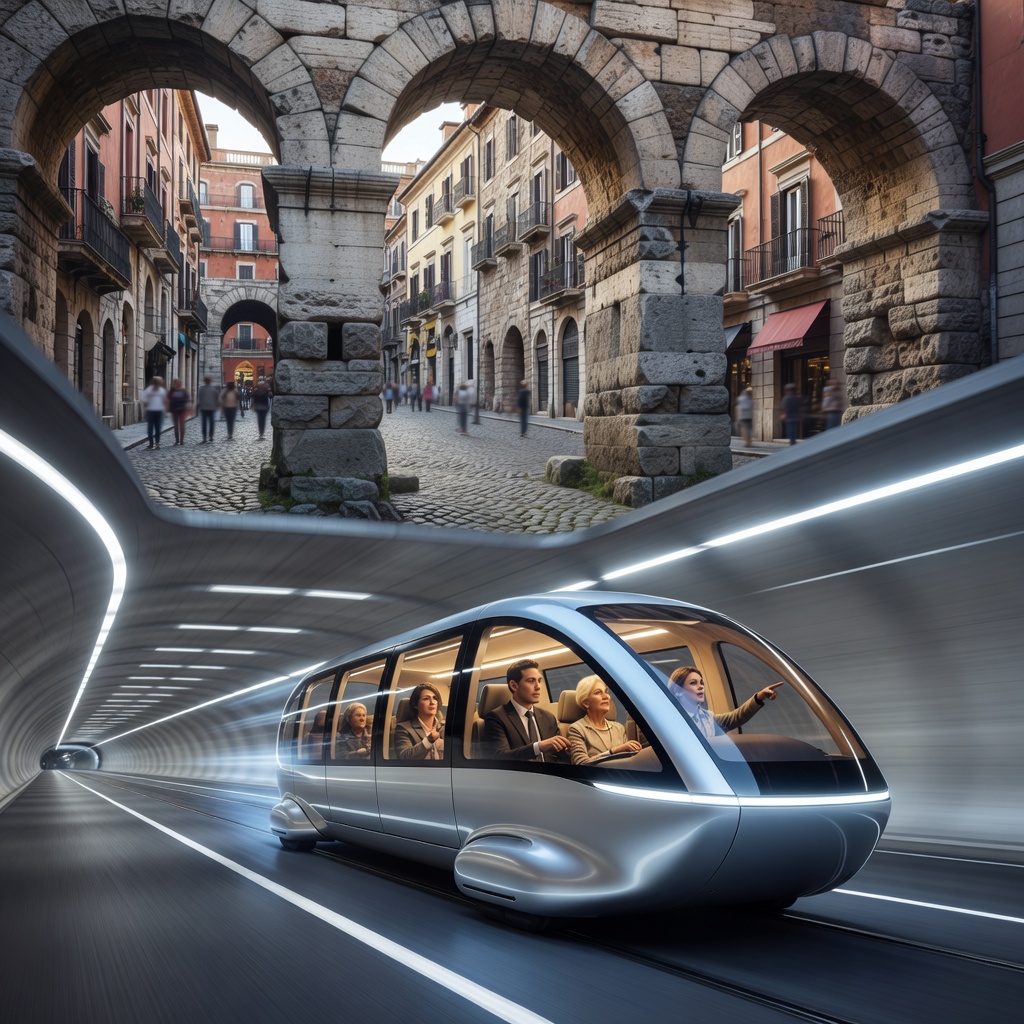
What European cities are watching for is a pivot: a version of Boring Company technology that moves pods or autonomous vehicles at higher frequencies, higher capacities, and without human drivers. That version would align far more comfortably with European transit philosophy. Until it arrives, the Loop remains admired in concept and declined in practice across most of the continent.
The American Middle: Where the Loop's Real Test Is Playing Out
Back in the United States, the most consequential experiments are not happening in Las Vegas. They are happening in the municipalities that are seriously evaluating Loop-style contracts: cities like Fort Lauderdale, San Antonio, and segments of greater Los Angeles, places that share Las Vegas's car-centric DNA but lack its concentrated tourism economy and its unusually cooperative local government.
In these environments, the Loop faces a different kind of scrutiny. Environmental impact reviews, public comment periods, union labor negotiations, and the basic politics of urban development all apply with full force. The speed advantage that made the Las Vegas installation so remarkable, built in roughly a year, is considerably harder to replicate in jurisdictions with denser regulatory environments.
That said, several mid-sized American cities have precisely the conditions the Loop serves best: sprawling layouts that make traditional subway investment economically unjustifiable, growing populations that are generating traffic faster than surface roads can accommodate, and political environments that are more receptive to private-sector transit innovation than their coastal counterparts. If the Boring Company is going to find its second great domestic success story, it is most likely lurking somewhere in the Sun Belt.
The Deeper Question Beneath the Concrete
What the global tour of Loop reactions ultimately reveals is that underground transit is not a solved problem wearing different clothes in different cities. It is a genuinely open question whose best answer changes depending on population density, geological conditions, existing infrastructure, cultural attitudes toward shared versus private transportation, and the fiscal reality of each municipality.
The Boring Company has done something genuinely valuable in Las Vegas: it has proven that a private company can bore urban tunnels faster and cheaper than the historical baseline, and it has demonstrated that point-to-point underground electric transit can operate cleanly and reliably. Those are real contributions to the global knowledge base.
But the Loop is a proof of concept, not a universal prescription. The cities that will benefit most from this technology are not those that copy the Las Vegas model wholesale. They are those that take the tunneling methodology, adapt the vehicle strategy to local capacity demands, and embed the system within whatever transit ecosystem already exists rather than trying to replace it.
Las Vegas built a mirror. The rest of the world is deciding what it sees in the reflection, and the answers are as varied, contentious, and fascinating as the cities doing the looking.