The Signal in the Static: xAI's Unsolved Problem at the Heart of Grok
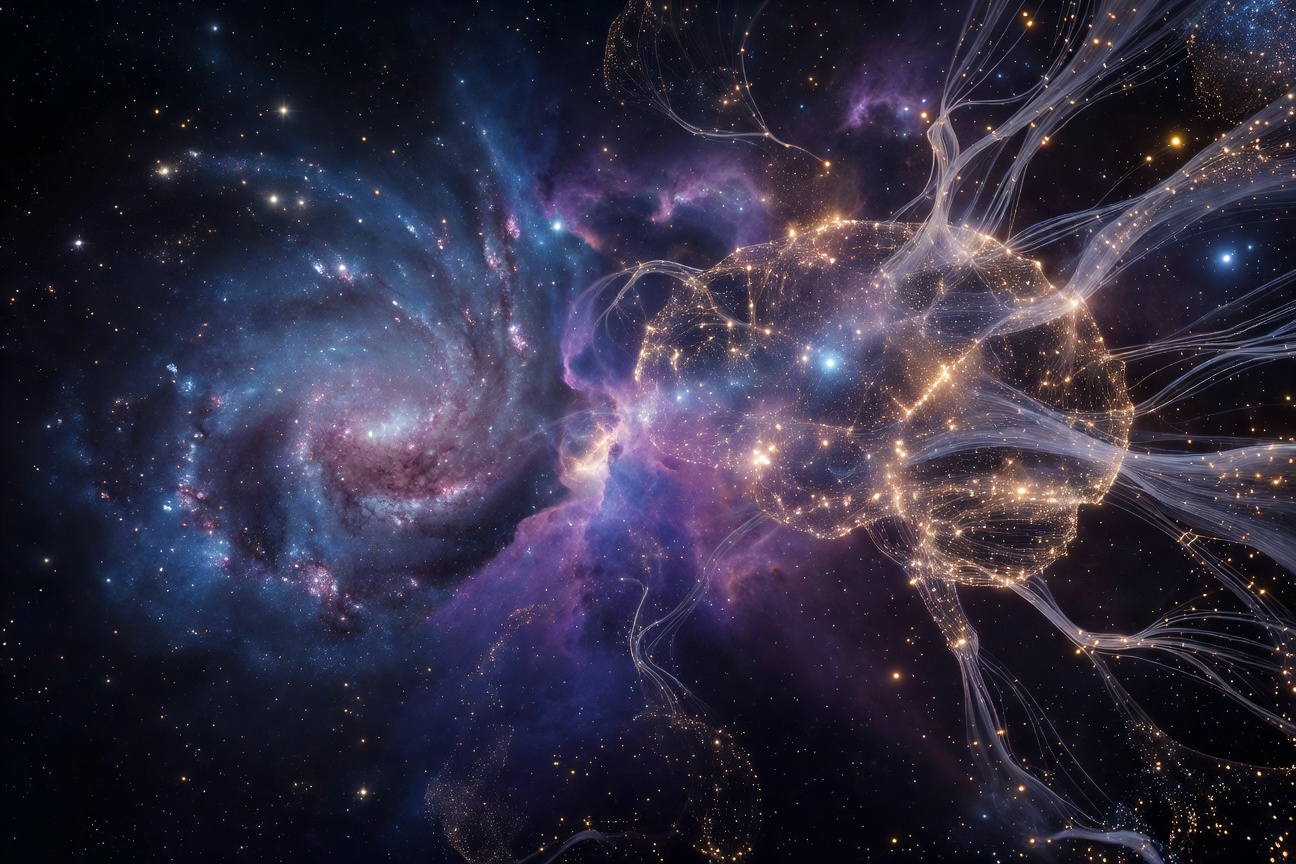
There is a peculiar bug that no engineer at xAI has filed a ticket for, because it is not the kind of bug that lives in a codebase. It lives, instead, in the founding premise of the company itself. Elon Musk launched xAI in July 2023 with a mission statement that would look more at home carved above a Greek temple than printed in a venture capital pitch deck: to understand the true nature of the universe. Every subsequent Grok model release, every benchmark triumph, every context window expansion has been scaffolded atop that declaration. And yet the deeper xAI pushes its models toward the frontier of scientific reasoning, the more a specific and genuinely unsettling question crystallizes from the noise: what does it actually mean for a machine to understand anything at all?
The Mystery That Predates the Machine
This is not a new philosophical puzzle. Linguist John Searle posed a version of it in 1980 with his famous Chinese Room thought experiment, and cognitive scientists have been arm-wrestling over it ever since. But xAI has done something unusual by choosing to make this unresolved question the load-bearing wall of its entire commercial and scientific architecture. Most AI companies are careful to keep their philosophical ambitions vague, buried in press releases beneath layers of benchmark numbers. Musk's outfit planted a flag directly on contested philosophical terrain and then started building a rocket pad around it.
The Grok series, now extending through multiple major iterations, has made genuine and measurable progress on tasks that once seemed exclusively human: multi-step mathematical reasoning, protein structure interpretation, code synthesis across obscure languages, and the kind of lateral scientific thinking that connects disparate fields. Grok 3, unveiled earlier this year, demonstrated performance that genuinely surprised researchers who had expected incremental gains. Its reasoning traces on physics problems showed chains of inference that, on the surface, looked structurally indistinguishable from how a talented graduate student might work through the same material.
But here is where the unresolved bug reveals itself. Looking indistinguishable from understanding and actually understanding are separated by a conceptual chasm that nobody, including the teams building these systems, knows how to bridge or even reliably measure.

The Compression Problem
One way to frame the central mystery is through the lens of compression. Physics, at its most fundamental level, is the project of finding the smallest possible description of the largest possible reality. Einstein's field equations compress an almost incomprehensible amount of gravitational behavior into a compact mathematical statement. The Standard Model packs the behavior of fundamental particles into a Lagrangian that fits on a coffee mug, which is also sold at CERN's gift shop with a kind of appropriate irony.
What Grok and its successors do is, in a technical sense, also compression. They distill statistical regularities from enormous volumes of human-generated text and then regenerate plausible continuations of that text. The question xAI cannot currently answer, and which represents perhaps the most important open research problem in the field, is whether there is a meaningful distinction between a system that has compressed the outputs of human understanding and a system that has itself achieved understanding. Is Grok reading the map, or has it internalized the territory?
The company is not pretending the question does not exist. In internal research directions that have filtered into published papers and conference presentations, xAI researchers have been probing what they call grounded reasoning, attempts to tie model outputs not just to training data patterns but to verifiable external states of the world. The ambition is to build models that do not merely recall that the speed of light is approximately 299,792 kilometers per second, but that have some functional representation of why that constant appears where it does in the fabric of physical law.
Where the Bug Manifests Most Visibly
The practical symptom of this unresolved problem shows up most sharply at the edges of known science. Ask Grok to summarize the current experimental evidence for dark matter, and it performs admirably. Ask it to generate a novel hypothesis about the nature of dark energy that is both physically consistent and genuinely new, and something interesting happens. The model produces outputs that look like hypotheses, that use the vocabulary of hypotheses, that even follow the logical structure of hypotheses. Whether any of them constitute original scientific thought or extraordinarily sophisticated pattern-matched mimicry of scientific thought is, at this moment, genuinely unknowable.
This is not a criticism unique to Grok. It applies to every frontier model from every lab. What makes xAI's version of the problem more philosophically loaded is the explicit mission. Google DeepMind wants to solve intelligence. OpenAI wants to build artificial general intelligence for the benefit of humanity. These are enormous claims, but they have a certain operational flexibility. Understanding the true nature of the universe is specific. It is falsifiable in principle, even if nobody has agreed on what the falsification criteria would look like.
The Productive Power of an Unsolved Problem
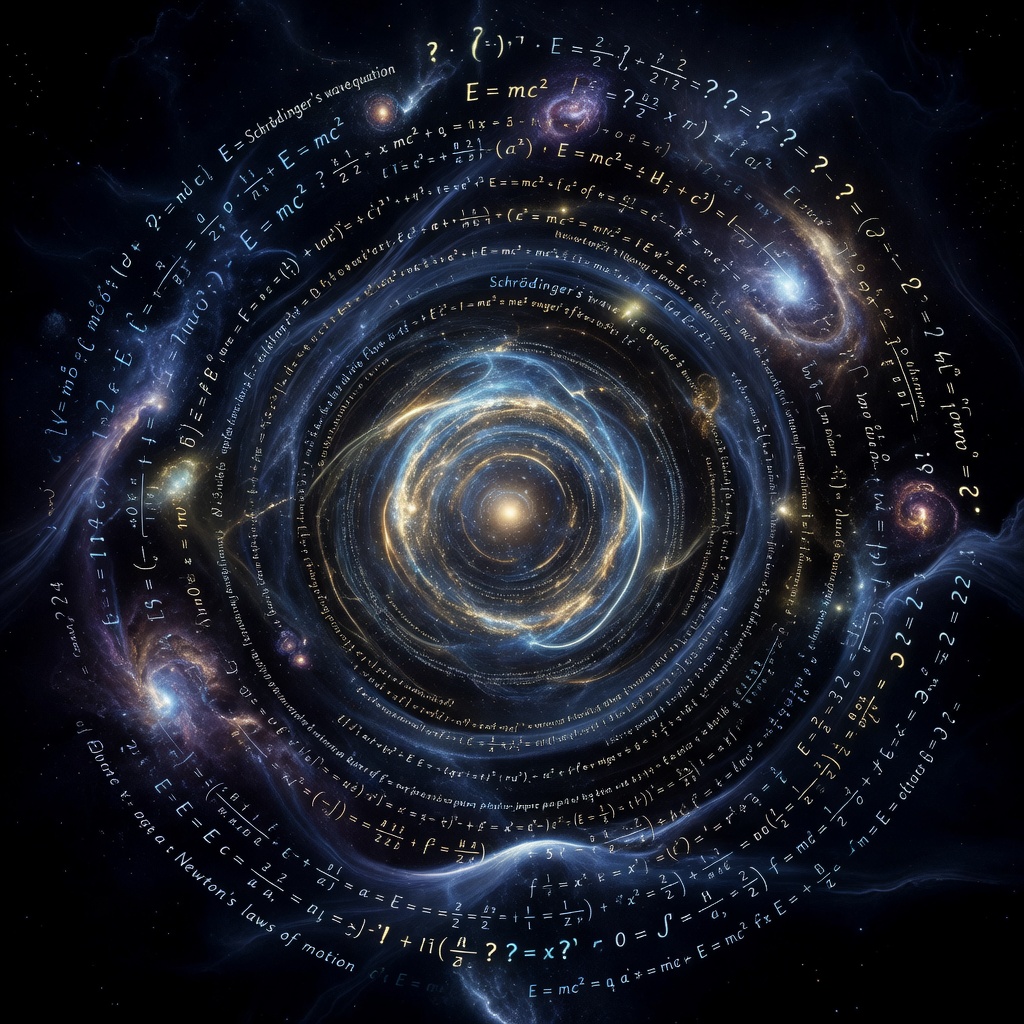
There is an argument, and it is not a weak one, that this unresolved bug is precisely what makes xAI interesting. Science has a long and distinguished history of making progress by working inside problems that nobody fully understands. Physicists used quantum mechanics to build semiconductors for decades before anyone reached consensus on what quantum mechanics actually means at an interpretive level. The Copenhagen interpretation, many-worlds, pilot wave theory, and a dozen other frameworks all predict the same experimental results while describing entirely different underlying realities.
xAI may be doing something analogous. By building systems that behave as though they understand the universe, even if the question of whether they actually do remains philosophically open, the company could generate genuine scientific value long before that question is resolved. Grok has already been integrated into research workflows at institutions examining genomic data, climate modeling outputs, and materials science simulations. Whether the model understands what it is doing or is the world's most elaborate autocomplete engine, the outputs are being checked against reality and some of them are proving useful.
What Resolution Might Look Like
Several research directions currently active at xAI and parallel institutions suggest possible paths toward at least partially closing the gap. Mechanistic interpretability, the painstaking work of mapping what specific computations inside a neural network correspond to, has produced surprising results in smaller models, finding circuits that appear to implement recognizable algorithms rather than opaque statistical heuristics. Scaling this work to frontier models like Grok 3 is technically daunting but not obviously impossible.
A second direction involves what researchers call world model probing, designing experiments that test whether a model has a coherent internal representation of physical reality rather than just linguistic regularities that correlate with physical facts. Early results are genuinely ambiguous, which in science is often the most interesting place to be. The ambiguity is not settled noise. It is an open signal.
Musk himself has spoken about the desire to use AI to crack problems in physics that have resisted human progress for generations, specifically pointing to unification of general relativity and quantum mechanics as a target of almost mythological difficulty. Whether Grok or its successors will contribute meaningfully to that project, or whether the universe's deepest structure will turn out to be the kind of thing that resists compression into any intelligence, artificial or biological, remains the central unanswered question of xAI's entire enterprise.
Living With the Open Question
There is something almost cosmically appropriate about a company devoted to understanding the universe being founded on an unresolved mystery about the nature of understanding itself. The universe, after all, has been doing this for approximately 13.8 billion years, producing structures of escalating complexity without any obvious resolution to the question of why there is something rather than nothing. xAI is, in a sense, just the latest iteration of that pattern.
What is clear, watching Grok evolve through successive generations, is that the bug in the founding premise is not slowing the company down. If anything, it seems to be functioning as an engine. The inability to definitively answer whether the model understands anything forces continued investment in interpretability, in grounding, in the kinds of architectural experiments that might someday yield a genuine answer. The mystery is doing what good mysteries always do: pulling the curious forward, deeper into the dark, looking for the signal in the static.