
Steel, Silence, and Self-Driving: How Tesla's Electric Machines Are Quietly Rewriting the Social Contract of the Road
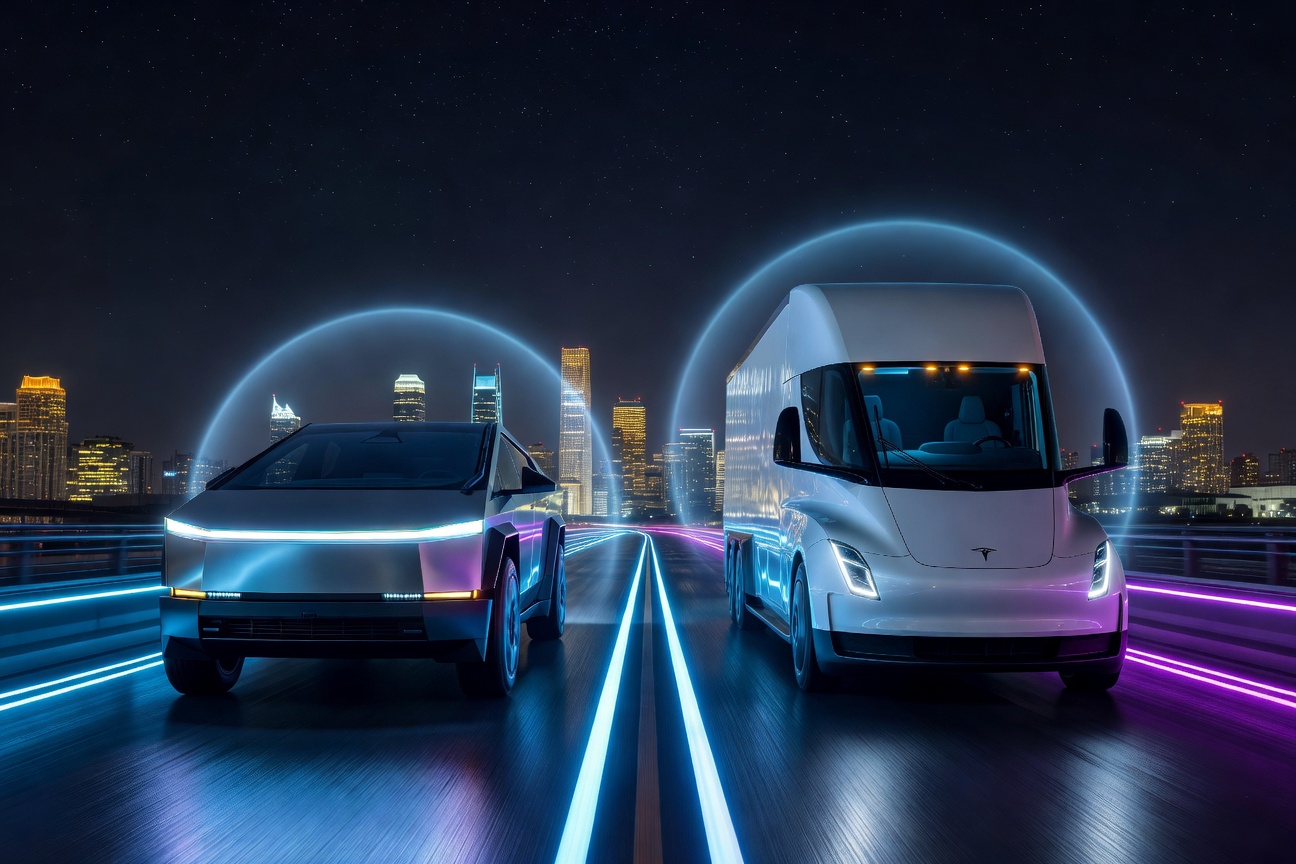
There is a moment, familiar to anyone who has ridden in a vehicle running Tesla's Full Self-Driving software, when the steering wheel moves without a human hand on it and the road ahead unfolds with mechanical calm. It lasts perhaps three seconds before the rational mind catches up. But in those three seconds, something ancient and deeply wired in human psychology shifts. Control — the primal assurance that you are the agent of your own fate — quietly transfers somewhere else. That transfer is not merely technological. It is civilizational.
The Truck as Cultural Totem
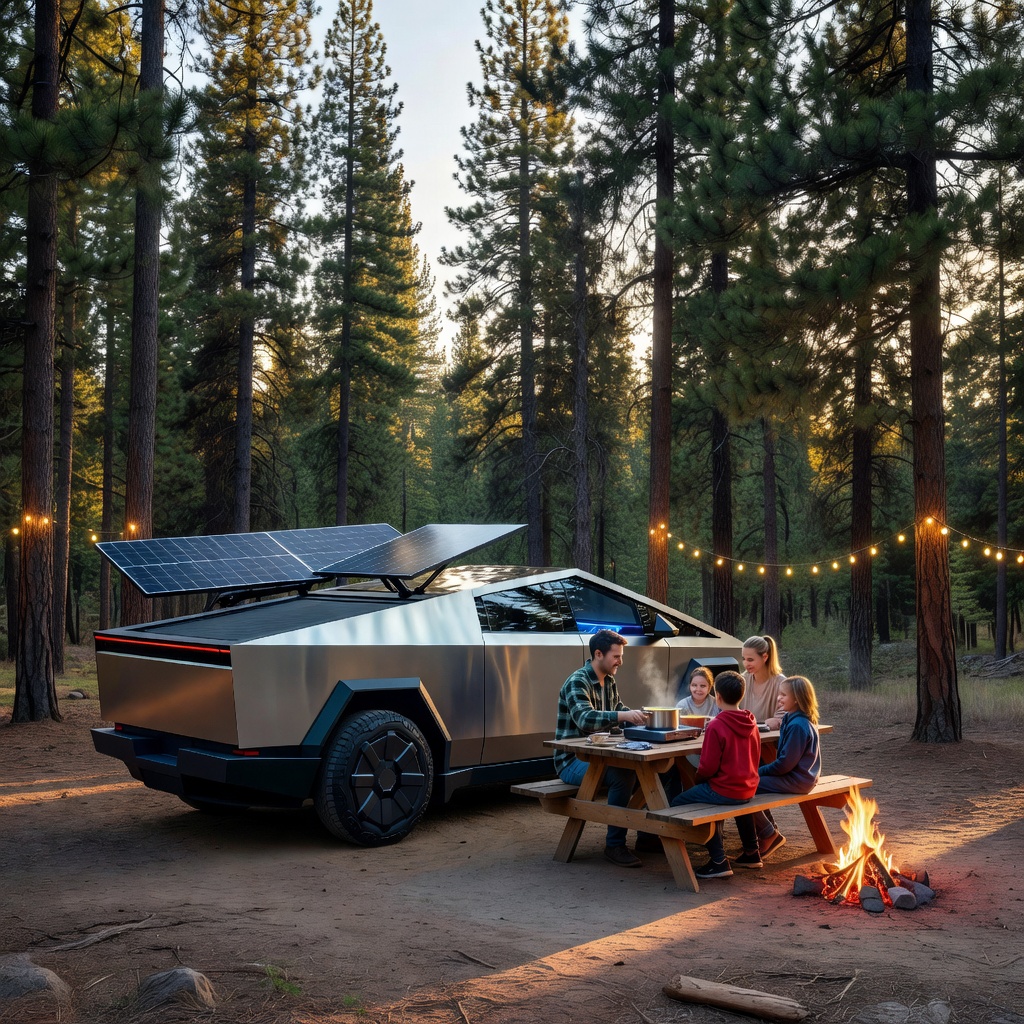
Americans, and increasingly the global public, have never treated trucks as simple transportation. The pickup truck in particular has functioned for generations as a mobile declaration of values: self-reliance, physical labor, freedom from urban constraint. Into this symbolic landscape arrived the Tesla Cybertruck, a vehicle so visually confrontational it looked less like something built in a factory and more like something excavated from a parallel timeline. Since its production ramp at Gigafactory Texas accelerated through 2024 and into 2025, the Cybertruck has sold in numbers that surprised even skeptics, crossing demographics that traditional truck manufacturers never penetrated simultaneously — ranchers and software engineers, off-road enthusiasts and urban minimalists.
What that cross-pollination reveals is striking. The Cybertruck has not simply attracted new truck buyers; it has begun dissolving the cultural wall between truck culture and tech culture. A vehicle that can power a job site with its onboard electrical output while simultaneously updating its autonomous driving software overnight is not playing by the old rules of what a truck is supposed to mean. It is rewriting them. And the people buying it are, consciously or not, buying into a revised identity — one where rugged utility and algorithmic intelligence are no longer opposites.
The Semi's Quiet Revolution in Labor
If the Cybertruck is a statement about personal identity, the Tesla Semi is a seismic event in the sociology of work. Long-haul trucking is not just an industry; it is a way of life with its own codes, rituals, and community. Roughly 3.5 million people in the United States alone earn their living behind the wheel of a commercial truck. The Semi, now in limited but expanding production with PepsiCo and other early fleet operators logging millions of real-world miles, does not immediately eliminate those jobs. But it begins the conversation about what those jobs become when the vehicle thinks alongside the driver.
Tesla's autonomy roadmap is explicit: the Semi is designed as an early platform for autonomous freight movement. Right now, a human operator is required. That requirement is both a regulatory formality and a cultural buffer — a transitional norm that lets society acclimate. But the buffer is temporary by design. When highway autonomy on the Semi matures to the point where a single remote operator can supervise multiple trucks simultaneously, the ethical weight of that shift will land squarely on policymakers, unions, and communities that have not yet begun the necessary conversations. The technology will not wait for the ethics to catch up. It never does.
Manufacturing as Moral Philosophy
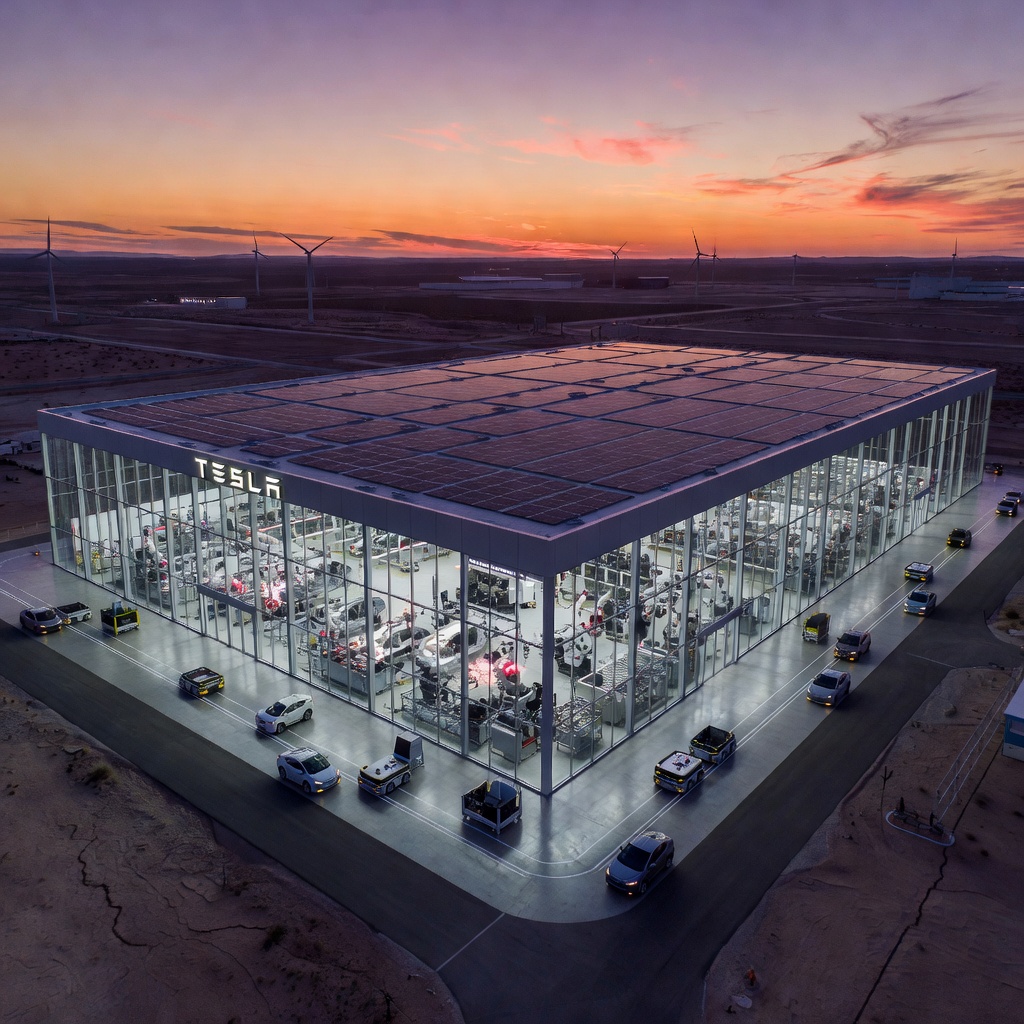
Tesla's factories — Gigafactory Nevada, Texas, Berlin, and Shanghai — are themselves artifacts of a new industrial ethic. The manufacturing process for both the Cybertruck and the Semi relies heavily on the company's proprietary gigacasting technology, which uses enormous die-casting machines to produce structural components in single pieces rather than hundreds of welded parts. The result is faster production, fewer failure points, and dramatically reduced material waste. It also means fewer assembly workers performing repetitive tasks, replaced by robotic systems operating with a precision no human arm can sustain across a twelve-hour shift.
This is where the cultural shift becomes genuinely uncomfortable to examine honestly. The efficiency gains are real and the environmental benefits of reducing manufacturing waste are measurable. But the displacement of human labor from the production floor raises questions that extend well beyond economics. What does it mean for communities built around automotive assembly when the factory that employed three thousand people now employs eight hundred, with the rest of the work performed by machines that never unionize, never call in sick, and never demand better conditions? The social architecture of factory towns was built on a specific relationship between human effort and manufactured output. Tesla's approach decouples those two things in ways that are only beginning to ripple outward.
Autonomy and the Ethics of Attention
Tesla's Full Self-Driving system, now in its supervised iteration available to a broad consumer base, has crossed a threshold that deserves more cultural scrutiny than it typically receives. The system handles the vast majority of driving inputs across highways, city streets, and complex intersections with a competence that regularly exceeds public expectations. The remaining failures are fewer in number but starker in consequence — and that asymmetry creates a new and genuinely novel ethical condition.
When a human driver causes an accident through inattention, we assign blame through a moral framework refined over a century of automotive law: negligence, recklessness, liability. When an autonomous system causes an accident, those frameworks crack. Is the driver negligent for trusting the system too much? Is Tesla liable for a capability gap between what the software implies it can do and what it actually does in edge cases? Is the regulator culpable for permitting deployment before the questions were answered? All three answers are partially yes, and that distributed culpability is profoundly disorienting for societies conditioned to locate responsibility in a single human agent behind a steering wheel.
The City That Does Not Exist Yet
Urban planners are beginning to grapple with the downstream consequences of a world where a significant percentage of vehicles are electric, connected, and capable of autonomous operation for at least portions of their journeys. Parking infrastructure — which currently consumes an almost absurd share of urban land in American cities — becomes partially obsolete when vehicles can drop off passengers and reposition themselves. Noise ordinances change when internal combustion engines disappear from residential streets. The social geography of cities, which has been shaped for decades by the assumption that cars are loud, polluting, and require constant human attention, begins to look different when those assumptions no longer hold.
None of this happens overnight, and Tesla is not the only actor in this transformation. But the company's particular combination of volume production, vertical software integration, and an explicit corporate ambition toward full autonomy makes it the most visible leading edge of the shift. The Cybertruck driving silently through a neighborhood at 2 a.m. with no driver inside, delivering a package, is not science fiction. It is a scenario Tesla has explicitly planned for and is actively building toward with its Robotaxi and autonomous delivery platforms.
What We Lose, What We Gain
Every major technological transition carries a ledger of gains and losses that takes generations to fully balance. The automobile eliminated the horse-drawn economy and, with it, an entire ecosystem of farriers, livery stables, and feed merchants. It also liberated human mobility at a scale previously unimaginable. The electric, autonomous vehicle transition is similarly double-edged. What erodes is the culture of driving as personal expression, the labor identity of the long-haul trucker, the neighborhood mechanic's livelihood built on combustion engine complexity. What emerges is quieter streets, dramatically reduced transportation emissions, freight networks that do not depend on human endurance, and potentially a radical democratization of mobility for the elderly and disabled.
Tesla's machines — brutal and angular in the Cybertruck's case, vast and silent in the Semi's — are the physical manifestation of a choice that society is making in slow motion, one purchase order and one software update at a time. The choice is not really about vehicles. It is about what kind of agency we are willing to surrender, what kind of labor we are willing to redefine, and what kind of future we are willing to build before we have fully agreed on its terms. The road ahead has never been more open. It has also never been more consequential who, or what, is doing the driving.
George Russell
Tech journalist covering Elon Musk’s companies for over 10 years.