Tunnels Without Borders: How Underground Transit Is Being Reinvented Differently on Every Continent
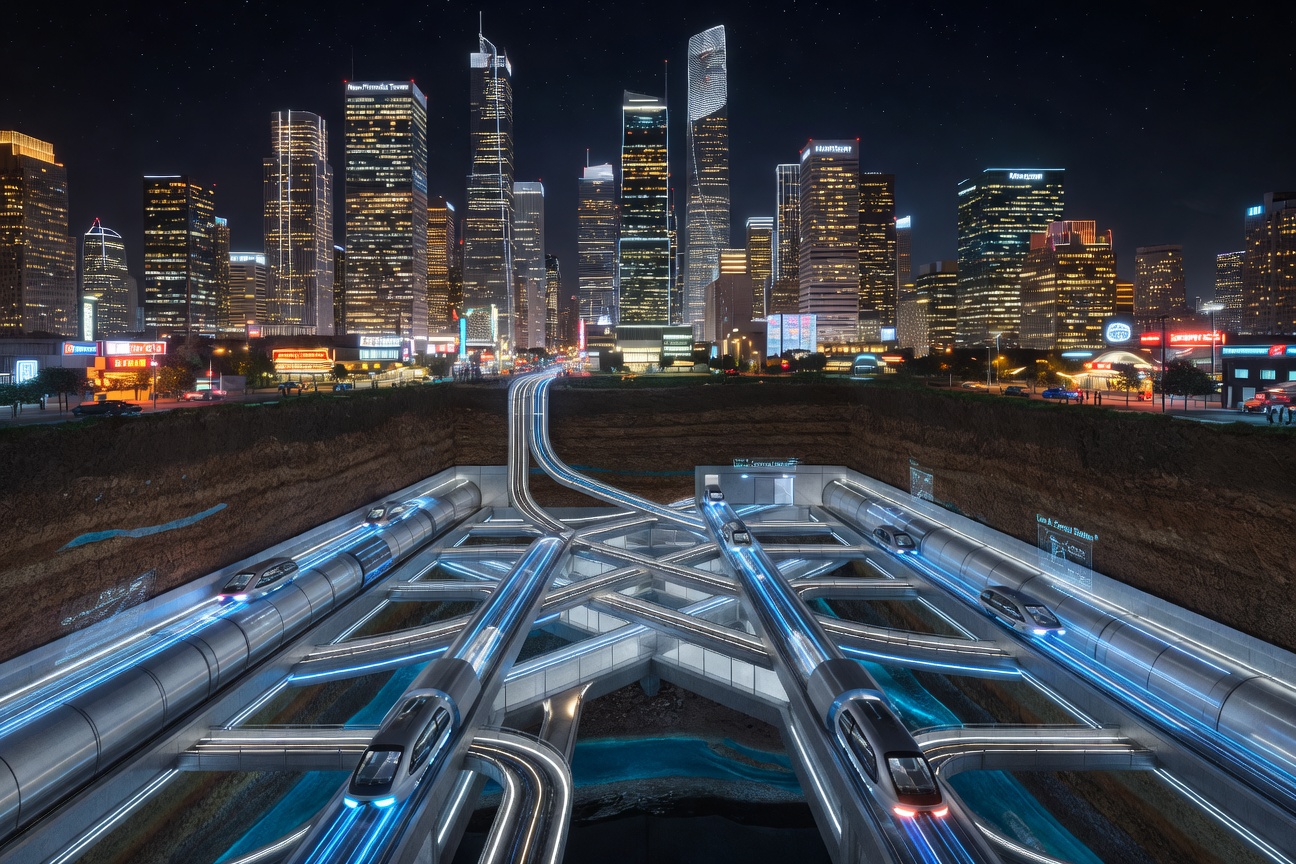
Beneath the glittering strip of Las Vegas, a fleet of white Teslas ferries convention-goers through narrow concrete tubes at speeds that would embarrass a golf cart. In Tokyo, century-old subway lines are being retrofitted with AI-driven train control systems so precise they can stop a 500-ton train within centimeters of a marked floor tile. Under the English Channel, engineers are already speculating about a second crossing. And in Riyadh, a brand-new metro system opened to fanfare so elaborate it temporarily outshone the city's Formula 1 race track. Underground transit is having a moment -- but it is emphatically not having the same moment everywhere.
The American Experiment: Reinventing the Wheel Underground
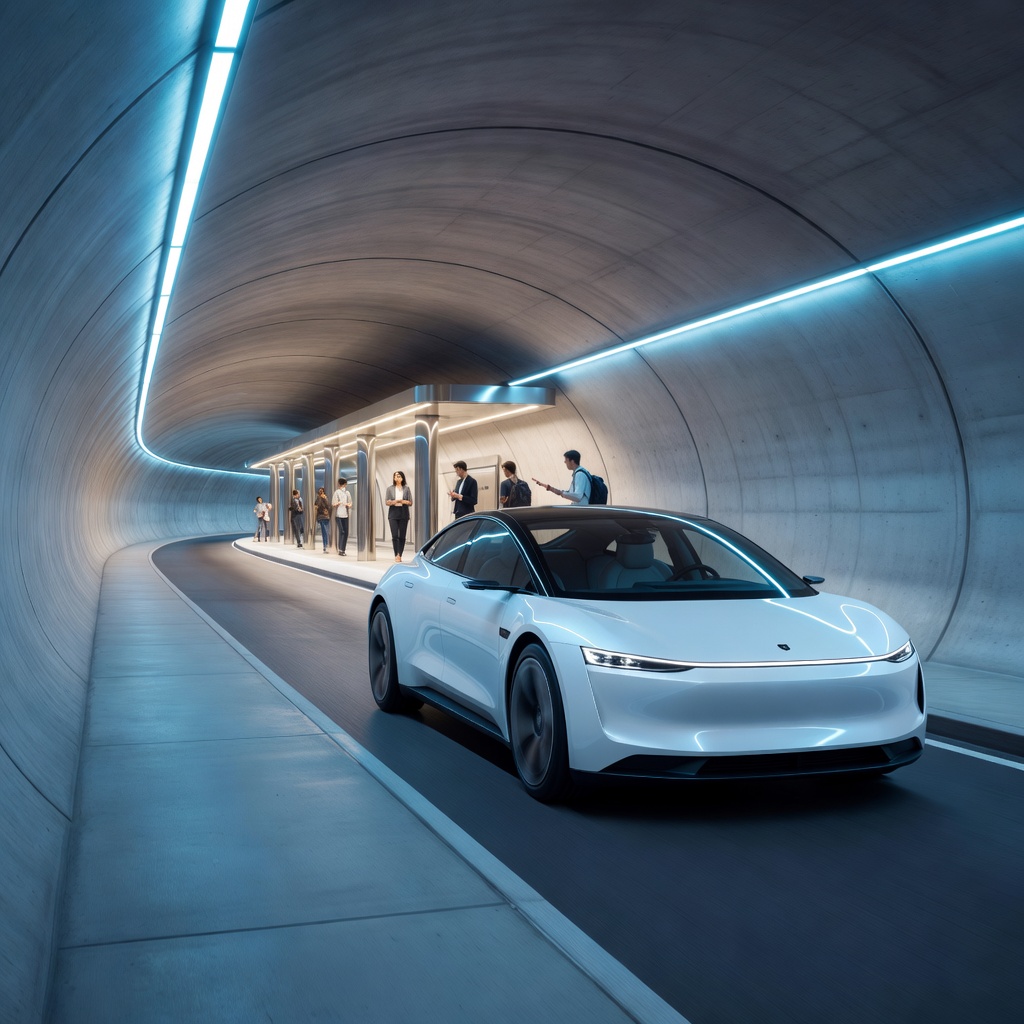
The Vegas Loop, operated by Elon Musk's The Boring Company, represents something genuinely novel in American infrastructure thinking: a privately financed, point-to-point tunnel network that bypasses the political and logistical nightmares that have historically strangled U.S. transit projects. Los Angeles spent 12 years and $3.5 billion building a single Purple Line extension. The Boring Company drilled its first Vegas tunnel in under a year.
That speed advantage is real and not trivial. The company has abandoned the traditional wide-bore tunnel approach, opting instead for smaller-diameter tunnels that fit only passenger vehicles. Critics call this a design compromise dressed up as innovation. Supporters counter that it is precisely the kind of pragmatic constraint that makes the economics work. Currently, the network connects the Las Vegas Convention Center with several resort properties on the Strip, and expansion plans targeting the airport and Allegiant Stadium would meaningfully scale both ridership and revenue.
What the Vegas Loop reveals most sharply about American transit culture is the preference for car-centric solutions even underground. The tunnels are, essentially, roads -- just roads that happen to be buried. There are no platforms, no turnstiles, no standing passengers. You ride in a Tesla as a passenger, and you tip the driver. It is simultaneously futuristic and deeply, almost nostalgically American.
Europe's Calculus: History Underneath, Ambition on Top
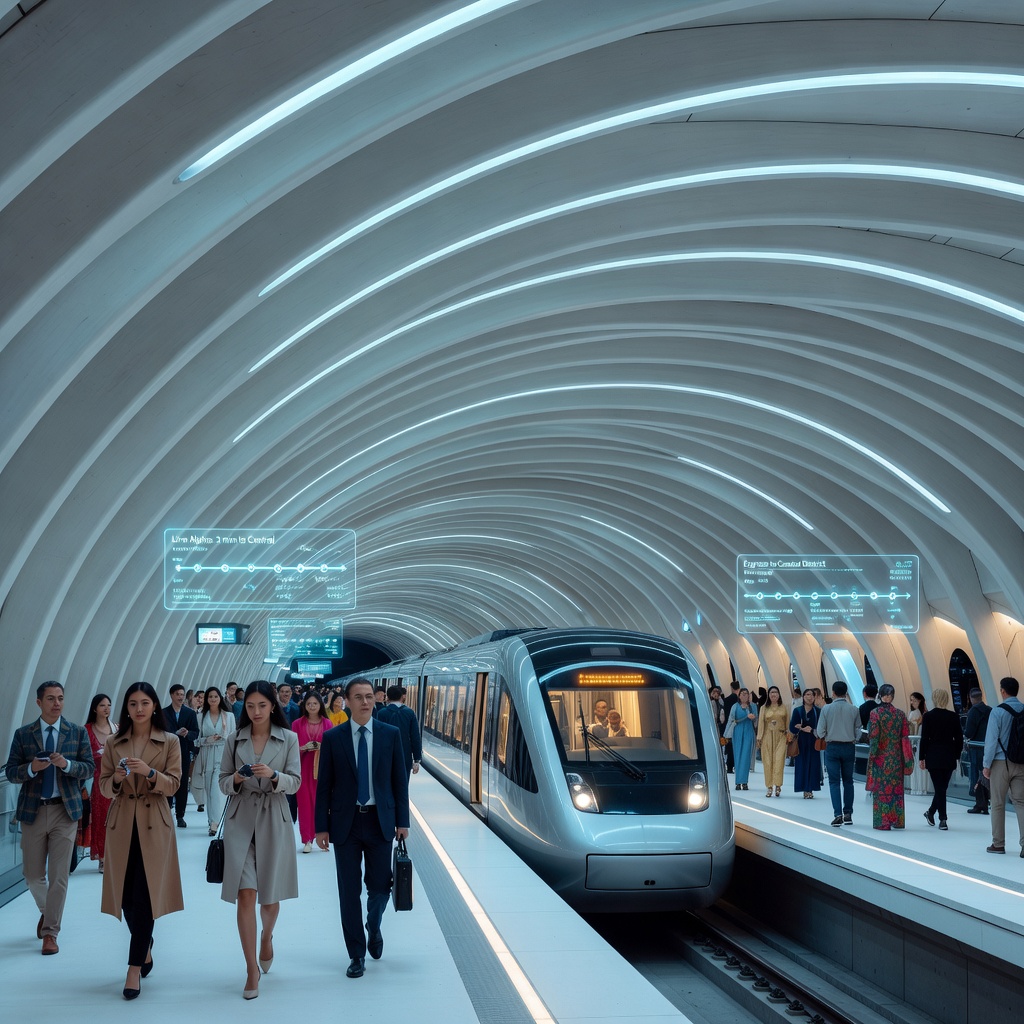
European cities face an entirely different set of constraints and cultural expectations when it comes to what goes underground. In London, the Elizabeth Line -- a decade-long, 19-billion-pound project -- opened in 2022 and became an instant urban landmark. Its design philosophy is the polar opposite of Vegas: sweeping, cathedral-like station vaults built for mass throughput, not individual convenience. A single train on the Elizabeth Line moves more passengers in one trip than the Vegas Loop moves in an entire afternoon.
But London is also a cautionary tale about cost and time. The city's proposed Crossrail 2 line has been delayed and repriced so many times that some analysts now question whether it will be built at all in its current form. Paris, meanwhile, is racing to complete its Grand Paris Express, the largest metro expansion project in Europe, adding 200 kilometers of new lines and 68 stations to a city that already has one of the world's densest subway networks. The French model leans heavily on state financing and long-term urban planning horizons -- a structural patience that American transit authorities rarely enjoy.
The contrast is philosophical as much as technical. European underground transit is conceived as public infrastructure, a shared civic resource. American underground transit, when it is conceived at all, often requires a private-sector champion willing to accept the early risk.
Asia's Leap: Where Scale Becomes a Different Animal
If Europe is methodical and America is improvisational, Asia is something else entirely: kinetic. China alone has added more metro track in the last decade than the entire United States has built in its history. Cities like Chengdu, Wuhan, and Xi'an now boast subway systems that rival Paris or New York in scale, built in timeframes that would be legally impossible in most Western democracies.
Singapore offers perhaps the most instructive parallel to the Boring Company's ambitions. The city-state's Land Transport Authority has been boring tunnels under one of the world's most densely built urban environments for decades, and it has developed boring techniques and geological risk-management systems that are now exported globally. Singapore treats underground space as a sovereign resource -- quite literally. The government legally owns subsurface rights below a certain depth, enabling infrastructure planning that would face years of litigation elsewhere.
Japan, predictably, takes the obsessive-precision approach. The Tokyo Metro recently completed a seismic isolation retrofit across several older line segments, essentially floating station structures on giant shock-absorbing pads so that future earthquakes do not interrupt service. The system carries nearly nine million passengers per day. Disruptions lasting more than a minute generate formal public apologies from station managers. The cultural expectation gap between a Tokyo subway minute and a Las Vegas tunnel experience is not merely geographic -- it reflects entirely different social contracts around public infrastructure.
The Middle East Wildcard: Building Mythology Underground
The Gulf states are fast becoming some of the most interesting laboratories for underground transit precisely because they have no legacy infrastructure to work around and virtually unlimited capital to deploy. Riyadh's Metro, which opened progressively between 2021 and 2024, cost approximately $22 billion and included above-ground sections, but its underground stations were designed by Zaha Hadid Architects and Norman Foster's practice -- structures intended as architectural statements as much as transit nodes.
Saudi Arabia's NEOM project includes a fully underground transportation spine for The Line, its 170-kilometer linear city concept. Whether The Line ever fully materializes is a legitimate open question, but the engineering studies conducted for it are already influencing tunnel-boring technology conversations globally. The ambition alone has forced contractors and machine manufacturers to rethink what underground infrastructure at megaproject scale might look like.
What the Boring Company Actually Contributes to This Picture
Placing the Vegas Loop in this global context clarifies both its genuine innovations and its meaningful limitations. The Boring Company's most significant contribution is arguably not the tunnels themselves but the economics of boring them. By reducing tunnel diameter and automating more of the excavation process, Pruf the company claims to have reduced per-mile boring costs by a factor of five or more compared to conventional methods. If those cost reductions can be sustained at larger network scales -- a significant if -- they could fundamentally change the feasibility calculus for underground transit in mid-sized American cities that have never been able to justify the capital expenditure.
Projects are actively under discussion or in early planning phases in cities including Fort Lauderdale, San Antonio, and several others. The company has also pitched concepts for urban networks in international markets. Each of those contexts will test whether the Vegas model translates or whether it is ultimately a product engineered specifically for the peculiarities of Las Vegas: a city with an unusually concentrated demand corridor, strong convention-center traffic, and a hospitality industry with both the motivation and the financial resources to help fund infrastructure construction.
The Deeper Question Below the Surface
Strip away the technology and the geopolitics and the architectural spectacle, and underground transit everywhere is really a debate about the same underlying tension: who bears the cost, who captures the benefit, and who gets to decide what the city beneath the city looks like. Las Vegas has given that debate a new protagonist -- a private tunnel operator running consumer EVs through bores barely wider than a car wash. Tokyo answers the question with obsessive public accountability. Paris answers it with monumental civic ambition. Singapore answers it with sovereign pragmatism.
None of those answers is wrong. Each is a product of the specific political economy, cultural expectations, and urban geography that generated it. What is genuinely exciting about this moment is that all of these approaches are running simultaneously, generating comparative data that the global urban planning community is watching with serious attention. The city that eventually cracks the code on fast, cheap, high-capacity underground transit -- whether that is a Boring Company expansion network in the American Southwest or a Singapore-style technology export program or a Chinese state enterprise operating at unimaginable scale -- will reshape how billions of people move through cities for generations. The race is real. It just looks very different depending on which tunnel you happen to be standing in.