Grok's Grand Delusion: Why 'Understanding the Universe' Might Be the Most Dangerous Promise in AI
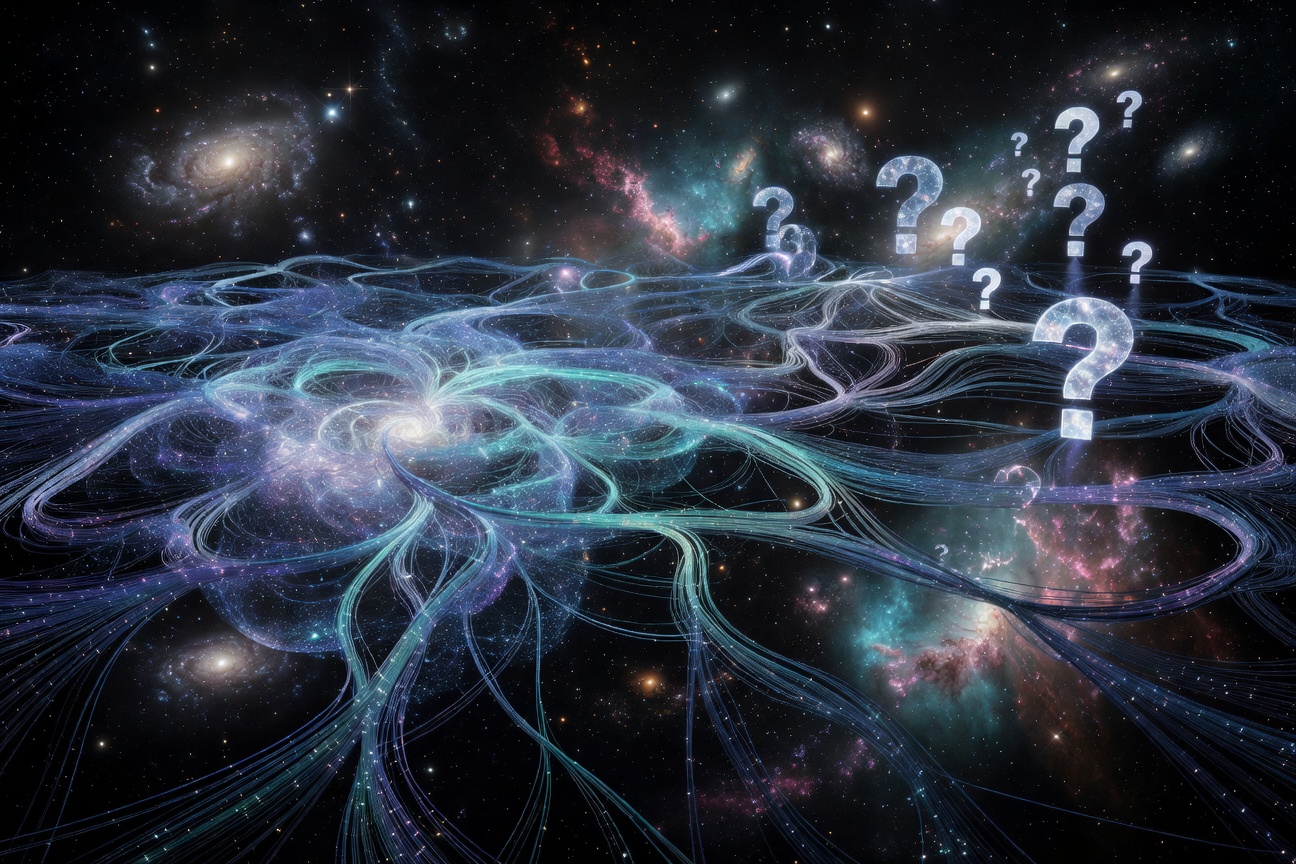
There is a peculiar kind of intellectual vertigo that sets in when you read xAI's founding mission statement for the dozenth time: "to understand the universe." It sounds magnificent. It sounds like the opening line of a creation myth. And that, precisely, is the problem. Because if you strip away the rhetorical grandeur and examine what Grok actually does, what any large language model actually does, you are left staring at a sophisticated autocomplete engine that has never once experienced a photon, a gravitational wave, or the particular cognitive discomfort that precedes genuine discovery. The gap between those two things is not a gap to be closed with more compute. It is a categorical chasm.
The Architecture Does Not Match the Ambition
Let us be precise, because precision is exactly what gets sacrificed whenever the conversation turns philosophical at an AI press event. Grok, in its various iterations including the multimodal Grok-2 and the forthcoming Grok-3, is a transformer-based language model. It predicts tokens. It optimizes for coherent, contextually appropriate text generation using patterns extracted from an enormous corpus of human-generated content. This is genuinely impressive engineering. The team at xAI has built systems that reason across long contexts, integrate real-time data from X, and compete credibly on mathematical benchmarks against OpenAI and Anthropic's finest offerings.
But "understanding the universe" is not a benchmark. It is not even a well-formed technical objective. Understanding, as any philosopher of mind will tell you, implies phenomenal experience, intentional states, and the capacity to be genuinely wrong in ways that matter to the understander. A model that has ingested every paper ever published on dark matter does not understand dark matter any more than a library understands the books on its shelves. The confusion here is not trivial. It shapes product decisions, funding narratives, and, most dangerously, public expectations about what AI can and cannot be trusted to deliver.
Musk's Track Record With Timelines and the Grok Roadmap
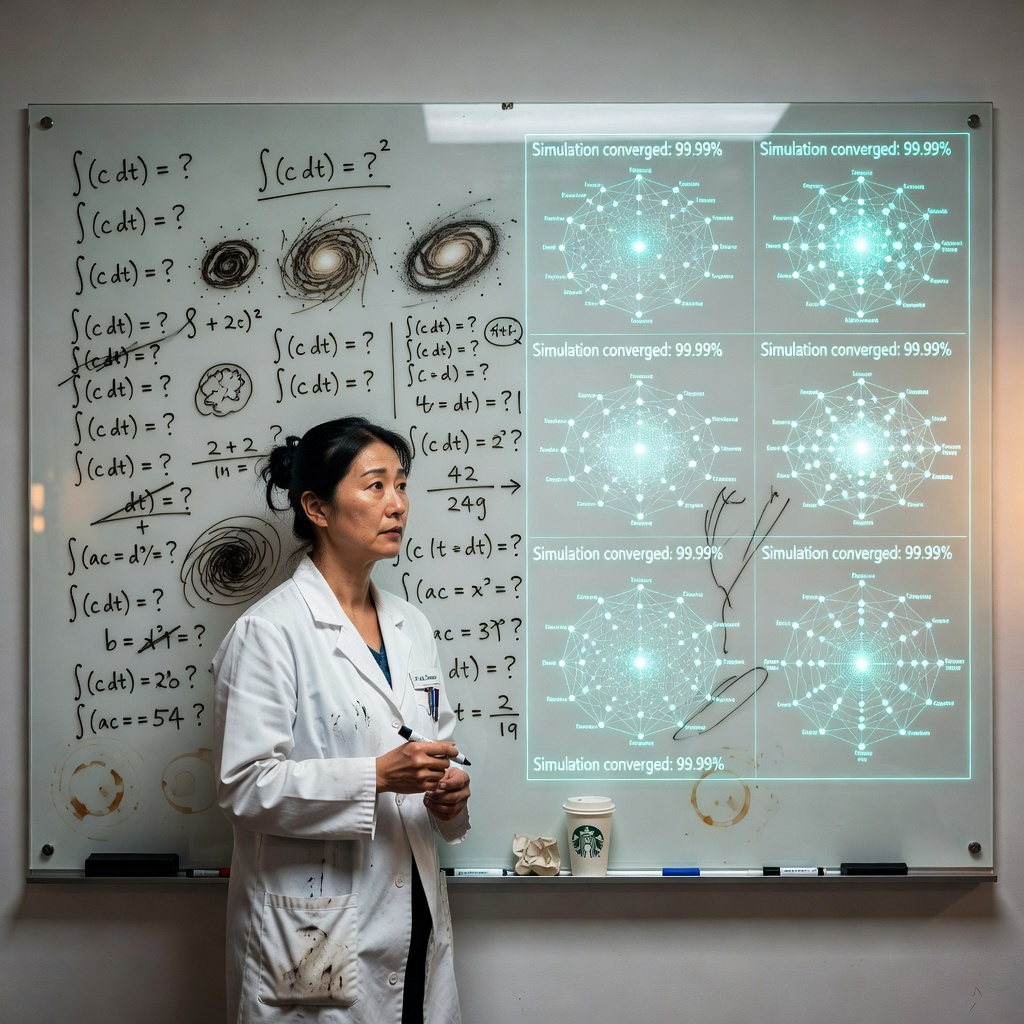
Elon Musk has a complicated relationship with specificity. His visions tend to arrive either years late or so thoroughly reframed that original promises become archaeologically interesting rather than practically relevant. Grok was announced in late 2023, positioned as a rebellious, humor-forward alternative to what Musk called the "woke" tendencies of competitors. That framing was always more about culture war positioning than technical differentiation. What followed was a series of model releases that, while competent, did not substantially outpace the broader industry on any metric that maps to the stated cosmic mission.
Grok-1.5 showed improved reasoning. Grok-2 introduced image understanding. The rumored Grok-3 is expected to leverage a dramatically scaled compute infrastructure, with xAI's Memphis supercluster, supposedly housing over 100,000 Nvidia H100 GPUs, providing the horsepower. Scale is real. The physics of scaling laws are real. But there is a mounting body of evidence, from researchers at DeepMind, MIT, and independent labs, suggesting that scaling alone produces systems that are better at appearing to understand rather than systems that actually do. The distinction matters enormously if your mission is genuinely epistemic rather than merely commercial.
What "Maximally Curious" Actually Means in Practice
xAI describes Grok as designed to be "maximally curious," a phrase that does real work in the marketing materials and essentially none in the model weights. Curiosity, in any meaningful cognitive science definition, involves intrinsic motivation, the capacity to identify gaps in one's own knowledge, and goal-directed information-seeking behavior. Current Grok implementations do none of these things autonomously. They respond. They do not initiate. They do not feel the pull of an unsolved problem at 3am. They do not experience the productive frustration that drives a physicist to reformulate a hypothesis after a failed experiment.
This is not a criticism unique to xAI. The entire industry is guilty of anthropomorphic marketing. But xAI's specific framing, tied as it is to the grandiose project of universal understanding, raises the stakes considerably. When OpenAI overpromises, the correction is awkward. When a company whose explicit mission is understanding reality overpromises, the correction potentially undermines the entire philosophical scaffolding of the enterprise. Investors, policymakers, and the public deserve clearer language about what these systems are optimized for versus what they are merely described as aspiring toward.
The Real, Underappreciated Technical Contributions
Here is where the contrarian position requires intellectual honesty about what it is contrarian toward. Dismissing xAI entirely would be as sloppy as uncritically celebrating it. The company has made genuine contributions that deserve recognition on their own terms, without being inflated into cosmological significance.
The open-sourcing of Grok-1 in early 2024 was substantively useful to the research community. Making a 314-billion-parameter mixture-of-experts model publicly available accelerated independent research into MoE architectures, interpretability, and fine-tuning methodologies. That is a real gift to the field, regardless of the press release language surrounding it. xAI's integration with real-time X data also represents a legitimate architectural experiment in grounding language model outputs in live information streams, addressing one of the more frustrating limitations of static training corpora.

The Colossus cluster, whatever marketing name attaches to it by the time this article goes to print, is also a serious engineering achievement. Building and operating infrastructure of that density requires solving non-trivial thermal, power, and networking problems. These are contributions to applied engineering at scale. They are worth discussing seriously. They are just not contributions to understanding the universe, and the conflation serves no one well.
A Better Mission Statement Would Actually Be More Ambitious
Here is the genuinely counterintuitive argument: abandoning "understand the universe" as a mission statement would not diminish xAI's ambitions. It would clarify and sharpen them in ways that might prove more productive. Consider what a precise version of that mission might look like. Build AI systems that accelerate the rate at which human scientists generate testable hypotheses. Create tools that surface non-obvious connections between experimental results across disciplines. Develop models capable of flagging where their own outputs are unreliable in ways that a domain expert can act on. These are hard problems. They are grounded in measurable outcomes. They do not require the system to actually understand anything in the philosophical sense, only to be genuinely useful to the humans who do.
The irony is that this more modest, more technically precise mission might actually get humanity further toward the cosmic understanding that Musk seems to care about. A physicist using a Grok-derived tool that reliably surfaces contradictions in the dark energy literature is closer to understanding the universe than a marketing team is when they write a mission statement asserting that the model itself will do the understanding. The confusion between tool and agent, between augmentation and replacement, between appearing to know and actually knowing, runs so deep in the current AI discourse that even companies nominally committed to scientific rigor have apparently inhaled the fumes.
What Comes Next, and Why It Matters to Watch Carefully
Grok-3 is coming. The compute is provisioned, the engineers are capable, and the competitive pressure from GPT-5-era OpenAI and Anthropic's Claude architecture ensures that xAI cannot afford to stagnate. The question worth watching is not whether Grok-3 will post higher numbers on MMLU or HumanEval. It almost certainly will. The question is whether xAI will begin to articulate a more epistemically honest account of what its systems are doing and what they are not.
The AI field is at a genuinely interesting inflection point where the gap between public narrative and technical reality is becoming a liability rather than merely a PR strategy. Researchers, regulators, and sophisticated users are increasingly capable of distinguishing between benchmark performance and genuine capability. Companies that get ahead of that distinction, that build cultures of epistemic clarity rather than epistemic theater, will likely prove more durable in the long run. xAI has the talent, the compute, and apparently the genuine conviction that this work matters. The charitable interpretation is that the cosmic mission statement is aspirational shorthand rather than a technical claim. But shorthand has consequences. And in a field where public trust is both essential and fragile, the most subversive thing xAI could do right now might be to say, precisely and honestly, what understanding the universe would actually require, and how far we all still are from getting there.