
One Truck, Many Worlds: How Tesla's Electric Fleet Is Being Received — and Resisted — Across the Globe
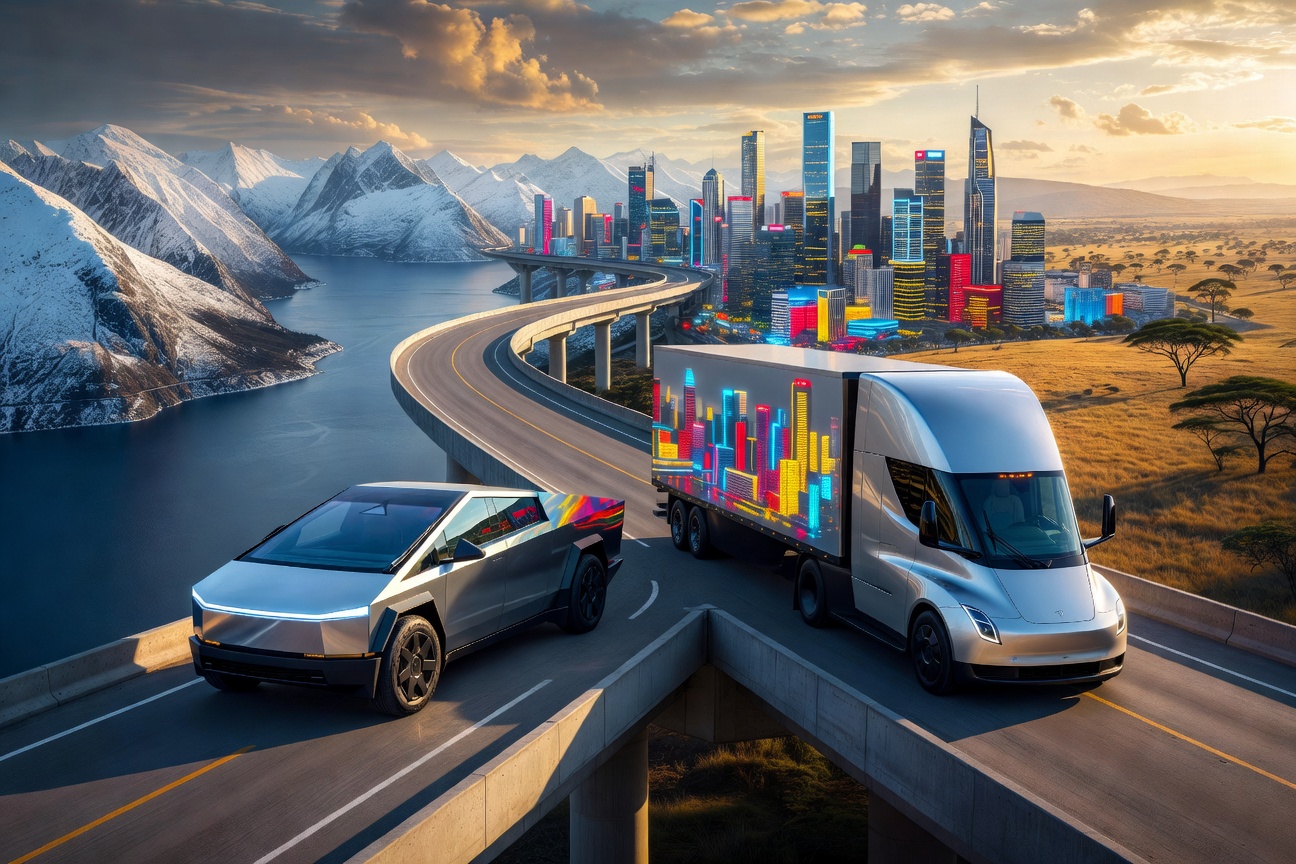
Picture a stainless-steel truck materializing in downtown Oslo, where EV adoption rates hover near 90 percent of new car sales, and the locals barely flinch. Then picture that same angular, polarizing machine rumbling through the dust roads outside Nairobi, where the electrical grid flickers on a good day and the nearest Tesla service center is a continent away. Same vehicle. Radically different realities. This is the central paradox of Tesla's current moment: the company is building machines designed to exist everywhere, yet the world is nowhere near ready to receive them equally.
The Cybertruck's Geography Problem
Since deliveries began in late 2023, the Cybertruck has accumulated a reputation as a vehicle that inspires visceral reactions — admiration, ridicule, awe, confusion — often in that order, sometimes simultaneously. But strip away the aesthetic debate and a more structural story emerges. The Cybertruck is, for now, a North American product trapped inside a global brand narrative.
Tesla has not certified the Cybertruck for sale in the European Union, largely because the vehicle's stainless steel exoskeleton poses pedestrian safety compliance challenges under EU regulations, which require vehicles to crumple in specific ways upon impact. That is not a minor regulatory footnote. It means Europe — home to some of the world's most enthusiastic EV buyers and the continent where Tesla has fought hardest for market share against Volkswagen, BMW, and an ascending wave of Chinese competitors — cannot legally purchase the truck that Tesla's own CEO called the most important product in company history.
Japan presents a different friction point altogether. The Cybertruck's dimensions exceed the width preferences deeply embedded in Japanese urban infrastructure, where narrow streets and compact parking norms make even a standard American pickup feel like an invasion. Australia, where ute culture runs as deep as the outback, is watching closely but cautiously, with right-hand-drive conversion requirements adding engineering complexity that Tesla has not yet publicly committed to solving.
The Semi's Slow Global March
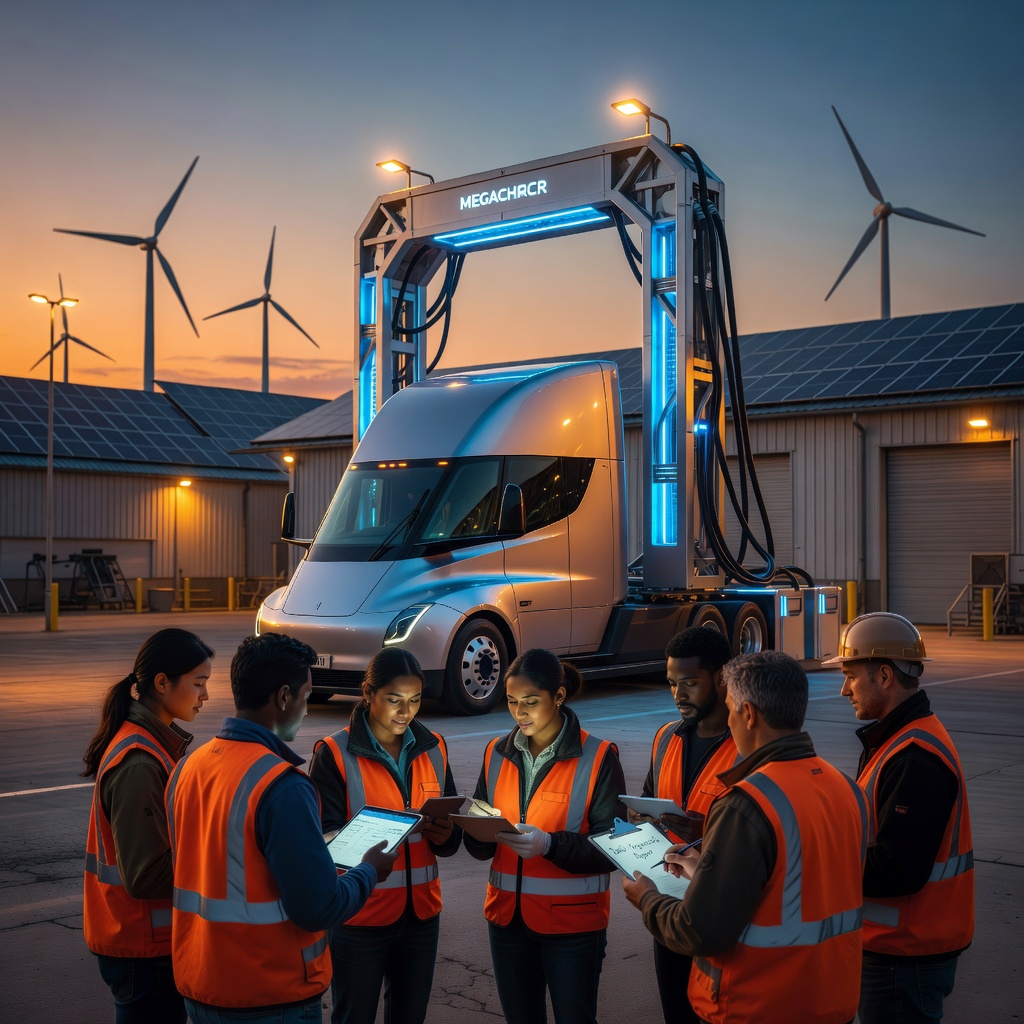
If the Cybertruck has a geography problem, the Tesla Semi has a geography opportunity — one that is being realized at a pace that frustrates logistics operators outside the United States. The Semi, which began limited deliveries to partners like PepsiCo and Frito-Lay in late 2022, has demonstrated remarkable real-world range performance, consistently meeting or exceeding its advertised 500-mile range under load. Independent operators have documented runs at 70,000 pounds gross vehicle weight that would have seemed implausible for a battery-electric truck just five years ago.
But the Semi's Megacharger infrastructure — the 1-megawatt charging network required to make the vehicle economically viable for long-haul routes — exists almost exclusively in California and a handful of other American states. For European freight operators eyeing fleet electrification deadlines imposed by EU emissions mandates, the Semi is theoretically appealing and practically inaccessible. For Australian mining operations, South American agricultural haulers, or Southeast Asian port logistics companies, the Semi remains a press release rather than a procurement option.
Tesla has signaled that Semi production will scale dramatically at its Nevada Gigafactory, with a dedicated Semi manufacturing line under construction. Volume production targets, once rumored for 2024, now appear to be tracking toward 2025 and 2026 with more realistic ambition. The manufacturing ramp matters enormously: at low volumes, the Semi serves as a demonstration project. At tens of thousands of units annually, it becomes a genuine market disruptor capable of reshaping how the global freight industry calculates total cost of ownership.
Autonomy: Where the Divergence Gets Dangerous
Nowhere does the global-versus-local tension become more charged than in Tesla's autonomy program. Full Self-Driving, now rebranded under the Supervised FSD designation following regulatory pressure, operates within a regulatory and infrastructural envelope that varies so dramatically between jurisdictions that it is almost misleading to call it a single product.
In the United States, Tesla's FSD Supervised has accumulated billions of miles of real-world data, benefiting from relatively standardized lane markings, high-quality road surfaces in most metropolitan corridors, and a regulatory environment that, while tightening, has permitted Tesla to iterate rapidly through over-the-air updates. The company's pivot toward a robotaxi model — anchored by the Cybercab, unveiled in late 2024 — assumes this regulatory flexibility will persist and eventually expand.
China tells a different story. Tesla operates in a market where local competitors like Huawei's smart driving stack, BYD's DiPilot system, and a constellation of startups are advancing autonomous features at speeds that rival or exceed Tesla's own development cadence. Chinese regulators have simultaneously become more permissive about autonomous vehicle testing zones while remaining protective of the data sovereignty implications of foreign AI systems mapping Chinese roads. Tesla's ability to transfer Chinese driving data to its global training pipeline has faced restrictions, meaning the world's largest EV market may be simultaneously Tesla's most important and most informationally isolated proving ground.
Europe, meanwhile, is constructing its own regulatory architecture around autonomous vehicles through frameworks that emphasize type approval, liability clarity, and human oversight in ways that may slow deployment timelines but ultimately produce more legally durable autonomy products. Tesla's FSD, optimized for American roads and American regulatory rhythms, will require meaningful adaptation to achieve widespread European authorization.

Manufacturing as the Great Equalizer — Eventually
Tesla's long-term answer to geographic fragmentation is manufacturing localization. Gigafactory Shanghai already produces vehicles calibrated for Asian market preferences, with local supply chains and price points that the Fremont factory could never match. Gigafactory Berlin serves European demand while navigating the continent's labor regulations and environmental permitting requirements, which famously delayed its opening by years.
The company's manufacturing philosophy, anchored in its proprietary unboxed production process and the use of giant aluminum castings that eliminate hundreds of individual parts, is designed to be replicable. Tesla's leadership has spoken openly about the possibility of future Gigafactories in India, Southeast Asia, and potentially South America, each of which would serve as a regional anchor for vehicle delivery, service infrastructure, and energy products like Powerwall and Megapack.
But manufacturing localization does not automatically solve regulatory divergence, cultural resistance, or infrastructure deficits. A Gigafactory in India would still produce vehicles that require charging infrastructure India is only beginning to build. A Gigafactory in Brazil would serve a market where EV incentive structures remain inconsistent and consumer familiarity with electric drivetrains is nascent compared to Western Europe or coastal China.
The Communities That Tesla Is Not Talking To
Perhaps the most underreported dimension of Tesla's global expansion is not the regulatory friction in wealthy markets but the near-total absence of Tesla's products from the world's fastest-growing vehicle markets. Sub-Saharan Africa, where vehicle ownership is expanding rapidly and where the consequences of fossil fuel dependence are acutely felt in urban air quality, has essentially no Tesla presence. South and Southeast Asia, home to billions of potential future vehicle owners, are being courted primarily by Chinese EV manufacturers offering vehicles at price points that Tesla's current lineup cannot approach.
The Cybertruck starts at approximately $80,000. The Semi's per-unit economics remain opaque but clearly favor large fleet operators with access to capital financing. FSD Supervised costs hundreds of dollars per month on a subscription basis. These are products designed for wealthy-market consumers and logistics operators with strong balance sheets, deployed globally in aspiration but locally in reality.
This is not a critique unique to Tesla. Every frontier technology company faces the tension between serving the customers who can pay today and reaching the communities that represent tomorrow's growth. But for a company whose stated mission is the acceleration of the world's transition to sustainable energy, the gap between global rhetoric and local access deserves more scrutiny than it typically receives in coverage dominated by American and European perspectives.
What the Next Cycle Reveals
The next 24 months will function as a stress test for Tesla's global ambitions. Semi production scaling will reveal whether the company can move beyond its demonstration-project phase and into genuine freight market disruption. Cybertruck's regulatory fate in Europe will signal whether Tesla is willing to engineer regional variants or accept that some markets simply will not receive some products. And FSD's evolution toward unsupervised operation will encounter the full complexity of regulatory environments that did not develop alongside Tesla's own timeline.
What makes this moment genuinely consequential is that the outcomes are not predetermined. Tesla has confounded pessimists repeatedly. It has also missed self-imposed deadlines with a consistency that has become its own kind of predictability. The global electric vehicle transition is happening, unevenly and at speeds that vary enormously by latitude, income, and political will. Tesla's machines are part of that story. But the story is far larger than any single company's product roadmap, and the communities writing their own chapters deserve to be heard.
George Russell
Tech journalist covering Elon Musk’s companies for over 10 years.