
The Humanoid Fallacy: Why Walking Robots Might Be the Wrong Answer to the Right Question
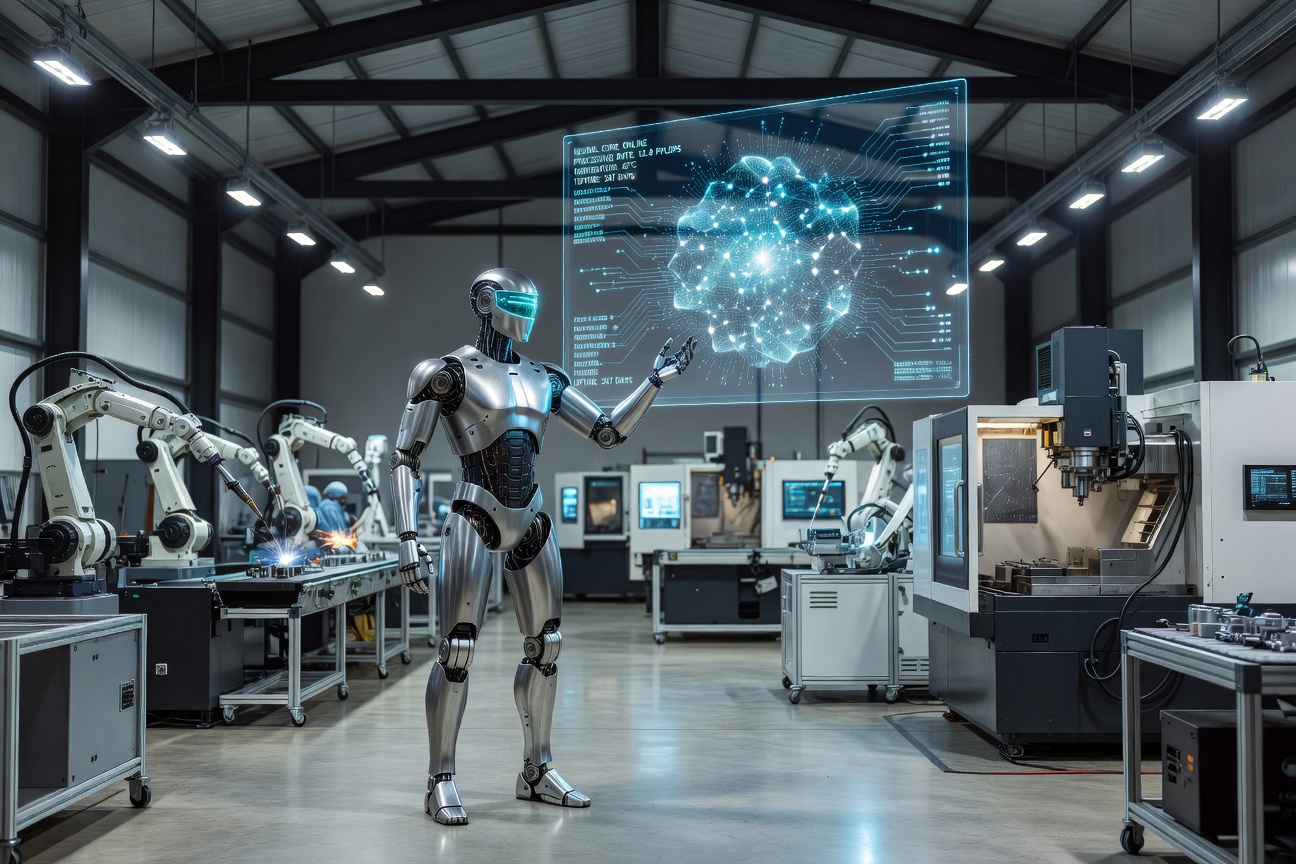
Everybody wants a robot that looks like a person. The impulse is ancient, woven into our mythology from the Golem of Prague to the androids of science fiction. So when Elon Musk unveiled Tesla's Optimus program and began producing glossy footage of a bipedal machine folding laundry and carrying boxes, the world responded with predictable awe. What fewer people are asking — and what the robotics engineering community is increasingly whispering at conferences — is whether the humanoid form factor is actually a sound engineering decision, or the world's most expensive exercise in anthropomorphic flattery.
The Shape of a Solution Nobody Questioned
Here is the foundational assumption baked into every humanoid robot program, including Tesla's: because human environments are designed for human bodies, robots that operate in those environments should have human bodies. It sounds unassailable. It is, on closer inspection, surprisingly fragile.
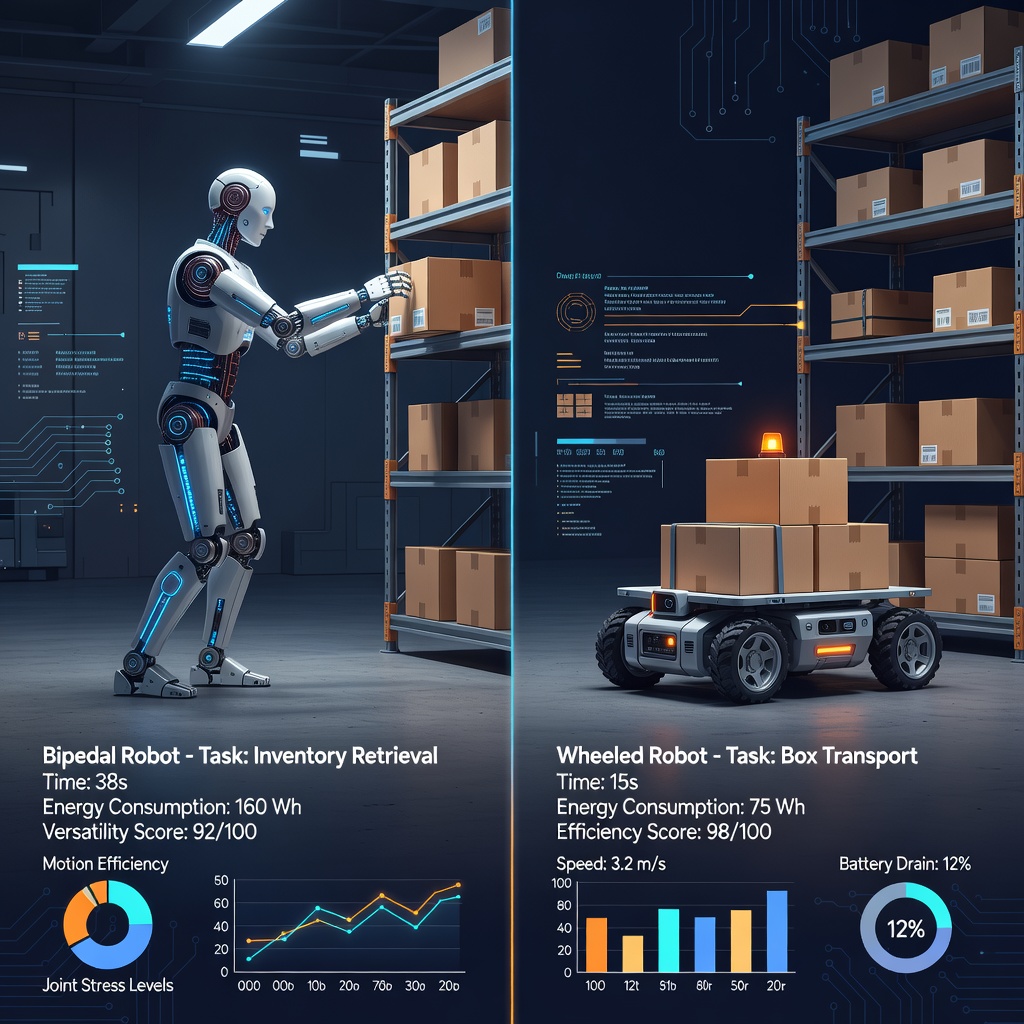
Consider what humanoid form actually demands. Two legs instead of four or six means inherently compromised stability — nature solved the bipedal balance problem over millions of years of evolution, and even then it gave us ankles that sprain and knees that fail. Replicating upright locomotion in a machine requires a dense stack of sensors, actuators, and real-time control algorithms just to keep the thing from falling over. Before Optimus lifts a single box, it is burning computational budget on the biological equivalent of not faceplanting. Wheeled and tracked robots — prosaic, unglamorous — simply do not have this problem. They move payload from point A to point B with a fraction of the engineering overhead.
Tesla's engineers are not unaware of this. They are among the most capable in the world. The question is not competence; it is whether the humanoid constraint is being treated as a design requirement when it is actually a design choice, and a philosophically motivated one at that.
What Physical AI Actually Needs
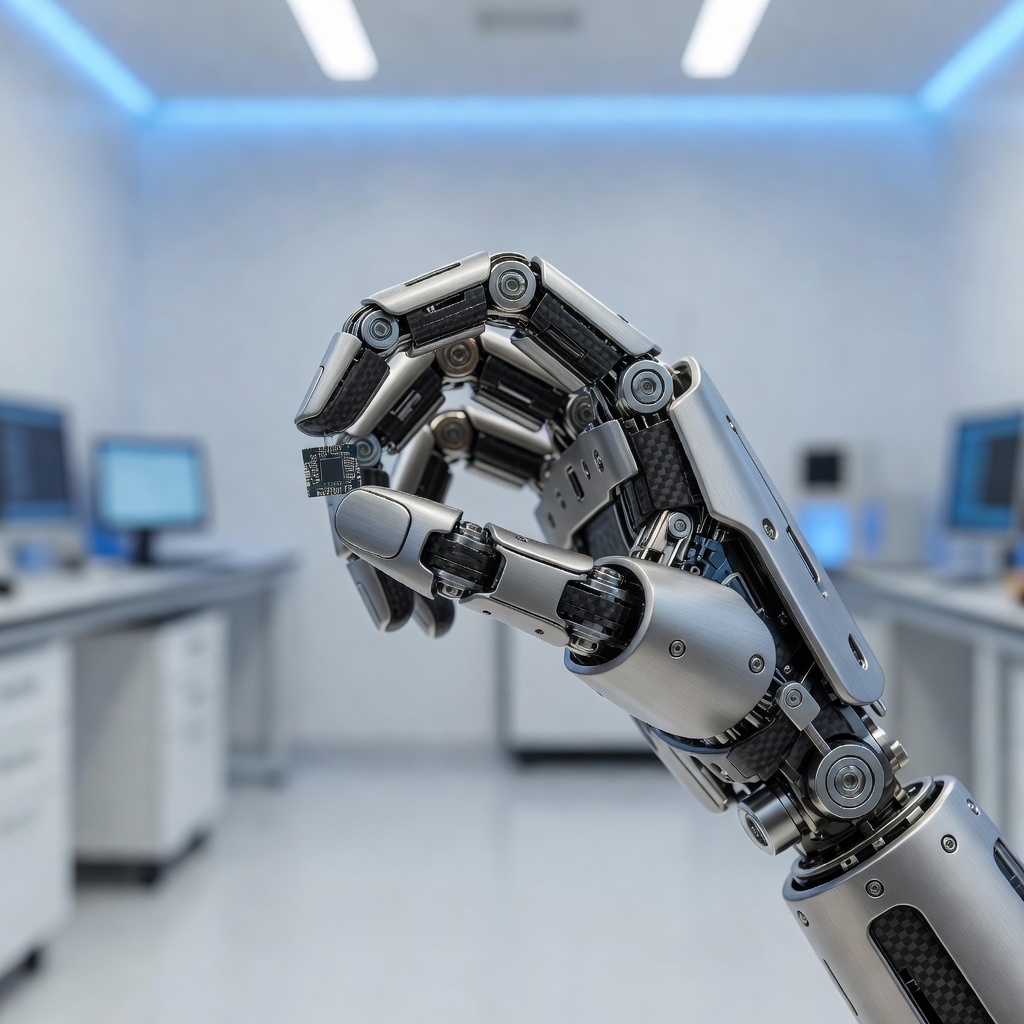
Strip away the form factor debate and focus on what physical AI genuinely requires, and a different picture emerges. The hard problems in embodied intelligence are perception, manipulation, generalization, and safe human interaction. None of these problems strictly require two legs and a torso. Dexterous hands matter enormously — that is real and important. Spatial reasoning about cluttered environments matters. The ability to generalize from one task to a novel one without retraining from scratch matters profoundly. Bipedal locomotion, by contrast, is a means of traversal that solves a navigation problem, and navigation is actually one of the more tractable problems in the field.
Tesla's neural network stack, trained on vast quantities of real-world video data harvested from its vehicle fleet, genuinely represents a paradigm shift in how robots can learn about the physical world. That is the real story, and it would be equally powerful — arguably more deployable sooner — if it were running on a form factor optimized for the actual task environment rather than one optimized to look good in a keynote presentation.
The counterargument from the humanoid camp runs like this: purpose-built robots require purpose-built facilities. A humanoid can drive a forklift, climb a staircase, open a door, and then pack a shipping container — versatility that a specialized machine cannot touch. This is true in principle. It is less impressive in practice when the humanoid falls over on uneven flooring, requires careful environmental pre-mapping, and operates at speeds that a human worker would find insultingly leisurely. The versatility argument is a promissory note written against future capability, not a description of current reality.
Tesla's Real Competitive Moat Is Not the Robot's Legs
What Tesla actually has that competitors lack is not Optimus's ability to walk. It is the data flywheel. The same infrastructure that processes billions of miles of driving data to train Full Self-Driving models can, with adaptation, train physical manipulation policies at a scale that Boston Dynamics, Figure, and Agility Robotics cannot approach from a standing start. This is a genuine, durable advantage — and it is entirely separable from the question of whether the robot should have two legs or wheels.
Musk has said publicly that Optimus could eventually outnumber humans, with a potential production of tens of millions of units. At that volume, form factor is an economic variable. Two-legged robots have more joints, more actuators, more failure points, more expensive maintenance profiles. A wheeled robot with equivalent AI capability would be cheaper to manufacture, cheaper to maintain, and easier to insure. The humanoid tax is real and it compounds at scale.
The Uncomfortable Psychology of Robot Design
There is a reason humanoid robots dominate investment narratives despite these engineering realities, and it has nothing to do with kilogram-per-dollar payload efficiency. Humans relate to human shapes. Investors fund what they can visualize. Regulators and the public are more likely to accept something that moves like a person than something that moves like an appliance. Robot companionship and elder care — massive future markets — demand social legibility that a warehouse cart simply cannot provide.
This is not cynical. It is a legitimate product consideration. But it should be labeled accurately: the humanoid form factor is partly a user experience and market positioning decision, not purely an engineering optimum. The robotics field's refusal to say this loudly is its own kind of intellectual dishonesty, and the hype cycle suffers for it. When Optimus stumbles — and it will stumble, literally and figuratively, because bipedal locomotion in unstructured environments remains extraordinarily difficult — observers will perceive failure rather than what it actually is: a predictable consequence of imposing unnecessary biomechanical constraints.
Where the Contrarian View Has Its Own Blind Spots
Intellectual honesty demands acknowledging where this critique overshoots. The world is genuinely built for human bodies, and retrofitting every environment for specialized robots is its own enormous cost. Staircases, vehicle interiors, narrow aisles stocked for human hands — the infrastructure of daily life does assume upright, two-handed, bipedal users. A robot that can move through that infrastructure without modification has real network effects that are hard to price from first principles.
Furthermore, Tesla is not naively stumbling into bipedal design. The team includes serious control theorists and biomechanics researchers who understand the tradeoffs. The bet being placed is not that humanoid form is the most efficient solution today — it is that it becomes the most economically rational solution once manufacturing scale drives down actuator costs and AI capability handles the locomotive complexity gracefully. That is a plausible thesis. It is simply not guaranteed, and the industry's collective refusal to interrogate it is what makes contrarian scrutiny valuable.
Physical AI at a Crossroads
The broader physical AI revolution is real and consequential regardless of how the form factor debate resolves. The capacity for machines to reason about the physical world, to manipulate objects they have never encountered, to learn from observation rather than exhaustive programming — these represent genuine discontinuities in what machines can do. Tesla, for all its humanoid theatrics, is contributing meaningfully to this transition through its neural net infrastructure, its simulation environments, and its willingness to deploy robots in actual production settings and absorb the messy reality data that entails.
The critique offered here is not that Tesla is wrong to build Optimus. It is that the industry, the press, and the investment community are wrong to treat humanoid form as axiomatic — as the obvious, unquestionable destination of physical AI development. History is littered with technologies that succeeded because they solved the right problem efficiently, not because they looked the most dramatic while doing it. The automobile did not look like a horse. The smartphone did not look like a typewriter. The robot that eventually transforms manufacturing, elder care, and domestic labor may not, in the end, look very much like a person at all.
That possibility deserves more than a footnote in the current conversation. It deserves a genuine engineering reckoning — one the industry seems reluctant to have while the humanoid hype cycle is still paying well.

George Russell
Tech journalist covering Elon Musk’s companies for over 10 years.