
Dawn Patrol: Riding Shotgun (With Nobody) as Tesla's Robotaxi Army Wakes Up
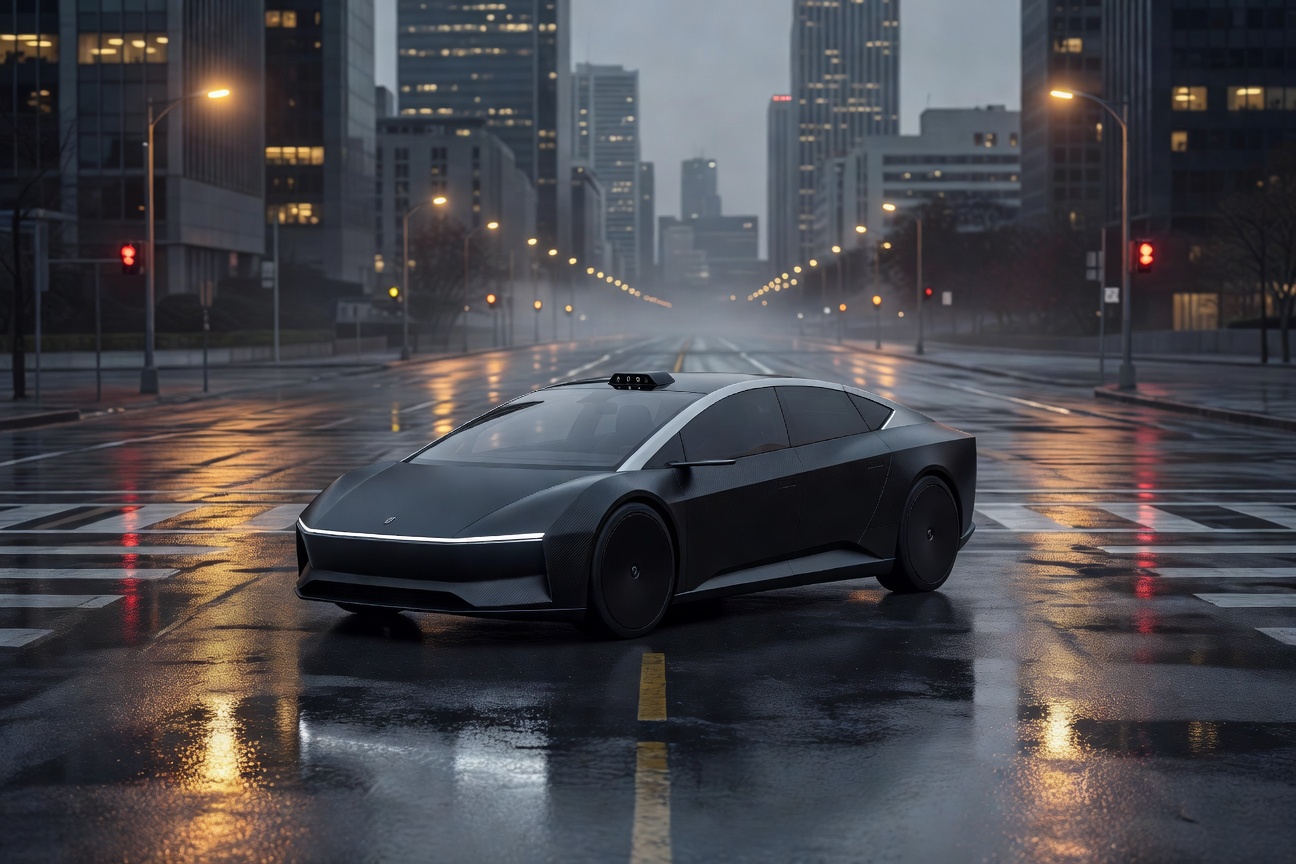
The parking structure on the eastern edge of Austin's tech corridor is unremarkable by any daylight standard, a concrete ziggurat humming with ventilation fans and the occasional pigeon. But at quarter to five in the morning, something shifts. A row of wedge-shaped vehicles, each one conspicuously absent of side mirrors and steering wheels, begins to stir. Their cameras blink open like compound insect eyes catching the first photons of the day. One by one, without a single human hand on any control surface, they roll out into the pre-dawn streets of Texas. Tesla's robotaxi network is not coming. It is already here, already billing, already learning, already making split-second decisions that engineers in Palo Alto will dissect by 9 a.m.
The Machine That Ate the Taxi Industry's Homework
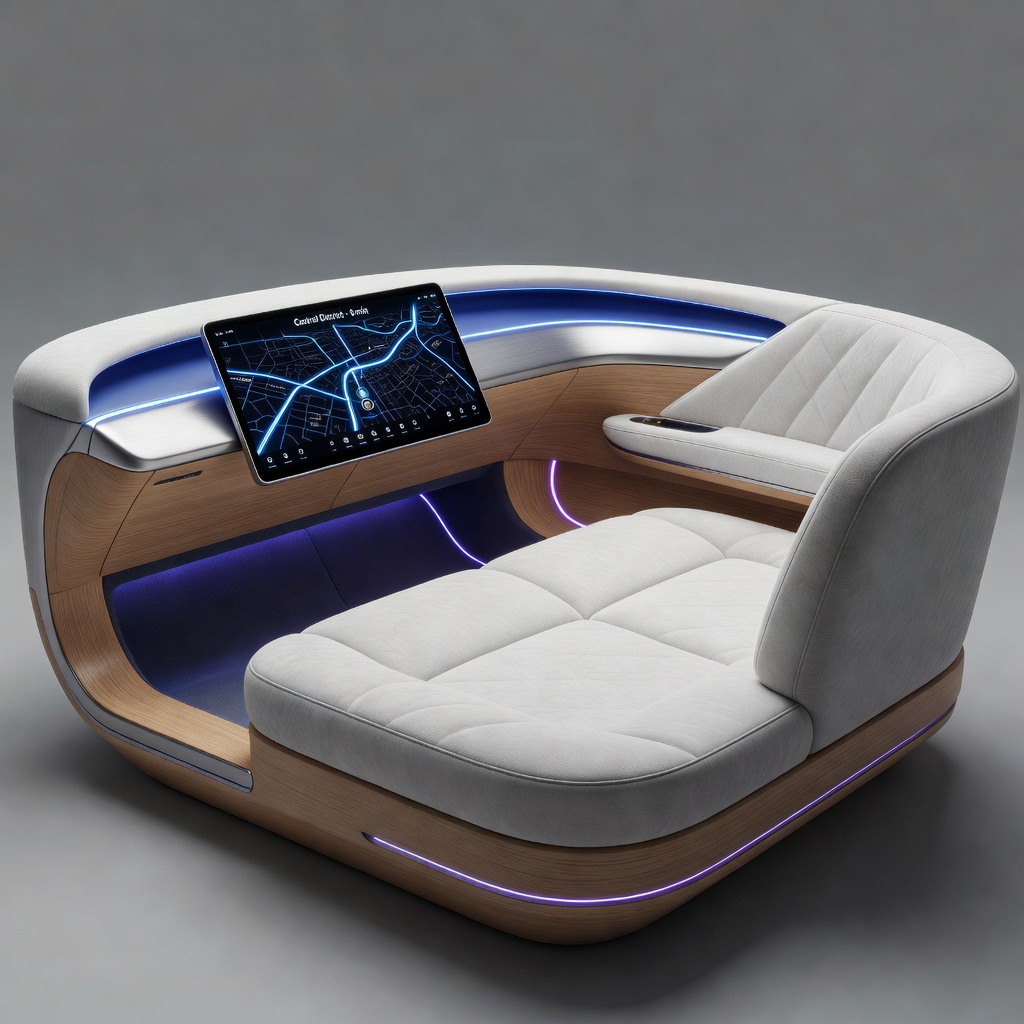
The Cybercab, Tesla's purpose-built autonomous vehicle unveiled to considerable fanfare in late 2024 and now entering limited but expanding commercial deployment, is less a car than a philosophical provocation rendered in aluminum and glass. Strip away the nostalgia, the human-to-human transaction of hailing a cab, the small talk, the debated route, the crumpled receipt, and what you are left with is pure transport utility. The Cybercab's interior is deliberately stark: a continuous bench seat, a central touchscreen, ambient lighting that shifts color based on route progress. There is no rearview mirror because there is no driver to look into it. The absence feels radical the first time and completely obvious the third.
Tesla's approach to autonomy has always been the subject of passionate debate among engineers, regulators, and competitors alike. Where rivals like Waymo leaned into expensive lidar arrays and high-definition mapping of every curb cut and pothole, Elon Musk made a counter-bet that now appears, at minimum, credible: vision-only systems, trained on the staggering volume of real-world data accumulated by millions of customer-owned Teslas already navigating every conceivable road condition on earth. Full Self-Driving, or FSD, in its latest iteration is the software backbone of the Cybercab, and the gap between the version that nervously crept through residential neighborhoods in 2021 and what is running in Austin today is roughly the gap between a student pilot and a commercial airline captain.
The Data Moat Nobody Wanted to Talk About
Here is the number that makes Tesla's competitors quietly uncomfortable: somewhere north of six million vehicles on public roads, every one of them a rolling data collection node, every one of them uploading edge cases, near-misses, unusual pedestrian behaviors, and ambiguous lane markings back to Tesla's training infrastructure. Each Cybercab that operates commercially does not just complete a trip; it generates annotated real-world data that feeds the next version of the neural network. The fleet learns collectively. A tricky merge on a rain-slicked freeway in Houston informs the system's confidence the next time a Cybercab in San Jose encounters similar geometry.
This flywheel dynamic is what Musk has called the core competitive moat, and it is genuinely difficult to replicate from scratch. A startup entering autonomous ride-hailing today would need to accumulate years of diverse real-world miles simply to approach the statistical depth Tesla already possesses. The argument is not that Tesla's system is perfect, because it is not, but that its imperfections are being corrected at a pace and scale that competitors with smaller fleets simply cannot match. Regulators, for their part, are watching incident reports with forensic attention, and Tesla's safety data per million miles traveled continues to be the central exhibit in any serious policy discussion about permitting expansion.
What a Robotaxi Morning Actually Looks Like
Back in Austin, a Cybercab accepts a fare at 5:12 a.m. The passenger, a nurse finishing a night shift, taps the app, confirms her destination, and slides into the bench seat. The door closes with a satisfying thunk. The car checks its surroundings with a 360-degree camera sweep, notes a cyclist approaching from the rear, waits a precise 1.8 seconds, and then pulls smoothly into the lane. There is no lurch, no theatrical acceleration, no sensation that the system is overcompensating for the absent human hand. It is, if anything, unsettlingly calm.
The route takes roughly eleven minutes. At two points, the Cybercab encounters situations that would have generated uncertainty in older FSD builds: a construction zone with temporary orange barrels creating an ambiguous lane boundary, and a school crossing guard who steps into the street slightly outside a marked crosswalk. In both cases, the vehicle decelerates early, yields generously, and proceeds only when the path is geometrically unambiguous. The nurse barely looks up from her phone. That nonchalance, more than any engineering specification, signals how much ground autonomous vehicles have covered.
The Economics That Keep Analysts Up at Night
Tesla's financial thesis for the robotaxi network rests on arithmetic that is simultaneously straightforward and staggering. A personally owned car sits idle approximately 95 percent of the time. A vehicle in a robotaxi network, by contrast, can operate continuously, interrupted only by charging cycles. Remove the driver, who in a conventional ride-hailing arrangement takes somewhere between 20 and 30 percent of each fare, and the unit economics shift dramatically. Tesla has suggested a per-mile cost for Cybercab operation that would undercut human-driven competitors by a substantial margin while still generating meaningful margin for the company.
The wildcard is charging logistics and fleet maintenance. Tesla's Supercharger network provides a significant structural advantage here, another domain where years of infrastructure investment compound into a competitive position that is expensive to replicate. Fleet operators integrating third-party vehicles into a robotaxi network face the messy reality of heterogeneous charging standards and service contracts. Tesla, running its own vehicles on its own charging infrastructure with its own software, sidesteps much of that complexity. Analysts covering the space have begun using the phrase vertically integrated autonomy, which is either a compliment or a concern depending on whether you are a Tesla shareholder or an antitrust regulator.
Friction Points and Honest Caveats
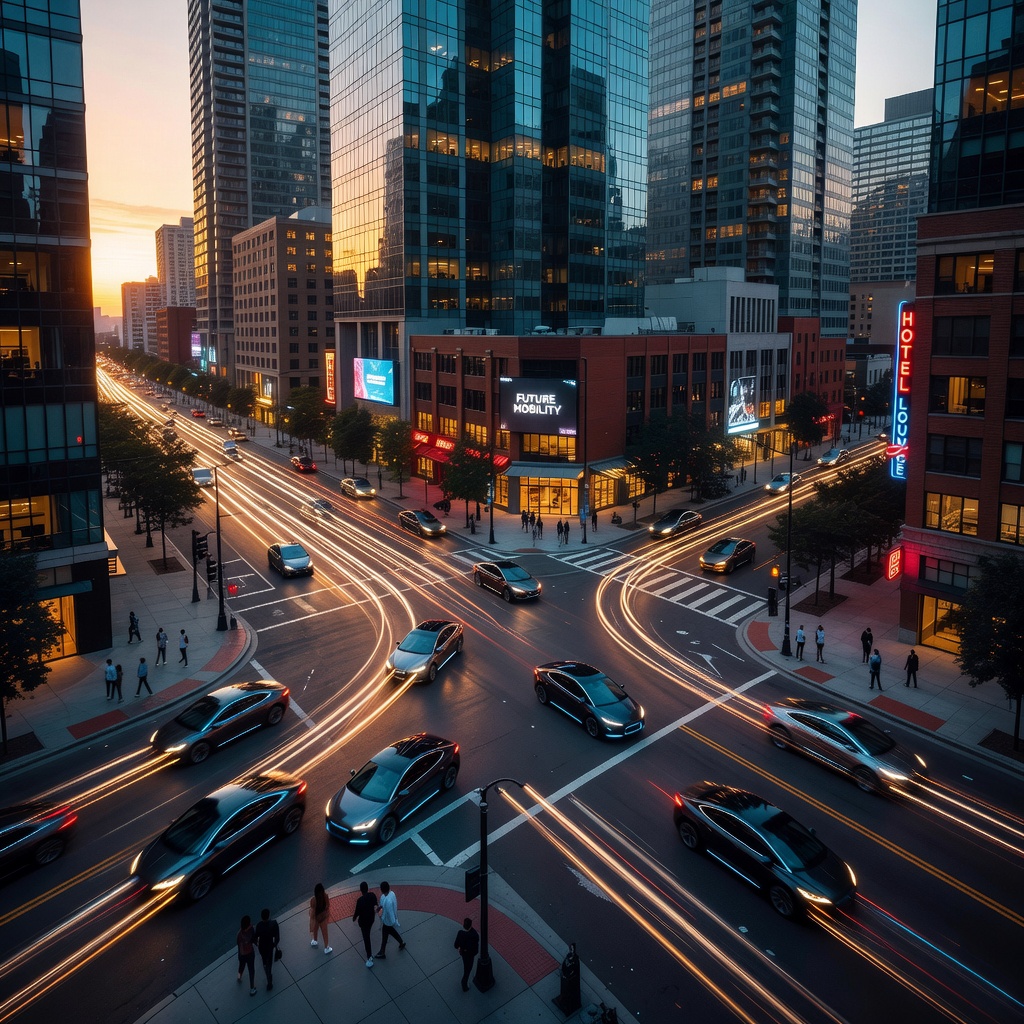
Enthusiasm for the network should not paper over the genuine challenges that remain. Regulatory approval is a state-by-state, sometimes city-by-city, patchwork of requirements, timelines, and political appetite. Some municipalities remain skeptical. A handful of high-profile autonomous vehicle incidents from other operators have raised public anxiety in ways that affect Tesla's expansion conversations even when Tesla's own safety record is not the direct cause. Perception is a force multiplier in either direction.
There is also the question of edge case handling in genuinely novel conditions. Extreme weather events, mass casualty incidents, large-scale infrastructure failures, these are scenarios where a human dispatcher and driver network possesses a kind of adaptable improvisation that fully automated systems have not yet demonstrated at scale. Tesla engineers acknowledge this openly and frame it as an active area of development rather than a theoretical future problem.
And then there is the labor dimension. Ride-hailing has been, for millions of people globally, a flexible income source during economic transitions. The displacement that robotaxi expansion will cause is real, gradual, and largely invisible to anyone not experiencing it personally. Musk has historically argued that new productivity creates new opportunities, a claim that economists debate vigorously and workers living through the transition experience as cold comfort.
What the Pavement Already Knows
By 6:30 a.m., the Austin fleet has logged its first hundred completed trips of the day. The data is already in transit, compressed, anonymized, and folded into the training queue. Somewhere in that data is the construction zone, the nurse, the crossing guard who stepped off the curb at an angle no textbook prepared anyone for. The network is slightly smarter than it was at dawn. Tomorrow it will be slightly smarter still.
Tesla's robotaxi ambition has always invited the accusation of being a promise stretched indefinitely forward, a horizon that retreats as you approach it. The streets of Austin at five in the morning tell a different story, quieter than the press releases, less dramatic than the skeptics, but undeniably, kinetically real. The Cybercabs roll. The fares complete. The algorithms iterate. Whatever the final shape of autonomous urban mobility turns out to be, this particular morning shift has already clocked in.

Alex Rivera
Tech journalist covering Elon Musk’s companies for over 8 years.