The Billion-Dollar Brain Race: How BCI Investment Is Redrawing the Map of Human Capability

When Elon Musk founded Neuralink in 2016, the premise sounded like science fiction wrapped in a Silicon Valley pitch deck: implant a chip inside a human skull, link neurons to software, and eventually allow people to control computers with nothing but thought. Eight years later, Neuralink has completed its first human trials, competitors have multiplied across three continents, and the global neurotechnology market is hurtling toward a projected valuation exceeding $24 billion by 2030. What once seemed like the ambition of a single eccentric billionaire has metastasized into one of the most aggressively funded technology sectors on the planet.
Capital Flows Into the Skull
The funding narrative around brain-computer interfaces is, by any measure, extraordinary. Neuralink alone has raised upward of $700 million, with Musk himself contributing a substantial portion of that war chest. But the money is no longer concentrated in a single company or even a single country. Synchron, the Australian-American startup that beat Neuralink to human trials in the United States, has secured backing from Jeff Bezos and Bill Gates, among others, raising over $145 million to commercialize its Stentrode device, a mesh electrode system threaded into the brain through blood vessels rather than requiring open-skull surgery. Precision Neuroscience, founded by a former Neuralink co-founder, has raised $93 million to develop a minimally invasive cortical strip. Meanwhile, Blackrock Neurotech, one of the oldest players in the field, continues to supply research-grade BCI hardware to neuroscience labs worldwide while quietly building a clinical pipeline.
The venture capital community, long skeptical of anything touching the human body with wires, has apparently reached a tipping point. The convergence of advances in miniaturized electronics, machine learning for signal decoding, and a post-pandemic appetite for bold biotechnology bets has made neurotechnology an increasingly palatable asset class. According to data from Pitchbook, neurotechnology startups collectively raised more than $3.1 billion between 2020 and 2024, a figure that dwarfs the preceding decade of investment combined.
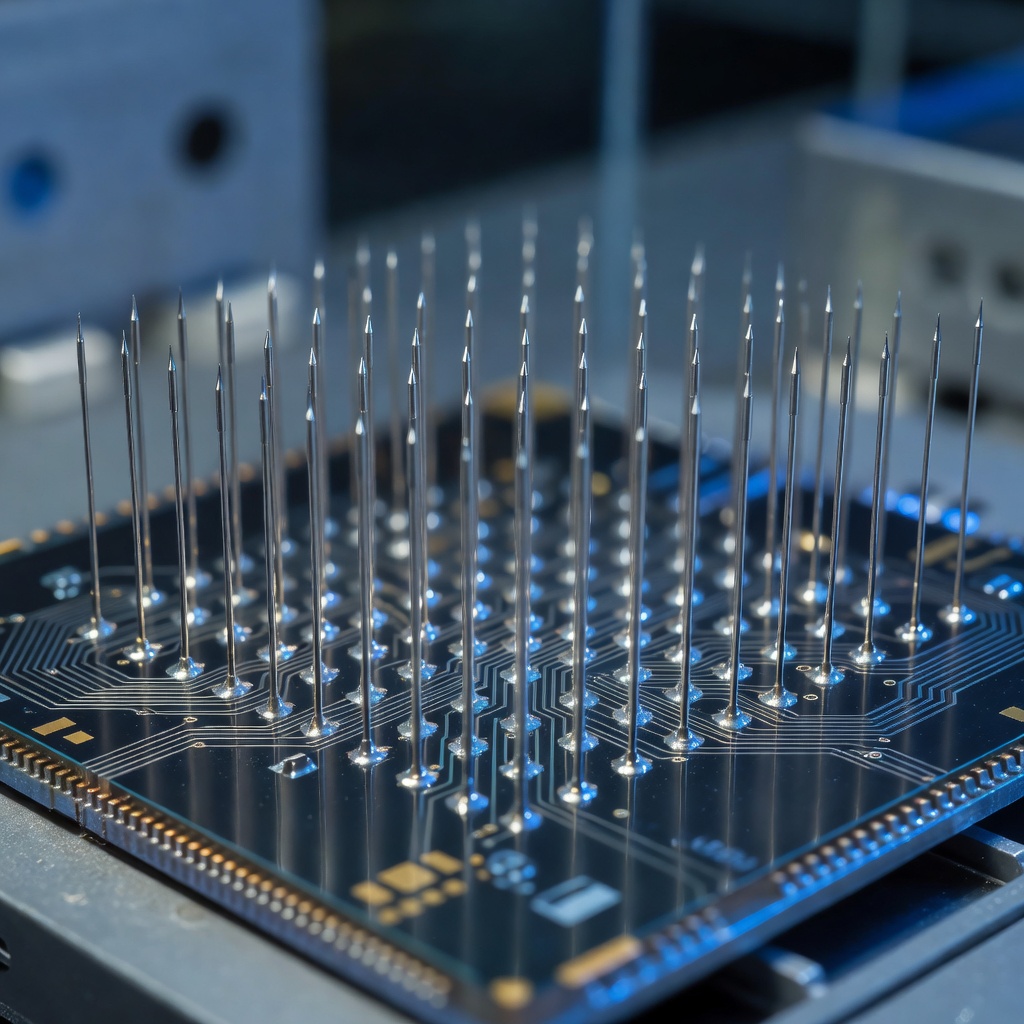
Neuralink's Commercial Calculus
Neuralink's trajectory offers a masterclass in how a moonshot project transitions from pure research to a commercialization machine, complete with all the friction that entails. The company's N1 chip, implanted in its first human patient Noland Arbaugh in January 2024, enabled him to control a computer cursor and play chess using only his thoughts. The images of Arbaugh streaming video games became a cultural moment, the kind of visceral demonstration that no whitepaper or investor deck could replicate. Musk took to X, his social media platform, to amplify the milestone, and the ripple effect across the neurotechnology sector was immediate.
Commercially, Neuralink's initial target market is people with quadriplegia and severe motor disabilities, a population estimated at over 5 million in the United States alone. This is not an accident of altruism. Regulatory agencies including the FDA are far more accommodating of invasive procedures when the patient population has no viable alternative, making disability applications the strategic beachhead before any broader consumer ambitions are pursued. Musk has been characteristically candid about his longer arc: a future where healthy individuals voluntarily augment their cognitive bandwidth to compete with artificial intelligence systems. Whether that vision ever materializes at consumer scale is a question that belongs to the next decade, but the regulatory and commercial groundwork being laid right now will determine whether it is even possible.
The Industrial Stakes Beyond Medicine
Framing BCIs purely as medical devices, however, dramatically undersells the technology's disruptive potential for adjacent industries. Consider the implications for human-machine interface design across manufacturing, defense, aerospace, and logistics. DARPA has been funding BCI research for over two decades through programs like N3 (Next-Generation Nonsurgical Neurotechnology), explicitly targeting applications in which soldiers or operators could control drones, vehicles, or robotic systems through direct neural commands. The Pentagon's interest signals something important: governments have concluded that BCI is not a fringe science. It is a strategic asset.
The enterprise software sector is watching closely too. If BCIs eventually allow workers to interact with digital systems at the speed of thought rather than the speed of typing, the productivity implications are staggering. Microsoft, which has invested heavily in ambient computing and mixed reality through HoloLens, has funded neurotechnology research partnerships through its research division. Meta's Reality Labs has explored neural interface wristbands that read motor nerve signals at the wrist rather than the brain, a less invasive proxy for true BCI. These are not idle academic exercises. They are competitive positioning maneuvers by companies that understand human attention is the most constrained resource in the digital economy.

The Regulatory Bottleneck and How It Gets Unplugged
For all the capital sloshing through the sector, commercialization faces a friction point that no amount of funding can instantly dissolve: regulatory approval. The FDA's breakthrough device designation, granted to both Neuralink and Synchron, accelerates review timelines but does not eliminate the requirement for longitudinal safety and efficacy data. Implantable devices must prove they remain functional and safe over years, not months, and the history of medical devices is littered with the wreckage of products that performed brilliantly in trials before failing in the real world.
The regulatory picture is further complicated by a patchwork of international frameworks. The European Union's Medical Device Regulation, which came into full effect in 2021, imposes some of the world's most rigorous conformity requirements, while regions like China and South Korea are simultaneously racing to establish domestic neurotechnology industries with more permissive early-stage trial environments. This regulatory arbitrage is already visible: several Chinese neurotechnology firms, some backed by state capital, are advancing clinical programs at speeds that Western competitors cannot legally match at home. The geopolitical dimension of BCIs is only beginning to register in policy circles, but the race to dominate neural interface standards could prove as consequential as the race to dominate 5G infrastructure.
What the Next Investment Cycle Will Buy
The next phase of BCI investment is expected to focus on three converging technical problems, each of which represents both a scientific challenge and a commercial moat for whoever solves it first. The first is longevity: current implantable devices degrade as the brain's immune response gradually encapsulates foreign material in scar tissue, reducing signal quality over time. Companies that crack biocompatible, long-lasting electrode materials will own a massive competitive advantage. The second is bandwidth: existing devices can read from hundreds or at most a few thousand neurons simultaneously, a fraction of the tens of billions involved in complex cognition. Scaling bandwidth without scaling invasiveness is the field's central engineering problem. The third is bidirectionality: most current BCIs read signals from the brain but cannot write meaningful information back with precision. True bidirectional interfaces, capable of both recording and stimulating with neuron-level specificity, would unlock applications in memory enhancement, sensory restoration, and neurological disease treatment that remain firmly in the theoretical today.
Musk's stated ambition for Neuralink is to achieve all three. Whether his company leads or a quieter competitor gets there first matters less than the certainty that the arrival of a reliable, bidirectional, high-bandwidth neural interface will represent one of the most significant platform shifts in the history of computing. It would not merely change medicine or productivity or entertainment. It would renegotiate the fundamental terms of what it means to be a user of technology, and potentially, what it means to be human.
The billion-dollar brain race is no longer a metaphor. The starting gun has already fired, the funding is committed, the first human heads carry hardware, and the companies that understand the commercial and strategic stakes are sprinting. The rest of the technology industry is beginning to realize it should be running too.