Steel, Fire, and Iteration: The Unfiltered Chronicle of SpaceX's Climb from Falcon to the Stars
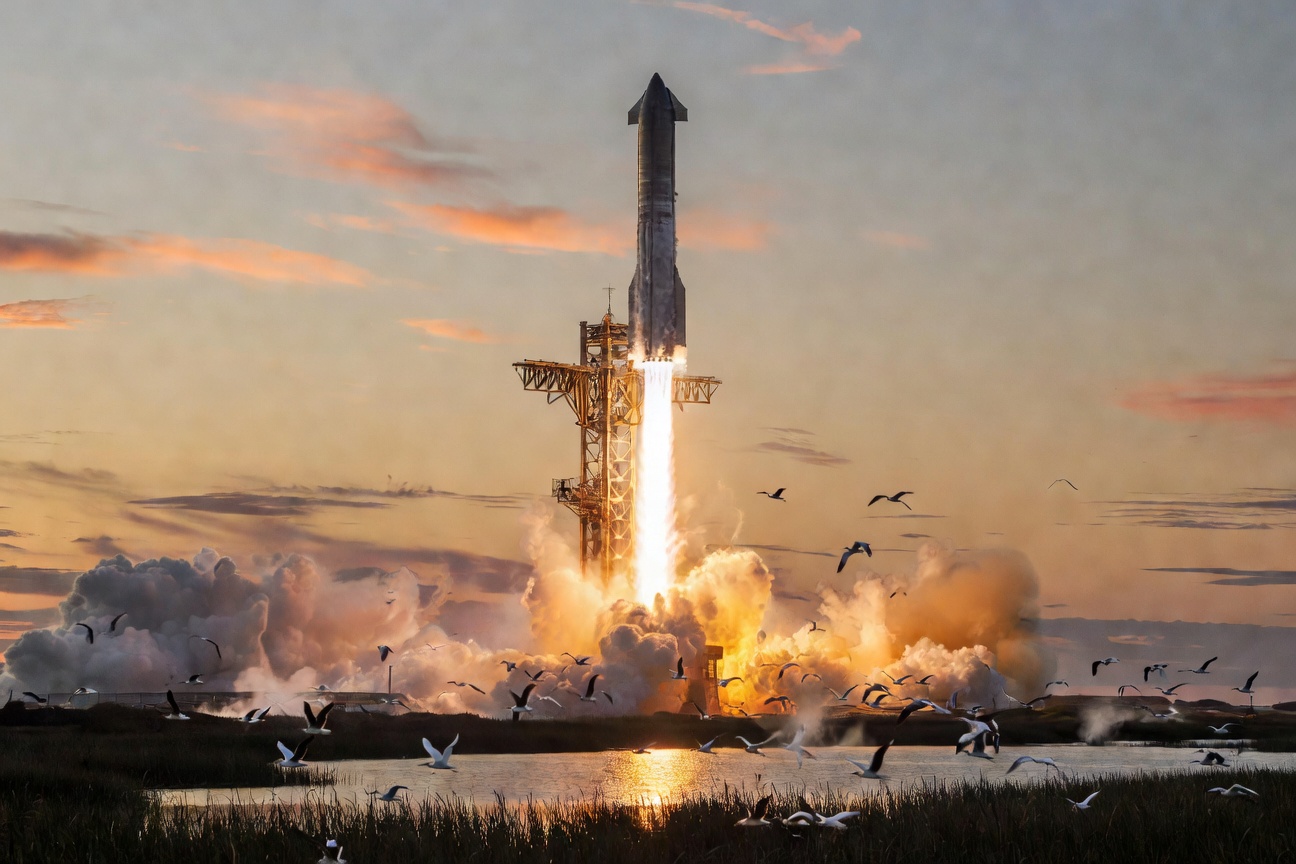
There is a peculiar kind of courage required to film your own rocket exploding, catalog every fragment of what went wrong, and then order more steel. SpaceX has done exactly that, repeatedly, across nearly a quarter century of development that reads less like a corporate roadmap and more like a scientific epic — one populated by singed launch pads, triumphant landings, and a cast of engineers who treated failure not as defeat but as data. To understand where SpaceX stands today, poised to return humans to the Moon and ultimately seed civilization on Mars, you must begin at the very beginning, in the dust of Omelek Island, where everything first went catastrophically right.
2002 to 2008: The Years Nobody Believed
When Elon Musk founded Space Exploration Technologies in June 2002, the aerospace establishment largely dismissed him. He had internet money and ambition, but the consensus was clear: rockets were the domain of Boeing, Lockheed, and government agencies with billion-dollar budgets. Musk's counter-thesis was radical in its simplicity. Rockets were expensive not because physics demanded it, but because the industry had never seriously tried to make them cheap. His proof-of-concept vehicle, the Falcon 1, would be the first privately developed liquid-fueled rocket to reach orbit. It was also, for three consecutive launches between 2006 and 2008, a machine that confirmed every skeptic's worst suspicions. The first flight lasted thirty-three seconds before a fuel line corroded by salt air caused an engine fire. The second reached higher before a fuel slosh issue ended its ascent. The third suffered a staging anomaly. SpaceX was nearly out of money. Then, on September 28, 2008, Falcon 1 Flight 4 reached orbit cleanly. The company, and the era of commercial spaceflight, survived by a single successful burn.
2010 to 2015: Falcon 9 and the Birth of an Idea Called Reuse
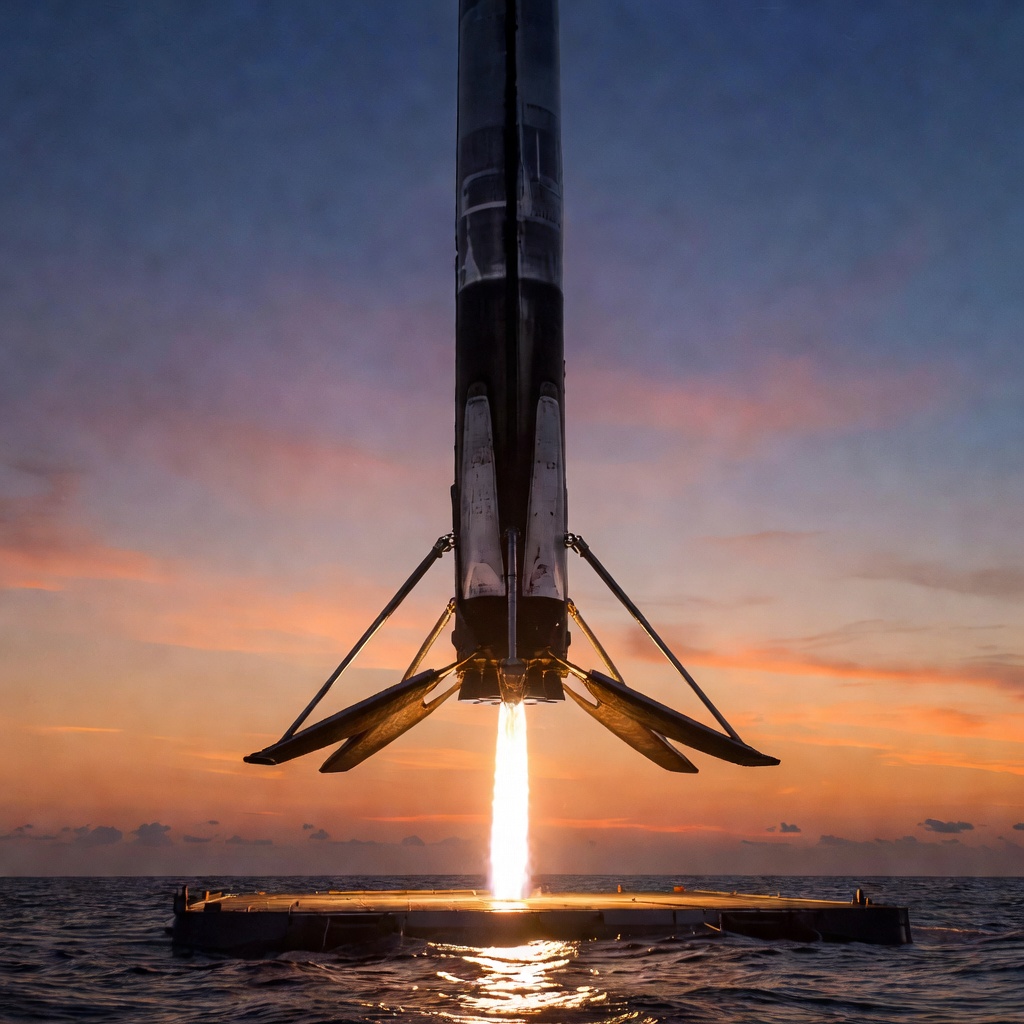
With Falcon 1's orbital credentials established, SpaceX pivoted quickly to its workhorse vehicle, the Falcon 9. The first Falcon 9 launch in June 2010 was textbook clean, an almost suspicious contrast to the Falcon 1 years. What followed was a rapid accumulation of capability: the Dragon spacecraft demonstrated cargo delivery to the International Space Station in 2012, making SpaceX the first commercial company to berth with the orbiting laboratory. But the genuinely transformative idea was already gestating. Musk had long believed that single-use rockets were the civilizational equivalent of throwing away a 747 after every flight. The Grasshopper test vehicle, a stubby experimental prototype that began hopping vertically in 2012, was the first physical expression of the reusability thesis. It rose and descended on columns of fire, sometimes dramatically, learning to hover and return with each successive test. By 2015, the concept had matured enough that a Falcon 9 first stage successfully landed back at Cape Canaveral, touching down on four deployable legs in a moment that prompted engineers in the control room to react with the kind of unguarded joy that spreadsheets cannot manufacture.
2016 to 2019: Starlink Seeds and a Monster on the Drawing Board
The years immediately following the first booster landing were defined by acceleration. Drone ship landings became routine, then almost boring. Booster turnaround times dropped from months to weeks. Meanwhile, in January 2015, Musk had quietly unveiled an audacious parallel project: Starlink, a constellation of low-Earth orbit satellites designed to blanket the planet in broadband internet. The first sixty Starlink satellites launched in May 2019, packed tightly into a single Falcon 9 fairing like silvered sardines. Critics raised immediate concerns about orbital congestion and light pollution. Engineers raised antenna gain. Within two years, Starlink would be providing connectivity to users across dozens of countries, and within four, it would become a geopolitical instrument of extraordinary reach, most viscerally demonstrated when terminals arrived in Ukraine shortly after the 2022 Russian invasion and kept communications alive under conditions that would have silenced earlier generations of battlefield infrastructure.
Simultaneously, on a scrubby patch of South Texas coastline that locals called Boca Chica, a stranger and more audacious construction project was underway. SpaceX was building Starship, a fully reusable two-stage system taller than the Saturn V, powered by a new methane-fueled engine called Raptor, and designed from first principles to carry one hundred humans to Mars at a time. The early prototypes were literal stainless steel silos welded together in the open air. One of them, SN1, was destroyed during a pressure test in February 2020 when it crumpled and burst like a crushed aluminum can. SN3 followed. Then SN4. Each failure fed the engineers more information about weld integrity, propellant loading, and structural limits under cryogenic stress. The cadence was almost industrial in its relentlessness.
2020 to 2022: Crew Dragon Flies, and Starship Learns to Fall Correctly
On May 30, 2020, SpaceX launched NASA astronauts Bob Behnken and Doug Hurley to the ISS aboard Crew Dragon, ending a nine-year gap in American human spaceflight capability. The significance was not merely national pride. It validated the entire commercial crew model and proved that private companies could match, and in some respects exceed, the safety and engineering standards of government programs. For SpaceX, it was also the moment the world stopped questioning whether the company could execute on human spaceflight. Back in Texas, prototype Starships continued their peculiar education. SN8 flew to twelve kilometers in December 2020 and executed a spectacular belly-flop maneuver before a low-pressure header tank caused it to arrive at the landing pad far too fast. The explosion was magnificent. It was also, per the company, successful in providing data. SN9 repeated the sequence in February 2021, exploding with similar educational value. Then SN10 landed intact, became a brief sensation, and exploded anyway approximately eight minutes later due to residual propellant. SN15 finally achieved a clean landing in May 2021, and the chapter closed.
2022 to 2024: Integrated Flight Tests and NASA's Moon Contract
The full Starship system, upper stage vehicle mated to the Super Heavy booster, stood thirty-nine stories tall. Its first integrated flight test in April 2023 ended when the vehicle cleared the pad, lost several engines, began rotating uncontrollably, and was intentionally terminated at roughly forty kilometers altitude. The launch pad itself was significantly damaged, having no flame trench or water deluge system at the time. SpaceX rebuilt the pad, added a massive steel plate and water suppression system they called the Mechazilla water deluge array, and returned. The second integrated flight test in November 2023 reached space for the first time before both stages were lost. Each subsequent test pushed the vehicle closer to the operational profile NASA requires for the Artemis lunar landing mission, in which a Starship variant will serve as the Human Landing System, carrying astronauts from lunar orbit down to the surface. By late 2024, SpaceX had demonstrated booster catch by the launch tower's mechanical arms, a feat so visually extraordinary that even engineers who had expected it appeared genuinely astonished. The Super Heavy booster, returning from its ascent burn, was grabbed in mid-descent by two enormous steel arms dubbed Mechazilla chopsticks, eliminating the need for landing legs entirely and dramatically accelerating turnaround potential.
Where the Story Now Stands
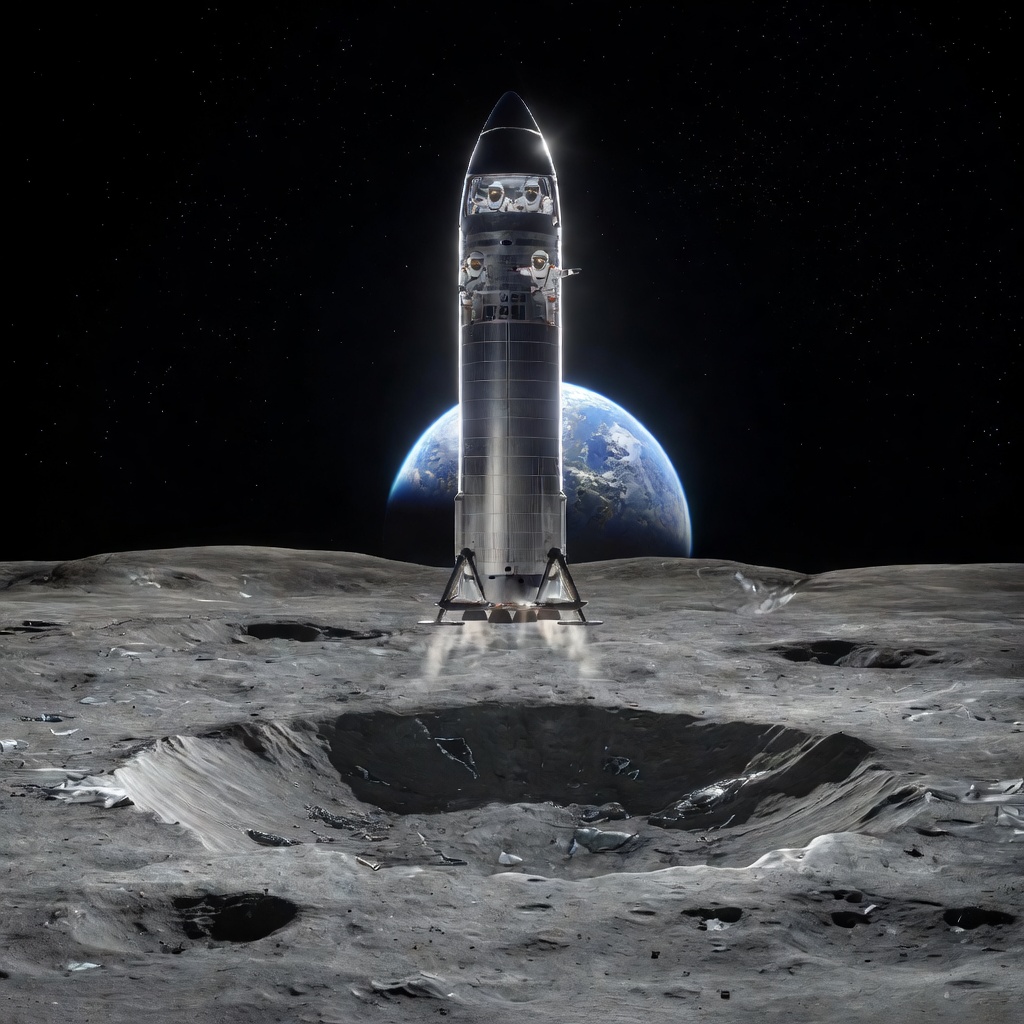
Starlink today operates more than six thousand active satellites and serves millions of subscribers globally, generating cash flow that underwrites the rest of SpaceX's ambitions. Falcon 9 has become so reliable that a single launch anomaly, occurring against a backdrop of hundreds of successes, generates genuine surprise rather than expectation. Falcon Heavy, the most powerful operational rocket in service, continues flying national security payloads. And Starship is no longer a prototype. It is a maturing system undergoing flight qualification for missions that include Artemis lunar landings, commercial passenger flights around the Moon, and the eventual first uncrewed cargo missions to Mars, tentatively targeted for the late 2020s.
The Mars timeline remains aggressive and fluid. Musk has consistently described the first crewed Mars landing as a target for the early 2030s, contingent on Starship's development pace and the solution of life support, radiation shielding, and in-situ resource utilization challenges that remain genuinely hard problems. What is not speculative is the hardware trajectory. Each Starship test flight has outperformed its predecessor. The Raptor engine program has produced engines with thrust and efficiency that exceed initial specifications. The manufacturing infrastructure at Starbase, Texas is designed for production rates that would generate a fleet, not a single vehicle.
The story of SpaceX is ultimately a story about what happens when the incentive to iterate is stronger than the incentive to be cautious. Bureaucracies protect themselves from embarrassment. SpaceX has, from its very first launch, treated embarrassment as a toll on the road to orbit. Pay it, learn from it, fly again faster. That philosophy, expressed in steel and fire across twenty-three years, has produced the most consequential launch company in history and pointed a plausible arrow, for the first time with credible engineering behind it, toward another world.