
The Automation Illusion: Why Tesla's Smart Factory Obsession May Be Its Biggest Manufacturing Liability
Everyone inside the Tesla ecosystem agrees on at least one thing: the company builds machines unlike anything else on wheels. What they disagree about, increasingly and loudly, is whether the way Tesla builds those machines is actually a competitive advantage or an elaborate, expensive gamble that the broader industry has wisely chosen not to replicate.
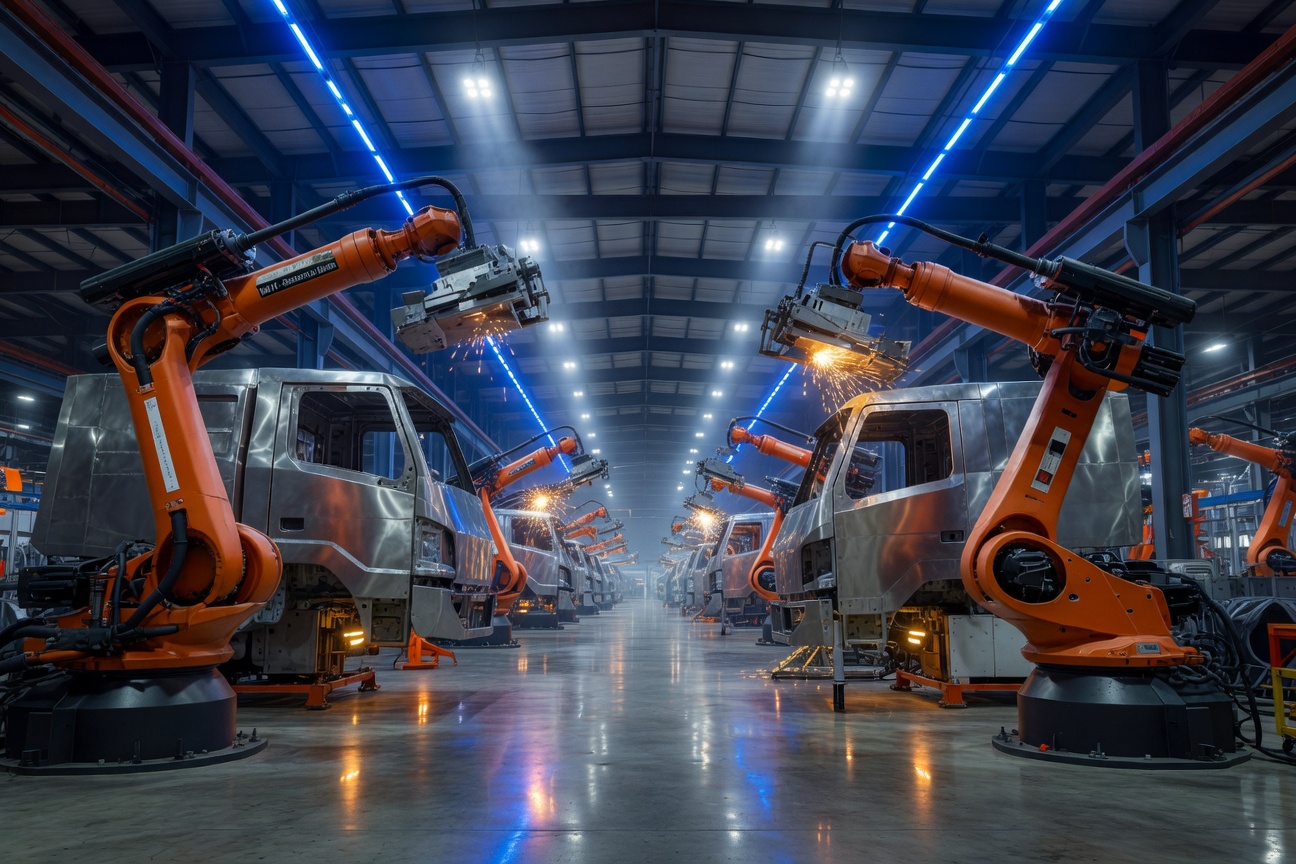
The conventional narrative frames Tesla as the inevitable future of manufacturing: ruthlessly automated, software-defined, vertically integrated to an almost absurd degree. Elon Musk coined the phrase "machine that builds the machine" years ago, and it has since become gospel in venture capital circles and technology media. But that framing obscures a critical engineering reality. Automation, particularly the kind Tesla has deployed at Gigafactory Texas for Cybertruck and at Gigafactory Nevada for the Semi, introduces systemic brittleness that human labor, for all its inefficiency, quietly and constantly corrects.
The Gigacasting Gamble Nobody Is Questioning Hard Enough
Tesla's signature manufacturing innovation, the giant die-casting process that stamps entire structural sections of a vehicle from a single mold, has attracted breathless admiration from competitors and consultants alike. Toyota dispatched engineers to study it. Rivian floated the concept. The logic is seductive: fewer parts, fewer welds, fewer potential failure points. On paper, it looks like a physicist's dream of manufacturing elegance.
But physics, as always, has a counterargument. Giant castings are extraordinarily difficult to repair. When a conventional stamped-steel body panel sustains damage, a collision shop replaces the panel. When a gigacasting sustains the same damage, the repair calculus changes entirely. Insurance actuaries have already begun repricing Cybertruck policies upward to account for this reality. More critically, a flaw discovered in a gigacasting after final assembly does not produce a reworkable sub-assembly. It potentially produces scrap at the vehicle level, which is a quality-control failure mode that traditional manufacturing explicitly evolved to prevent through modular build sequences.
The Cybertruck's stainless steel exoskeleton compounds the problem. Stainless steel work-hardens when formed, meaning it becomes stiffer and more brittle at the precise locations where it has been bent or shaped. Every body panel on a Cybertruck carries residual stress from its own manufacture. Traditional automotive steel is specifically formulated to absorb crash energy predictably. Stainless steel, selected primarily for visual identity and corrosion resistance, was never optimized for crash energy management. Tesla's engineers clearly solved enough of this problem to achieve regulatory certification, but "certified" and "optimal" are not synonyms.
The Semi's Silent Problem: Energy Density Has Not Caught Up to the Promise
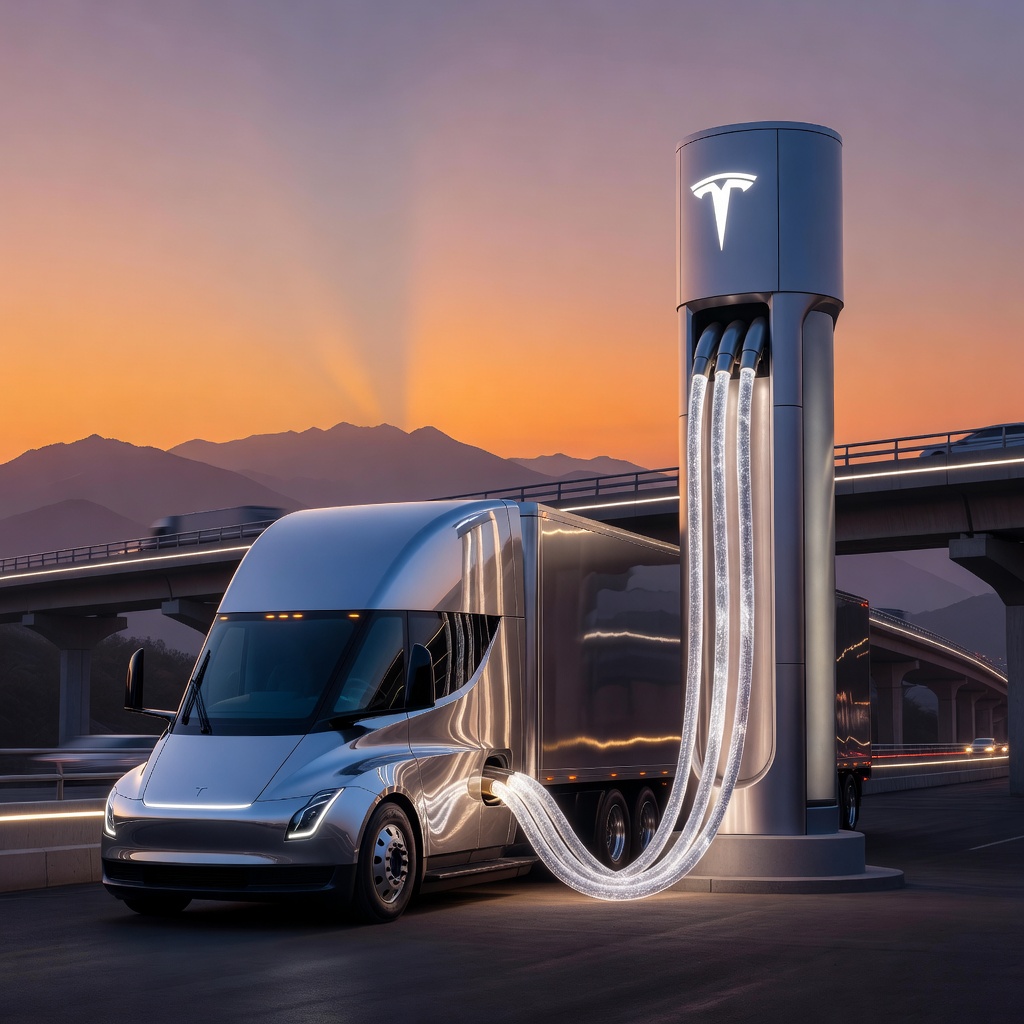
Tesla's Semi has completed demonstration runs that genuinely impressed logistics engineers. A loaded 500-mile run at highway speed is not nothing. But the celebration has glossed over the structural tension at the heart of the Semi's value proposition, which is that the vehicle's battery pack is simultaneously its greatest asset and its most serious operational liability.
The pack required to deliver that range in a Class 8 truck weighs somewhere in the range of 7,000 to 10,000 pounds by credible third-party estimates, though Tesla has not published the figure officially. Federal bridge law in the United States governs gross vehicle weight ratings, and that battery mass directly reduces the payload a shipper can legally carry. For fleets running at or near maximum legal payload, which describes most serious freight operations, the Semi's effective payload capacity is noticeably lower than a comparable diesel truck. The fuel savings must therefore not only offset diesel costs but also compensate for the revenue lost on every ton of payload that cannot legally be carried.
This is not a fatal problem. Short-haul, partial-load, and return-leg routes can make the economics work cleanly. But the Tesla Semi has been marketed with language implying broad disruption of long-haul freight, and the physics of battery energy density simply do not support that claim at current cell technology. The diesel engine's energy density advantage, roughly 35 times that of lithium-ion on a mass basis, is not a gap that software updates can close. It requires chemistry breakthroughs that Tesla does not control and cannot schedule.
Full Self-Driving and the Epistemic Problem at Its Core
Tesla's autonomy stack, now marketed as Full Self-Driving Supervised, operates on a fundamentally different architectural philosophy than every other serious autonomous vehicle program. Where Waymo, Cruise, and most academic robotics groups use lidar as a primary sensor for its direct, physics-based measurement of three-dimensional space, Tesla relies exclusively on cameras processed through a large neural network. Musk has argued that because human drivers navigate successfully with eyes, cameras are sufficient for machine driving.
This argument sounds intuitive and fails on close inspection. Human eyes are not cameras. The human visual system integrates binocular disparity, vestibular input, proprioception, predictive modeling from years of embodied experience, and continuous microsaccadic adjustment that no current camera array replicates. More practically, human vision operates within a cognitive architecture that contains explicit world models built over a lifetime. Tesla's neural network learns correlations between pixel patterns and steering commands from billions of miles of fleet data. These are not equivalent processes, and treating them as equivalent leads to a specific and well-documented failure mode: the network confidently misclassifies novel situations that a human would immediately flag as uncertain.
"Correlation-based machine learning systems navigate familiar situations brilliantly and unfamiliar situations dangerously. The question is never average-case performance. It is tail-risk behavior at the edge of the training distribution."
Tesla's approach does have a genuine advantage: scale. No other company has instrumented as many vehicles collecting as much real-world driving data. That data advantage is real and compounds over time. But data volume solves the average case, not the tail risk, and autonomous vehicles are not evaluated on their average-case performance. They are evaluated on their worst-case behavior, which is where Tesla's camera-only architecture remains structurally vulnerable compared to sensor-fused alternatives.
Optimus in the Factory: Vision or Distraction?
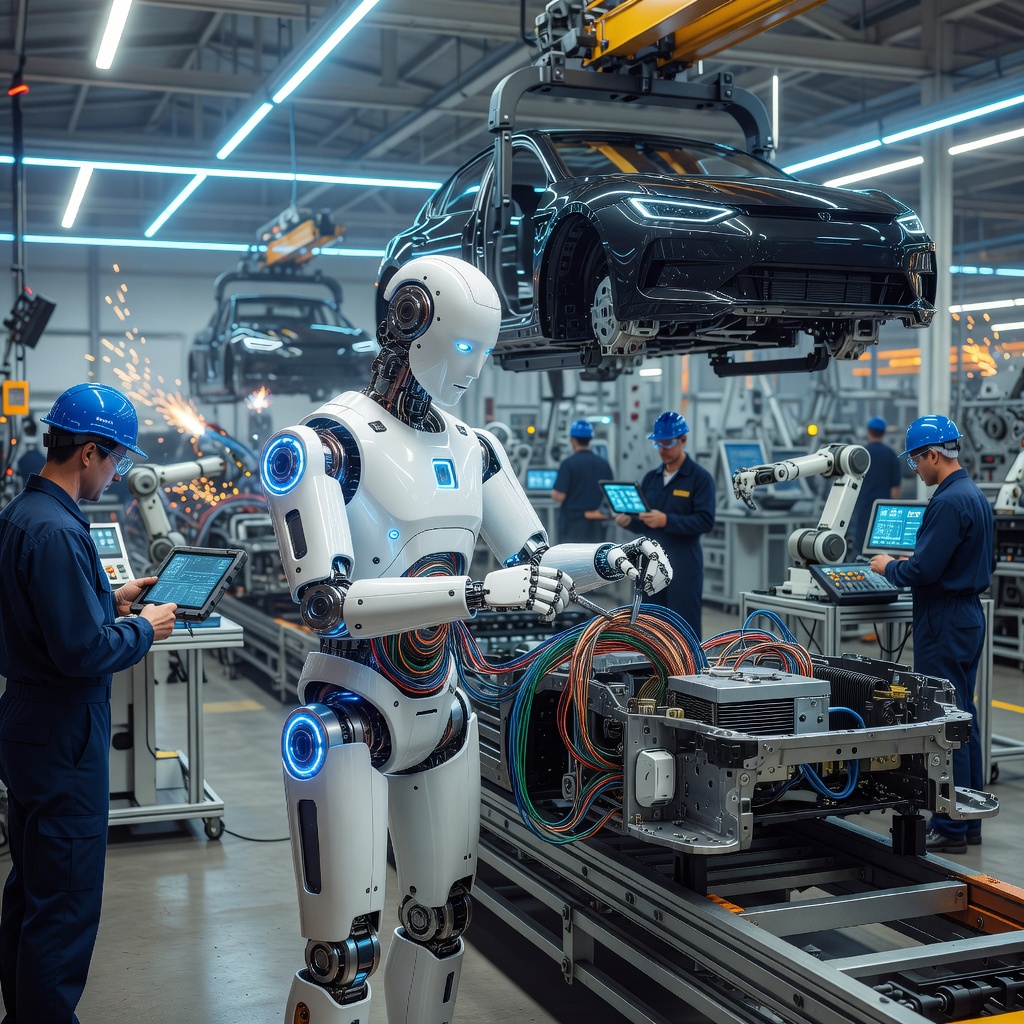
Musk has stated publicly that Tesla's humanoid robot, Optimus, will eventually work alongside and potentially replace human laborers in Tesla's own manufacturing lines. This vision is rhetorically powerful and operationally premature. The specific tasks that make automotive assembly difficult for robots are precisely the tasks that make them difficult for humanoids: manipulating limp, deformable materials like wiring harnesses and foam seals in constrained spaces with high positional accuracy requirements. These tasks defeated industrial robotics for decades before humans developed specialized end-effectors and fixtures to work around them. A general-purpose humanoid body does not solve that problem by being shaped like a person. It inherits the same manipulation challenge that purpose-built industrial robots have struggled with for forty years.
The case for Optimus as a near-term manufacturing asset is, at minimum, not proven. The case for it as a long-term research platform that eventually yields meaningful capabilities is more credible, but that is a ten-to-twenty-year horizon, not a production-quarter story. Treating Optimus deployment timelines as a near-term manufacturing efficiency driver, as some Tesla bulls do, conflates demonstration and deployment in a way that has burned technology investors repeatedly across robotics history.
What the Skeptics Get Wrong, and Why Tesla Still Matters
None of the above is an argument that Tesla fails. The contrarian position here is not bearish on Tesla's ultimate trajectory. It is skeptical of the framing that every Tesla manufacturing decision is brilliant by definition and that the conventional automotive industry's reluctance to replicate Tesla's approach reflects mere timidity rather than considered engineering judgment.
The traditional automakers who declined to adopt gigacasting wholesale, who maintained human assembly labor in flexible roles, who chose sensor fusion for their autonomy programs, were not all making cowardly choices. Many were making different risk tradeoffs based on different production volumes, different supply chain structures, and different customer bases. Mercedes-Benz building heavy-duty trucks for European operators running at maximum legal payload cannot make the same battery-weight tradeoffs Tesla makes for American logistics customers running lighter loads. Context is not an excuse for complacency. It is an engineering input.
Tesla has genuinely advanced the state of the art in battery integration, over-the-air software deployment, and data-driven product iteration. The Cybertruck, for all its structural idiosyncrasies, has created a vehicle category that no competitor has successfully answered. The Semi has demonstrated energy consumption figures that outperform conservative projections. Full Self-Driving, despite its architectural limitations, is the most widely deployed driver assistance system at its capability tier on the planet.
The honest assessment is not that Tesla is wrong and its critics are right. The honest assessment is that Tesla is conducting a high-stakes engineering experiment at consumer scale, with tradeoffs that are more complex and more interesting than either the hype or the dismissal acknowledges. The machine that builds the machine is impressive. Whether it is also wise remains, genuinely, an open question that production data from the next three years will begin to answer.
For engineers, entrepreneurs, and builders watching this unfold: the most valuable lesson from Tesla's manufacturing journey is not "automate everything." It is "understand your failure modes before they find your customers." That lesson applies whether you are casting steel in Austin or writing inference code for a camera array navigating a school zone in the rain.
George Russell
Tech journalist covering Elon Musk’s companies for over 10 years.