The Throughput Paradox: Why Nobody Can Agree on How Many People a Vegas Loop Tunnel Actually Moves
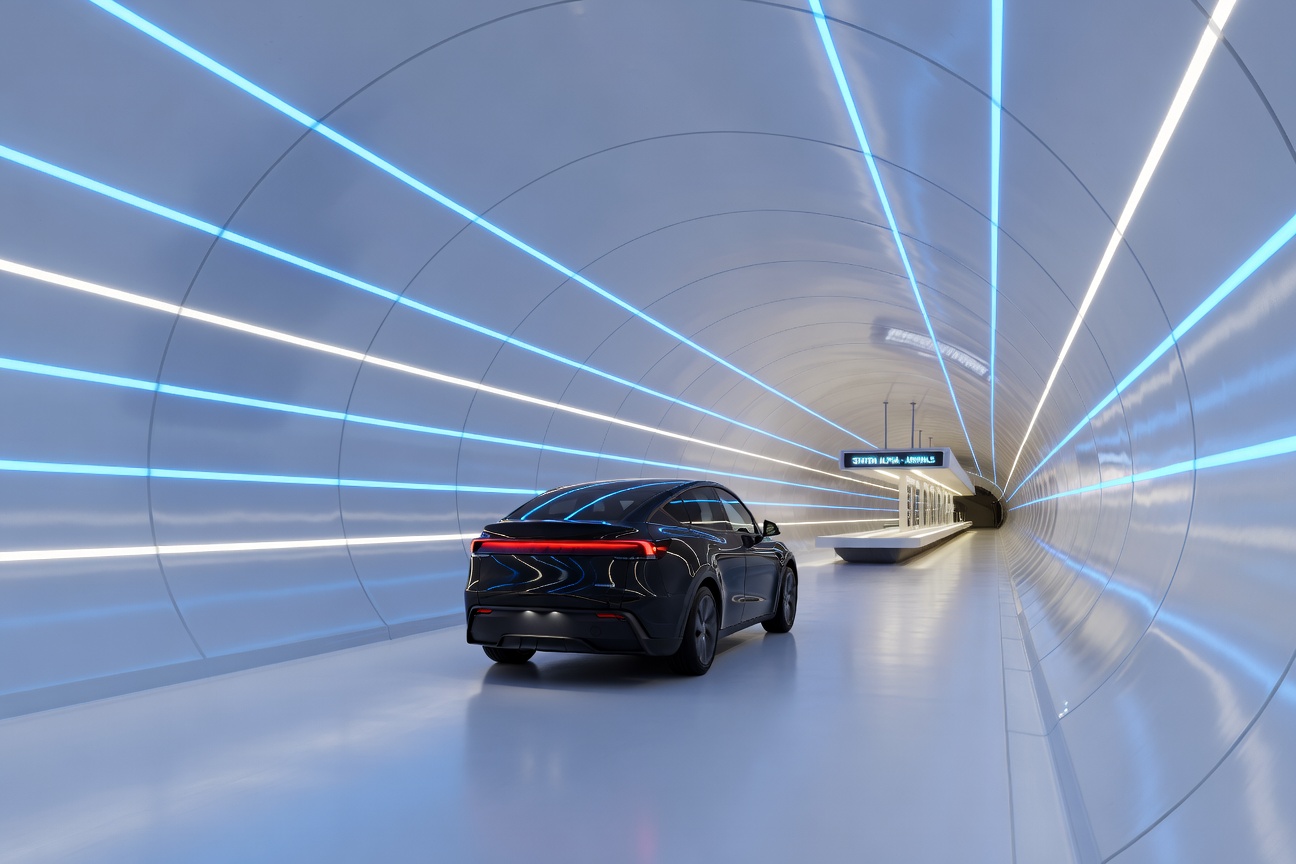
There is a number at the center of everything, and nobody can agree on what it is. Ask a Boring Company engineer, a transit planner from the Regional Transportation Commission of Southern Nevada, an academic traffic modeler, or an independent infrastructure analyst how many people per hour a single Vegas Loop tunnel lane can realistically move, and you will get answers that range from under 1,400 to over 4,000. That is not a rounding error. That is a scientific mystery dressed up in concrete and LED lighting, and it may be the single most consequential unresolved question in American urban transit right now.
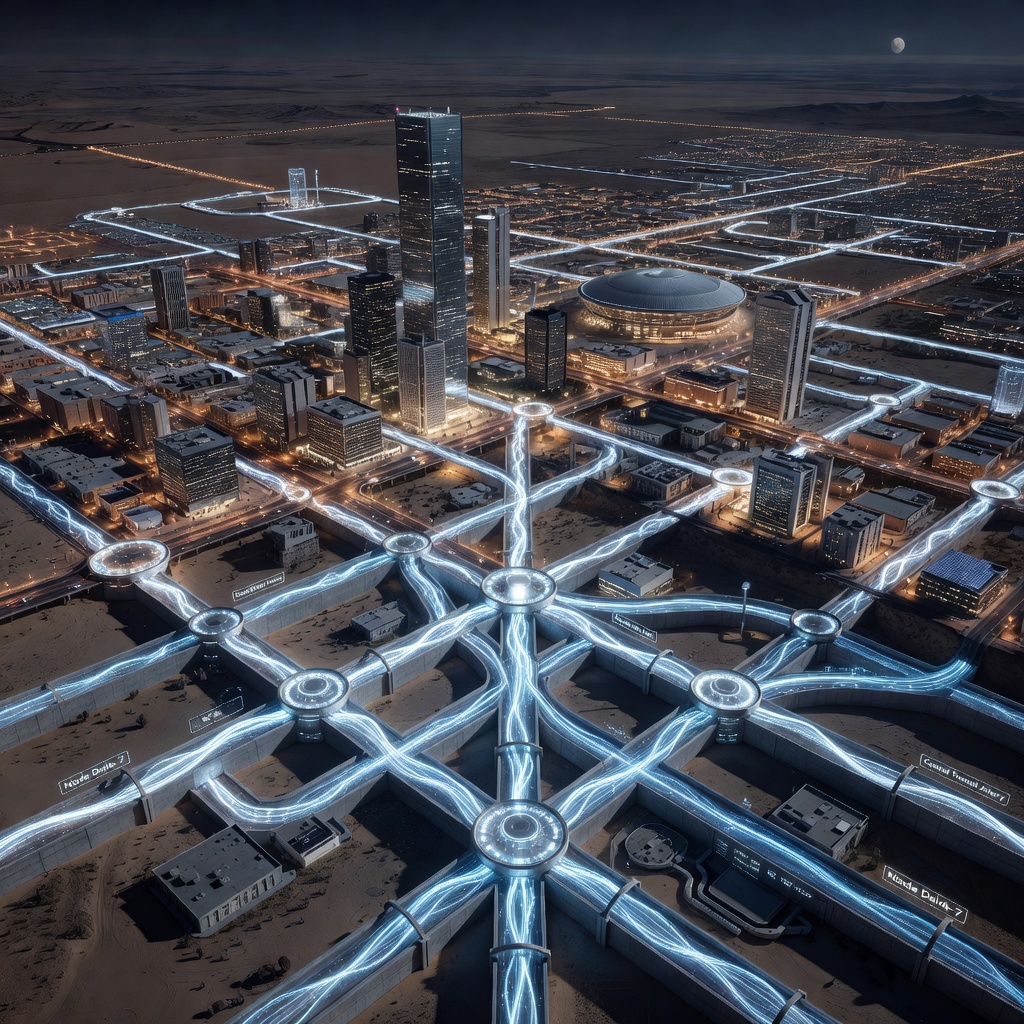
The Vegas Loop currently stretches across roughly 2.4 miles of tunnel beneath the Las Vegas Convention Center, connecting the sprawling campus with a network of stations that now reaches toward Resorts World and Allegiant Stadium. Expansion proposals would push the system to eventually cover 69 stations across the greater Las Vegas strip. Billions of dollars in municipal planning hang on the answer to this deceptively simple question: how many humans can you actually move through a tube in an hour?
The Bug That Refuses to Be Patched
In software, an unresolved bug is an embarrassment. In infrastructure, it is a liability measured in concrete pours and public trust. The throughput paradox at the core of the Vegas Loop is not a bug in the traditional sense, but it behaves like one: reproducible, stubbornly present, and resistant to simple fixes.
The system's theoretical architecture is seductive in its elegance. Autonomous Tesla vehicles, eventually operating without safety drivers, shuttle small groups of passengers between stations in a dedicated lane. No traffic lights. No pedestrians. No competing lanes of distracted commuters. The physics seem to promise something extraordinary: a conveyor belt of people, continuous and swift.
But throughput is not purely a physics problem. It is a choreography problem. And choreography, it turns out, is where the mystery lives.
Consider the variables that have to align perfectly for a tunnel to operate near its theoretical ceiling. Dwell time at stations — the seconds a vehicle spends with doors open while passengers board or exit — fluctuates dramatically based on luggage, mobility needs, group size, and simple human unpredictability. The merging and diverging logic at junction points, where tunnels branch toward different destinations, introduces latency that compounds across a network of vehicles. And the headway problem, how close two autonomous vehicles can safely follow each other in an enclosed tube, remains an active area of research with no industry consensus.

Transportation engineers who have spent careers modeling bus rapid transit and light rail systems describe the Vegas Loop's operational profile as genuinely novel, in ways that make standard modeling tools unreliable. "We are applying frameworks built for vehicles that follow fixed schedules on fixed tracks to a system that is fundamentally demand-responsive and variable," one transit researcher summarized. "The math does not port cleanly."
What the Data from Operations Actually Shows
During the 2023 Consumer Electronics Show, the Vegas Loop moved an estimated 90,000 riders across the convention center campus over four days. That figure, cited frequently by The Boring Company and its advocates, is impressive by any measure. But raw ridership totals over multi-day events obscure the more granular question: what is the sustained hourly peak throughput of a single tunnel segment?
Independent observers who have documented queue behavior during high-demand periods note that the system's bottleneck is frequently at the station level rather than inside the tunnel itself. Vehicles arrive and depart with reasonable efficiency. The compression happens at the point of human boarding, where organic crowd behavior collides with an infrastructure designed around optimistic assumptions about how quickly small groups of strangers organize themselves into a moving vehicle.
This is not a trivial distinction. If the bottleneck lives in the station, the solution is architectural and operational: redesign station flow, add parallel loading zones, deploy human guides. If the bottleneck lives in the tunnel, the solution requires rethinking vehicle spacing algorithms or lane geometry. The Vegas Loop appears to experience both, at different demand levels, which makes diagnosis genuinely difficult.
The Boring Company has indicated that full autonomy, removing safety drivers entirely, will unlock substantially higher throughput by enabling tighter vehicle headways. This claim is plausible in principle. It is also, as of now, unverified at scale in a production tunnel environment. The autonomy question is not a marketing footnote. It is load-bearing for every throughput projection the company has ever published.
Why This Mystery Actually Matters Beyond Las Vegas
If the Vegas Loop were simply a novelty attraction for convention-goers, the throughput paradox would be an academic curiosity. But over a dozen cities have held formal discussions with The Boring Company about potential loop systems, from San Antonio to Miami to Austin. Fort Lauderdale has moved into active planning phases. Each of those conversations is shaped, implicitly or explicitly, by projections derived from Vegas Loop performance data.
If that data is systematically optimistic because the throughput ceiling has never been independently validated under reproducible conditions, then cities are making infrastructure commitments based on an unresolved scientific question. That is not an indictment of the technology's potential. It is a call for the kind of rigorous, transparent operational study that no party has yet commissioned or published.
"The throughput question is not whether the technology works. Clearly vehicles move through tunnels. The question is whether the system scales to the density where it competes with rail alternatives on a per-dollar, per-passenger basis."
That question has particular urgency because the modal comparison math changes dramatically at different throughput levels. At 1,400 passengers per hour per lane, a tunnel system is efficient for resort connectivity or campus transport but cannot credibly relieve arterial road congestion in a major metro. At 4,000 passengers per hour per lane, the calculus shifts considerably, and tunnel transit enters a competitive conversation with light rail and bus rapid transit corridors costing far more per mile to build.
The Autonomy Variable and Its Unknowns
Elon Musk has consistently framed full self-driving capability as the keystone technology that transforms the Loop from a clever shuttle service into a genuine mass transit alternative. The logic is straightforward: human drivers require conservative following distances, capping vehicle frequency. An autonomous system with millisecond reaction times could theoretically compress headways to intervals that a human driver could never safely maintain, effectively turning a lane of vehicles into something closer to a train of independently steerable pods.
Tesla's Full Self-Driving technology has made substantial progress on public roads. But tunnel operation introduces a specific set of conditions that differ meaningfully from general roadway autonomy. The closed environment eliminates many of the unpredictable variables that make public road autonomy difficult, which is genuinely advantageous. But it also concentrates risk. A stalled vehicle in a two-lane tunnel with no emergency shoulder is a categorically different operational crisis than a stalled vehicle on a surface street.
How the autonomous fleet handles edge cases, the medical emergency, the mechanical failure, the passenger who opens a door at the wrong moment, remains largely unaddressed in public technical documentation. These scenarios do not need to be common to be consequential. They need only occur during peak demand to collapse throughput from theoretical ceilings to practical floors.
An Open Problem Worth Solving in Public
What is striking about the throughput paradox is how solvable it appears, conceptually, if the right data were available. Unlike some frontier science questions that require decades of research to even frame correctly, this one has a known empirical path: instrument the system comprehensively, run it at designed capacity during controlled conditions, publish the results, and iterate on the design in response to what the data reveals.
The Boring Company has every commercial incentive to generate that data, because validated, peer-reviewed throughput figures would be an extraordinary sales tool for municipal negotiations. Cities have every public interest reason to require it before committing to construction contracts. Researchers have the methodological frameworks to analyze it credibly. The missing ingredient is not intelligence or infrastructure. It is institutional will to treat an operational transit system as a living experiment rather than a finished product.
Until that gap closes, the Vegas Loop exists in a peculiar scientific limbo: undeniably real, demonstrably functional, and yet fundamentally unmeasured in the way that matters most to the cities watching from the surface and wondering whether to dig.
The tunnel is there. The vehicles are moving. Somewhere inside that activity is a number that could reshape how tens of millions of urban residents get from point A to point B. Finding it cleanly, honestly, and verifiably may be the most important engineering problem in American transit that almost nobody is talking about by name.