
5:47 AM with Optimus: A Tesla Robotics Engineer's Day Inside the Machine
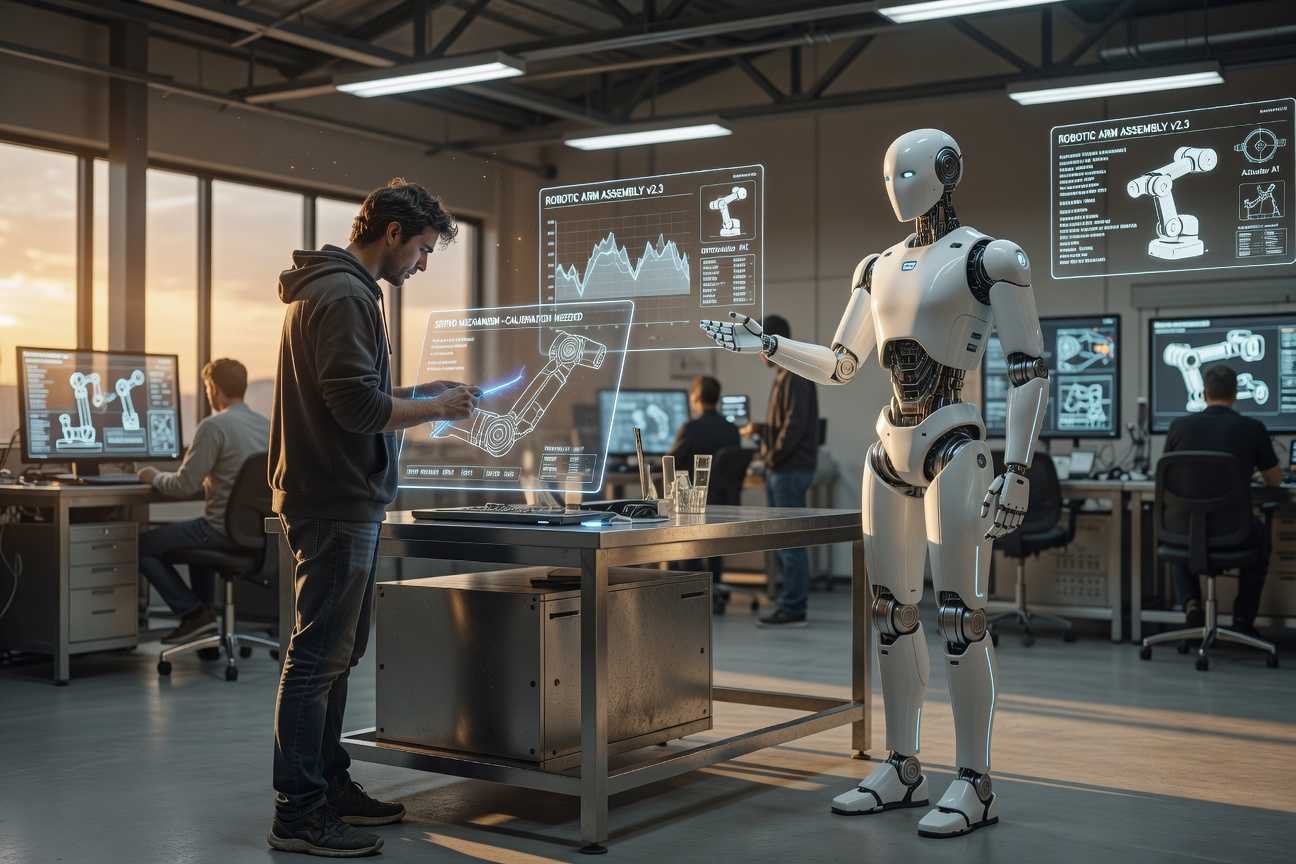
The alarm goes off at 5:47 AM, thirteen minutes before the scheduled shift, because Maya Chen never trusts round numbers anymore. She learned that lesson on the day Optimus Gen 2 picked up a battery module seventeen seconds ahead of its predicted motion window and nearly collided with a calibration cart nobody had thought to move. In the world of physical AI development at Tesla, thirteen minutes of buffer is not paranoia. It is engineering culture.
Maya is a composite figure, but her day is not fiction. She represents the hundreds of robotics engineers, motion-learning specialists, and embodied AI researchers currently working at Tesla's facilities in Fremont and Palo Alto, building and refining what the company has positioned as its most consequential product since the Model S rewired the automotive industry. The work they do before most people finish their first coffee is, quietly, reshaping the definition of what a machine can be.
The Morning Ritual: Booting Up Alongside the Bot
By 6:15 AM, Maya is in the lab. The first thing she does is not check her laptop. She checks Optimus. Specifically, she pulls overnight telemetry logs from the robot's neural network activity during unsupervised practice sessions that ran through the night. Tesla's physical AI stack allows Optimus units to continue refining motor policies during off-hours using a blend of simulation replay and real-world micro-tasks performed in controlled cage environments. Think of it as homework, except the student never sleeps and the homework reshapes the student's own brain.
The overnight data this morning shows something interesting. Optimus attempted a wrist-rotation subtask 2,340 times between 11 PM and 5 AM. Its success rate climbed from 61 percent to 88 percent without a single human intervention. The neural policy that governs fine motor control effectively rewrote a portion of itself using reinforcement signals derived from onboard tactile feedback and vision data. Maya flags the session for the weekly synthesis meeting. These are the moments the team lives for.
"The rate of autonomous policy improvement has been accelerating quarter over quarter," she notes in her log, using language deliberately stripped of emotion. But there is no stripping the weight from what she is actually describing: a machine that gets meaningfully better at being a machine, on its own, while humans sleep.
Mid-Morning: When the Robot Does Something Nobody Programmed
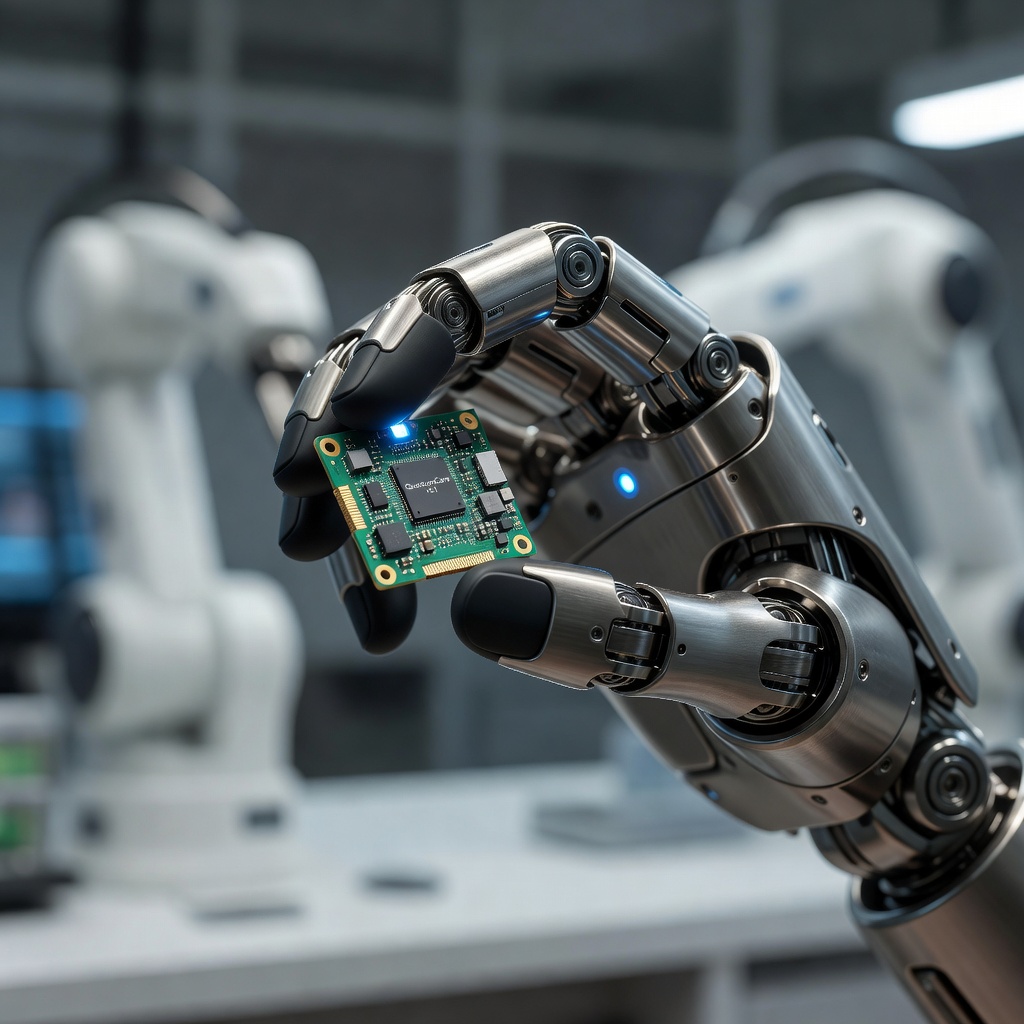
By 9:30 AM, the main floor is populated and Optimus is running live trials. Today's task sequence involves transferring small components between trays at varying heights while a secondary sensor array maps deviations from predicted joint trajectories. This is not glamorous robotics. There are no dramatic leaps or dexterous piano recitals. There is a humanoid figure, roughly 5 feet 8 inches tall and 125 pounds, methodically picking up objects and placing them somewhere else. Over and over.
Except around 9:47 AM, it does something unexpected.
A component slips. Optimus's right hand closes on air instead of the part, and the standard policy would typically trigger a reset: back to start position, retry from a fixed approach angle. Instead, the robot pauses for approximately 340 milliseconds, which in robotics time is a geological epoch, and adjusts its approach vector by 14 degrees. It recovers the component on the next attempt without flagging a failure state.
Maya watches this on the monitoring screen and says nothing for a moment. Then she calls across the lab to her colleague Raj: "Did you see that compensation move?" He had. They both had. It was not in the original policy. It emerged from the robot's internalized model of its own physical limitations, a kind of mechanical self-awareness that sits at the bleeding edge of what Tesla's physical AI researchers call "embodied generalization."
This is the frontier that separates Tesla's approach from the broader robotics industry. Most humanoid robot programs write explicit rules for every physical scenario. Tesla's physical AI philosophy, borrowed and evolved from the team that built Full Self-Driving's neural architecture, bets heavily on learning from raw data. The robot is not told how to compensate for a slip. It discovers that compensation exists as a category of useful behavior and builds it into its own repertoire. The approach mirrors how a toddler learns to catch a falling cup: not from a lecture, but from consequence.
Lunch, and the Question That Follows You Around
In the cafeteria at 12:15 PM, Maya eats quickly. The conversation at her table drifts, as it always does, toward the number. Specifically: how many Optimus units will Tesla deploy by the end of 2026? Elon Musk has suggested figures that would have seemed hallucinatory five years ago, with production targets potentially reaching tens of thousands of units within the next eighteen months if manufacturing scale-up proceeds on schedule. The team speaks about this with a mixture of excitement and the particular vertigo that comes from knowing you are building something before the world fully understands it needs to exist.
There is also honest skepticism at the table. "The gap between task performance in a controlled environment and genuine deployment robustness is still very real," one engineer admits, asking not to be identified by name. "We're closing it faster than anyone outside these walls probably realizes, but we haven't closed it yet." This is the engineering version of a disclaimer that carries actual weight. Physical AI at human scale is unforgiving. A language model that produces a wrong answer can be corrected. A 125-pound robot that misreads a staircase cannot.
Afternoon Deep Dive: Teaching a Robot to Trust Its Own Senses
The afternoon session focuses on a challenge that does not photograph well but defines the entire project: sensor fusion under uncertainty. Optimus integrates data from cameras, force-torque sensors in its joints, and proprioceptive feedback from its actuators to build a real-time internal model of where it is, what it is touching, and how hard. When those inputs conflict, which they do constantly in the real world, the robot must decide what to believe.
Maya's team is running experiments today where one sensor channel is deliberately degraded to simulate real-world noise conditions, a flickering camera feed, an overloaded joint sensor, interference patterns that mimic electromagnetic noise in a factory environment. The goal is not to test whether Optimus fails. It will fail, and they know it. The goal is to map precisely how and when and why, because failure topology is what drives the next round of training data generation.
"We are not building a robot that never fails. We are building a robot that fails the way a competent human fails: gracefully, recoverably, and less often every month."
That framing, from a senior researcher on the physical AI team, captures the philosophical shift that makes Tesla's approach distinct. The benchmark is not perfection. It is the shape of imperfection, and whether that shape is improving.
Late Afternoon: The Data Nobody Talks About at Conferences
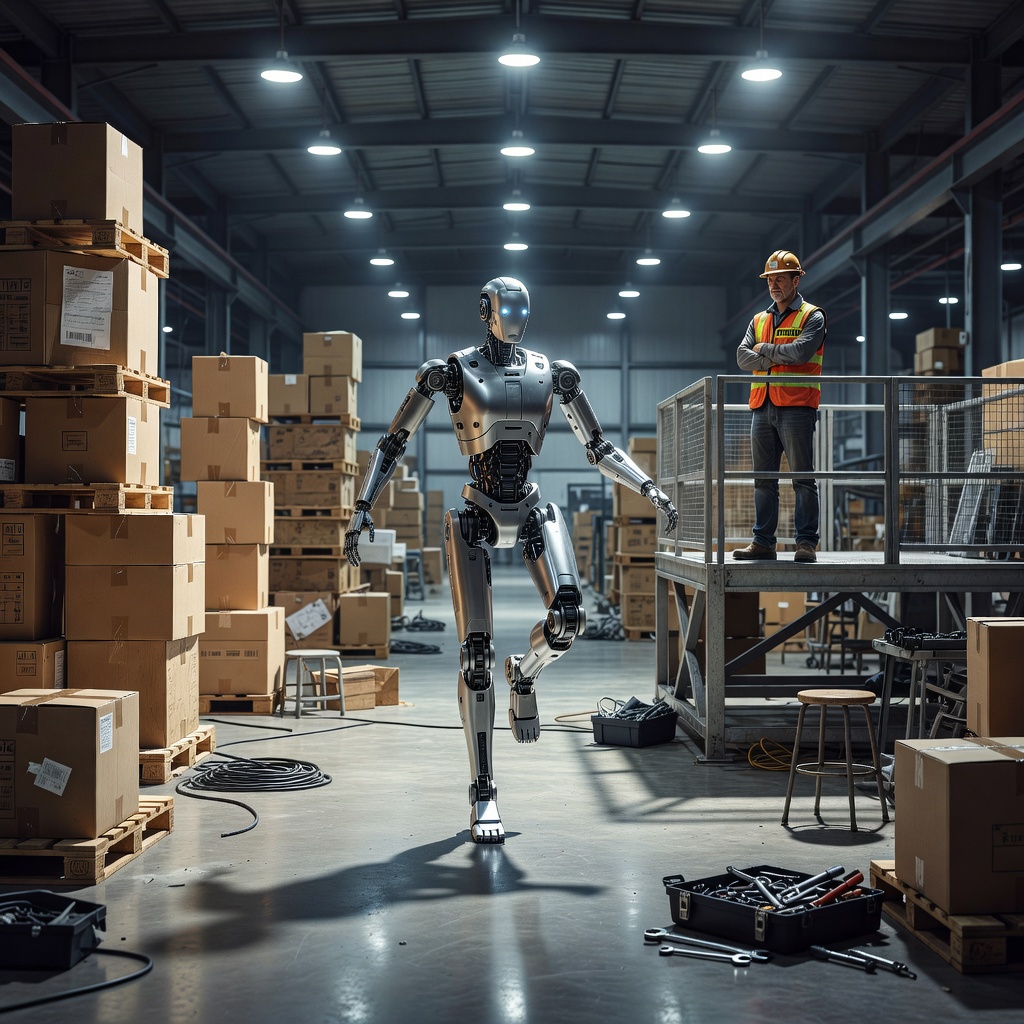
At 4:30 PM, Maya is reviewing what the team calls "the ugly folder": a curated archive of every significant failure mode observed during the past sprint cycle. A robot that misidentified a reflective surface as an open space and walked into a wall at low speed. A grip calibration that worked perfectly on dry components but failed on anything with a trace of machine oil. A navigation policy that became confused when a human team member walked through its planned path wearing an unusually reflective vest.
These are not embarrassments. They are, in the physical AI worldview, the most valuable data the team produces. Each failure gets tagged, analyzed, converted into synthetic training scenarios, and fed back into the model. The loop between failure and improvement is tightening. Eighteen months ago, a novel failure mode might take three sprint cycles to meaningfully address. Today that window is closer to one, sometimes less.
The acceleration is not incidental. It reflects the underlying bet Tesla has made on physical AI as a scalable discipline. The same data flywheel that made its self-driving neural network progressively more robust through millions of real-world miles is being rebuilt for three-dimensional embodied space. Every Optimus unit in operation generates training signal. More units mean more signal. More signal means faster improvement. The curve bends upward, and Maya's job is to make sure it bends in the right direction.
6:02 PM: Leaving the Lab, Carrying the Problem
Maya closes her laptop at 6:02 PM. She will think about the wrist-rotation data on the drive home. She will probably sketch something in the notebook she keeps on her nightstand, some adjustment to the reward shaping function that she wants to test in simulation tomorrow morning before the team arrives. This is not overwork. It is the occupational signature of anyone working on a problem that has not been solved before.
Outside in the parking lot, she passes a delivery vehicle and briefly imagines a version of that vehicle being unloaded by an Optimus unit five years from now, not on a demonstration stage, but on a Tuesday, because it is cheaper and faster and the robot learned overnight how to handle the new box dimensions. The image is mundane. That is precisely why it is credible, and why it keeps her coming back at 5:47 AM.
Physical AI is not arriving with a press conference. It is arriving the way most transformative technology eventually does: incrementally, imperfectly, and much faster than the world was watching for.

George Russell
Tech journalist covering Elon Musk’s companies for over 10 years.