
The People the Cybertruck Was Never Supposed to Save
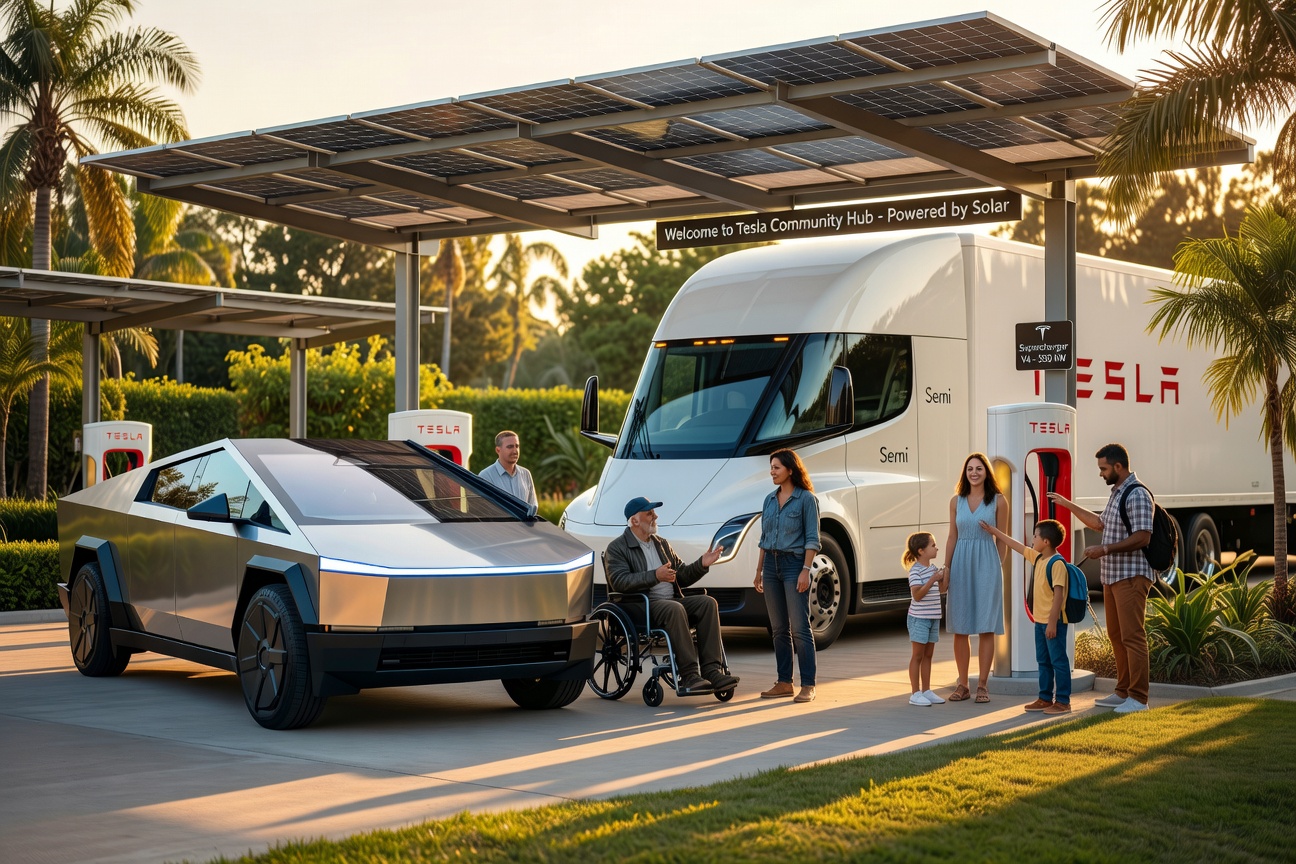
Marcus Webb did not expect a truck to change his life. A 41-year-old Army veteran from Flagstaff, Arizona, living with a spinal injury that cost him full use of his left hand, Webb spent years watching the auto industry promise accessibility improvements that never quite materialized. Then, earlier this year, he climbed into a Cybertruck for the first time at a Phoenix dealership, activated the Full Self-Driving supervised mode, and sat in silence as the vehicle navigated a busy arterial road without a single input from him. "I cried," he says plainly. "Not because it was perfect. Because for the first time, the machine worked around me instead of the other way around."
Tesla's electric vehicle lineup, encompassing the polarizing stainless-steel Cybertruck now rolling off the Gigafactory Texas line at a notably improved production cadence, the Class 8 Semi expanding its commercial footprint across freight corridors, and the software autonomy stack underpinning both, is generating rivers of technical coverage. Range figures, torque curves, delivery tallies, and Autopilot incident reports dominate the conversation. But underneath that data layer, something more complicated and more human is happening. Real people, in circumstances nobody at Tesla's product planning meetings envisioned, are finding that these machines are altering the texture of their daily existence in ways both profound and occasionally frustrating.
Autonomy as Accessibility Tool
Webb is not an outlier. Disability advocacy communities have quietly become some of the most analytically rigorous evaluators of Tesla's Full Self-Driving system, precisely because the stakes for them are not about convenience but independence. Online forums populated by drivers with Parkinson's disease, multiple sclerosis, and various motor impairments have developed their own dense lexicon for documenting FSD behavior, rating phantom braking events, logging intersection hesitation patterns, and sharing workarounds with the precision of beta testers who have never been asked to participate.
The irony is considerable. Tesla markets autonomy primarily as a productivity and comfort feature for neurotypical, fully ambulatory users. Yet the individuals stress-testing it most rigorously, and arguably benefiting most acutely from each incremental software update, are those whose lives depend on the system not making a mistake. When Tesla pushed its FSD version 13 update in late 2024, improving city street navigation and reducing unnecessary disengagements, the mainstream press covered it as a competitive milestone against Waymo. In the spinal cord injury support groups, it was covered as a potential restoration of the daily commute.
This gap between intended user and actual user is one of the more quietly consequential stories in the EV space right now. It does not appear in Tesla's quarterly updates. It does not shape the Cybertruck's advertising. But it is shaping how at least a segment of the population relates to the question of when fully autonomous vehicles will arrive, and why the timeline feels urgent in ways that quarterly earnings calls simply do not capture.
The Trucker Reckoning Nobody Wants to Have Honestly
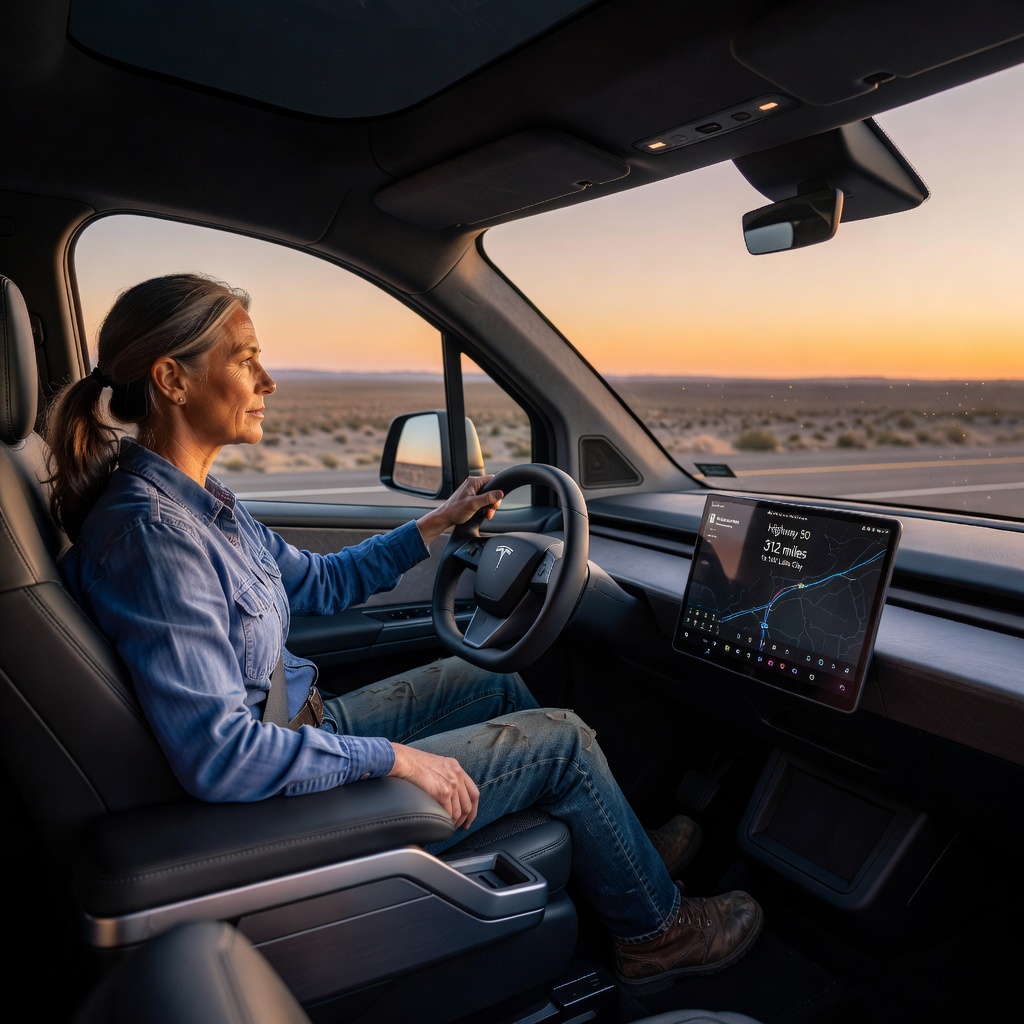
Shift the lens three states east to a truck stop outside Oklahoma City, and the human dimension of Tesla's electric fleet takes on a different and more anxious character. Desiree Fontaine has driven an eighteen-wheeler for fourteen years. She hauls refrigerated produce up and down the I-35 corridor, and she has watched the Tesla Semi go from industry joke to genuine operational presence with a mixture of professional respect and barely concealed dread.
"The truck is real," she says, eating a breakfast burrito in a booth that overlooks a parking lot where two Semis bound for a Frito-Lay distribution center are charging. "I drove next to one outside of Dallas last spring. It's quiet, it's smooth, it doesn't do what diesel does in cold starts. I know what I'm looking at." She pauses. "I also know what it means for me in about eight years."
The Tesla Semi's current operational expansion, with PepsiCo, Sysco, and other major logistics players logging millions of miles on the platform, is being managed by human drivers. The vehicles are not autonomous on public highways at a commercial scale yet. But Fontaine is not worried about today. She is doing the same arithmetic that anyone paying attention to Tesla's stated autonomy roadmap, Elon Musk's repeated assertions about robotaxi and robo-freight timelines, and the broader trajectory of the industry cannot avoid. The Semi is the hardware. The software is coming. And when it arrives, the question of what happens to roughly 3.5 million professional truck drivers in the United States alone becomes something other than theoretical.
What makes Fontaine's situation particularly illustrative is that she does not fit the caricature of a technophobe resisting progress. She owns a first-generation Tesla Model 3. She charges it at home. She thinks electric vehicles are superior in almost every measurable way. "This isn't about hating the technology," she says. "It's about asking who builds the bridge between here and there, and whether anyone is actually building it or just talking about it."
Manufacturing's Human Equation at Gigafactory Texas
The Cybertruck, which spent years as a meme before becoming a legitimate production vehicle, is now being built at a clip that surprised even cautious analysts. Production efficiency improvements at Gigafactory Texas, driven in part by Tesla's ongoing investment in its robotic manufacturing systems and revised assembly line architecture, have meaningfully reduced the cost per unit and shortened delivery backlogs for several trim configurations. But the factory floor is not populated by robots alone, and the people working there are navigating their own version of this technological transition.
Assembly line workers at Tesla's Texas facility, many of whom relocated from other states to take the jobs, describe an environment that oscillates between exhilarating and exhausting. The pace is demanding. The technology is genuinely impressive. And the awareness that Tesla is simultaneously working to automate significant portions of their roles sits in the background of every shift like a low-frequency hum. Tesla's Optimus humanoid robot program, while still in early development stages, is explicitly framed by Musk as eventually replacing human labor in dangerous or repetitive manufacturing tasks. The Cybertruck line is precisely the kind of environment those robots are being designed for.
"Every upgrade to the line that makes our jobs easier also makes the argument for our jobs weaker. We know that. We're not stupid."
This is not a reason to halt innovation. It is, however, a reason to take seriously the human ecosystems that industrial transformation disrupts, not after the disruption, but during it, while there is still time to build the transitional infrastructure that makes the difference between upheaval and adaptation.
The Communities Charging Stations Built
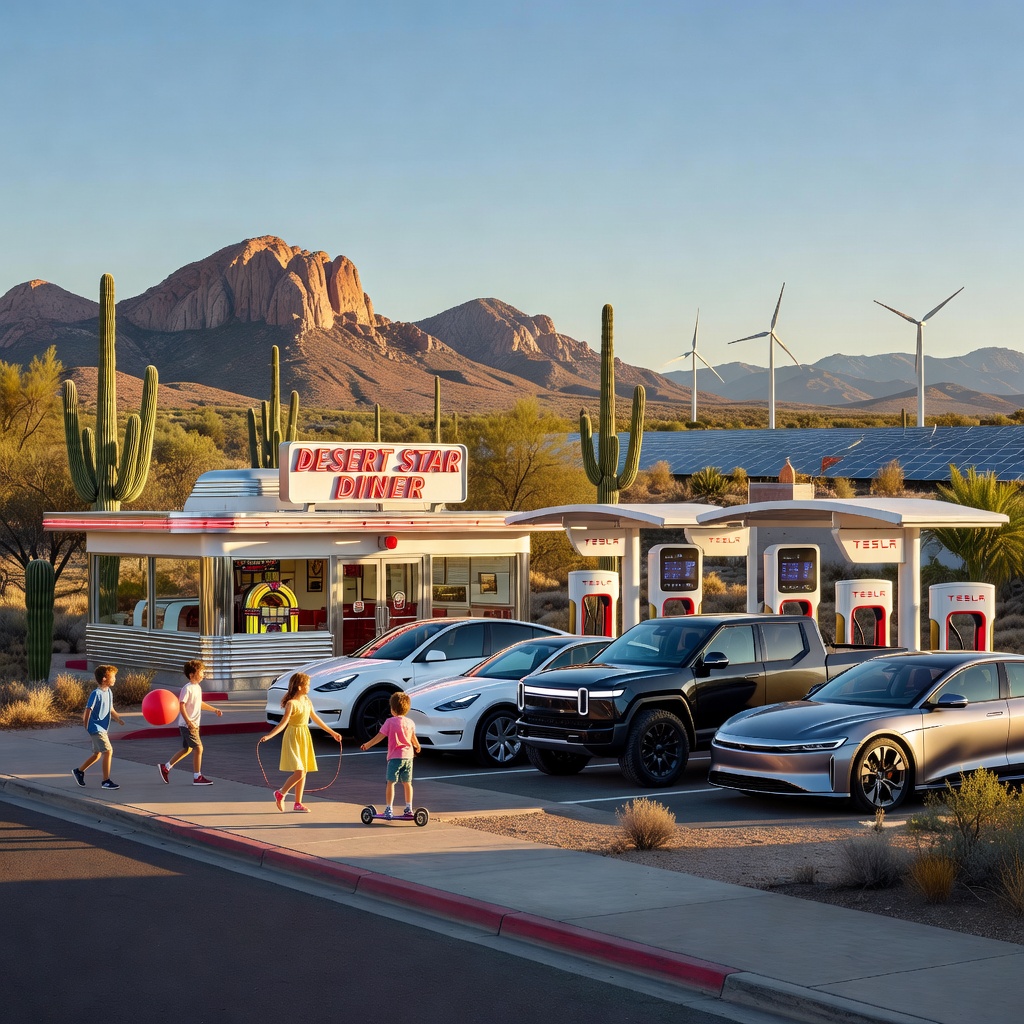
Not every human story in Tesla's electric vehicle expansion is shadowed by anxiety. In rural communities along expanding Supercharger corridors, something unexpected is happening. Small towns that were bypassed by the original gas station economy, places that never attracted a franchise fuel stop because the traffic counts did not justify the capital expenditure, are finding that Tesla's Supercharger network logic operates differently. The company has placed charging infrastructure in locations that purely profit-driven fuel retailers would never have touched, and in doing so has inadvertently created economic activity in places that had stopped expecting it.
A diner owner in a small Nevada town near a Supercharger installation describes a customer base that simply did not exist eighteen months ago. EV drivers, who stop for the thirty to forty-five minutes required to add meaningful range, need somewhere to sit. They buy coffee. They buy food. They charge their laptops and ask about local attractions. "We got a TripAdvisor review from someone from Seattle," she says, still audibly surprised. "They had never heard of us. They stopped because of the charger."
Tesla's Supercharger network, now the largest fast-charging infrastructure in North America and increasingly accessible to non-Tesla vehicles following the industry-wide adoption of the NACS connector standard, is functioning in some rural contexts less like a corporate amenity and more like a utility investment that carries secondary economic benefits. That was nobody's stated intention. It is happening anyway.
What the Machines Are Teaching Us About Ourselves
Marcus Webb, the veteran in Flagstaff, eventually bought a Cybertruck. He chose it not for the aesthetic, which he describes with characteristic veteran bluntness as "a refrigerator that got in a fight with a battleship," but for the combination of the adaptive driver assistance features, the large touchscreen interface that accommodates his limited hand mobility better than conventional controls, and the over-the-air update system that means the vehicle he bought last month will be meaningfully more capable in six months without requiring a dealership visit.
He is under no illusions about Tesla as a company or Elon Musk as a figure. He follows the news. He has opinions. But he separates the product from the politics with the pragmatism of someone whose independence depends on the former. "I don't need the truck to be perfect," he says. "I need it to keep getting better. And so far, it keeps getting better."
That sentence, modest and conditional and grounded in lived experience rather than promotional copy, might be the most honest summary of where Tesla's electric vehicle program actually stands in 2025. The Cybertruck is real, flawed, and improving. The Semi is moving freight and moving an industry toward a reckoning it is not prepared for. The autonomy software is genuinely advancing, unevenly and imperfectly, in ways that matter enormously to people the product team has never met. And the manufacturing lines that build these machines are staffed by humans who are, with remarkable clarity, watching their own potential obsolescence take shape around them.
None of this fits cleanly into a product launch narrative or a bear-case short thesis. It is messier than both. It is, in other words, exactly what technology actually looks like when it lands in the world and meets the full complexity of the people living in it.
George Russell
Tech journalist covering Elon Musk’s companies for over 10 years.