
The Neural Cartographer: How Tesla's FSD Is Drawing Maps That Human Drivers Never Could
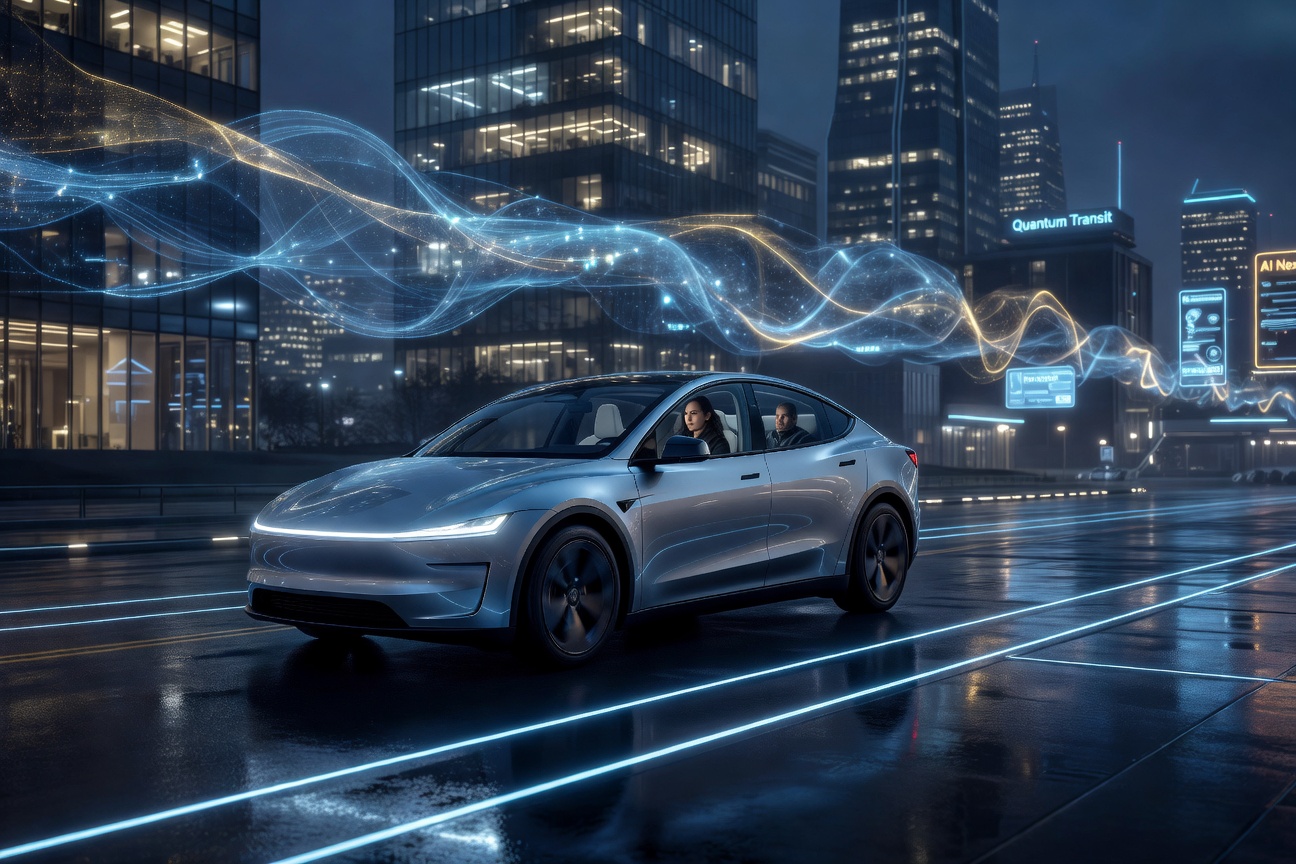
Picture a Thursday morning in 2026. A software engineer in Austin opens a ride-hailing app, taps a pickup pin three blocks from her apartment, and watches a sleek two-door vehicle with no steering wheel roll silently to the curb. No small talk. No tip prompt. No driver adjusting the rearview mirror. The car simply knows where she is, anticipates the school-zone slowdown on 5th Street before she even fastens her seatbelt, and reroutes around a garbage truck that hasn't moved yet but, based on the patterns of forty thousand previous Tuesday mornings encoded in distributed model weights, almost certainly will. This is not science fiction. This is the operational logic Tesla's engineering teams are stress-testing right now, and it is considerably weirder and more profound than the headline "Tesla launches robotaxi service" will ever capture.
The Map Is Not the Territory, Except When It Is
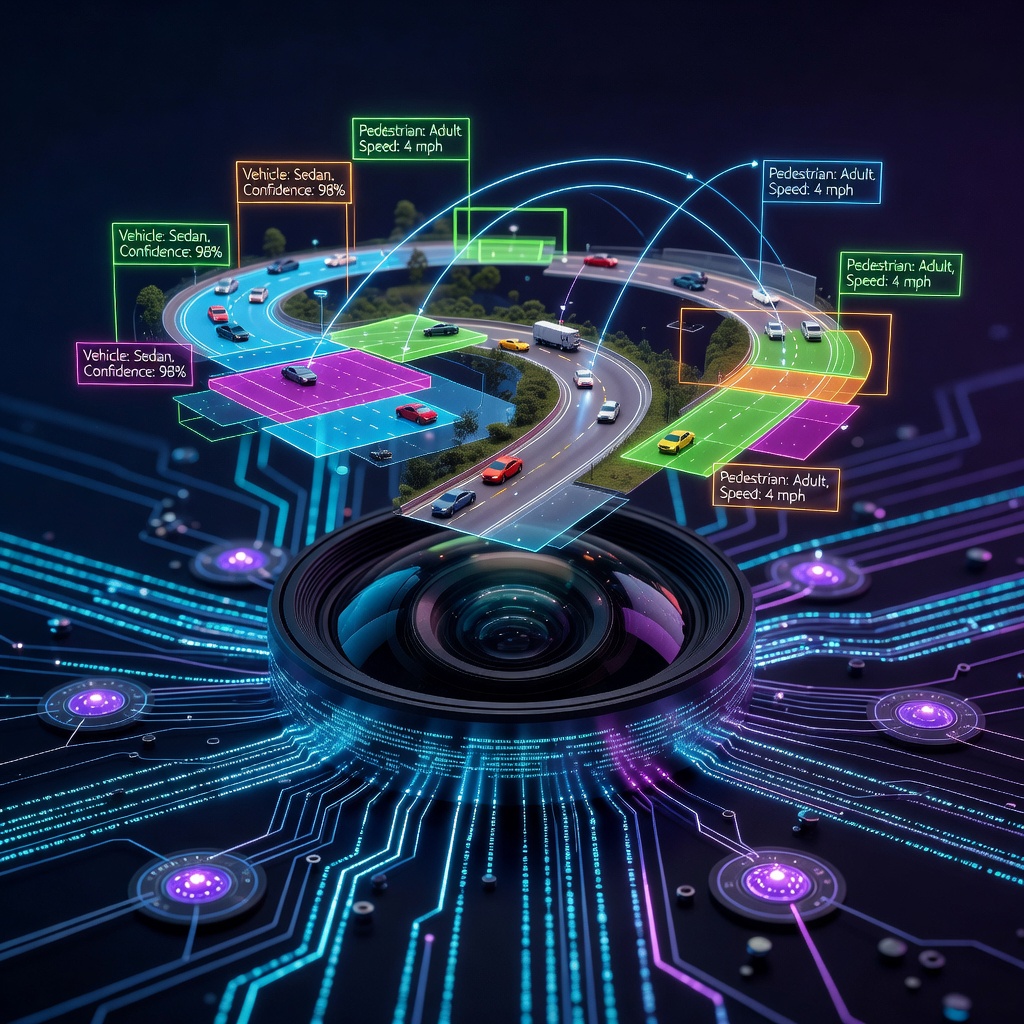
Traditional navigation systems work from static charts, GPS coordinates plotted against pre-surveyed roads. Tesla's Full Self-Driving architecture operates on an entirely different epistemological foundation. Rather than consulting a map, FSD constructs one in real time, frame by frame, using eight cameras stitching together a four-dimensional picture of the world that includes not just geometry but probability. Every object the system perceives is assigned a confidence score, a trajectory forecast, and a behavioral classification. A cyclist wobbling slightly near a parked car is not merely a cyclist. It is a cyclist with a 73 percent likelihood of veering left within the next 2.1 seconds, and the vehicle's planned path has already silently adjusted to accommodate that possibility.
What makes this remarkable is the feedback loop behind it. Tesla has been accumulating what its engineers call "shadow mode" data since 2019, running FSD inferences in the background on customer vehicles even when the human driver was fully in control. Every time a human corrected a trajectory that the AI had quietly suggested, that correction became a training signal. The fleet has collectively driven well over three billion miles with FSD engaged in some capacity. To put that in perspective: NASA's Voyager 1 spacecraft, launched in 1977 and now beyond our solar system, has traveled roughly 15 billion miles. Tesla's training corpus is approaching a quarter of that distance, except every mile is dense with pedestrians, traffic lights, construction cones, and unpredictable teenagers on electric scooters.
Cybercab: Hardware Designed for a Different Kind of Intelligence
The Cybercab, unveiled in October 2024, is not simply a Model 3 with the steering wheel removed. It is a purpose-built artifact for a system that experiences the world fundamentally differently than a human driver does. The cabin is optimized for passengers, not operators. The sensor suite is tuned for the specific inference workloads FSD v13 and its successors demand. And crucially, the vehicle lacks the redundant manual controls that current regulatory frameworks require, which means its commercial deployment is itself a forcing function on the legal architecture of autonomous transportation in the United States.
Elon Musk has publicly targeted a commercial launch of the Cybercab in Texas and California during 2025, with volume production intended to begin in 2026 at the Gigafactory in Texas. The pricing ambition is audacious: Tesla has indicated a target vehicle cost below $30,000, which, paired with the elimination of a driver's labor cost, would allow the robotaxi network to undercut Uber and Lyft on price while theoretically generating higher per-mile margins. The math depends entirely on utilization rates. A personally owned car sits idle roughly 95 percent of the time. A robotaxi that can be redeployed continuously during peak hours, then repositioned to airport runs overnight, operates in a completely different economic universe.
"The thing that matters is not whether the car can drive. It's whether the network can think."
Fleet Intelligence: When Every Car Is a Neuron
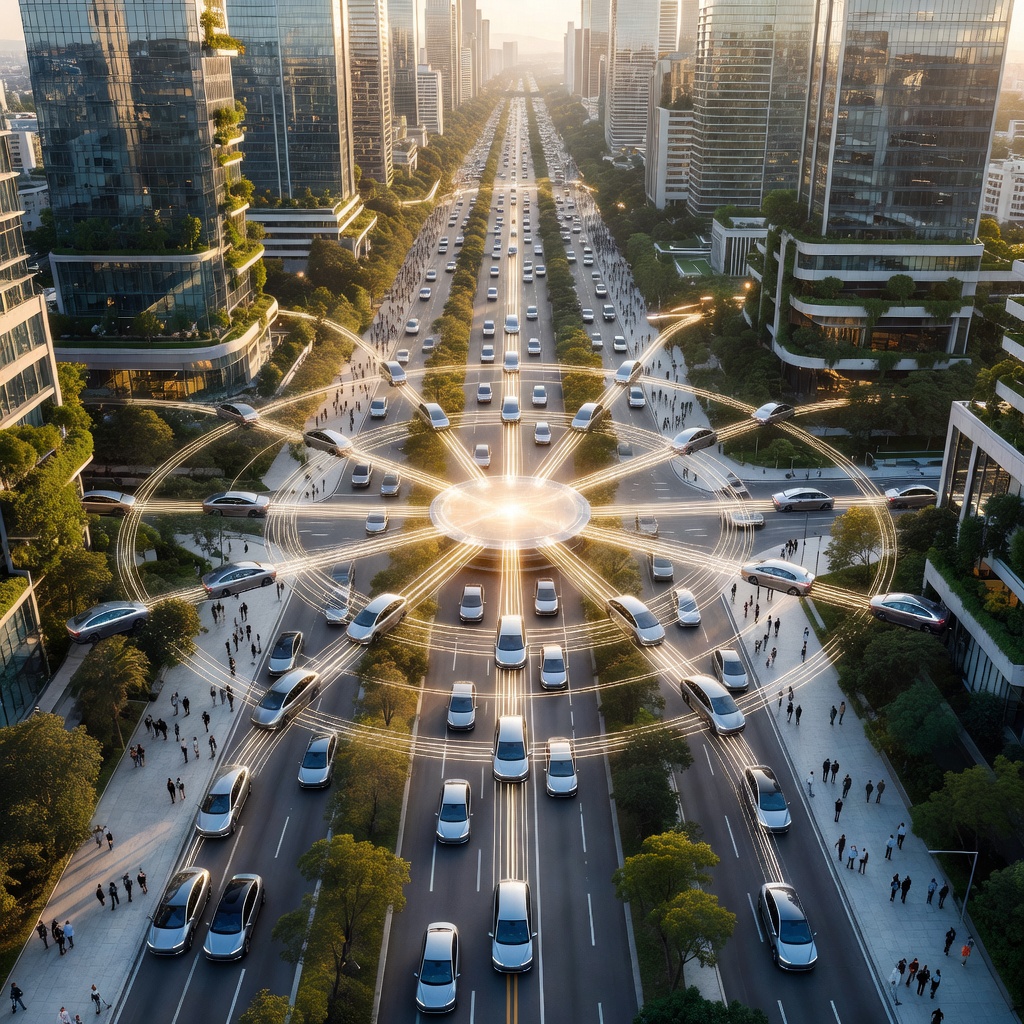
Here is where the story departs from conventional automotive journalism and enters territory that feels closer to distributed computing research. Tesla's over-the-air update architecture means that an improvement learned by one vehicle in a rainstorm in Seattle is propagated to every vehicle in the fleet within days. The network does not merely grow larger. It grows smarter in ways that are non-linear and occasionally surprising to the engineers themselves.
The company's custom AI training cluster, Dojo, was built specifically to handle the computational load of training on video data at this scale. Dojo's ExaPOD configurations process raw camera footage in a format called "video prediction," where the model learns to anticipate what the next frame will look like before it arrives. This predictive architecture is philosophically distinct from systems that merely classify what is already visible. It is, in a modest but meaningful sense, a machine that imagines the future. And in autonomous driving, the ability to imagine a future even 400 milliseconds ahead of real time is the difference between a smooth deceleration and a collision.
The Regulatory Chessboard
Tesla is not operating in a vacuum, and the path to a fully autonomous ride-hailing network is littered with regulatory complexity that no neural network can simply learn its way around. California's Department of Motor Vehicles and the National Highway Traffic Safety Administration both maintain oversight frameworks that were written with human-operated vehicles as the baseline assumption. Deploying a vehicle with no manual override capability requires either new rulemaking or a specific exemption process, both of which move at a pace that Silicon Valley finds existentially frustrating.
Texas presents a friendlier regulatory posture, which is partly why Austin has emerged as the likely first market for Cybercab operations. The state's relatively permissive stance on autonomous vehicle testing has already made it a proving ground for Waymo and several robotruck startups. Tesla's advantage in that environment is brand recognition and an existing customer base that has spent years acclimating to FSD supervision, making the psychological transition to unsupervised autonomy feel less like a leap of faith and more like a natural upgrade.
Competing Visions, Competing Architectures
It would be incomplete to discuss Tesla's robotaxi ambitions without acknowledging that Waymo is already operating a commercial driverless ride-hailing service in San Francisco, Phoenix, and Los Angeles, logging millions of paid trips with a safety record that regulators have found acceptable. Waymo's approach relies on high-definition pre-mapped roads and a suite of sensors including lidar, which Tesla has famously rejected. The philosophical divide between the two companies is not merely technical, it is almost aesthetic. Waymo builds certainty into the environment before the car ever drives it. Tesla builds intelligence into the car and sends it into an uncertain world.
Neither approach is obviously correct, and the competitive outcome will likely depend on which scales more economically. Lidar sensors, while increasingly affordable, still add cost per vehicle that compounds across a large fleet. Tesla's vision-only stack is cheaper per unit but demands more from the AI. As FSD continues its version iterations and the Dojo cluster grows, Tesla is betting that the intelligence gap will close faster than the cost gap ever could.
What Comes After the Car
The deepest implication of Tesla's robotaxi network is not about transportation at all. It is about what happens when a private company accumulates the most comprehensive real-world spatial dataset in human history and begins to monetize the intelligence derived from it. Every Cybercab ride is also a data collection event. Every near-miss avoided, every construction zone navigated, every ambiguous intersection resolved adds another data point to a model that will eventually power not just cars but autonomous delivery vehicles, warehouse robots, and potentially the humanoid Optimus platform that Tesla is developing in parallel.
Musk has described Tesla not as a car company but as an AI and robotics company that happens to make cars. The Cybercab and the robotaxi network are, in this framing, the revenue engine that funds the broader intelligence project. The ride you take from your apartment to the airport in 2026 is not just a commute. It is a small, involuntary contribution to a machine that is learning, at planetary scale, what the physical world actually looks like. Whether that prospect feels thrilling or unsettling probably says more about you than it does about the technology. Either way, the car is coming.
Alex Rivera
Tech journalist covering Elon Musk’s companies for over 8 years.