Voices Returned: The Patients Rewriting What It Means to Communicate

Before the disease took her voice, Patricia Guerrero-Ayala used to sing to her grandchildren at bedtime. Not professionally, not beautifully by any technical measure, but with the kind of warmth that only a grandmother's voice carries. When ALS gradually silenced her over a period of fourteen months, the absence of that sound became, for her family in Tucson, Arizona, the loudest thing in any room. Then, seven weeks after receiving a brain-computer interface implant as part of a clinical trial, Patricia spelled out the opening line of the lullaby she had always sung, letter by letter, through nothing but the intention to move fingers she could no longer physically move. Her daughter, watching the words appear on the screen, had to leave the room to cry.
Stories like Patricia's are multiplying. As brain-computer interface technology accelerates from laboratory curiosity to cautious clinical deployment, the people living at the center of this transformation are offering a perspective that press releases and patent filings rarely capture: that the most consequential breakthroughs are not measured in bits per second or electrode density, but in whether a husband can argue with his wife again, whether a teenager with locked-in syndrome can finally complain about her homework, whether a father can say goodnight.
What the Data Cannot Hold
Clinical trials generate impressive numbers. Researchers at several leading institutions have published results showing paralyzed participants achieving text output at speeds surpassing 40 words per minute using implanted electrode arrays that decode motor-cortex signals. Neuralink's first human participant, Noland Arbaugh, demonstrated cursor control precise enough to play chess and browse the internet for hours at a stretch. These figures are genuinely extraordinary. But spend time speaking with BCI users and their caregivers, and a different kind of data emerges, the kind that does not fit neatly into a journal abstract.
Marcus Thibodeaux, a 34-year-old former electrician from Louisiana who suffered a cervical spinal cord injury in 2021, participated in a non-invasive EEG-based BCI program at a rehabilitation center last year. He can now control a motorized wheelchair and operate a tablet using imagined hand movements. When asked what that means to him practically, he does not mention freedom of movement first. He mentions being able to turn off his own bedroom light. "Everyone kept talking about independence," he says. "But independence starts with the small stuff. I wanted to turn my own light off at night without asking someone. That's where dignity lives, in the small stuff."
His observation cuts to something researchers are increasingly acknowledging: the communities most affected by BCI technology have priorities that do not always align with the priorities of the engineers building it. Speed benchmarks matter, but so does comfort during long wear. Signal accuracy matters, but so does whether the device draws stares in a grocery store. Battery life matters, but so does whether the charging routine can be managed independently, without requiring a caregiver to handle intimate contact with a person's scalp or skull.
The Caregiver Equation
One population that almost never appears in BCI research headlines is the caregiver. Yet for every person with an implant or a wearable neural interface, there is typically at least one other person whose life is restructured around that technology. Families, partners, and professional care workers are absorbing the practical weight of a field that moves fast and communicates poorly with the people doing the daily work.
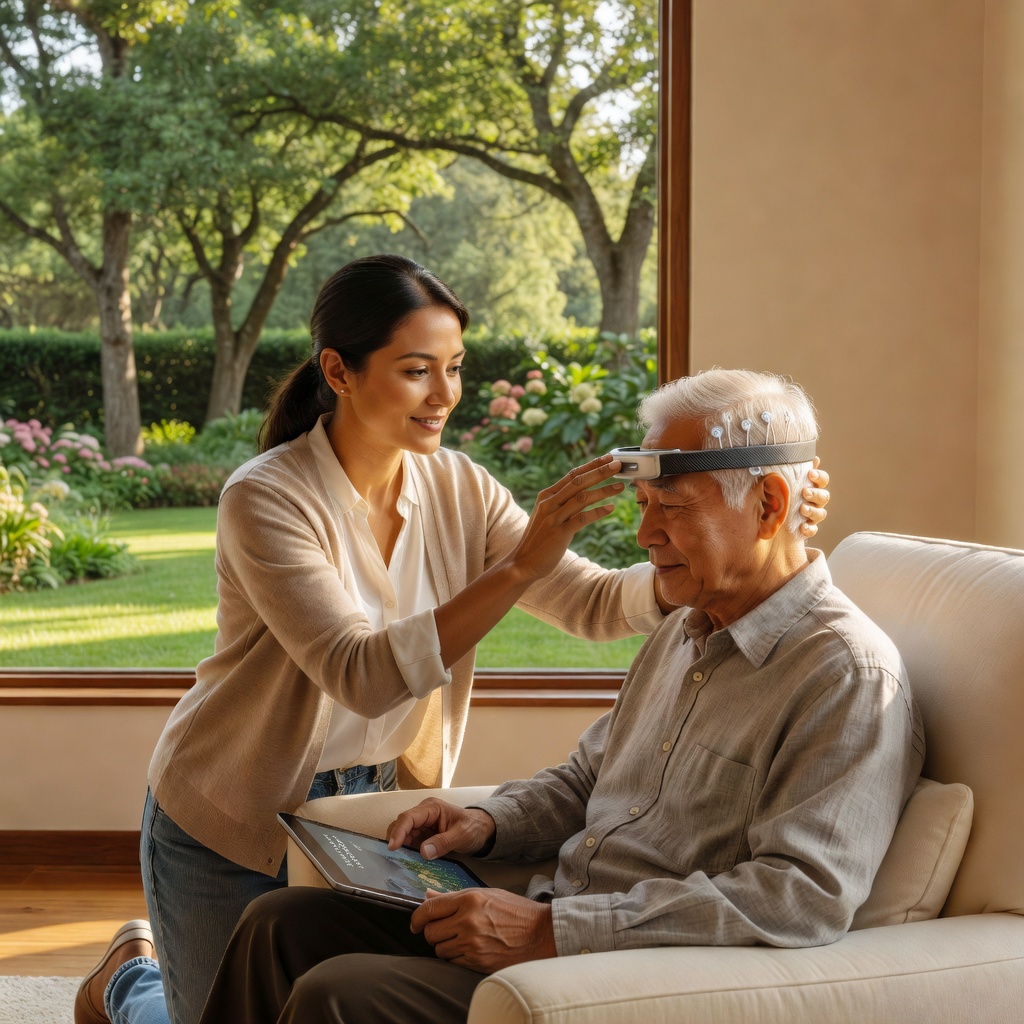
Renata Kowalski has cared for her husband Dmitri, who has advanced multiple sclerosis, for eleven years. When Dmitri began using an EEG-based communication system eighteen months ago, Renata had to learn the device's software, troubleshoot calibration failures, coordinate with the clinic managing his trial participation, and manage the emotional weight of watching her husband struggle through the learning curve of a technology designed by people who had never lived inside their situation. "The researchers are brilliant," she says carefully. "But the onboarding materials were written for someone who has a neurotypical support system and a fast internet connection and no other crises happening. That's not most of us."
Her frustration points to an equity gap that disability advocates have been raising for years. BCI trials have historically skewed toward participants with higher levels of education, stable housing, and proximity to major research centers, not because researchers intend to exclude others, but because the infrastructure of clinical research demands it. As the technology matures and moves toward commercial availability, the question of who actually gets access, and under what conditions, is becoming urgent.
Children at the Frontier
Perhaps nowhere is the human dimension of BCI technology more acute than in pediatric cases. Children with conditions like cerebral palsy, Rett syndrome, or brainstem strokes often develop communicative intent and emotional awareness long before any existing assistive technology can give that intent an outlet. Parents describe watching their children reach for connection, understanding humor, tracking conversations, forming preferences, while being locked out of the means to express any of it.
Non-invasive BCI systems designed for pediatric users are still early-stage, but several research groups are now developing child-specific interfaces that account for developing neural architecture, smaller skull geometries, and the reality that children are not simply small adults in their neurological profiles. Parents involved in these research programs describe a strange, hopeful tension: gratitude for being included, anxiety about being experimented on, and a fierce protectiveness about who controls the data generated by their child's brain activity.
That last concern is not abstract. Neural data is among the most intimate information a human being can generate. Unlike a fitness tracker's step count, brainwave patterns can potentially reveal emotional states, cognitive fatigue, even early markers of neurological conditions that have not yet manifested clinically. Parents of pediatric BCI users, along with adult users themselves, are increasingly asking pointed questions about data ownership, storage, commercial use, and what happens to that data if a company restructures, is acquired, or ceases operations. So far, the answers from most device developers have been incomplete.
What Users Are Actually Asking For
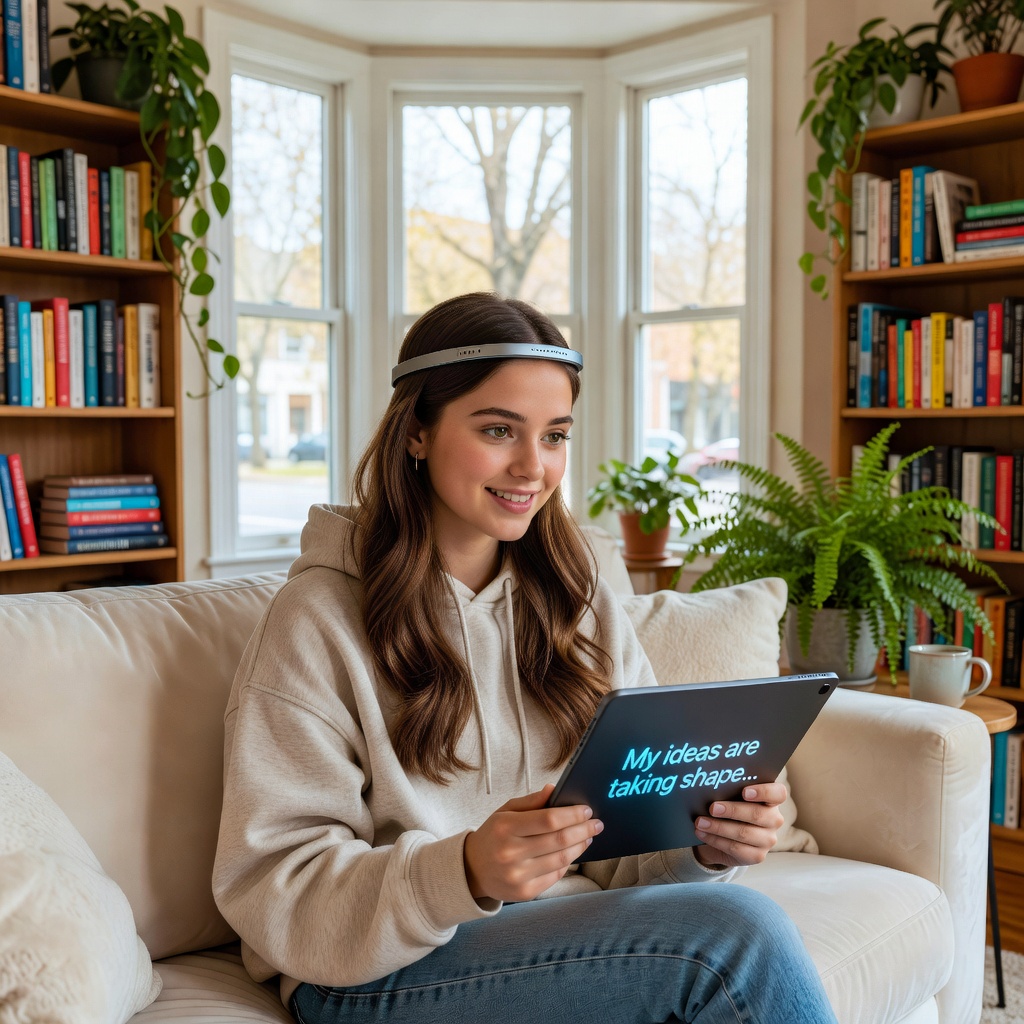
A pattern is emerging from user advocacy groups, patient councils attached to research institutions, and informal communities of BCI participants: the gap between what gets built and what gets needed is narrowing, but it is still real. Users are asking for devices that do not require expert recalibration every few days. They are asking for systems that work reliably in noisy real-world environments, not just the controlled acoustics of a laboratory. They are asking for interfaces that do not require them to remain still, because life does not pause for signal acquisition.
They are also asking, with increasing directness, to be included in the design process rather than consulted at the end of it. Several disability-led organizations have begun formally partnering with BCI developers at the concept stage, bringing user experience into the room before the first prototype is built. Early results from these collaborations suggest that co-design catches usability problems that purely technical testing misses entirely, and that it produces devices people actually want to use every day, not just during a trial.
The Technology Is Ready. The Ecosystem Is Not.
The honest assessment from people living inside the BCI moment is that the technology itself, while still maturing, has already crossed a threshold of genuine usefulness. The bottleneck is everything around it: reimbursement pathways, trained technicians outside major cities, regulatory frameworks that move at the speed of bureaucracy while innovation moves at the speed of ambition, and a cultural narrative about brain-computer interfaces that oscillates between utopian hype and dystopian dread without pausing long enough to ask ordinary people what they actually want from it.
Patricia Guerrero-Ayala, the grandmother in Tucson, has a clear answer to that question. She wants to finish the lullaby. She wants her grandchildren to hear the whole thing, every verse, delivered in her own cadence even if the mechanism is now electrical rather than vocal. She is not interested in the philosophical debate about whether that makes the voice authentically hers. She already knows the answer. Her grandchildren do too.
"People keep asking me if it feels strange, using my brain to talk instead of my mouth. I tell them: the strange part was the silence. This just feels like me."
That may be the most important data point the field has produced so far. Not a words-per-minute record. Not a funding milestone. The simple, radical fact that a grandmother in Arizona can once again put her grandchildren to sleep with a song, and that she does not experience the technology making it possible as anything foreign or futuristic. She experiences it as herself, finally, speaking again.