
Who Funds the Future? The Hidden Money Trail Behind Tesla's EV and Autonomy Research
When a peer-reviewed journal publishes a study concluding that Tesla's Full Self-Driving system reduces collision rates by a statistically significant margin, the headlines write themselves. Shares tick upward. Advocates tweet. Critics grumble. But almost nobody asks the question that any seasoned investigative reporter would consider mandatory: who paid for the data, who controls the methodology, and what happens to the researcher's career if the numbers come out the other way?
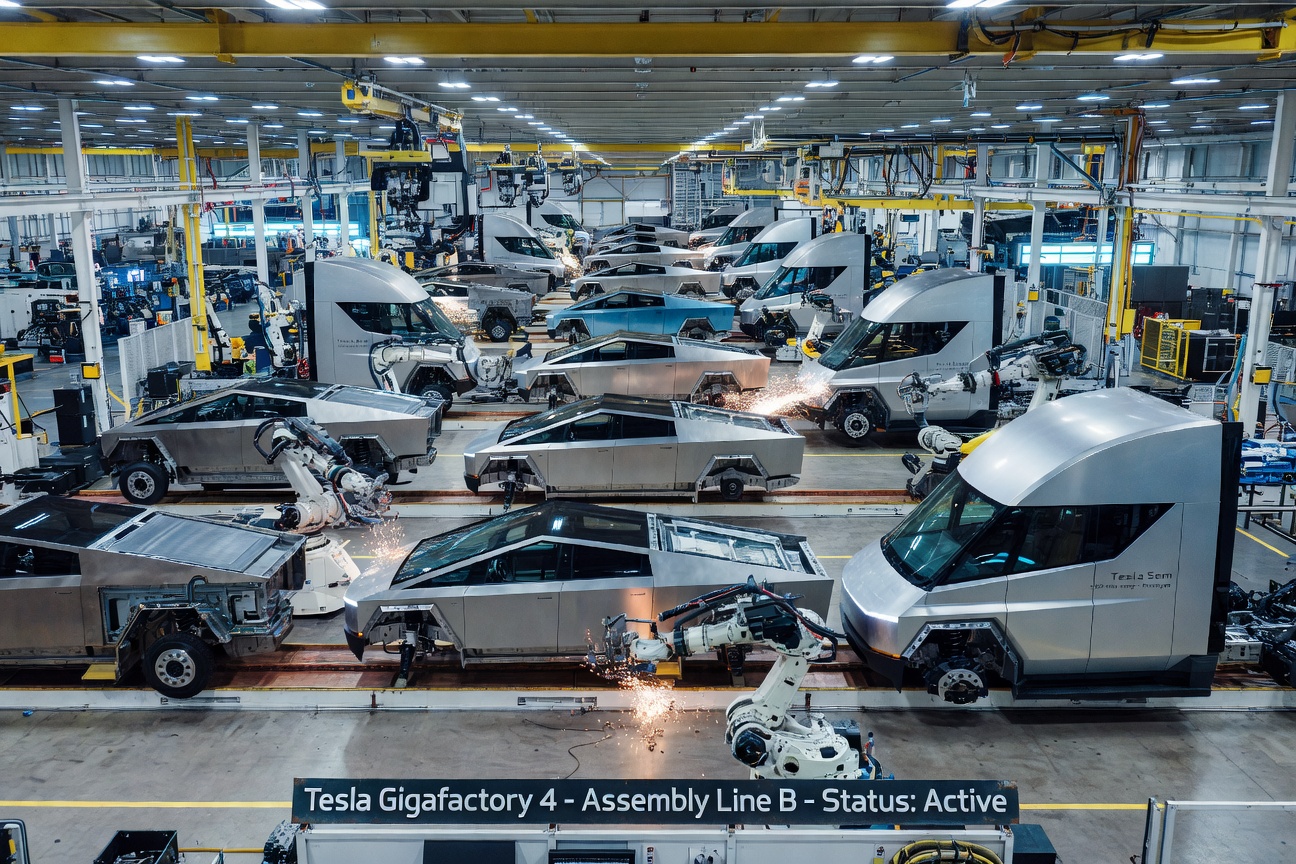
That question, uncomfortable and persistently avoided in mainstream tech coverage, is becoming impossible to ignore as Tesla accelerates the rollout of its most consequential vehicles yet. The Cybertruck, now moving through an ambitious production ramp at Gigafactory Texas, the Tesla Semi logging commercial miles for early fleet operators, and the Full Self-Driving suite inching toward the autonomy threshold that Elon Musk has been promising for the better part of a decade. Each of these programs generates enormous quantities of research. Safety studies. Efficiency benchmarks. Range analyses. Battery degradation curves. Collision avoidance datasets. And each study sits inside a funding ecosystem that is far messier, far more politically charged, and far more financially entangled than the clean white pages of academic journals suggest.
The Benchmark Problem: Who Sets the Ruler?
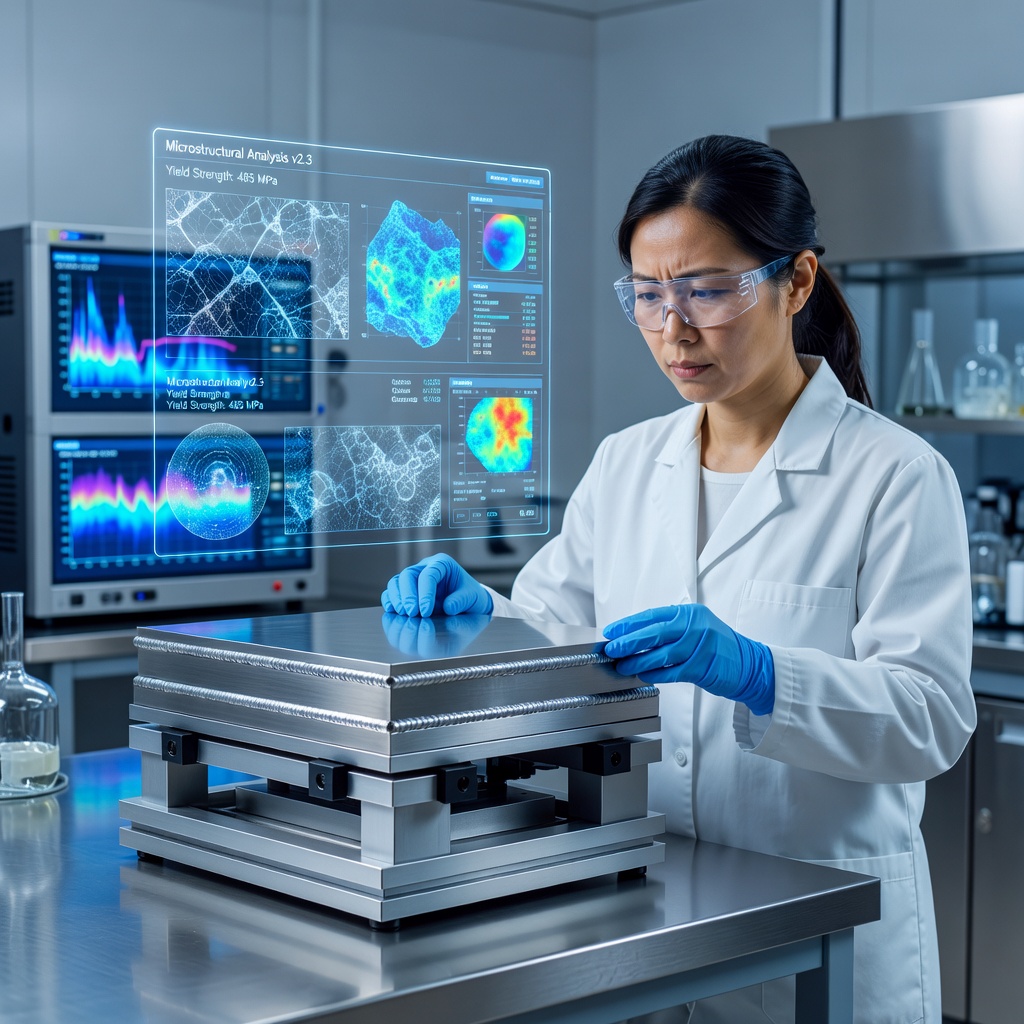
Start with manufacturing. Tesla's Cybertruck arrived carrying extraordinary claims about its stainless steel exoskeleton and its ultra-hard 30X cold-rolled steel body panels. Independent materials scientists broadly confirmed the hardness specifications, but a quieter dispute has been simmering in metallurgical research circles about what those specifications actually mean for real-world durability over a ten-year ownership cycle. The problem is methodological: standardized automotive corrosion and fatigue testing protocols were developed for conventional coated steel and aluminum. Nobody wrote the rulebook for a vehicle built the way the Cybertruck is built, which means early academic comparisons are measuring the truck against benchmarks it was never designed to meet, while the benchmarks it was designed to exceed don't yet formally exist.
Several university engineering programs have begun developing Cybertruck-specific testing protocols. At least two of those programs received equipment grants from suppliers in Tesla's own manufacturing chain. That is not necessarily corrupt. Equipment grants are standard academic practice. But it does create a structural condition where the researchers most positioned to set the new benchmarks have a financial relationship with the companies that benefit most from favorable benchmarks. When this was raised with one materials scientist at a Big Ten university, the response was candid: "The funding doesn't tell me what to find. But it absolutely shapes what questions I think are worth asking."
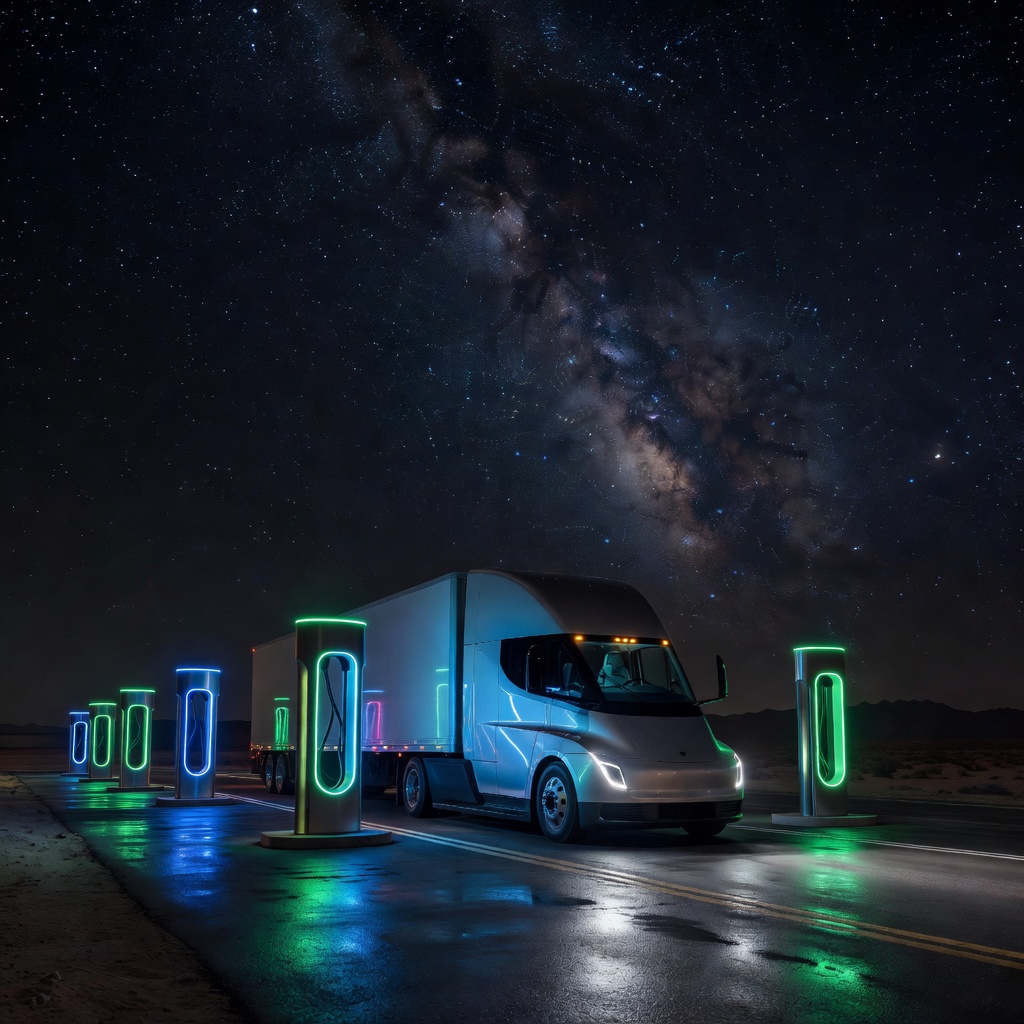
The Tesla Semi adds another layer of complexity. As Class 8 freight operators report early efficiency numbers from their Semi fleets, those figures are being fed into transportation research models that will influence federal policy on electrification mandates, charging infrastructure investment, and emissions credits. The trucking industry is not a neutral observer. Diesel freight operators have a billion-dollar incentive to fund research that finds fault with electric Semi economics. Simultaneously, charging infrastructure companies, battery suppliers, and logistics firms with Tesla partnerships have an equally large incentive to fund research that finds the Semi transformative. Both camps are actively doing exactly that, and the resulting literature is not a converging consensus. It is two parallel research ecosystems producing divergent conclusions and citing each other only to dispute.
The Autonomy Data Labyrinth
Nowhere is the research ecosystem more tangled than in the autonomy space. Tesla's FSD program is unique in one critical respect: the primary dataset driving its development is proprietary. The neural networks learning to navigate complex urban environments are being trained on footage from more than five million vehicles on public roads. No independent researcher has full access to that dataset. No external ethics board has reviewed its collection methodology. The consent framework under which drivers agreed to contribute their driving data to a commercial AI training program is embedded in a terms-of-service document that the overwhelming majority of Tesla owners have never read in full.
This creates a peculiar epistemic situation. Researchers studying FSD safety are working with outputs, not inputs. They analyze disengagement reports, insurance claim correlations, and video incidents that surface publicly, but they cannot interrogate the model itself or audit the training data. It is the equivalent of reviewing a pharmaceutical drug's safety record without access to the clinical trial data. The analogy is not merely rhetorical. In 2024, the National Highway Traffic Safety Administration expanded its investigation into FSD-related incidents, and a persistent methodological complaint from external safety researchers was that Tesla's own internal analyses, submitted as part of regulatory responses, could not be independently verified because the underlying data remained proprietary.
"Tesla is simultaneously the researcher, the subject, the funder, and the gatekeeper of the most consequential autonomous driving dataset on the planet. That is an extraordinary concentration of epistemic power."
Tesla's defenders, and there are credible ones, argue that this proprietary structure is not evasion but necessity. Opening the full dataset to external researchers would compromise customer privacy at a scale that no consent framework could adequately address. The competitive intelligence embedded in five million vehicles' worth of real-world driving behavior is also genuinely irreplaceable, and releasing it would hand rivals an advantage that no commercial enterprise could rationally accept. These are fair points. They do not, however, resolve the scientific problem of unverifiable claims.
Manufacturing Research and the Incentive Gradient
Tesla's manufacturing methodology, specifically its aggressive use of massive casting machines to produce single-piece underbody structures for the Cybertruck and next-generation platforms, has generated genuine academic enthusiasm. The process, which Tesla calls Unboxed Manufacturing for its next iteration, promises to radically compress the assembly process and cut factory footprint requirements. Several manufacturing engineering journals have published glowing analyses of its efficiency potential.
What those analyses sometimes underreport is the repair and insurance cost dimension. Repairability researchers, many of them funded by insurance industry coalitions with an obvious interest in finding EVs expensive to repair, have produced countervailing studies suggesting that single-piece castings turn minor collision damage into total-loss scenarios. The truth almost certainly lives somewhere between the two camps, but the public, and policymakers, are receiving research conclusions calibrated by funding incentives rather than converging toward an honest center.
The Cybertruck's production ramp itself has become a research subject in industrial engineering circles. Output has grown substantially from the troubled early months of 2024, with manufacturing throughput improving as Tesla resolved tooling issues specific to the exoskeleton's forming process. But the peer-reviewed literature on production ramp trajectories for novel vehicle architectures is almost entirely funded by either Tesla's supply chain or its competitors. There is no well-resourced neutral institution producing disinterested longitudinal analysis of whether Tesla's manufacturing ambitions are tracking their projected curves.
The Institutional Silence Problem
Perhaps the most revealing finding from surveying this research landscape is not what is being contested but what is not being studied at all. The psychosocial effects of high-automation driving on long-haul truck operators using early Semi fleets is almost entirely unresearched. The environmental lifecycle accounting for stainless steel versus conventional automotive steel, a calculation that could substantially alter the Cybertruck's total carbon narrative, remains incomplete and contested. The network effects of Tesla's Supercharger infrastructure on competing EV adoption, a question with enormous implications for whether the US hits its electrification targets, is being studied primarily by researchers with financial ties to either Tesla or its direct competitors.
None of this means Tesla's vehicles are unsafe, its manufacturing claims fraudulent, or its autonomy program a chimera. The Cybertruck is a genuinely novel engineering artifact. The Semi is logging impressive real-world efficiency numbers. FSD continues to improve in measurable ways. The problem is not that the technology is failing. The problem is that the research apparatus meant to hold it accountable, to catch the failures before they become catastrophes, has been so thoroughly colonized by financial interest that its outputs can no longer be taken at face value by anyone operating without a stake in the outcome.
Elon Musk has built companies that thrive, in part, by moving faster than the regulatory and scientific infrastructure designed to evaluate them. That is a genuine competitive advantage. It is also, depending on your perspective, the most important unresolved safety story in contemporary technology. The trucks are on the road. The robots are driving. The money is talking. And the independent scientists who might tell us what it all actually means are, in too many cases, working for someone.
George Russell
Tech journalist covering Elon Musk’s companies for over 10 years.