The Ghost Signal: Why Satellite Internet Still Can't Solve Its Latency Paradox
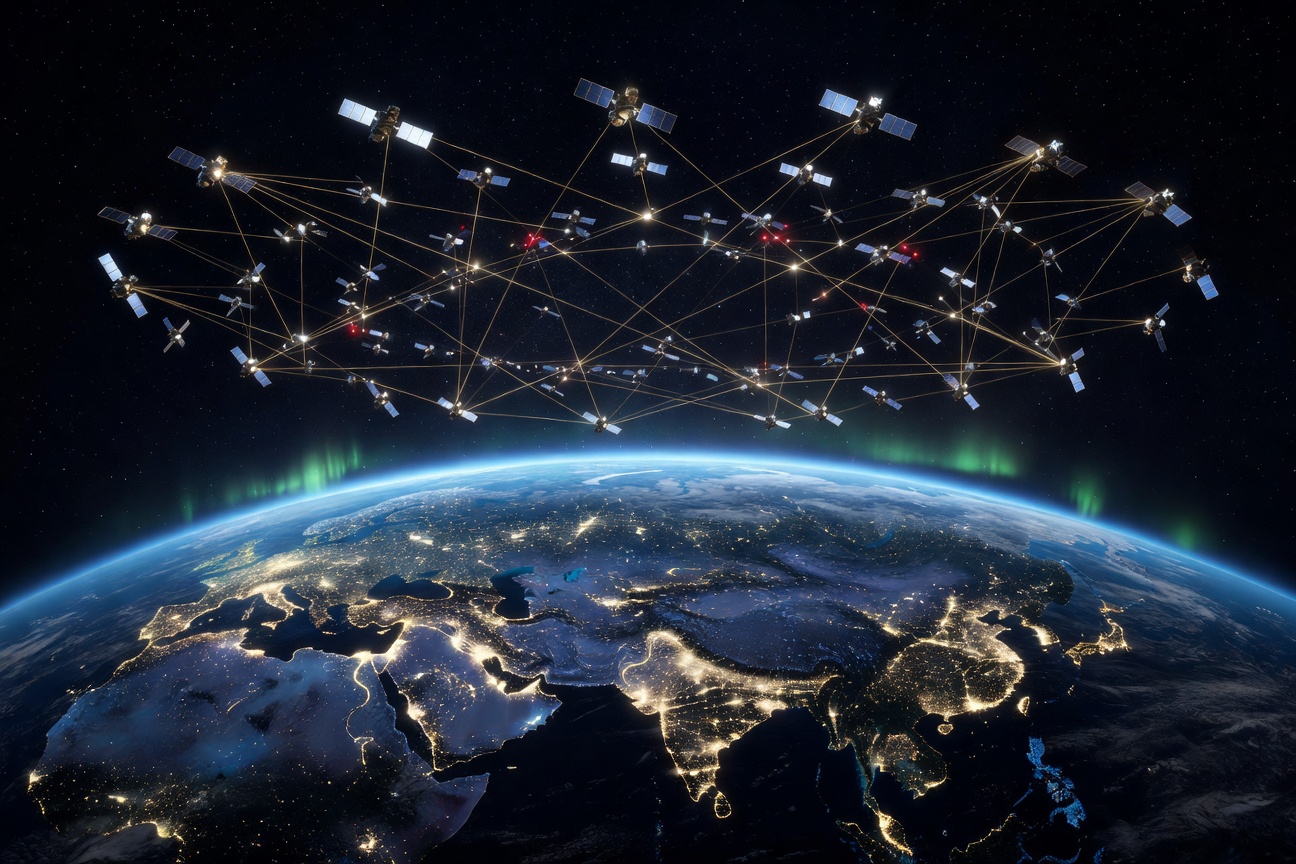
Somewhere above the Indian Ocean, traveling at roughly 27,000 kilometers per hour, a data packet leaves a fishing trawler's terminal, rockets up to a low Earth orbit satellite, bounces across a chain of inter-satellite laser links, descends to a ground station in Portugal, and arrives at a server farm in Frankfurt. The entire journey takes about 35 milliseconds. By any historical comparison, that is astonishing. By the standard set by the fiber-optic cable buried beneath the street outside that Frankfurt data center, it is still frustratingly, puzzlingly slow, and nobody in the satellite internet industry has yet figured out exactly why.
A Problem Hiding Inside a Success Story
The satellite internet sector has, by almost every visible metric, achieved something extraordinary in a remarkably compressed timeframe. SpaceX's Starlink constellation now fields over 6,700 active satellites and serves more than four million subscribers across 100-plus countries. Amazon's Project Kuiper completed its first major batch deployment earlier this year, placing 27 production satellites into orbit and triggering a race that will eventually see thousands more Kuiper nodes overhead. OneWeb, now rebranded under Eutelsat, continues plugging gaps across equatorial Africa and Southeast Asia. The sky is, quite literally, filling up.
Yet inside every engineering team working on these constellations, a whiteboard exists somewhere with a problem that refuses to be erased. Operators call it different things: the "latency floor," the "jitter ceiling," the "last-nanosecond problem." Whatever the label, it describes the same stubborn reality. Satellite internet, even at its best, delivers latency that hovers between 20 and 60 milliseconds under real-world conditions, compared to the 1 to 5 milliseconds achievable over terrestrial fiber. The gap sounds trivial. For an enormous class of applications, including financial trading algorithms, real-time surgical robotics, augmented reality overlays, and competitive online gaming, it is the difference between useful and useless.
"We have solved the distance problem. What we have not solved is the physics-of-light problem dressed up in software clothing."
Why Speed-of-Light Arguments Only Tell Half the Story
The textbook explanation for satellite latency goes like this: signals travel at the speed of light, LEO satellites orbit at roughly 550 kilometers altitude, and a round-trip signal therefore covers about 2,200 kilometers minimum, which at light speed takes approximately 7.3 milliseconds. Simple geometry. Unavoidable physics. Case closed.
Except it isn't. Because measured latency in production Starlink and Kuiper systems consistently runs three to eight times higher than that theoretical floor, and that gap is the mystery. Researchers at several major universities studying network packet behavior across LEO constellations have published findings suggesting the excess latency comes from at least four distinct sources, and the relative contribution of each one is still actively debated. Queuing delays at satellite switching nodes. Inter-satellite link (ISL) handoff hesitation when a packet transfers between laser-linked birds. Ground station routing inefficiencies when traffic must descend to Earth before climbing back up. And most intriguingly, a phenomenon some researchers are calling "orbital Doppler drift compensation lag," where the onboard processing required to continuously adjust for frequency shifts caused by the satellite's velocity introduces microsecond-scale delays that stack into something measurable.
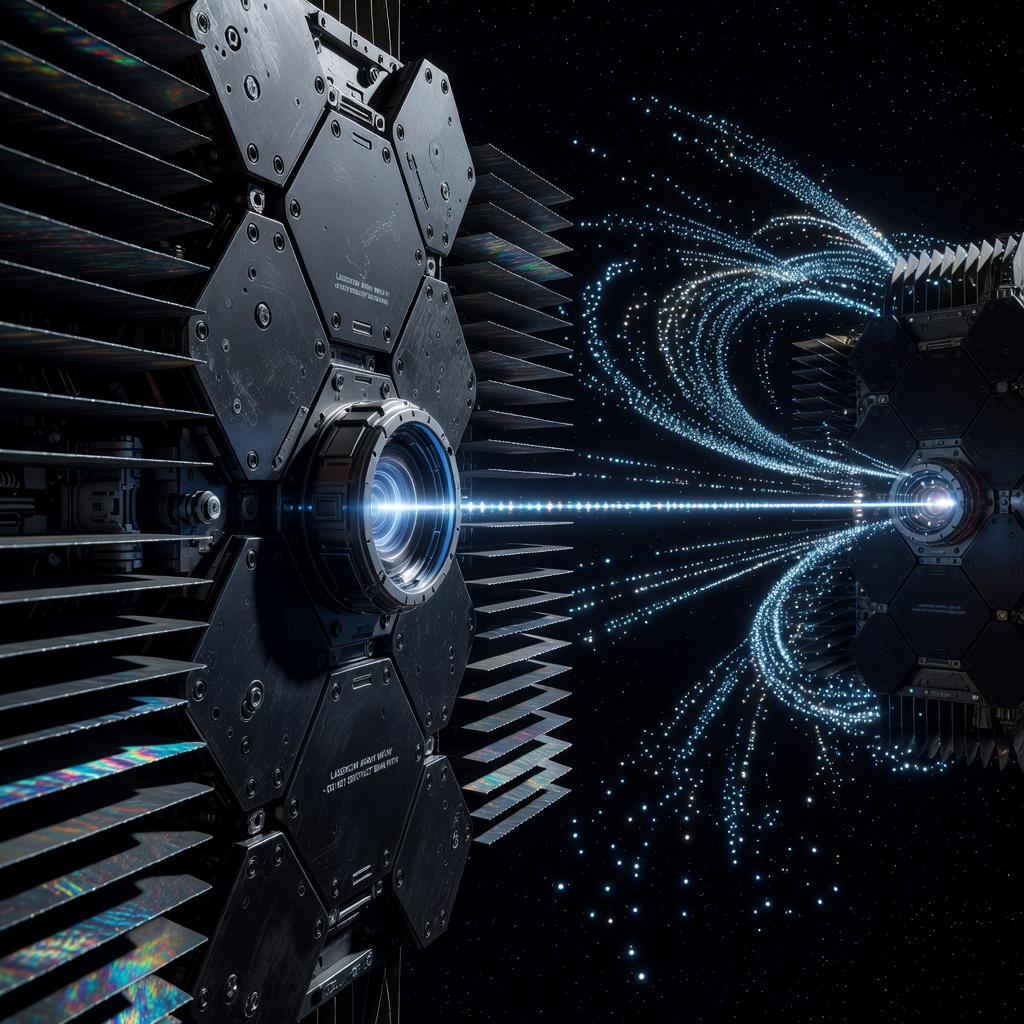
That last factor is particularly interesting because it was not predicted in the original system models for any of the major constellations. It emerged from observed data, meaning the satellites were built, launched, and activated before anyone noticed it was a real contributor. That kind of empirical surprise in a multi-billion-dollar engineering program is relatively rare, and it speaks to just how genuinely novel the problem space is.
Starlink's Version 2 Satellites and the Unanswered Question
SpaceX has been quietly rolling out its second-generation Starlink satellites, the larger, heavier Starlink V2 Mini variants that were engineered to fly on Falcon 9 while the company awaits full Starship deployment capacity. These newer nodes carry improved ISL hardware and more onboard processing power, which is why Starlink's published latency figures have nudged downward over the past 18 months. The company's own speed test aggregation shows median latency dropping from around 48 milliseconds in mid-2022 to closer to 25 milliseconds in early 2025 for North American subscribers under clear-sky conditions.
That is real progress. It is also progress that has slowed noticeably as the improvements compound and the remaining gap becomes harder to close. Network engineers studying the Starlink architecture argue that without a fundamental redesign of how packets are queued at the satellite node level, further improvements will be incremental at best. "We're chasing microseconds now," one network systems researcher noted in a recent conference presentation. "At that scale, the compiler choices you made for the onboard firmware start to matter as much as the RF hardware."
Amazon's Kuiper team has approached the problem differently, designing its ground-to-satellite protocol stack from scratch rather than adapting existing terrestrial networking standards. Early test results from Kuiper's beta network suggest median latencies in the 17 to 30 millisecond range, which would beat Starlink's current consumer average if those figures hold at scale. But "at scale" is doing enormous work in that sentence. Getting 27 satellites to perform beautifully is not the same engineering problem as maintaining those numbers across a constellation of 3,200 nodes, each of which is moving, aging, occasionally glitching, and interacting with thousands of terminals on the ground that have varying atmospheric conditions between them and the sky.
The Open Research Problem Nobody Has Officially Named
What makes the latency paradox genuinely scientifically interesting, as opposed to merely technically annoying, is that it sits at the intersection of several disciplines that rarely talk to each other. It is partly a physics problem, involving signal propagation and relativistic corrections for fast-moving hardware. It is partly a computer science problem, involving protocol design and queue management. It is partly an orbital mechanics problem, since the handoff patterns between satellites depend on constellation geometry that is still being tuned. And it is partly a materials science problem, because the thermal behavior of onboard processors at altitude affects clock speeds in ways that are still being characterized.

No single research group owns this problem. The companies working on it treat their findings as proprietary. Academic researchers who want to study it are largely dependent on consumer-grade speed test data and inference. There is, at the moment of writing, no equivalent of the Human Genome Project or CERN for satellite network latency. It is a distributed mystery being pursued by dozens of groups in parallel, mostly without coordination, occasionally rediscovering each other's findings years apart.
Some researchers believe the answer will come from AI-driven predictive routing, where an onboard model anticipates which ISL path a packet should take before the routing request is even made, cutting queuing delay by preloading decisions. Preliminary simulations suggest this could shave 4 to 9 milliseconds from median latency. Others argue the bigger gains are in the terminal hardware itself, where smarter Doppler pre-compensation could eliminate one of the compounding delay sources before signals even leave the ground.
Why the Stakes Are Higher Than Streaming Quality
It would be easy to frame the latency problem as a concern for gamers and day traders, and therefore not particularly urgent. That framing is dangerously wrong. The next decade's connectivity infrastructure is being built right now, and the latency floor baked into these constellations will determine which applications are feasible for the roughly three billion people who will gain meaningful internet access primarily through satellite links over the next 10 years.
Telemedicine that requires real-time video consultation. Autonomous vehicle coordination in regions without fiber. Remote industrial control systems for mining and agriculture. AI inference at the edge in locations where cloud round-trips are the only option. All of these use cases live or die at the 20-to-30-millisecond boundary that current LEO systems are just beginning to breach. If the industry solves the latency paradox, it does not merely improve streaming quality. It changes the definition of what is possible in every rural hospital, remote classroom, and offshore platform on Earth.
That is why the ghost signal haunting satellite network engineers matters. Not because the problem is unacknowledged, but because it remains, after years of billion-dollar effort, genuinely unsolved. The whiteboard is still full. The packet is still in transit. And somewhere above the Indian Ocean, another satellite is executing its 15th orbit of the day, carrying data faster than any human technology could have managed a generation ago, while still falling just short of fast enough.