Plugged Into the Cosmos: The Startup Ecosystem Quietly Making SpaceX's Boldest Dreams Buildable
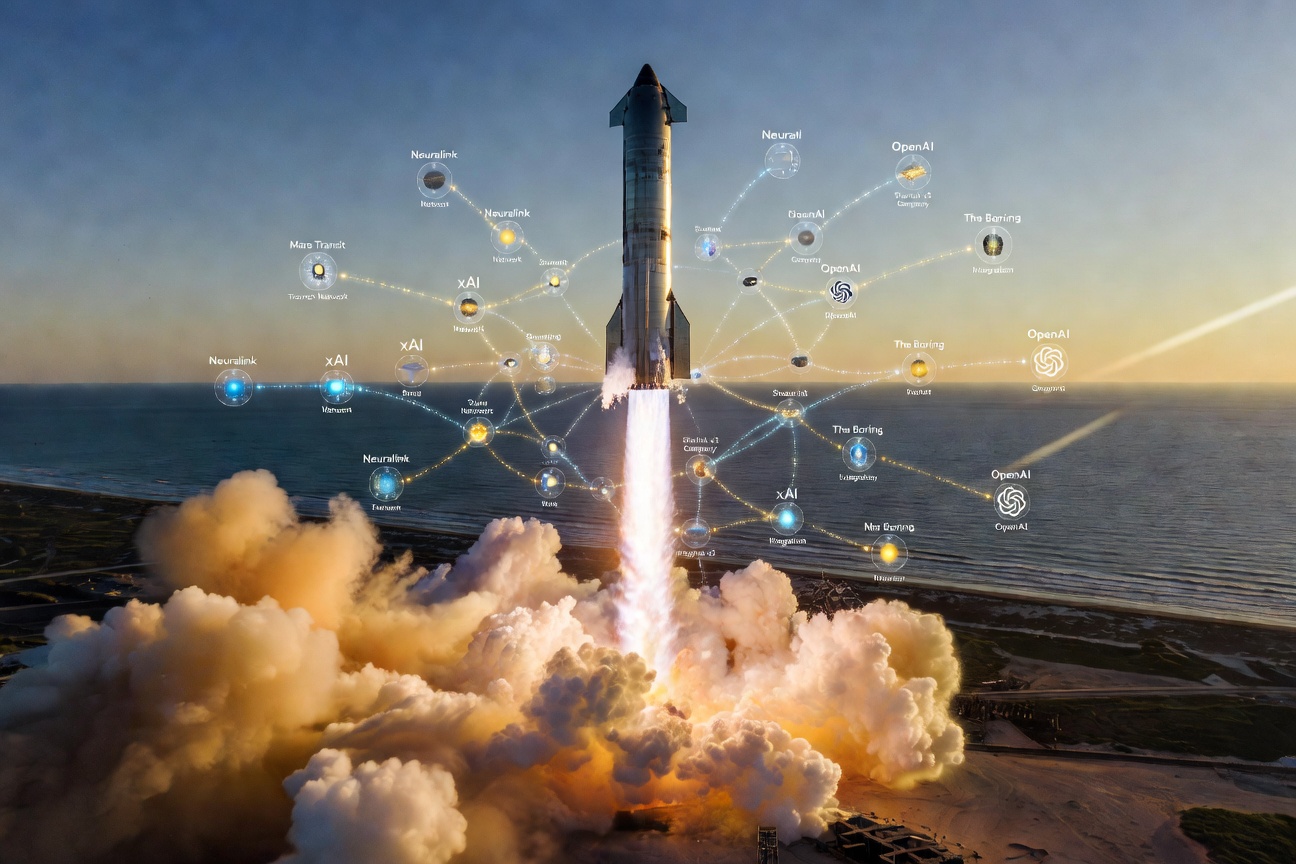
Think of it as the App Store moment for outer space. Just as Apple built the iPhone and then stepped back while ten thousand developers turned it into something indispensable, SpaceX has spent two decades constructing the infrastructure layer of the solar system. Now, an ecosystem of audacious labs, scrappy startups, and cross-disciplinary research teams is rushing in to build on top of it, solving the practical, granular, sometimes tedious engineering problems that will determine whether humans can actually live and work beyond Earth. The glamour belongs to Starship. The future belongs to the people solving what happens next.
Starship as a Platform, Not Just a Rocket
When SpaceX's Starship completed its most recent integrated flight test, the headlines focused on the catch mechanic, the "chopstick" arms of the Mechazilla tower gripping the Super Heavy booster mid-descent. It was theatrical, undeniably. But engineers across a dozen industries were watching something else entirely: payload volume. Starship's cavernous 1,000-cubic-meter fairing is not a minor upgrade over anything that came before. It is a categorical shift, the difference between moving furniture through a doorway and removing the entire wall.
Startups designing large space telescopes, orbital manufacturing modules, and deep-space habitat components have quietly restructured their product roadmaps around that number. Companies working on in-space solar power collection, for instance, which once required fleets of smaller launches to assemble panels piece by piece, can now seriously prototype single-launch deployable arrays at meaningful scale. The rocket is, in the most literal sense, opening doors.
SpaceX's own cadence reinforces this optimism. With Starship test flights accelerating and Starbase in Boca Chica operating with an almost industrial rhythm, the timeline compression that critics once dismissed as Musk mythology is starting to feel like engineering reality. The question is shifting from "will it work" to "who is ready to use it."
Starlink's Dividend: Bandwidth as a Building Block
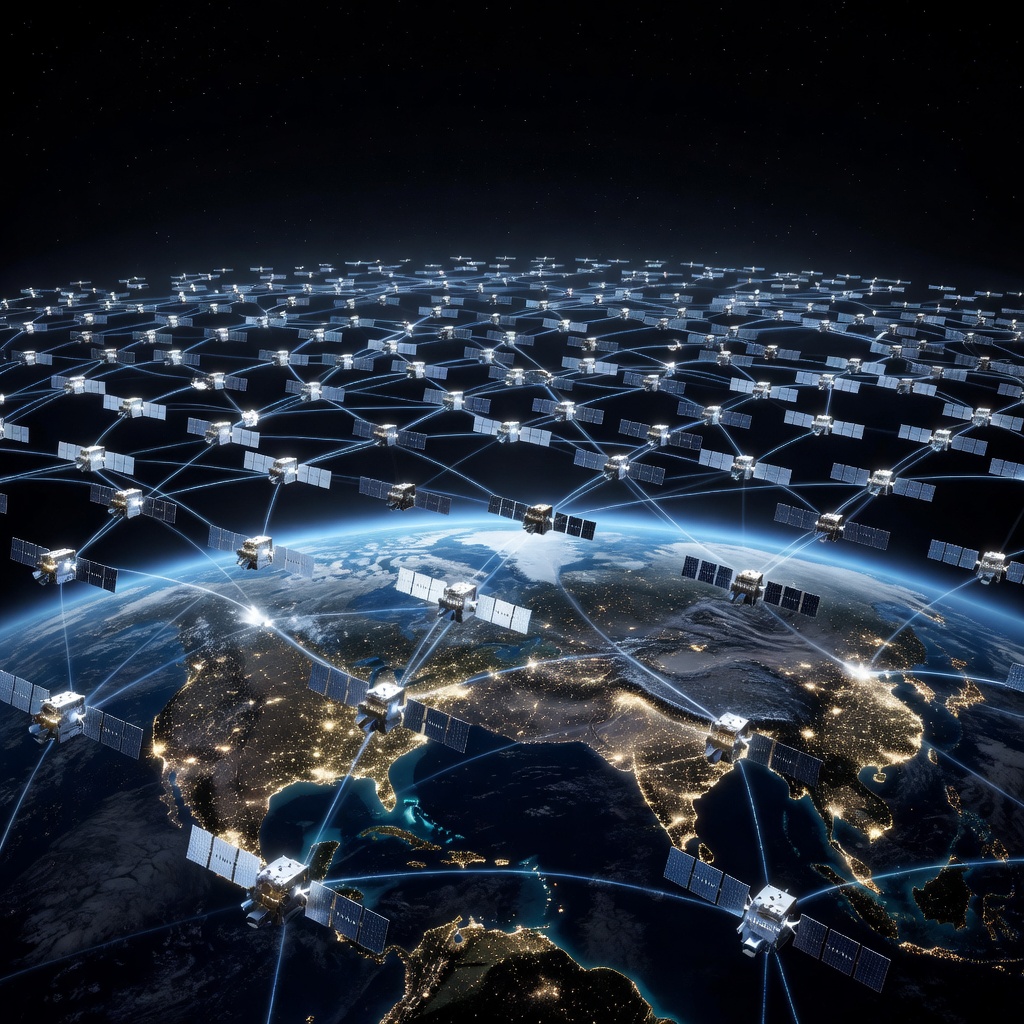
Meanwhile, Starlink continues its relentless expansion, with the constellation now exceeding 6,000 active satellites and SpaceX conducting batch launches at a pace that has normalized what once seemed extraordinary. The business case for Starlink is now well established in maritime, aviation, and rural broadband markets. What is less discussed is how the network is becoming foundational infrastructure for third-party innovation.
Agricultural technology firms are integrating Starlink terminals into autonomous farm equipment operating in regions where cellular coverage is a fantasy. Disaster response organizations are pre-positioning terminals as standard emergency gear. Developers in the Global South are building app ecosystems premised on the assumption that always-on, low-latency satellite connectivity will be a commodity within five years. That assumption is increasingly defensible.
The Direct-to-Cell capability, now being progressively rolled out through carrier partnerships, adds another dimension. Connecting existing smartphones without hardware modification to satellite networks is the kind of quiet revolution that does not generate a launch livestream but reshapes telecommunications economics at a civilizational level. Investors tracking connected-device startups are already pricing in a world where dead zones are a historical footnote.
Artemis, Starship HLS, and the Moon as a Proving Ground
NASA's Artemis program has had its share of schedule turbulence, but the selection of Starship as the Human Landing System for crewed lunar surface missions represents a convergence of institutional space exploration and commercial innovation that is genuinely unprecedented. When astronauts descend to the lunar south pole, the vehicle carrying them will have been built by a private company operating on iteration cycles that NASA's traditional contractors would find bewildering.
What makes this particularly exciting for the innovation community is the downstream effect. Lunar surface operations demand solutions to problems that are also Mars problems: power generation in low-light conditions, dust mitigation for mechanical systems, thermal regulation across extreme temperature swings, and autonomous resource extraction. Startups working on regolith-based construction materials, for example, are finding that lunar contracts and research partnerships have become newly accessible, because Artemis created a concrete near-term demand that funds the foundational research that eventually enables Mars.
Small companies building lunar-rated battery chemistries, cryogenic fluid management tools, and compact nuclear microreactor designs are no longer pitching science fiction. They are pitching solutions to problems with launch windows and mission schedules attached. That specificity is rocket fuel for engineering progress.
Solving the Unglamorous Stuff: Food, Radiation, and Mental Health
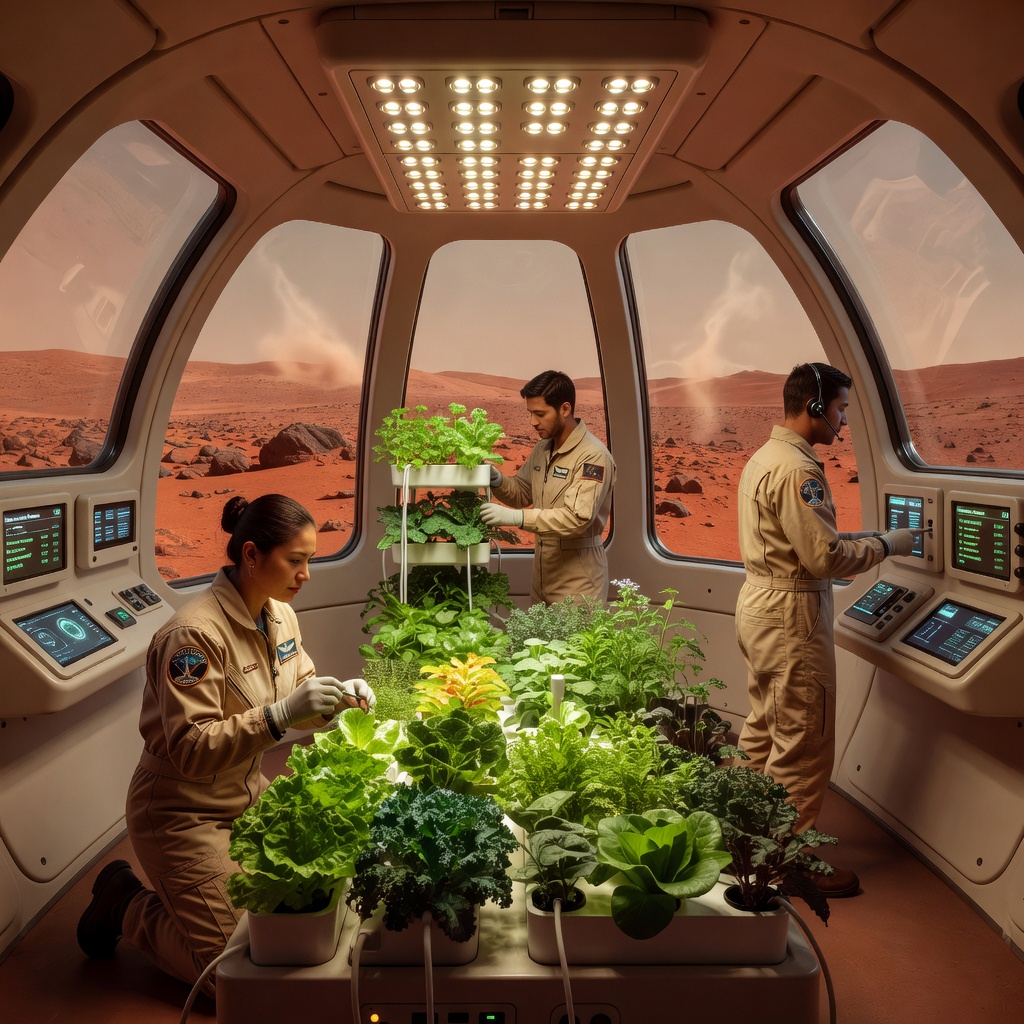
The path to Mars colonization runs through some deeply unromantic territory. Growing food in microgravity. Shielding electronics and human tissue from galactic cosmic rays. Maintaining psychological cohesion in crews isolated for 18 months or longer. None of these challenges trend on social media. All of them are being worked on with fresh urgency, because SpaceX has made the mission feel imminent rather than aspirational.
Bioregenerative life support startups, once dismissed as too early-stage for serious funding, are now attracting serious venture capital and government research contracts. The logic is simple: if Starship can deliver 100 tons to Mars surface in a single flight, the bottleneck is not the rocket. It is whether the people inside can survive and thrive long enough to build something. Closed-loop food and oxygen systems that could feed a crew of six from a module the size of a shipping container are moving from university labs to prototype hardware with notable speed.
Radiation hardening is seeing similar acceleration. A wave of semiconductor startups is applying modern chip design techniques to radiation-tolerant electronics, producing components that can survive deep space environments at cost points that make large-scale deployment practical. The crossover benefits for terrestrial applications, including medical imaging, nuclear energy, and high-altitude aviation, are not incidental. They are part of the pitch.
Perhaps most surprisingly, the behavioral health technology sector is finding a new customer in the space industry. AI-driven mental health monitoring tools, biofeedback-based stress management systems, and crew cohesion algorithms are being tested in analog Mars habitat environments. The problem of keeping a small crew psychologically functional during a multi-year mission is every bit as technical as orbital mechanics, and it is finally being treated that way.
The Compounding Effect: When SpaceX's Programs Reinforce Each Other
What is easy to miss when examining SpaceX's portfolio in isolation is how profoundly each program amplifies the others. Starlink's revenue funds Starship's development. Starship's payload capacity makes ambitious Starlink constellation upgrades and lunar cargo delivery economically viable. Lunar operations generate the technical knowledge and supply chain for Mars surface systems. Mars colonization ambitions drive investment in life support, in-situ resource utilization, and long-duration habitat technology that feeds back into Artemis mission planning.
This is not a linear roadmap. It is a compounding feedback loop, and it is exactly the kind of system that startups and labs can attach themselves to productively. Every solved sub-problem creates market opportunity and demonstrates feasibility for the next layer of challenge. The ecosystem is not waiting for SpaceX to finish something. It is building in parallel, iterating in real time, and treating each successful Starship flight as a green light to push prototypes closer to flight-ready hardware.
Why Right Now Might Be the Most Important Moment in Space History
Historians of technology often observe that the most consequential innovations arrive not in a single breakthrough moment but in a cluster, a period when several enabling conditions mature simultaneously and trigger an explosion of applied creativity. The steam engine did not change the world alone. It changed the world when it met cheap iron, available capital, and a generation of engineers who grew up believing machinery was the answer to every problem.
Something analogous is happening in space right now. Starship is maturing. Starlink is generating the cash flow to fund ambition. Artemis is creating institutional demand for commercial lunar solutions. A generation of engineers who grew up watching SpaceX falcon boosters land themselves are now five years into their careers and building companies. The practical solutions emerging from this moment are not being held in reserve for some future golden age of space exploration. They are being tested, iterated, and prepared for deployment on timelines that would have seemed hallucinatory a decade ago.
The cosmos has never felt more buildable. And for the first time, the builders are everywhere.