Same Dirt, Different Dreams: How Cities Around the World Are Deciding Whether to Go Underground
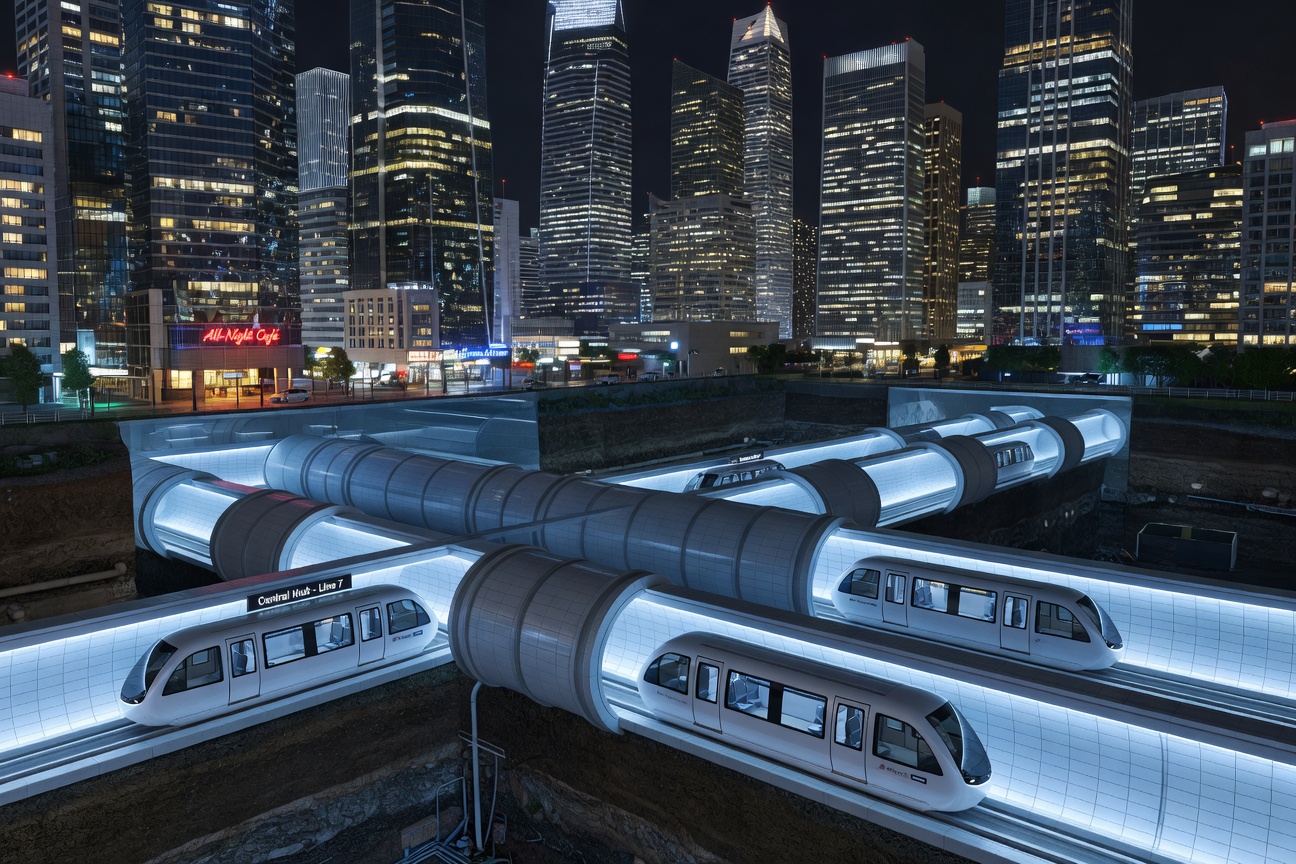
When Elon Musk first floated the idea of boring tunnels beneath cities to escape traffic, the reaction ranged from skeptical laughter to guarded fascination. That was 2016. Fast forward to today, and the Vegas Loop is ferrying convention-goers beneath the Las Vegas Convention Center at speeds that make the Strip's famous gridlock feel like a distant joke. But here is the thing nobody is saying loudly enough: what works beneath the Nevada desert, in a city literally built on spectacle and private investment, is teaching the rest of the world something very specific about itself. Not about tunnels. About identity.
The Strip Is Not a Template
Las Vegas is, in almost every measurable way, an anomaly in the global urban landscape. It has a concentrated entertainment corridor, a tourism economy that demands frictionless short-distance movement, and a civic culture comfortable with bold private-sector experiments. The Vegas Loop, now stretching across roughly 2.4 miles of operational tunnel with plans to eventually connect 68 miles of underground roadway across the metro area, thrives precisely because those conditions are present simultaneously. Remove any one of them and the math changes considerably.
Dubai understood this intuitively. When The Boring Company pitched regional expansion conversations in the Gulf, Dubai's Roads and Transport Authority was already wrestling with a public transit network that moves over 200 million riders annually on its metro system. The Loop concept, with its small-pod personal vehicle model, collides philosophically with high-density mass transit orthodoxy. Dubai's answer was not a flat rejection. It was a conditional curiosity: could tunnel technology serve as a premium connector between key nodes rather than a city-wide replacement? That reframing is telling. It suggests that the most sophisticated transit markets are not asking whether to go underground. They are asking what underground is actually for.
Geology as Destiny
Ask a civil engineer in Mumbai about tunneling costs and you will hear a number that would make a Las Vegas contractor wince. The Western Ghats region presents volcanic basalt formations that dramatically increase boring time and equipment wear. Singapore, by contrast, sits atop a mix of sedimentary rock and soft marine clay that its Land Transport Authority has spent decades learning to navigate, producing some of the world's most cost-efficient deep tunnel infrastructure. These are not mere footnotes. Geology is, in many respects, destiny for underground transit ambitions.
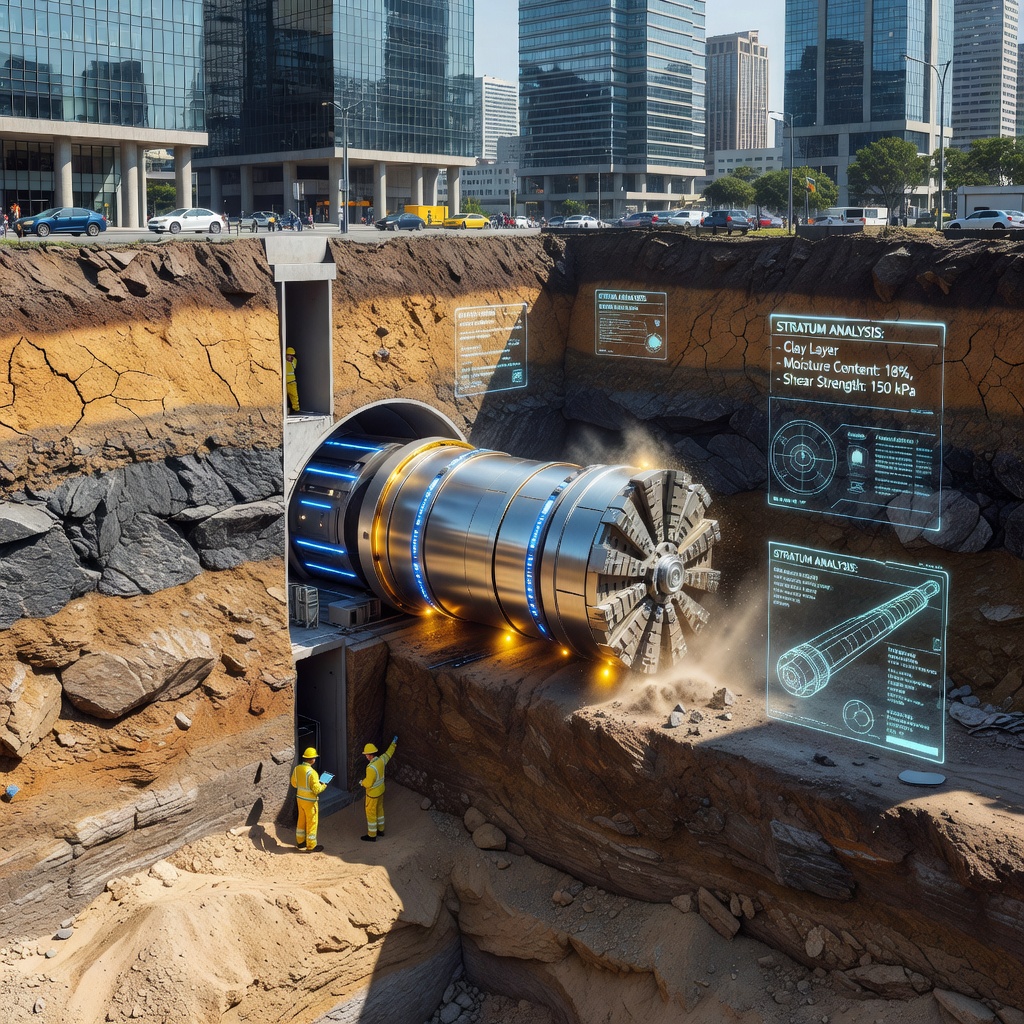
The Boring Company's signature innovation, the continuous improvement of its Prufrock tunnel boring machine, is designed to attack this problem from the machine side rather than the geology side. Prufrock-3 is targeting a boring speed of one mile per day, roughly seven times faster than industry standard. If that target is achieved at scale, it compresses the cost curve enough to make geologically challenging cities reconsider. London's Crossrail project, which took 13 years and cost north of 18 billion pounds, stands as a cautionary monument to what happens when you combine complex geology, aging infrastructure, and public procurement bureaucracy. The Boring Company's pitch is essentially: we can collapse that timeline. The question cities are asking back is: but can you do it here, under our streets, with our unions, our regulators, and our water tables?
The Political Topsoil Problem
Technology does not operate in a vacuum, and nowhere is this more evident than in how different political systems approach underground infrastructure. China has built more subway tunnel kilometers in the last two decades than the rest of the world combined, largely because centralized planning authority allows rapid land acquisition and construction approvals that democratic systems structurally resist. Beijing's subway system added over 100 kilometers of new lines in 2023 alone. That is not a function of superior engineering. It is a function of political architecture.
In the United States, the environmental review process under the National Environmental Policy Act can add years to any major infrastructure project before a shovel enters the ground. California's high-speed rail project has become a case study in how regulatory and legal friction can transform a 33 billion dollar project into a 128 billion dollar odyssey spanning decades. The Vegas Loop sidesteps much of this by operating largely on private land, particularly within the Convention Center campus and casino properties, before connecting to public rights-of-way. That is a clever jurisdictional arbitrage, but it is not easily replicable in cities where public space is more contested.
European cities present a different wrinkle. The Netherlands, Germany, and Scandinavia have sophisticated public transit cultures with strong rider advocacy communities that view personal-vehicle-based tunnel systems with genuine suspicion. Amsterdam, a city that has spent generations diverting car traffic to liberate surface space for cyclists and pedestrians, would face a politically combustible conversation if a proposal arrived to build underground lanes for autonomous Tesla pods. The optics of spending public money to move private vehicles underground while cyclists navigate surface streets would generate a backlash that no amount of efficiency data could easily defuse.
Where the Concept Actually Finds Traction
The most fertile ground for Loop-style underground transit may not be the places currently generating the most buzz. Texas is the obvious domestic candidate: Houston, Dallas, and Austin share a car-centric urban geometry and a regulatory environment friendly to private infrastructure investment. Austin in particular has engaged in preliminary conversations with The Boring Company about connecting its notoriously gridlocked tech corridors. The city's population grew by roughly 33 percent in the last decade, and its surface road network is visibly buckling under that pressure. Underground connectivity is not a luxury conversation in Austin anymore. It is increasingly a survival conversation.
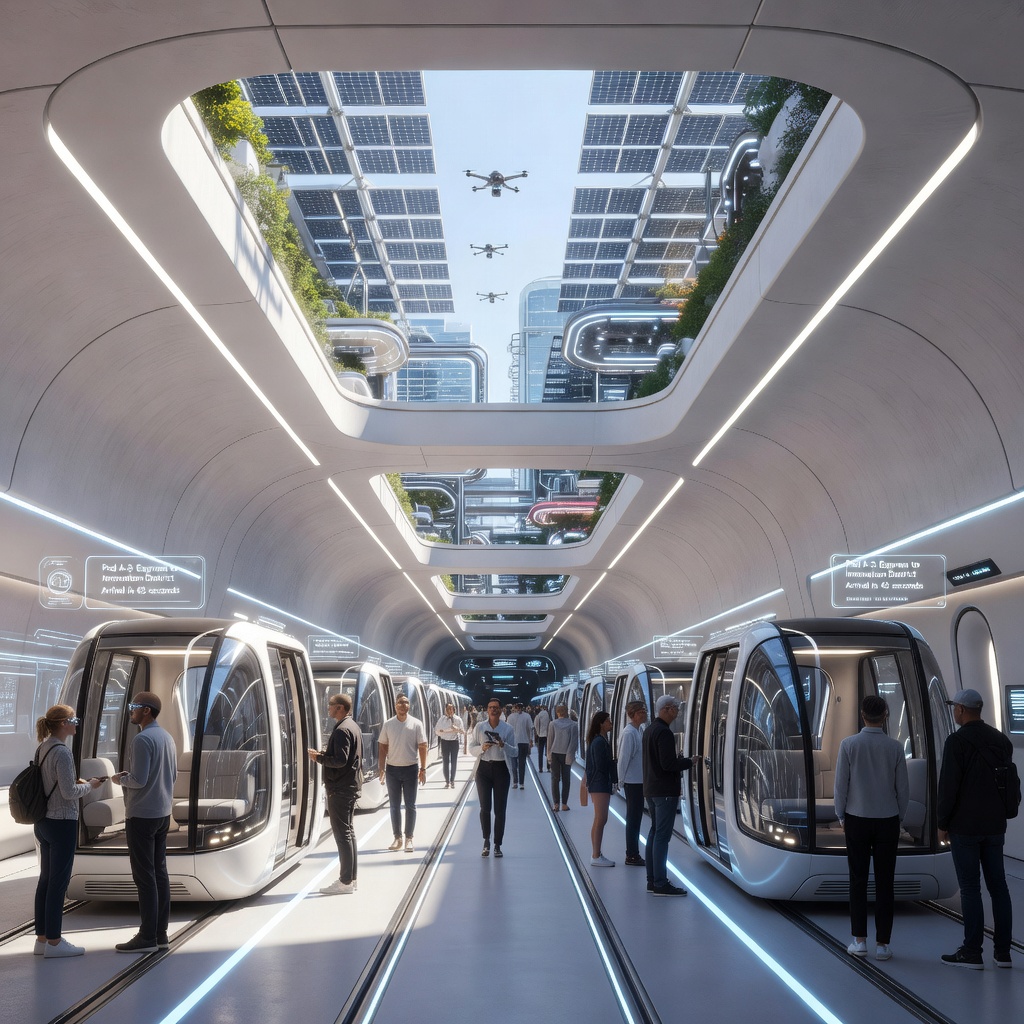
Internationally, the Gulf Cooperation Council states represent perhaps the most structurally aligned market outside Nevada. Riyadh is building aggressively, with its metro system and ambitious Neom project demonstrating an appetite for transformational infrastructure investment. Abu Dhabi has already experimented with automated personal rapid transit on Masdar City, a direct conceptual ancestor of the Loop model. These are cities with sovereign wealth, centralized decision-making, extreme heat that incentivizes underground movement, and a tourism-driven economy that rewards novelty. The cultural resonance with the Vegas playbook is genuine, not superficial.
What the Divergence Reveals About the Technology Itself
There is a deeper lesson buried in all of this geographic variation, and it concerns the nature of The Boring Company's innovation itself. The company is not primarily selling a transit philosophy. It is selling a construction methodology. The Loop is the proof-of-concept vehicle, but the real product is the boring machine and the cost reduction it enables. This distinction matters enormously for how cities should evaluate the technology.
A city like Tokyo, which operates the world's most punctual and highest-ridership metro system, has no compelling reason to replace its transit philosophy with personal vehicle pods. But Tokyo absolutely has reasons to be interested in faster, cheaper tunnel construction for expanding its existing rail network. The technology is modular in a way that the marketing sometimes obscures. You do not have to adopt the Vegas model to benefit from the engineering advances The Boring Company is driving.
This reframe opens a substantially larger global market. If Prufrock-class boring machines become commercially available to traditional metro authorities, the competitive disruption to the legacy tunnel construction industry would be seismic. Companies like Herrenknecht and Robbins have dominated the TBM market for decades. A step-change in boring speed, even partially achieved, rewrites the economics of every metro expansion project currently sitting in a government planning queue somewhere on the planet.
The Underground as Cultural Mirror
What the global patchwork of responses to underground transit ultimately reflects is something urbanists have long argued: cities are not problems to be solved with universal solutions. They are accumulated expressions of culture, history, and collective priority. Las Vegas chose spectacle and speed. Amsterdam chose surface democracy. Tokyo chose collective precision. Each city's relationship to the underground says something true about what its residents value above ground.
Elon Musk has never been a man who designs products for the median customer. He designs for the edge cases and lets the mainstream catch up. The Vegas Loop is an edge case made operational, a proof that the physics and economics of personal underground transit can coexist in one specific, carefully chosen environment. The next decade will reveal which other cities share enough of that environment's DNA to follow. The dirt is the same everywhere. The dreams built on top of it are not.