One Planet, Unequal Skies: How SpaceX's Cosmic Ambitions Are Landing Differently Across the Globe

Picture two people checking their phones at the exact same moment. One is a subsistence farmer in northern Nigeria, streaming her first-ever video call to a daughter studying abroad, routed through a Starlink terminal that arrived six weeks ago and transformed her mud-brick courtyard into a node on a global network. The other is a senior official at the European Space Agency in Darmstadt, scrolling through a briefing document on Starlink's expanding orbital footprint and drafting language for a new interference-mitigation protocol. Same constellation of satellites overhead. Radically different emotional registers. That is the central paradox of SpaceX in 2025: one company, one launch manifest, but a dozen different worlds experiencing the consequences.
Starlink's Uneven Revolution
Starlink has crossed 4.6 million active subscribers across more than 100 countries, and the raw geography of that expansion tells a story that the company's press releases prefer to leave unspoken. In Sub-Saharan Africa and rural Southeast Asia, Starlink is not a luxury broadband upgrade. It is frequently the first reliable internet connection a community has ever seen. Schools in Papua New Guinea are running digital curricula. Clinics in rural Chad are uploading patient data to centralized diagnostics platforms. The humanitarian case essentially writes itself.
But in Western Europe, Starlink's arrival has triggered a different kind of reckoning. Telecom incumbents from Deutsche Telekom to Orange have lobbied their respective governments to scrutinize SpaceX's spectrum usage. France and Germany have raised pointed objections inside the International Telecommunication Union about Starlink's Gen2 satellites potentially crowding radio frequencies allocated to domestic operators. The argument is less about access and more about market power: when one American company can undercut a decade of fiber rollout investment with a dish the size of a pizza box, the economics of sovereign infrastructure start looking very fragile.
Then there is the military dimension, rendered impossible to ignore after Ukraine. Starlink's battlefield role in Eastern Europe produced a geopolitical split-screen that no one at SpaceX headquarters had publicly scripted for. NATO members absorbed the lesson enthusiastically: resilient, low-orbit satellite communications are now a warfighting asset. Meanwhile, Beijing and Moscow accelerated their own low-Earth-orbit broadband programs, explicitly framed as national-security responses to what Chinese state media called "American space hegemony." A single satellite internet service has somehow become a mirror in which every nation sees a different threat or opportunity.
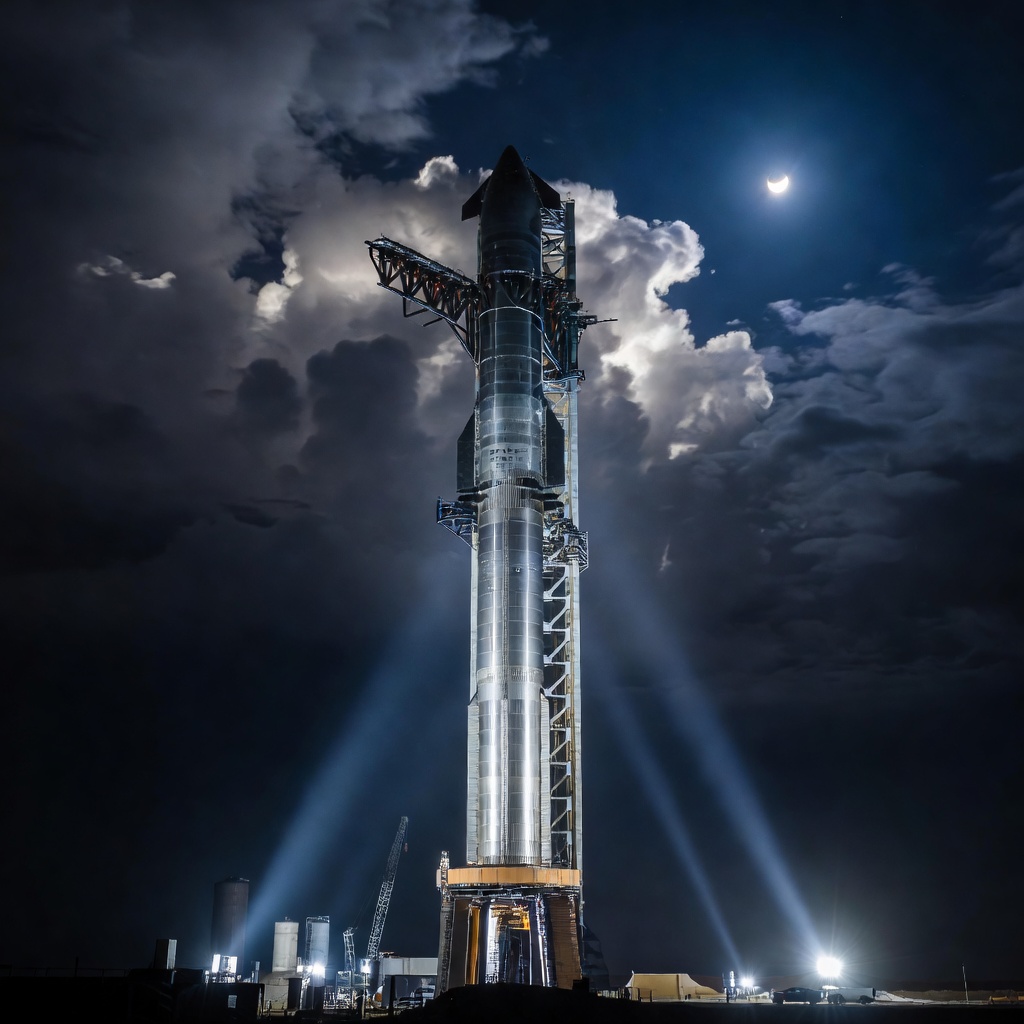
Starship and the Question of Who Rides
Starship's iterative test campaign has moved faster than almost every independent timeline predicted. With full-stack integrated flight tests accumulating data at a pace that embarrasses traditional aerospace development cycles, SpaceX is converging on an operational vehicle capable of lifting over 100 metric tons to low Earth orbit per flight. The cost projections that Elon Musk has floated, roughly $10 per kilogram to orbit at scale, would not merely disrupt the launch market. They would annihilate it and replace it with something entirely new.
Here is where the global divergence sharpens into something almost philosophical. For NASA and its Artemis partners, Starship is the Human Landing System that puts American astronauts back on the Moon, contractually designated and politically championed. Canada, Japan, and the European Space Agency are all Artemis Gateway partners, but their relationship to Starship is structurally different from NASA's: they are passengers in an architecture they do not own and cannot easily replicate. ESA director general Josef Aschbacher has spoken openly about the need for Europe to develop independent heavy-lift capability, precisely because a future dominated by a single commercial launcher creates dependency rather than partnership.
India's ISRO presents yet another angle. As the country celebrates the success of its Chandrayaan and Gaganyaan programs, its engineers and policymakers are watching Starship with something between admiration and competitive anxiety. India has ambitions for its own crewed lunar program and eventual Mars aspirations. If Starship achieves its promised economics, ISRO faces a strategic crossroads: partner with SpaceX and accept a junior role, or double down on domestic heavy-lift development at costs that may prove uncompetitive. No one in New Delhi has answered that question publicly yet.
"The Moon is not a destination owned by any flag. But the rocket that gets you there increasingly shapes who has a say in what happens when you land."
The Artemis Arc: Partnership or Preeminence?
NASA's Artemis program, with its planned crewed lunar south-pole landing targeting the 2026 window, has assembled an international coalition that looks impressively multilateral on paper. The Gateway lunar-orbit station carries hardware contributions from ESA, JAXA, and the Canadian Space Agency. Scientific payloads will arrive from across the Artemis Accords signatory list, which now exceeds 40 nations. On the surface, this reads as the most globally inclusive lunar program in history.
Scratch slightly deeper, however, and the architecture reveals a hierarchy. The Artemis Accords, conceived in Washington and managed through bilateral agreements with NASA, are conspicuously not a United Nations framework. China and Russia have declined to sign, pursuing their own International Lunar Research Station under a bilateral framework. The result is an emerging bifurcation in lunar geopolitics that mirrors the Cold War-era space race in structure, even if it differs dramatically in commercial character. SpaceX sits at the center of the American-led column, not as a government agency but as an indispensable private contractor with its own agenda that extends well past NASA's program timelines.
Communities near SpaceX's Starbase facility in South Texas experience this global drama at a micro level. The town of Boca Chica has effectively been absorbed into the operational footprint of the world's most ambitious launch complex. Residents who remain have negotiated an uneasy coexistence with road closures, beach evacuations, and the sonic punctuation of static-fire tests. Cameron County and the broader Rio Grande Valley have gained construction jobs and infrastructure investment, but community groups have raised sustained concerns about environmental monitoring near the wetlands of the Lower Rio Grande Valley. The people physically closest to the rocket are among the least connected to its decision-making orbit.
Mars: The Most Unequal Destination of All

No SpaceX program cleaves the global audience more sharply than the Mars colonization vision. In Silicon Valley and among the global tech community, Musk's articulation of a self-sustaining Martian city of one million people by mid-century functions as a design brief, a civilizational insurance policy framed in engineering language. Startups across the United States, Europe, and Israel are actively building life-support systems, in-situ resource utilization hardware, and closed-loop agricultural systems calibrated to Martian conditions.
In the Global South, the conversation sounds entirely different. Academics and development economists have published a growing literature questioning the moral calculus of interplanetary expansion while billions of people lack clean water, reliable electricity, or basic healthcare. This is not anti-science sentiment; it is a values argument about prioritization, and it surfaces with particular intensity in countries where the daily experience of infrastructure failure makes Mars feel not aspirational but alienating. SpaceX and its advocates have countered that the technologies developed in pursuit of Mars, closed-loop life support, high-efficiency energy systems, advanced manufacturing, will cascade back to Earth. History lends this argument some credibility. History also lends credibility to skepticism about who captures the value when that cascade arrives.
China's growing Mars ambitions add geopolitical texture to this picture. The Tianwen program has already demonstrated surface-landing capability, and Chinese space planners have articulated crewed Mars mission goals for the 2040s. If SpaceX reaches Mars first with human boots, it will not be arriving at an unclaimed frontier so much as the opening act of a contested horizon. The legal architecture governing resource rights and territorial claims beyond Earth, embodied in instruments like the Outer Space Treaty of 1967, was written for a world that did not anticipate private companies making credible first-mover claims.
Building Toward a Shared Sky, or a Divided One?
The engineers and mission planners inside SpaceX are, by most accounts, genuinely focused on the technical problems of making humanity multiplanetary. The company's launch cadence in 2025, targeting over 150 Falcon 9 and Falcon Heavy missions alongside continued Starship development flights, reflects an operational intensity that leaves little bandwidth for geopolitical philosophy. The rockets fly. The satellites deploy. The data flows.
But the world receiving all of that activity is not a uniform surface. It is a planet of competing sovereignties, unequal economies, contested histories, and deeply divergent visions of what space exploration is actually for. A Nigerian farmer connected for the first time and a European regulator drafting interference rules and an Indian space engineer recalibrating national ambition and a South Texas resident navigating a launch-day road closure are all, in different ways, living inside the SpaceX story. None of them wrote the script. Not all of them were consulted before the cameras started rolling.
The most important question facing the next decade of space development is not whether Starship can reach Mars. The engineering, while formidable, is tractable. The harder question is whether a civilization capable of sending humans to another planet can also build the governance frameworks, the equitable access models, and the genuinely inclusive partnerships that turn a single company's ambition into a shared human achievement. The skies above belong to everyone. The infrastructure being built to reach them, for now, does not.