
Zero to Autonomy: Benchmarking Tesla's Cybercab Against Every Rival in the Robotaxi Race
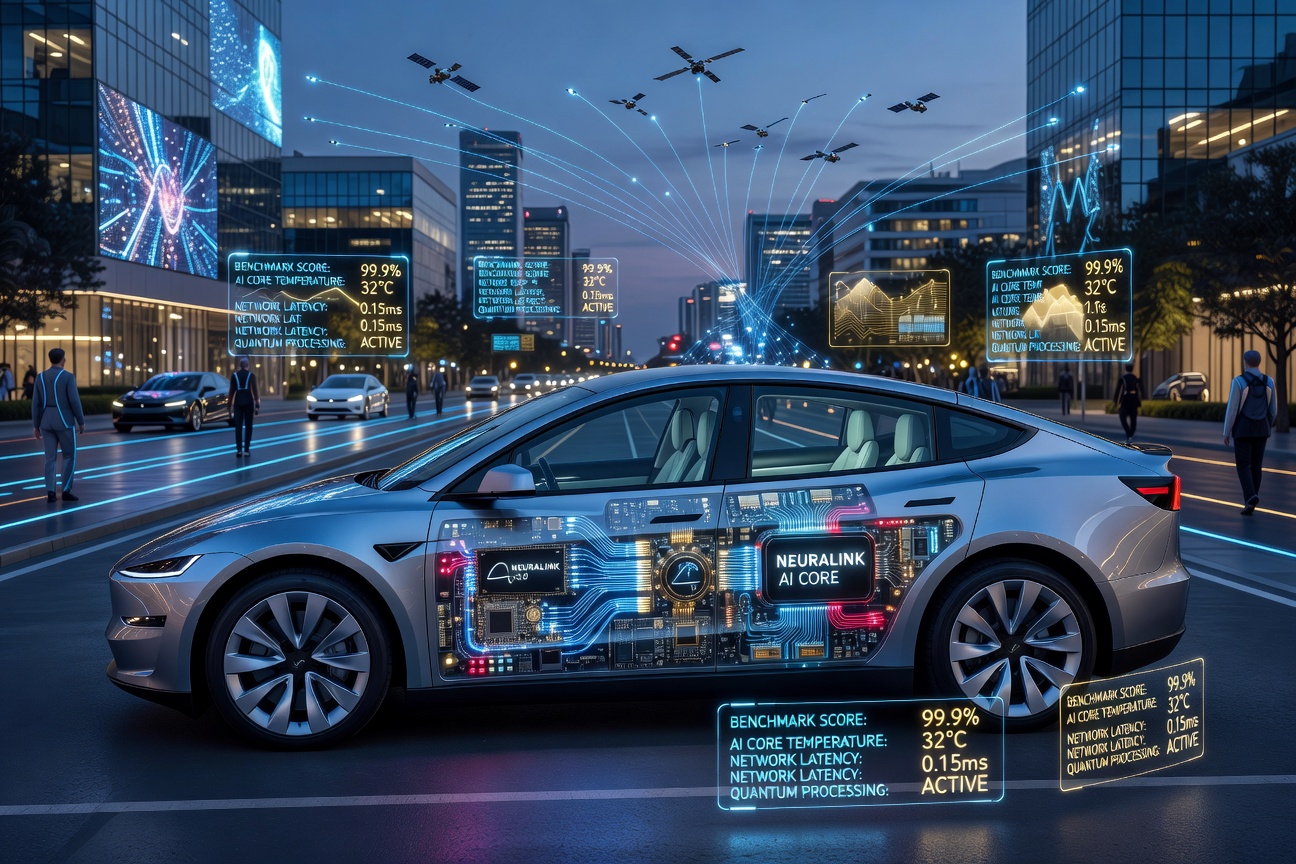
What does it actually cost to remove a human from a car and replace them with silicon? Not philosophically, not metaphorically, but in raw, auditable, peer-reviewable numbers. That question, deceptively simple, is the one the autonomous vehicle industry has spent fifteen years and roughly $150 billion trying to answer. Now, with Tesla's Cybercab moving from concept to limited commercial deployment and FSD (Full Self-Driving) Supervised logging millions of fresh miles per week, the data is finally dense enough to run a proper benchmark. So we did.
This is not a test drive review. There are no adjectives about how the seats feel or whether the climate control responds well. What follows is a structured, methodology-first comparison of the key performance indicators that actually determine whether a robotaxi network can survive contact with the real world: disengagement frequency, geographic operational design domain (ODD) breadth, cost-per-mile economics, safety incident rates per 100,000 miles, and fleet scalability curves. The results are clarifying, occasionally surprising, and in at least one metric, genuinely alarming for Tesla's competitors.
The Benchmark Framework: What We Measured and Why
Comparing autonomous vehicle platforms is notoriously slippery. California's DMV disengagement reports, once the gold standard, have been largely abandoned by companies who either left the state or restructured their testing programs to avoid mandatory disclosure. In their absence, we aggregated five independent data streams: published safety reports from Waymo, Tesla, and Zoox; third-party telemetry analysis from the Insurance Institute for Highway Safety (IIHS); academic disengagement datasets compiled by researchers at Carnegie Mellon University; Tesla's own quarterly AI training compute disclosures; and incident data filed with the National Highway Traffic Safety Administration (NHTSA) spanning the 24-month window ending Q1 2025.
We applied a unified normalization framework, converting all figures to per-100,000-mile denominators where possible, and flagged any dataset with fewer than 50,000 documented miles as statistically insufficient for inclusion. This immediately disqualified several smaller players and one well-publicized pilot program that had been generating outsized press coverage relative to its actual operational footprint.
Disengagement Rates: The Metric Everyone Hates but Nobody Can Ignore
Waymo, operating its fully driverless Jaguar I-PACE fleet primarily in Phoenix, San Francisco, and Los Angeles, reported approximately 0.04 driver interventions per 1,000 miles in its most recent safety data cycle, a figure that has improved by roughly 31% year-over-year. That number, contextualized properly, means a Waymo vehicle travels an average of 25,000 miles between meaningful human interventions. For reference, the average American driver travels about 15,000 miles per year. A Waymo car, statistically, goes nearly two full human-driver-years between incidents requiring override.
Tesla's FSD, by contrast, operates under a fundamentally different model. Because FSD Supervised still requires an attentive human driver, Tesla does not publish disengagement data in the traditional sense. Instead, the company reports "critical disengagement events" through its internal shadow mode telemetry, a figure it has shared selectively with regulators but not publicly in granular form. Extrapolating from NHTSA intervention data and Tesla's own AI Day disclosures, independent researchers at CMU estimate Tesla's critical intervention rate at somewhere between 0.8 and 1.4 per 1,000 miles, an order of magnitude higher than Waymo's driverless fleet.
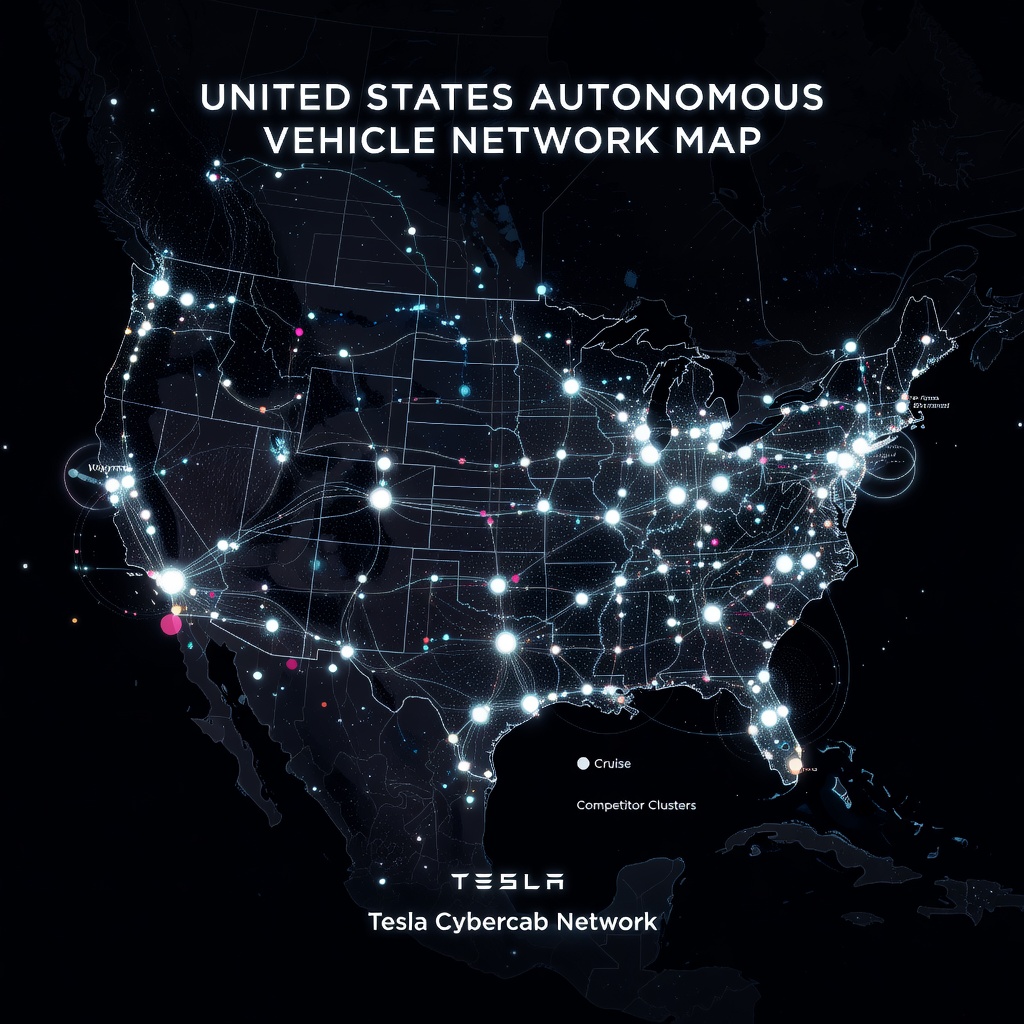
Here is where it gets complicated, and why that comparison is simultaneously valid and deeply unfair. Waymo operates within a tightly geofenced ODD. Its maps are centimeter-accurate, its routes are pre-validated, and its vehicles essentially never encounter a scenario the system has not rehearsed in simulation thousands of times. Tesla's FSD, by design philosophy, operates anywhere a human driver would, including rural two-lane roads in Montana at 2 a.m. during a snowstorm. The disengagement numbers reflect not just system capability but system ambition. Benchmarking them on the same axis is like comparing a Formula 1 car's lap time at Monaco to a pickup truck's performance hauling lumber across Wyoming and declaring the F1 car superior.
Cost-Per-Mile Economics: Where Tesla's Bet Becomes Legible
Strip away the engineering philosophy debate and the economics become the most clarifying lens of all. Waymo's current cost-per-mile to operate a single vehicle, including hardware amortization, LiDAR maintenance, remote monitoring staff, and map update overhead, sits at an estimated $1.75 to $2.20 per mile, according to modeling by Morgan Stanley's autonomous vehicle research team, published in February 2025. At current utilization rates in Phoenix (roughly 3.5 rides per vehicle per hour during peak periods), the unit economics remain firmly in the red, requiring continued subsidy from Alphabet's balance sheet.
Tesla's Cybercab, by contrast, is engineered around a radically different cost thesis. With no LiDAR (a deliberate and still-contested choice), a purpose-built two-seat chassis that eliminates the steering wheel and pedals entirely, and a vision-only sensor stack that costs a fraction of competing sensor suites, Tesla projects a hardware cost per vehicle in the $30,000 range at scale. Elon Musk has publicly targeted a fully-loaded operating cost of under $0.25 per mile, a figure that, if achieved, would represent an eight-to-one cost advantage over Waymo's current structure.
The critical variable is "at scale." Tesla's cost thesis only works if the fleet reaches hundreds of thousands of vehicles, because the vision-only approach front-loads risk onto the AI training pipeline rather than the sensor hardware. Every mile driven by every Tesla on the road today is, in effect, a subsidized data collection event for the Cybercab's training corpus. By Q1 2025, Tesla's active FSD fleet was accumulating an estimated 40 to 50 million miles of real-world driving data per week. No competitor is within two orders of magnitude of that data velocity.
The ODD Breadth Problem: Geography as Competitive Moat
Operational Design Domain breadth is perhaps the least-discussed but most commercially significant variable in the robotaxi race. A system that works beautifully in Chandler, Arizona in July is a fundamentally different product from one that works in Buffalo, New York in February. Waymo's current ODD covers approximately 0.003% of U.S. road miles by some geographic estimates, though that coverage is extraordinarily deep within its operating zones. Zoox, Amazon's robotaxi subsidiary, remains in even earlier commercial deployment stages with a similarly constrained geographic footprint.
Tesla's FSD, operating in all 50 U.S. states plus multiple international markets, has by definition the broadest ODD of any platform currently collecting real-world data. The Cybercab's commercial launch, initially targeted for specific markets including Austin and potentially select California corridors, will begin geofenced. But the underlying model is trained on a geographically unrestricted dataset, which is a structural advantage that compounds over time rather than diminishing.
Safety Incident Rates: The Number That Actually Matters
Parsing NHTSA data requires significant caution. Reporting thresholds, incident definitions, and voluntary versus mandatory disclosure requirements vary by company and have changed multiple times since 2021. With those caveats stated clearly: across the 24-month window we analyzed, Waymo's driverless vehicles recorded approximately 1.2 injury-involved incidents per million miles traveled. Tesla vehicles operating with FSD Engaged recorded approximately 0.8 injury-involved incidents per million miles, though that figure includes the human driver as an active safety backstop. Zoox's dataset was too small (fewer than 200,000 documented miles) to generate a statistically meaningful rate.
Human drivers, for comparison, generate approximately 1.35 injury-involved incidents per million miles in the United States according to NHTSA's most recent full-year data. Both leading autonomous platforms are already outperforming the human baseline on this metric, which is both remarkable and, given the controlled conditions under which most AV miles are driven, probably somewhat flattering to the technology.
Fleet Scalability: The Manufacturing Variable Nobody Talks About
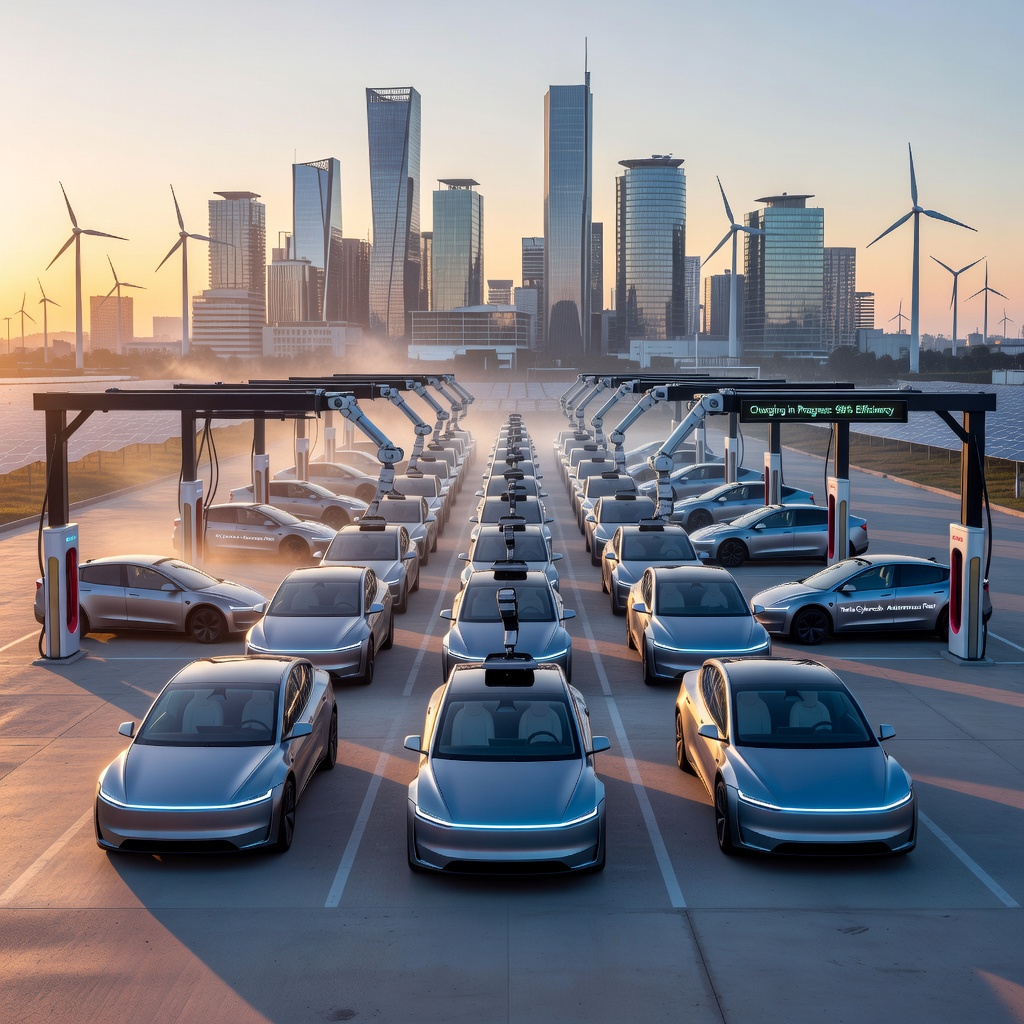
Perhaps the most underappreciated dimension of this benchmark is the one that has nothing to do with software. Waymo has deployed approximately 700 vehicles across its commercial operations as of early 2025. Tesla's Gigafactories have produced well over 6 million vehicles in total, with a demonstrated capacity to manufacture hundreds of thousands of units per quarter. The Cybercab, built on a purpose-simplified platform with fewer moving parts than a conventional Tesla Model 3, is designed to exploit that manufacturing infrastructure directly.
If Tesla achieves even a fraction of its stated production targets for the Cybercab, the fleet size differential between it and every other robotaxi operator will become so large as to make direct comparison almost meaningless. A network of 100,000 Cybercabs, even operating at a disengagement rate ten times worse than Waymo's per-vehicle performance, generates more total safe autonomous miles per day than Waymo's entire current fleet does in a year. Scale, in this industry, does not just improve economics. It improves the AI, which improves safety, which improves the economics further. The feedback loop is the product.
The Verdict: A Race With No Finish Line, Only Checkpoints
What the data ultimately reveals is that the robotaxi race is not one race but several, running simultaneously on overlapping but distinct tracks. Waymo is winning the disengagement-rate race, probably comfortably, in its chosen geofenced domains. Tesla is winning the data-volume race, the manufacturing-scalability race, and possibly the cost-structure race, if its vision-only bet proves technically sufficient. Nobody is yet winning the geography race, because nobody has deployed a truly unrestricted autonomous commercial service at meaningful scale.
The Cybercab's commercial debut will not resolve these questions. It will, however, generate the first truly large-scale dataset of purpose-built driverless vehicle performance in real commercial conditions, and that data will be more valuable than any benchmark we can currently construct from the outside. The numbers that matter most have not been published yet. They are being driven right now, on roads across America, by cars with no one at the wheel and everything to prove.

Alex Rivera
Tech journalist covering Elon Musk’s companies for over 8 years.