Stop Calling It a Revolution: The Hard Truths Battery Storage Evangelists Don't Want You to Hear
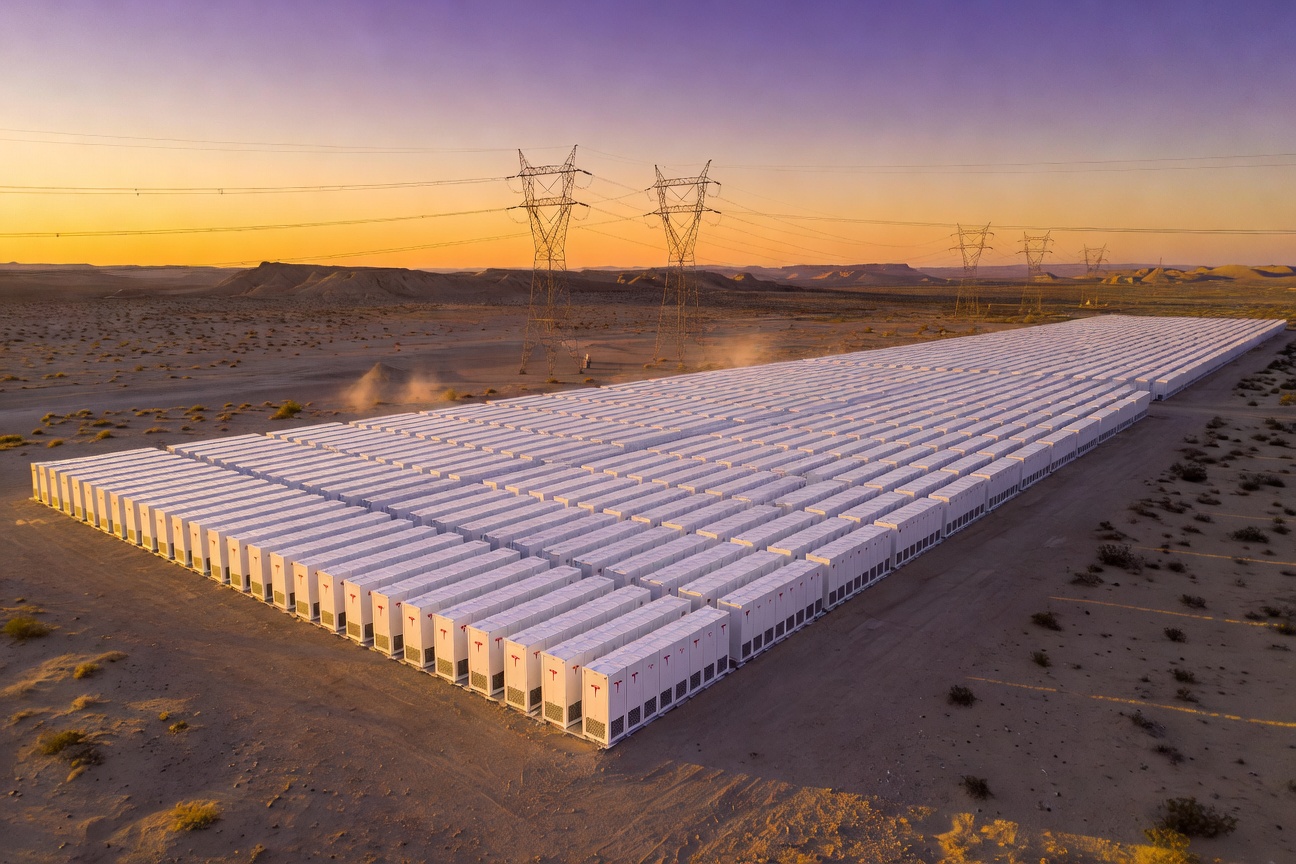
Everybody loves a storage story. Feed a journalist a rendering of gleaming white battery boxes lined up like monoliths across a sun-baked California field, add a quote from a utility executive about "energy independence," and you have a reliable formula for viral clean-energy content. Tesla's Megapack has become arguably the most photographed piece of industrial hardware in the world right now, a photogenic symbol of a civilization finally getting serious about its energy problem. But photogenic and correct are not the same thing, and a quiet but increasingly credible chorus of grid engineers, economists, and honest-to-goodness battery scientists are starting to ask whether the industry has constructed a cathedral around a set of assumptions that will not survive contact with actual physics and actual grid arithmetic.
The Efficiency Equation Nobody Posts on LinkedIn
Let's start with something unglamorous: round-trip efficiency. When you store electricity in a lithium-iron-phosphate battery and then pull it back out, you lose somewhere between 8 and 20 percent of the energy depending on the system, the temperature, the charge rate, and how old the cells are. Tesla's Megapack is genuinely excellent hardware, with round-trip efficiency figures typically cited around 92 percent under favorable conditions. But "favorable conditions" is doing a lot of work in that sentence. Real-world deployments in extreme climates, which is precisely where grid stress events tend to occur, frequently report effective round-trip efficiencies in the mid-80s once thermal management loads are counted honestly. That efficiency gap doesn't disappear. It becomes heat, and that heat has to go somewhere, and cooling that heat requires more electricity, which usually comes from the grid, which is the thing you were supposed to be helping.
Scale this across a national ambition to replace meaningful fractions of firm generation capacity with batteries, and the losses start to matter enormously. A 2,000-megawatt-hour Megapack facility cycling daily at 85 percent effective round-trip efficiency consumes roughly 300 megawatt-hours per day just in conversion losses. That is not a rounding error. That is a medium-sized city's overnight demand, invisibly vanishing into entropy every single day, in perpetuity, across every facility of this type operating on the continent.
Duration: The Number That Breaks the Business Case
The virtual power plant concept, the distributed network of home batteries, commercial storage, and EV chargers coordinated by software into a responsive grid asset, is genuinely clever. Companies are scaling these platforms aggressively, and Tesla's own VPP program in South Australia has produced real, measurable results in frequency regulation and short-duration peak shaving. Nobody serious disputes that. What the enthusiast press rarely dwells on is the duration problem, which is the single most important variable in determining whether battery storage can fulfill the grid role its advocates claim.
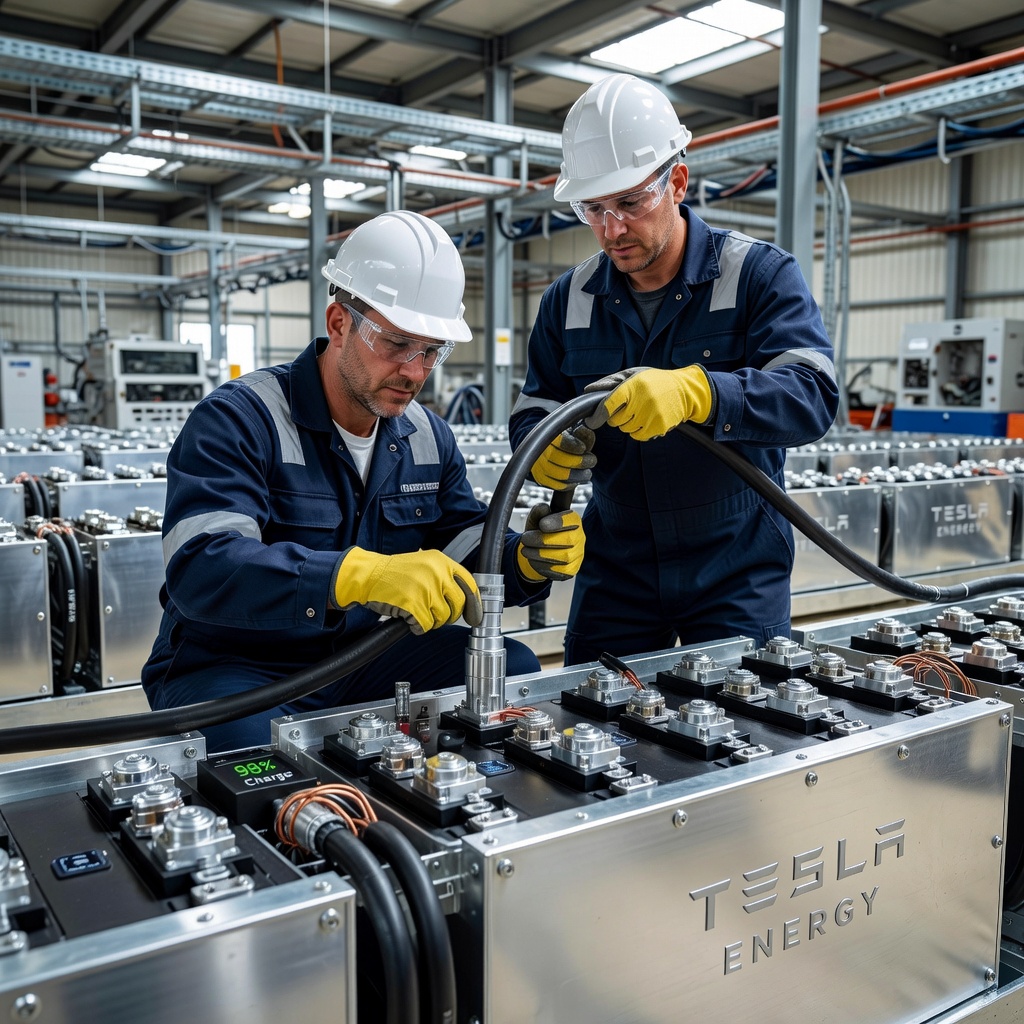
Most utility-scale battery installations, including Megapack deployments, are sized for 2 to 4 hours of discharge at rated capacity. That is the economic sweet spot for current lithium battery economics, and it makes perfect sense for what these systems actually do well, which is arbitrage intraday price spreads and provide fast frequency response. But the grid's most dangerous stress events, the ones that have historically triggered rolling blackouts and multi-day outages, do not last 4 hours. The Texas freeze of February 2021 lasted 4 days. The 2003 Northeast blackout cascaded over 2 days. Prolonged heat dome events suppress solar generation for 10 to 14 consecutive days across entire regions while simultaneously spiking demand. No realistic near-term battery deployment addresses these scenarios. The physics of energy density and the economics of lithium simply do not allow it at any price point currently visible on the horizon.
This is not a pessimistic fringe position. The U.S. Department of Energy's own grid reliability assessments consistently flag "multiday storage" as an unsolved challenge. The honest framing of what current Megapacks and VPP networks actually solve is: short-duration grid services. That is valuable. It is not the same as grid resilience.
Solar's Uncomfortable Correlation Problem
Here is an assumption that has migrated from discussion paper to accepted wisdom without quite earning the promotion: that solar and storage are a natural pairing that, at sufficient scale, constitutes a reliable generation system. The pairing is real and valuable. The "sufficient scale" claim deserves a much harder look.
Solar generation is not merely intermittent in the casual sense. It exhibits something grid planners call spatial correlation, meaning that a large-scale weather event suppresses generation across an enormous geographic footprint simultaneously. A persistent overcast driven by a high-pressure system parked over the American Southwest doesn't darken one solar farm. It darkens hundreds of them, all at once, across a region that has been aggressively retiring dispatchable thermal generation in favor of solar plus storage. The correlation problem means that adding more solar farms within a region doesn't diversify the generation risk the way adding more gas peakers does. It concentrates it.
Battery storage can buffer the daily solar cycle elegantly. It cannot buffer a two-week low-insolation weather pattern, not at any storage capacity that is economically or physically achievable with current technology. This is why several prominent grid engineers, including researchers at MIT's Energy Initiative and Lawrence Berkeley National Laboratory, have argued that the transition narrative needs to be far more precise about what "solar plus storage" actually delivers versus what it is loosely implied to deliver in policy documents and investor presentations.
The Lithium Supply Chain Elephant
Tesla's Megapack roadmap is ambitious and the manufacturing execution has been genuinely impressive. The Lathrop Gigafactory in California is cranking out Megapacks at rates that would have seemed fictional five years ago, and the cost curve for utility-scale lithium-iron-phosphate storage has dropped sharply. None of that changes the upstream reality: lithium, manganese, nickel, cobalt, and the refined chemical precursors that go into battery cells are extracted and processed through a global supply chain that is geographically concentrated, environmentally stressed, and strategically exposed in ways that the "batteries will run everything" narrative tends to gloss over.
The International Energy Agency has projected that a grid powered predominantly by wind, solar, and battery storage would require anywhere from 4 to 6 times the current global lithium production by 2040, depending on the deployment scenario. Global lithium mining is expanding, but not linearly with that demand, and the processing capacity, which is even more concentrated than mining, represents a genuine bottleneck. The scenario where the world builds its critical energy infrastructure on a mineral supply chain controlled by a small number of countries deserves the same strategic scrutiny we applied to oil dependence, not a footnote in a press release about energy independence.
What Battery Storage Actually Does Brilliantly
None of the above means Megapacks are a mistake, or that Tesla's energy division is selling snake oil, or that VPPs should be abandoned. The contrarian point is not that battery storage is bad. The contrarian point is that the field has developed a habit of allowing the genuine, documented, remarkable capabilities of battery storage to metastasize into claims about grid transformation that the technology does not yet support.
Where lithium grid storage is unambiguously excellent: frequency regulation, voltage support, transmission congestion relief, solar curtailment capture, and intraday peak shaving. These are real grid services with real economic value, and Megapacks deliver them with a speed and precision that no legacy technology matches. Virtual power plant networks are genuine innovations in demand-side management and distributed asset coordination. The software platforms being built by Tesla Energy and its competitors represent genuine advances in grid intelligence.
The problem is not the technology. The problem is the narrative frame, the persistent implication that scaling this technology linearly solves the grid's hardest reliability problems. It does not. Those problems require complementary solutions: long-duration storage technologies like iron-air or compressed air systems still in early commercial deployment, transmission expansion that moves renewable energy across the correlated weather zones, and yes, in many grid configurations, continued operation of firm low-carbon generation assets while those long-duration solutions mature.
Demanding More From the Disruption
Elon Musk has built a company that manufactures real hardware solving real problems at real scale, and that is worth saying plainly. Tesla Energy is not a vaporware operation. But the energy transition is too consequential, and too technically demanding, to be navigated by enthusiasm alone. The engineers who are pushing back on the storage-first narrative are not defenders of fossil fuel incumbency. They are people who have spent careers understanding that grids fail in subtle, nonlinear ways that don't appear in the business cases that get written before the infrastructure gets built.
The revolution in grid storage is real. The timeline is slower, the constraints are harder, and the complementary technologies are less optional than the headline writers tend to let on. Demanding precision about that is not pessimism. It is how you actually build something that works.