After the Last Blackout: What the World Looks Like When Every Building Thinks for Itself
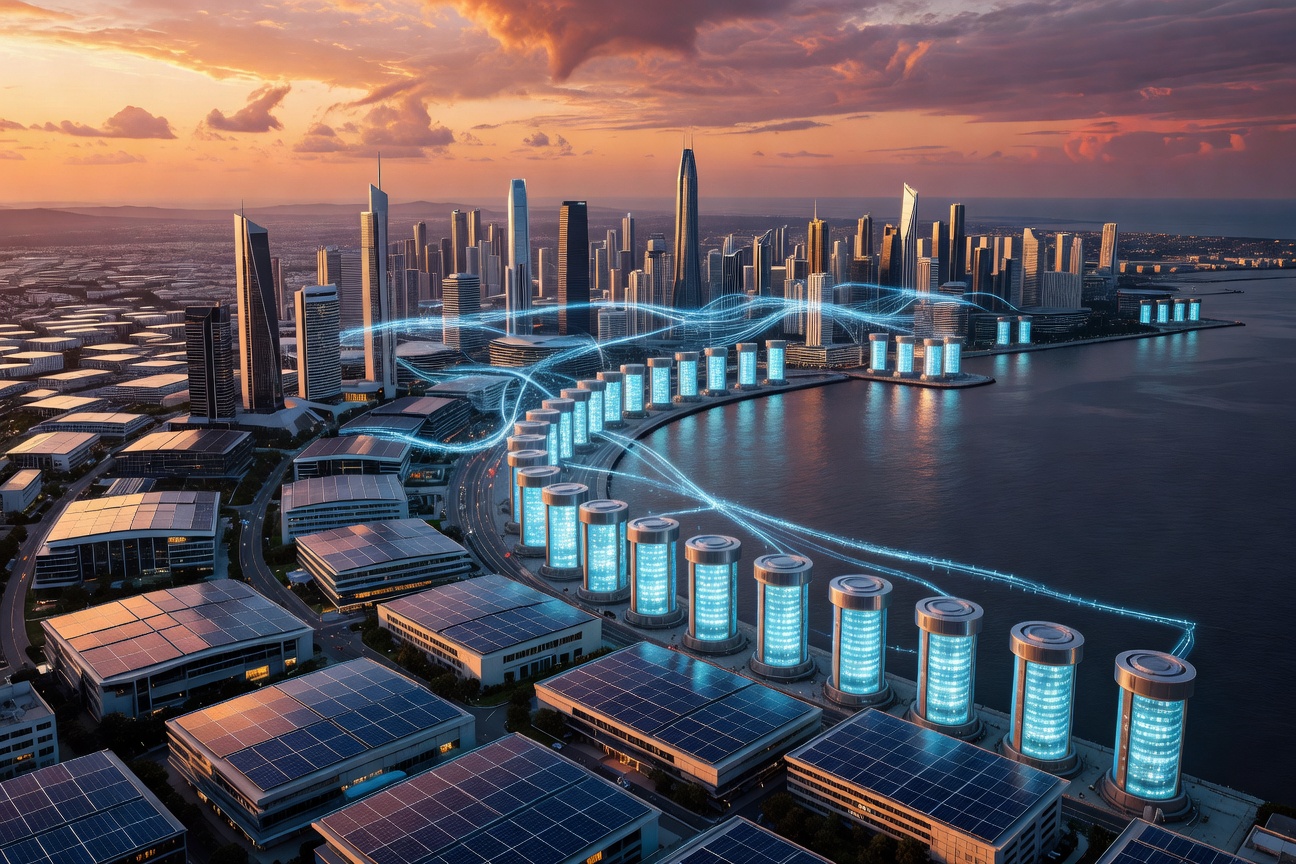
Picture yourself in 2038. A Category 4 hurricane is grinding up the Florida coast. Emergency managers are watching their dashboards the way generals once watched war maps. But instead of ordering rolling blackouts, they are doing something that would have seemed like science fiction to a 2020 utility executive: they are redirecting electricity from 400,000 residential solar-plus-storage systems, 17 utility-scale Tesla Megapack installations, and three offshore wind arrays, all stitched together by an AI dispatch layer that makes decisions in 40-millisecond intervals. The storm makes landfall. The lights stay on. Not because of heroic infrastructure, but because the infrastructure has become, in a very real sense, alive.
That scenario is speculative. It is also, based on every trajectory currently measurable in the energy industry, almost boringly plausible. The question worth sitting with is not whether distributed storage and intelligent virtual power plants will transform civilization-level energy infrastructure. They will. The more interesting question is what that transformation actually feels like from the inside, and how strange and irreversible the consequences turn out to be.
The Quiet Multiplication Happening Right Now
Tesla shipped its first commercial Megapack in 2019. By 2024, the company was manufacturing them at a rate that would have seemed implausible at the project's inception, with the Lathrop Megafactory in California producing units at roughly one every two hours at peak capacity. Each Megapack holds approximately 3.9 megawatt-hours of energy, enough to power several hundred homes for a day. Stack enough of them together, as Pacific Gas and Electric did at Elkhorn in Monterey County and as Neoen did with the famous Hornsdale project in South Australia, and you have something that begins to challenge the very premise of the gas peaker plant: the expensive, polluting, slow-to-respond turbine infrastructure that grids have leaned on for half a century to handle demand spikes.
Peaker plants are, by any honest assessment, a bizarre solution to a solvable problem. They sit idle for roughly 95 percent of the year, burning capital and occasionally burning fuel, waiting for the handful of sweltering August afternoons when everyone cranks their air conditioning simultaneously. Battery storage systems do not idle. They participate in frequency regulation markets, they absorb excess solar generation that would otherwise be curtailed, and they respond to grid signals faster than any combustion technology ever could. The economics of this substitution are now past the tipping point in many markets. The speculation worth entertaining is what happens when they are past the tipping point everywhere.
When Buildings Stop Being Consumers
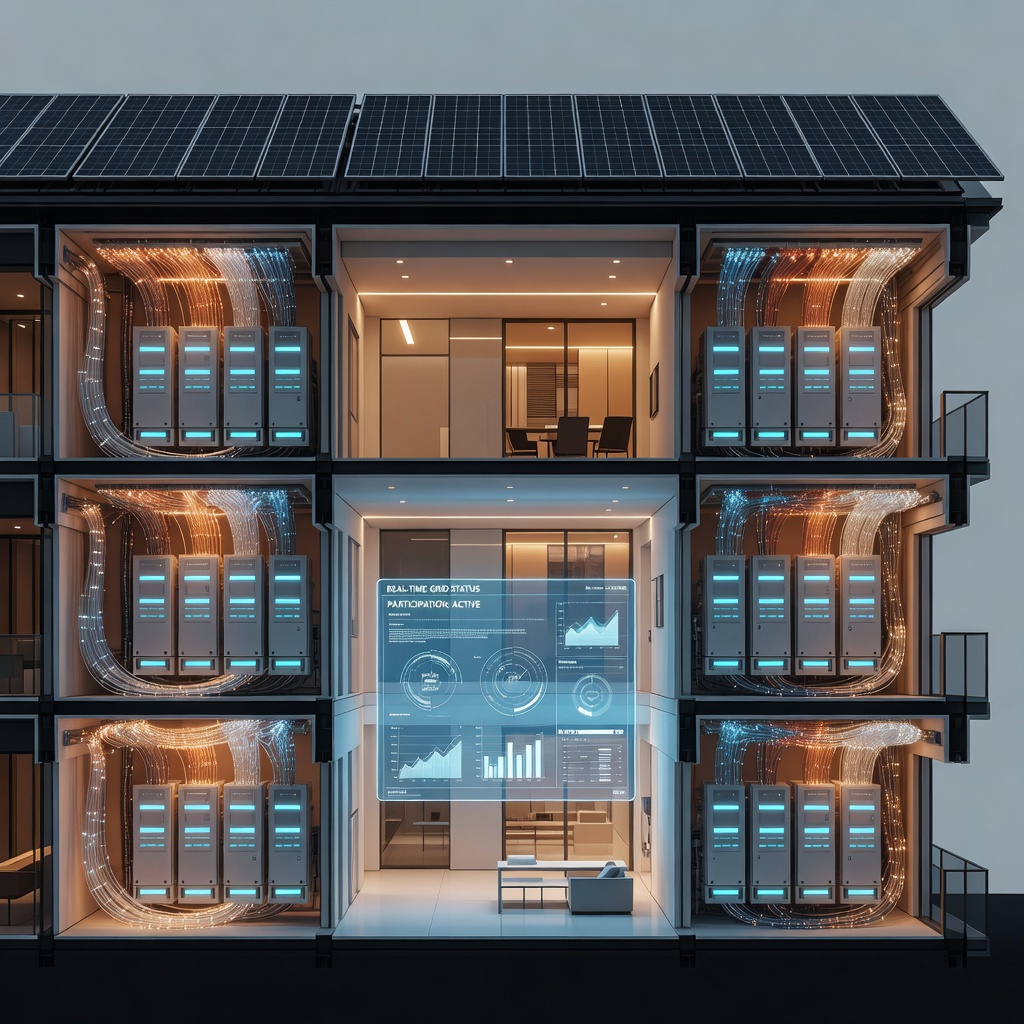
The virtual power plant concept is, at its core, an act of aggregation. Take ten thousand rooftop solar installations with attached battery storage, enroll their owners in a coordinated dispatch program, and you have assembled something that behaves, from the grid's perspective, exactly like a mid-sized power station. Except this power station has no single point of failure. It cannot be knocked offline by a fire, a flood, or a cyberattack targeting one facility. It is distributed across a city like neurons across a brain.
Tesla's virtual power plant program in South Australia offered an early proof of concept, enrolling Powerwall owners and demonstrating that aggregated residential storage could provide real grid services. But what happens when the aggregation scales by two orders of magnitude? When every new apartment complex in California is code-mandated to include storage and a grid-participation protocol? When the building you live in has a smarter energy identity than most power stations did in 2010?
The honest answer is that urban energy economics get rewritten from scratch. Buildings transition from passive consumers to active market participants. Property developers start calculating storage capacity alongside square footage. Municipalities begin treating distributed energy resources as infrastructure assets on par with water mains. And the concept of an "electricity bill" starts to dissolve into something more reciprocal, more variable, and far more interesting.
"The grid of the future doesn't move electrons from a central source outward. It negotiates. Millions of nodes, each with preferences and capabilities, reaching a consensus about energy every few seconds."
Solar's Uncomfortable Abundance Problem
Here is the paradox that does not get enough attention in mainstream energy coverage: solar power is rapidly becoming too cheap and too abundant for grids designed around scarcity. On sunny spring afternoons in California, wholesale electricity prices already go negative with alarming regularity, meaning generators are effectively paying the grid to take their power because there is simply nowhere for it to go. Curtailment, the practice of switching off perfectly functional solar generation because the grid cannot absorb it, is growing at a rate that should embarrass every policymaker who has not yet made storage deployment a legislative priority.
Megapack installations are the most direct answer to this problem at the utility scale. A large solar farm paired with several hundred megawatt-hours of Megapack storage stops being a variable, weather-dependent resource and becomes something closer to a dispatchable asset, a plant that can be told to deliver power at 7 PM on a Tuesday regardless of whether the sun is shining. That transformation, from intermittent to firm, is the unlock that makes a fully renewable grid theoretically achievable without heroic assumptions about transmission buildout or demand flexibility.
But the speculative leap worth making is not about the next decade. It is about the decade after, when storage costs have continued falling along the curve that lithium-ion and emerging chemistries are tracing, when the installed base of grid-connected batteries is measured in terawatt-hours rather than gigawatt-hours, and when the software intelligence coordinating all of it has been trained on a decade of real operational data. At that point, the grid does not just accommodate renewable energy. It is rebuilt around the assumption of abundance, and the engineering challenge inverts entirely. The question stops being "how do we keep the lights on when the sun doesn't shine?" and becomes "how do we build an economy worthy of essentially free, essentially infinite energy?"
The AI Layer Nobody Talks About
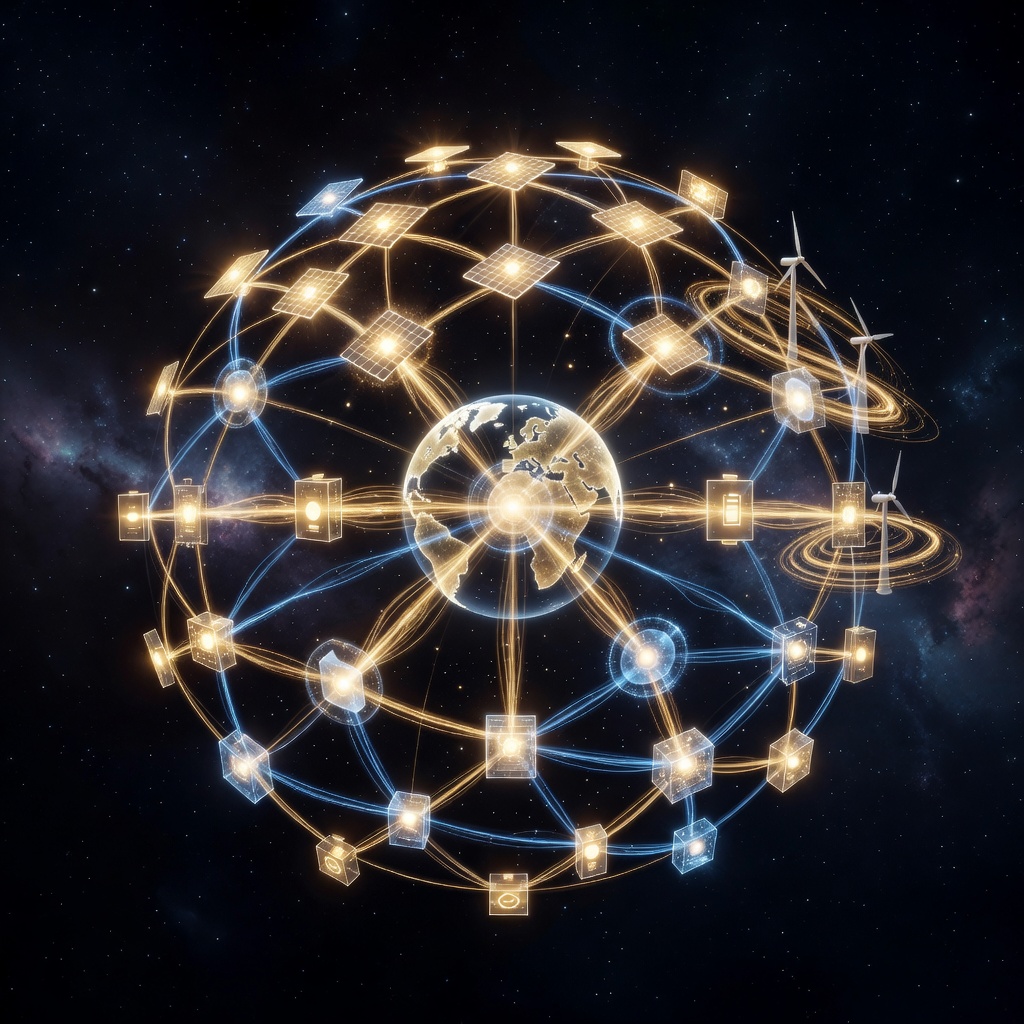
Tesla's Autobidder platform, which autonomously trades energy from Megapack installations in real-time electricity markets, offers a preview of something genuinely unprecedented: machine intelligence operating inside critical national infrastructure, making financial and physical decisions at machine speed. The implications of this are not primarily technical. They are philosophical, regulatory, and, eventually, political.
When the software layer managing your city's energy supply is also optimizing for revenue in a wholesale market, questions about accountability become surprisingly sharp. Who is responsible when an algorithmic dispatch decision contributes to a localized voltage event? How do regulators audit a system that makes a hundred thousand decisions per hour? These are not hypothetical concerns for 2038. They are active questions that utility commissions in California, Texas, and Australia are grappling with right now, mostly without adequate frameworks.
The optimistic read, and it is a genuinely well-supported one, is that machine-speed energy management is categorically better than human-speed energy management for a grid with millions of distributed nodes. No human operator could coordinate 400,000 residential batteries and 17 utility installations simultaneously during a hurricane. The software does not panic, does not get tired, and does not make the kind of catastrophic manual errors that have contributed to real-world blackout cascades. The regulatory challenge is not whether to allow AI in grid operations. It is whether institutions built around the assumption of human decision-makers can adapt fast enough to govern systems that have already moved beyond them.
The Shape of What Comes Next
Elon Musk has described a fully sustainable energy civilization as requiring roughly 300 terawatt-hours of global battery storage, paired with dramatic expansion of solar generation. That number, which sounded audacious when he first articulated it, is beginning to serve as a navigational coordinate for the industry rather than a fantasy. The manufacturing capacity to approach it, while not yet present, is being actively constructed across the United States, Europe, and China.
What that destination actually looks like from street level is worth imagining carefully. Energy, which has been a source of geopolitical conflict, economic inequality, and environmental catastrophe for the entire industrial era, becomes structurally cheap and structurally clean simultaneously. The countries and communities that build the most storage, deploy the most solar, and write the smartest software for coordinating them inherit enormous economic advantages. Those that do not face a competitiveness cliff that makes the transition from manufacturing to services look gentle by comparison.
The last blackout, when it happens, will probably not be announced as such. Nobody will hold a ceremony. One year, grid operators will simply notice that the emergency protocols for major outages have not been activated in 18 months. Then 36. The infrastructure will have quietly become too resilient, too distributed, and too intelligent to fail in the ways grids used to fail. And the engineers who spent their careers placing Megapacks in fields, writing dispatch algorithms, and arguing with regulators about interconnection rules will look at each other and realize they built something that most of their contemporaries never quite saw coming. Not a better grid. A different kind of energy entirely.