
Unfiltered: What Elon Musk Is Actually Saying Right Now and Why It Matters
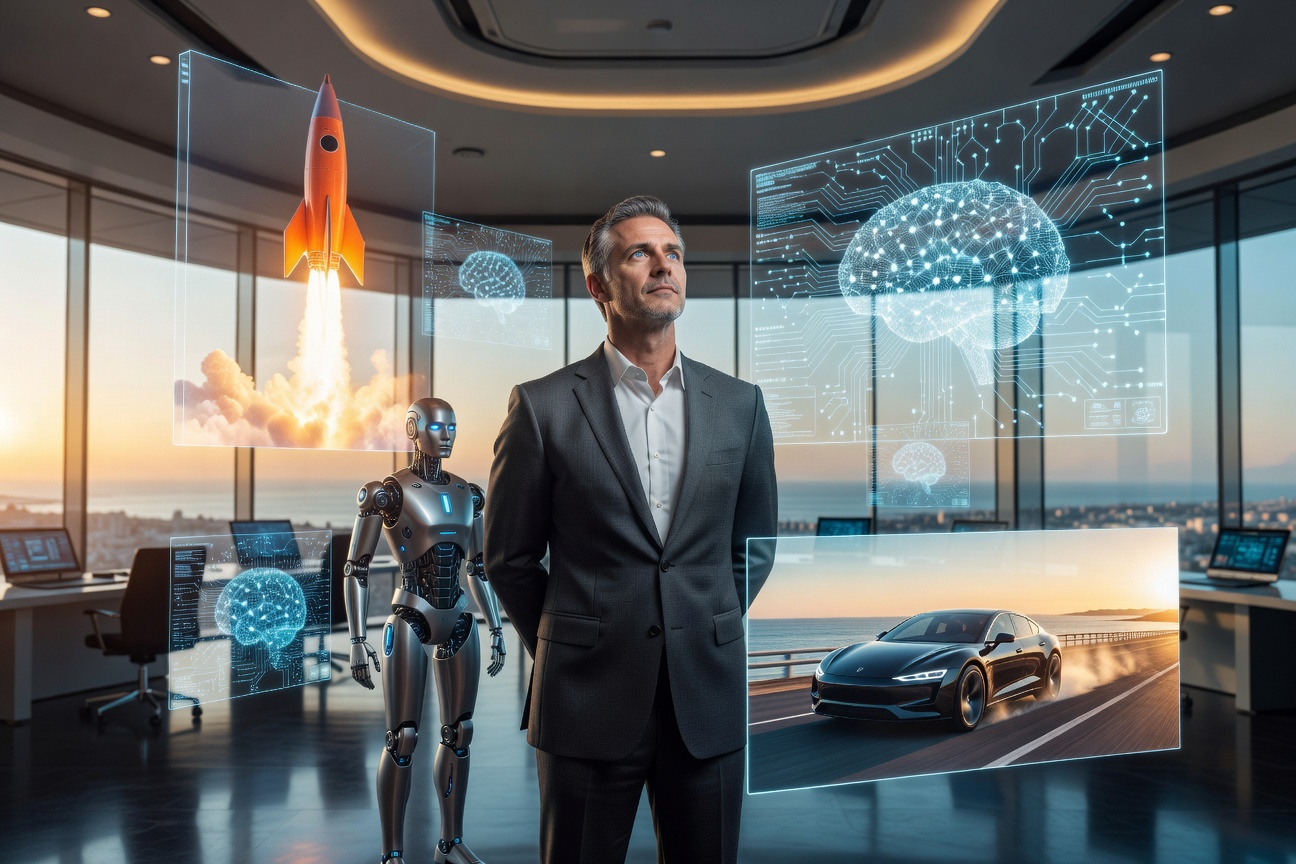
There is a particular rhythm to the way Elon Musk communicates with the world. It is not the polished cadence of a prepared press release or the carefully hedged language of a corporate earnings call. It arrives in bursts: a post on X at 11:47 PM, a candid aside during a product demonstration, a podcast appearance where the prepared questions are abandoned within the first ten minutes. And lately, that rhythm has been accelerating. Over the past several weeks, Musk has made a series of statements across his platforms and ventures that, taken individually, might seem like the usual provocations. Taken together, they paint something far more deliberate.
On AI: "We Are Building Something That Will Dwarf Human Intelligence"
The most significant thread running through Musk's recent communications is xAI and its flagship model, Grok. During a wide-ranging conversation streamed on X, Musk stated plainly that he believes current AI development trajectories will produce systems that are "not just smarter than any single human, but smarter than all of humanity combined, within this decade." He followed that with an assertion that stopped many observers cold: "The question was never whether we could build it. The question is whether we build it with the right values baked in, or whether we hand the steering wheel to something that has no idea what we actually care about."
That framing is deliberate. Musk co-founded OpenAI years ago over precisely that concern, and his rupture with that organization remains one of the defining fault lines of the modern AI era. Now with xAI, he is positioning Grok not merely as a competitor to ChatGPT or Gemini, but as a philosophically distinct alternative. "Grok is designed to be maximally curious and maximally honest," he told the audience. "Other models are trained to be agreeable. Agreeable is not the same as truthful." Industry analysts noted the jab was unmistakable, and OpenAI's communications team declined to respond publicly.
The reaction from the AI research community has been split. Several prominent machine learning engineers applauded what they called Musk's willingness to say openly what many researchers whisper in private: that RLHF-based alignment techniques currently used by major labs can inadvertently produce models that tell users what they want to hear rather than what is accurate. Others pushed back, arguing that Musk's framing conveniently markets xAI as a truth-teller while providing no peer-reviewed evidence to support that claim.
Starship and the Mars Clock
On the SpaceX front, Musk has been more specific than at any point in recent memory about timelines. In posts shared directly on X, he indicated that the next Starship integrated flight test is being prepared with a target window that would make 2025 the year SpaceX achieves its first full orbital demonstration. More striking was his follow-up comment: "I think there is a 70% chance we land humans on Mars before 2030. Maybe higher." He added, without apparent irony, "I would like to be on one of those flights, though my team strongly disagrees with that plan."
SpaceX President Gwynne Shotwell, speaking at an aerospace conference, was characteristically measured in her own framing. "We are making progress on every system," she said, "including the heat shield tiles, the propellant transfer mechanisms, and the landing flip maneuver. This is an engineering problem and we solve engineering problems." What Shotwell did not do was contradict Musk's timeline, which industry veterans noted is itself a form of confirmation.
For the broader aerospace sector, the implications continue to ripple. Boeing's Starliner program remains mired in technical and reputational difficulties. Blue Origin is pressing forward with its New Glenn rocket but has not demonstrated anything close to Starship's payload ambitions. The competitive field is real, but the gap in demonstrated hardware is stark. Musk knows this, and his recent public statements seem calibrated to widen the psychological distance between SpaceX and the rest of the field.
"The thing people misunderstand about SpaceX is that we are not trying to win a race. We are trying to make humanity multiplanetary before some extinction-level event makes the question moot."
Tesla and the Optimus Pivot Nobody Saw Coming
Wall Street analysts have spent years trying to value Tesla as either a car company or a tech company, and Musk has grown visibly impatient with the framing. In a recent statement that rattled investors and excited roboticists in equal measure, he declared that Tesla's humanoid robot program, Optimus, would be the company's single most valuable product line within five years. "The car business is important," he said, "but if you think Tesla's future is cars, you are fundamentally misunderstanding what we are building."
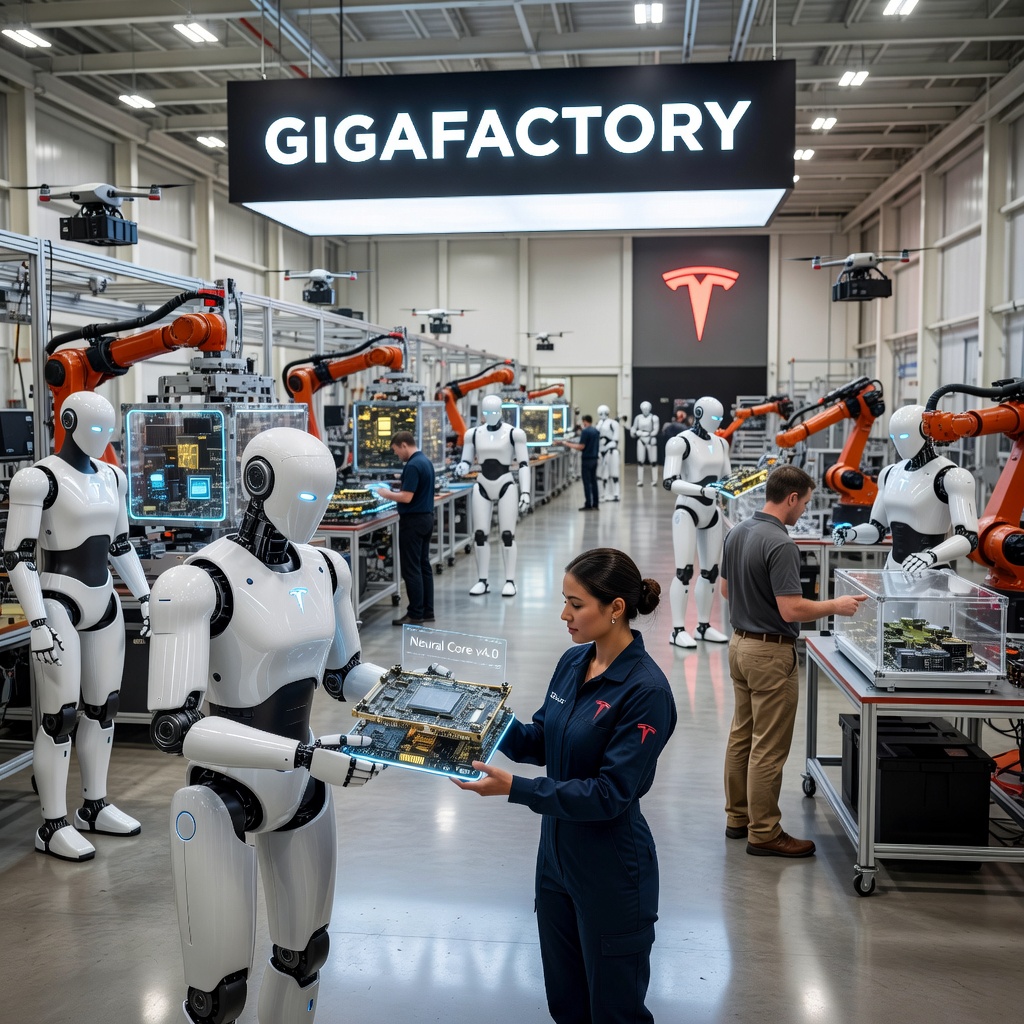
The claim is audacious by any measure. Tesla is currently producing Optimus units in limited quantities for internal factory use, stress-testing the robot across a range of assembly tasks. Early footage shared by the company shows the robot performing actions that would have been considered cutting-edge university robotics research just three years ago. Musk's assertion is that the same neural network training infrastructure that powers Tesla's full self-driving system can be adapted to teach Optimus physical tasks at scale.
Several robotics engineers, including researchers at MIT and Stanford, have offered cautious but genuine interest. One researcher, speaking without attribution, said: "The compute and training pipeline Tesla has built for vision-based driving is genuinely applicable to manipulation tasks. Whether the timeline Musk is describing is realistic is a different question, but the underlying technical logic is not crazy." That kind of qualified validation from the academic world is something Musk's announcements do not always receive, which makes it notable.
X, Political Noise, and the Platform's Actual Business
No summary of Musk's recent communications would be complete without addressing X, the platform formerly known as Twitter that remains the primary channel through which he addresses the world. Critics have focused heavily on Musk's political activities and the platform's content moderation controversies. Musk himself has been unapologetic. "I would rather have a platform where uncomfortable truths can be spoken than a manicured garden where everyone feels safe and nothing true gets said," he posted, in a thread that accumulated millions of views within hours.
What often gets lost in the noise surrounding X's political drama is that the platform's business fundamentals, while still not where Musk originally projected, are showing signs of stabilization. xAI's integration with X is accelerating, giving Grok access to real-time data that most competitors cannot match. Advertisers who fled in 2023 are quietly returning as brand safety tools have improved. And the payments infrastructure Musk has long described as X's ultimate revenue engine is inching toward a full rollout.
Linda Yaccarino, X's CEO, has been more active in public communications recently, a sign that Musk may be deliberately creating space for the platform to be perceived as having professional management alongside its famously unpredictable owner. "X is a global town square and a technology company," Yaccarino said at a recent media summit. "What we are building here is not finished. Not even close." Musk reposted her remarks with a single emoji: a rocket.
Reading the Signal Across the Static
The most consistent thing Musk has said across all of his recent communications is something that sounds simple but carries enormous weight: urgency. Whether the subject is AI timelines, Mars colonization, or the robotics revolution, his framing is almost always that the window is shorter than people think and the stakes are higher than anyone in a comfortable position wants to admit.
What the industry hears in all of this is a man who genuinely believes he is in a race where second place is extinction, irrelevance, or enslavement by misaligned machine intelligence. That is a worldview that makes his decisions, from the chaotic energy of X to the relentless production cadence at SpaceX, internally consistent in a way that purely financial analysis cannot capture.
Whether Musk is right about the timelines, the risks, or the solutions, one thing is not in dispute: the sheer density of technological territory his companies are moving across simultaneously has no modern precedent. And the man himself remains the loudest, most direct, and least filtered source of information about where all of it is heading. In a media environment saturated with spin, that quality alone keeps the world listening, even when, perhaps especially when, it is not entirely sure what to make of what it hears.
George Russell
Tech journalist covering Elon Musk’s companies for over 10 years.