
The Phantom Stumble: Why Tesla's Optimus Can't Always Explain Why It Falls
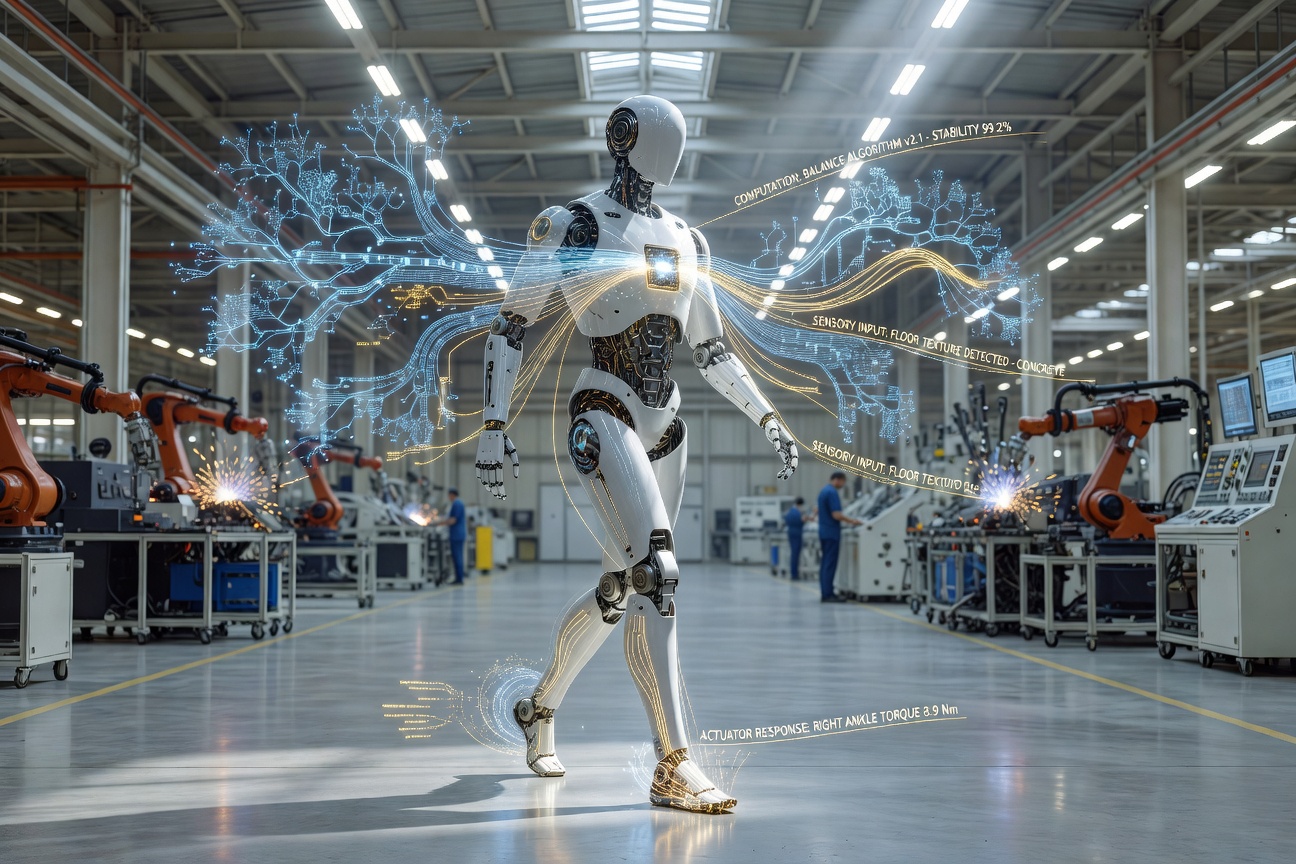
There is a moment, captured in several internal Tesla robotics review sessions and described by engineers close to the project, that has become something of a haunting reference point in physical AI circles. Optimus, mid-task, moving with the kind of fluid, almost organic confidence that makes onlookers forget they are watching a machine, simply... folds. Not dramatically, not because it tripped on a cable or misjudged a step edge. The floor was flat. The lighting was adequate. Every sensor reading, reviewed in post-mortem, looked nominal. And yet the robot went down, and when engineers asked the system to account for the failure, the diagnostic logs returned something that no amount of compute power has yet resolved cleanly: essentially nothing. A ghost in the proprioception.
Balance Is Not What You Think It Is
Most people, when they imagine why a robot might fall, picture an obvious culprit: a slippery surface, a rogue obstacle, a software crash. The unsettling reality of what Tesla's robotics team is grappling with runs much deeper than any of those tidy explanations. The phenomenon researchers have informally labeled the "phantom stumble" describes a class of balance failures in Optimus that occur in the absence of any externally measurable destabilizing event. The robot's inertial measurement units register normal readings. Its foot-contact pressure sensors show appropriate load distribution. Its visual and lidar systems see a clear, obstacle-free path. And then the whole system fails to maintain upright posture anyway.
To understand why this is so scientifically vexing, it helps to appreciate what balance actually requires from a biological or synthetic perspective. Human balance is not a single system but a continuous negotiation between at least four distinct feedback loops: the vestibular system in the inner ear, proprioceptive signals from muscles and joints, visual reference framing, and predictive motor commands from the cerebellum that fire before sensory data even arrives. The cerebellum, in particular, runs what neuroscientists call "forward models" of the body, essentially pre-simulating the next half-second of physical reality and issuing corrective commands in anticipation of perturbation rather than in reaction to it. Tesla's engineers have spent enormous effort encoding analogous predictive architectures into Optimus. That they have largely succeeded is evidenced by the robot's general capability. That a residual failure mode persists despite this success is what makes the phantom stumble so philosophically loaded.
When the Data Lies by Telling the Truth
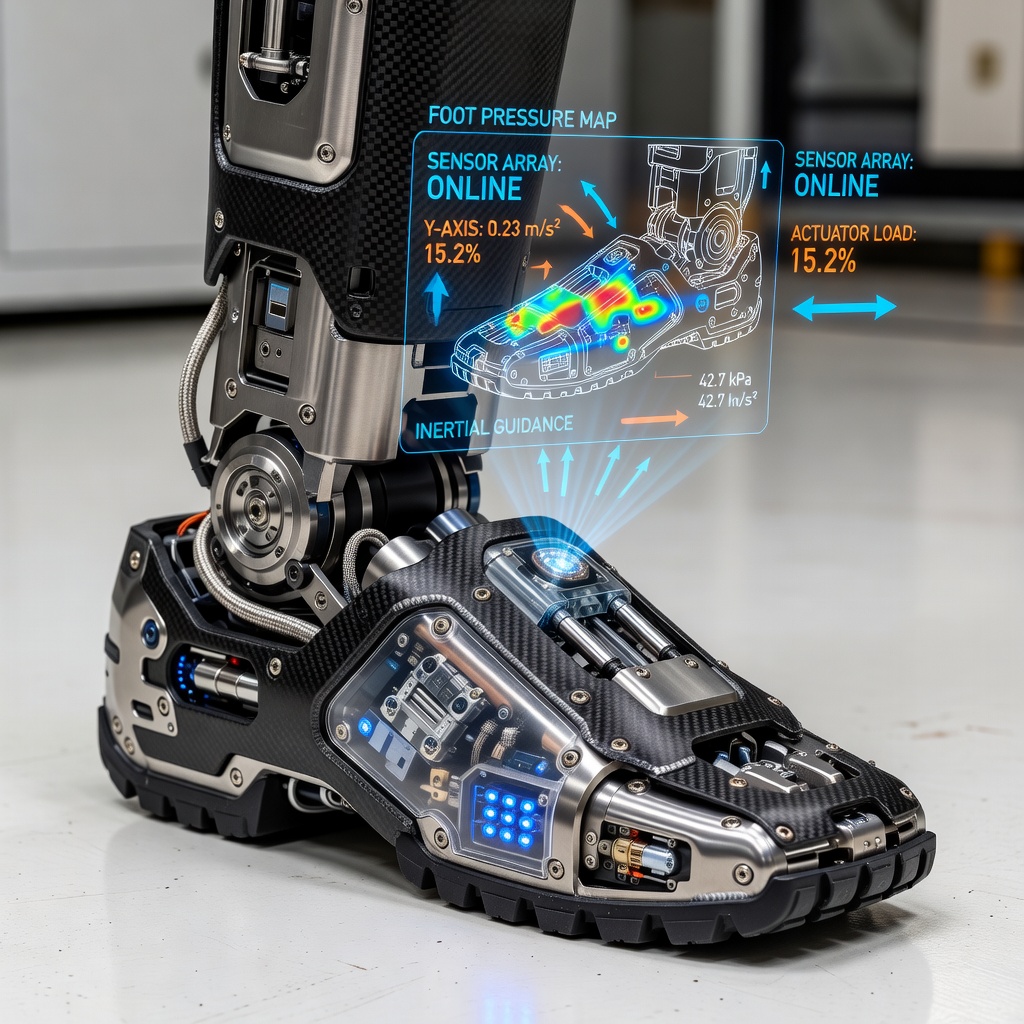
The paradox at the core of this problem is one that cuts across virtually every frontier in machine learning: a system can be simultaneously correct and incomplete. Each individual sensor on Optimus is functioning as designed during a phantom stumble event. Each subsystem is reporting accurately. The failure does not live in any single component. It lives in the integration, in the temporal stitching of sensor data into a coherent whole-body model of the robot's relationship to gravity, momentum, and ground contact. And that integration process, for all its sophistication, appears to have blind spots that no one has yet mapped with sufficient precision to eliminate.
One hypothesis gaining traction among researchers is what some call "latency phase drift." The idea is that even microsecond-level misalignments between different sensor update rates can, under specific conditions of dynamic movement, create a brief window in which the robot's internal model of its own body position diverges just enough from physical reality to trigger a cascade of poorly timed corrective commands. Think of it as the robotic equivalent of reaching for a handrail in the dark and grabbing three inches to the left of where your brain was certain it was. The reach itself was confident and precise. The model was simply fractionally wrong, and the architecture had no mechanism to catch the error before commitment.
What makes this hypothesis frustrating to test is that the conditions required to reproduce phantom stumble events are not programmable in advance. They appear to arise from the intersection of specific gait phases, thermal states of actuators, minor surface micro-texture variations below sensor resolution, and possibly even electromagnetic interference from the robot's own motor drives. It is, in the language of complex systems science, an emergent failure: something that the sum of the parts produces without any single part being the cause.
The Broader Stakes for Physical AI
Tesla is far from the only organization wrestling with unexplained failure modes in humanoid locomotion, but it is arguably the one with the most to lose from unresolved instability and the most data with which to eventually solve it. Elon Musk has publicly framed Optimus not as a demonstration project but as a future revenue engine potentially exceeding Tesla's automotive business in long-term value. A robot that performs flawlessly ninety-nine percent of the time but falls inexplicably during the remaining fraction is not a product. It is a liability, particularly when the deployment context involves sharing physical space with human workers, sensitive equipment, or elderly care recipients.
"The most dangerous failure in a physical system is not the one you can see coming. It is the one that looks, right up until the moment of collapse, exactly like success."
The phantom stumble problem also illuminates a fundamental tension in how physical AI systems are trained. Tesla's approach leans heavily on real-world data collection and imitation learning from human demonstration, supplemented by simulation. The simulation pipeline, however sophisticated, cannot perfectly replicate the stochastic noise of the physical world, including the micro-vibrations of factory floors, the subtle compliance variation in different shoe-equivalent foot pad materials across temperature ranges, and the aerodynamic effects of the robot's own arm movements on its center-of-mass trajectory during fast manipulation tasks. Every gap between simulated training conditions and real deployment conditions is a potential incubator for failure modes that the model has never encountered and therefore cannot anticipate.
Three Paths Forward, None of Them Easy
Within the research community focused on this class of problem, three broad approaches are being explored simultaneously, each carrying its own tradeoffs. The first is sensor densification: adding more measurement points, higher-frequency sampling, and redundant modalities to shrink the information gaps in which phantom stumble events seem to originate. The challenge here is not capability but consequence. More sensors mean more data, more latency in integration, more potential for the very timing drift that may already be causing the problem. Adding complexity to solve a complexity-driven failure is a gamble with no guaranteed return.
The second approach is architectural: redesigning the balance control stack to operate on probabilistic whole-body state estimates rather than deterministic sensor fusion. Instead of treating the robot's body position as a known quantity to be measured, this approach treats it as a distribution of possible states to be managed, with corrective actions designed to be robust across the uncertainty range rather than optimal for a single assumed state. This is philosophically closer to how biological cerebellums actually operate, and early simulation results suggest it reduces phantom stumble frequency. The computational cost, however, is substantial, and real-time execution on current onboard hardware remains an open engineering challenge.
The third path is arguably the most radical and the most interesting: accepting that some residual unexplained failure rate is irreducible given current physics and sensor technology, and instead investing heavily in fall recovery, designing Optimus to fall safely, get up quickly, and self-assess damage with the same fluency that it currently applies to task execution. This reframes the phantom stumble from a catastrophic bug into a managed operational parameter, much the way commercial aviation manages the residual risk of rare instrument failure not by eliminating the possibility but by engineering the response to be survivable and recoverable.
A Mystery That Sharpens the Field
There is something clarifying about an unsolved problem that refuses to yield to brute-force compute or incremental sensor improvement. The phantom stumble is not a headline crisis for Tesla's robotics program. Optimus continues to expand its operational scope inside Tesla's Fremont and Gigafactory facilities, taking on increasingly complex manipulation and logistics tasks. Musk has indicated plans to deploy the robot in external commercial contexts within a timeframe measured in years, not decades. The pressure to resolve this failure mode is therefore not merely academic.
But the deeper value of the phantom stumble, for anyone paying close attention, is what it reveals about the genuine frontier of physical AI. The field has made extraordinary progress in the visible, legible challenges: grasp planning, object recognition, natural language task instruction, bipedal locomotion over varied terrain. What remains stubbornly hard is the invisible substrate underneath all of it, the moment-to-moment integration of a machine's sense of its own body into a reliable, predictive model of physical reality. Until that problem is solved, every humanoid robot in the world, no matter how graceful it appears, is one phantom stumble away from reminding us how much remains unknown.
And in the strange, exhilarating, humbling world of physical AI research, that reminder might be the most valuable data point of all.

George Russell
Tech journalist covering Elon Musk’s companies for over 10 years.