
Between the Blueprint and the Possible: Elon Musk's Current Bets and the Engineering Reality Behind Them
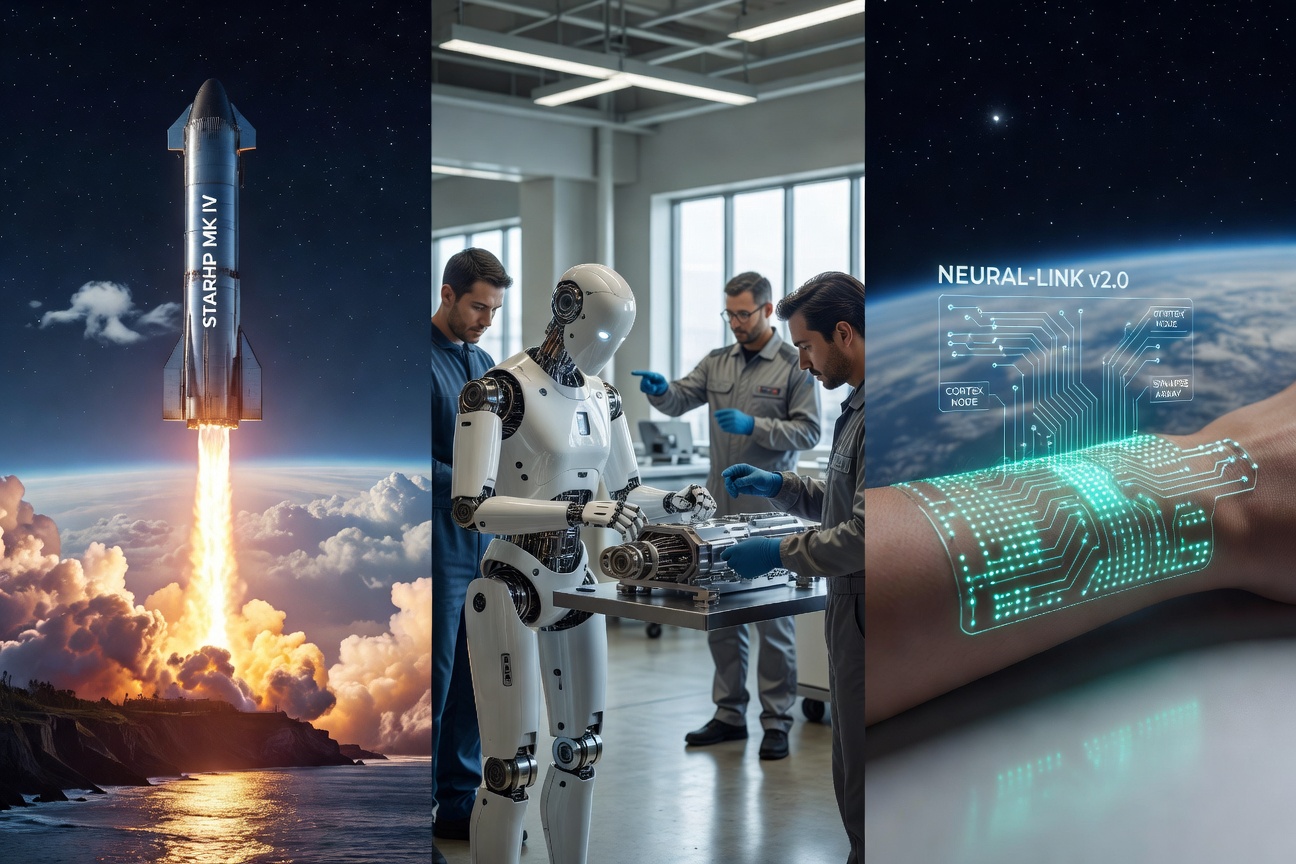
Somewhere between the skeptics who dismiss every announcement as vaporware and the true believers who treat each tweet as gospel, there exists a more productive question: which of Elon Musk's current bets are actually tracking toward reality, and which are still fighting gravity? Right now, across five companies and a dozen active engineering programs, that question has never been harder to answer, or more consequential to ignore.
Musk has been unusually vocal in recent months, granting interviews, posting extended technical threads, and making public statements that sketch out a worldview as coherent as it is audacious. Strip away the celebrity noise and what remains is a man who genuinely believes that three civilizational threats, namely artificial general intelligence misalignment, single-planet fragility, and chronic human cognitive bottlenecks, require engineering solutions that no government and no traditional corporation will deliver fast enough. His companies, in his framing, are not businesses so much as countermeasures.
Starship: The Machine That Has to Work
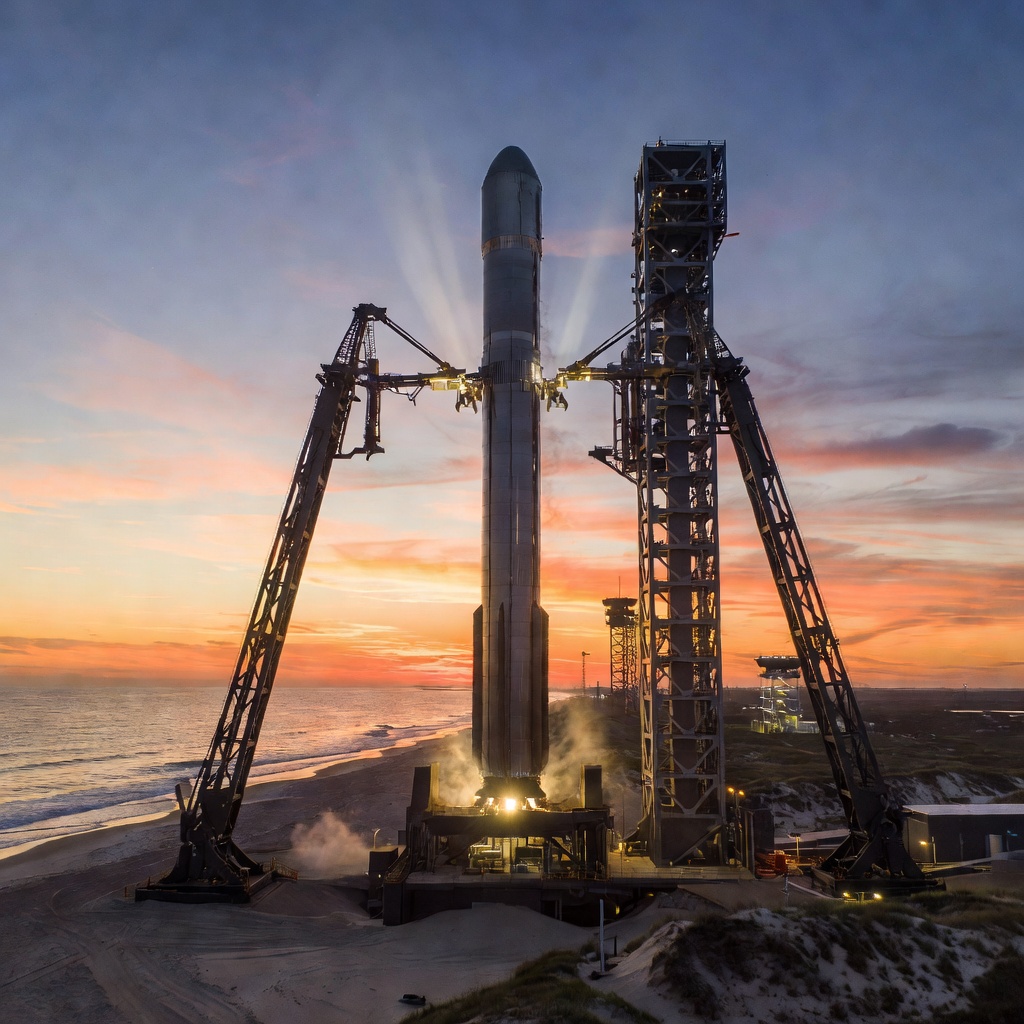
No project in Musk's portfolio carries more structural weight than Starship. In recent statements, he has doubled down on a target that once sounded fanciful: fully reusable orbital launch capability at a cost per kilogram that undercuts every existing rocket by an order of magnitude. The logic is straightforward. Mars colonization is economically impossible without cheap lift. Cheap lift requires full reusability. Full reusability requires Starship to function the way a commercial aircraft functions, fly, refuel, fly again.
The engineering challenges are not trivial. Catching a 70-meter booster with mechanical arms, which SpaceX has now achieved in testing, is genuinely unprecedented. But catching it reliably, at commercial cadence, in variable weather, is a different problem entirely. Musk acknowledged in a recent interview that the heat shield tile system on the orbital vehicle remains one of the most stubborn unsolved problems. Tiles that survive one reentry may not survive ten. The materials science required to close that gap is being worked out in real time, at scale, with hardware that costs hundreds of millions of dollars per iteration.
What makes this worth watching is not the spectacle of big rockets. It is the downstream effect. If Starship achieves its cost targets, the economics of everything from satellite internet to lunar infrastructure to deep-space science missions changes permanently. NASA's Artemis program is already betting on a Starship variant as a lunar lander. That dependency is a signal, not just a contract.
Grok and the xAI Ambition: Playing Catch-Up or Leapfrog?
When Musk launched xAI and its conversational model Grok, the initial reaction from much of the AI research community was polite skepticism. OpenAI, Google DeepMind, and Anthropic had multi-year head starts, enormous compute budgets, and deep talent pools. What exactly was xAI bringing to the table?
Musk's answer, stated clearly across multiple recent interviews, is a philosophical one before it is a technical one. He believes the dominant AI labs are training models with safety constraints that amount to ideological guardrails, producing systems that are less truthful and less useful than they could be. Grok, in his framing, is designed to pursue maximum truth-seeking, even when that truth is uncomfortable. Whether that philosophy produces better AI or simply less filtered AI is a debate the industry is actively having.
What is less debatable is the infrastructure ambition behind xAI. Musk recently revealed details about a supercomputing cluster, internally called Colossus, that he claims is the largest GPU training cluster in the world by certain metrics. If accurate, this is not a vanity project. Training frontier AI models is fundamentally a compute race, and raw infrastructure investment is one of the few variables that can compress the gap between a newcomer and an established leader. The next 18 months of Grok releases will test whether the philosophy and the compute combine into something that genuinely competes with GPT-5 class models.
Optimus: The Robot That Could Reshape Labor Economics
Of all Musk's active projects, Tesla's Optimus humanoid robot may be the one with the most underappreciated near-term implications. In recent public demonstrations and statements, Musk has pushed a specific claim: Optimus units are already performing useful tasks inside Tesla's own factories, and the company intends to manufacture them at a scale that would make them commercially available at a price point around $20,000 to $30,000.
The skeptical case is well-rehearsed. Robotics has been promising general-purpose humanoids for decades. Boston Dynamics has produced machines of breathtaking physical capability that remain economically unscalable. What makes Optimus different, if anything, is that it is being developed inside a company that already manufactures complex electromechanical systems at automotive scale and is training its AI on some of the most diverse real-world sensory data available.
The grounded analysis here requires holding two things simultaneously. First, even a partially capable Optimus, one that can reliably perform a narrow set of repetitive manufacturing or logistics tasks, represents a meaningful productivity tool. Second, the leap from narrow task performance to general household utility is an order-of-magnitude harder problem. Musk tends to compress his public timelines, a pattern that is by now well-documented. But the direction of travel is clear, and the first customers who can deploy even limited Optimus capability in controlled industrial settings will gain a real competitive advantage.
Neuralink: Slow Science, High Stakes
Neuralink moves on a different clock than the rest of Musk's portfolio. Brain-computer interface technology is constrained not just by engineering but by biology, regulatory approval timelines, and the irreducible caution required when your product is implanted in a human skull. Musk has been publicly enthusiastic about early patient results, describing cases where implant recipients have been able to control computers and digital interfaces with thought alone at speeds that exceed any previous BCI benchmark.
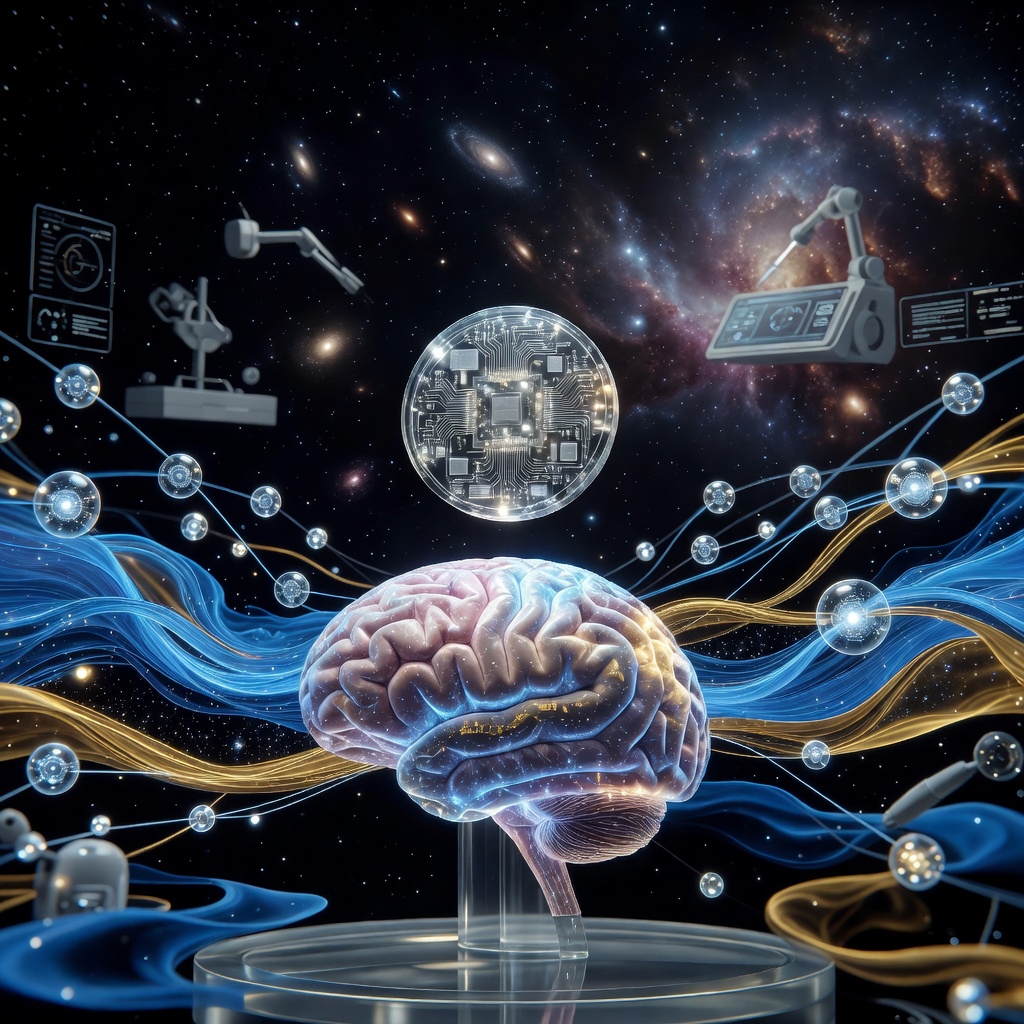
The long-term vision Musk articulates is one of cognitive symbiosis: humans augmented by AI-linked neural interfaces to the point where the traditional distinction between biological and digital intelligence becomes blurry. That vision is measured in decades, not years. The nearer-term and far more certain application is therapeutic. Restoring communication and motor function to patients with ALS, spinal cord injuries, or severe paralysis is a goal with profound humanitarian value entirely independent of any transhumanist aspiration. The current clinical trial phase is precisely where attention should be focused, and early data suggests the technology is performing better than many neuroscientists expected.
The Coherence Beneath the Chaos
One of the most common criticisms of Musk is that his portfolio is simply too sprawling to be managed with real rigor, that spreading executive attention across rockets, cars, robots, AI, and neural implants simultaneously is a recipe for mediocrity across the board. It is a fair challenge. The counterargument, and it is one that the actual engineering record supports with increasing frequency, is that these projects feed each other in ways that are not always visible from the outside. Tesla's battery and manufacturing expertise flows into Optimus. SpaceX's materials science informs Tesla's engineering culture. xAI's compute infrastructure is being built to serve not just Grok but potentially every AI-dependent system across the portfolio.
What Musk articulates, most clearly in long-form interviews and technical presentations, is a systems-level view of civilization. Energy, intelligence, mobility, and multi-planetary presence are not separate problems. They are four faces of the same problem: the long-term survival and flourishing of human consciousness. That framing may read as grandiose, but it produces a specific, practical consequence. It means his companies are optimized not for quarterly returns but for optionality at civilizational scale.
Why the Engineering Challenges Are the Story
The most important thing to understand about Musk's current moment is that the bottlenecks are no longer primarily financial or even political. They are physical. Heat shield tiles that degrade under thermal cycling. Neural electrodes that must remain stable in biological tissue for years. Humanoid hands that need to manipulate tools designed for human fingers. AI training runs that require cooling infrastructure as complex as the compute itself. These are hard problems. They do not yield to motivation or capital alone. They yield to iteration, measurement, and occasionally to a materials scientist or mechanical engineer having a genuinely new idea.
The next chapter of Musk's story will be written in test data, in flight logs, in clinical outcomes, and in factory throughput numbers. The vision is already on record. What remains is whether the engineering can keep pace with it, and whether the teams he has assembled can solve problems that have never been solved before. For anyone who cares about what the next 30 years of human civilization looks like, those are the numbers worth watching.

George Russell
Tech journalist covering Elon Musk’s companies for over 10 years.