
Robots Don't Clock Out: The Global Standards War Over Who Sets the Rules for Tesla's Iron Workforce
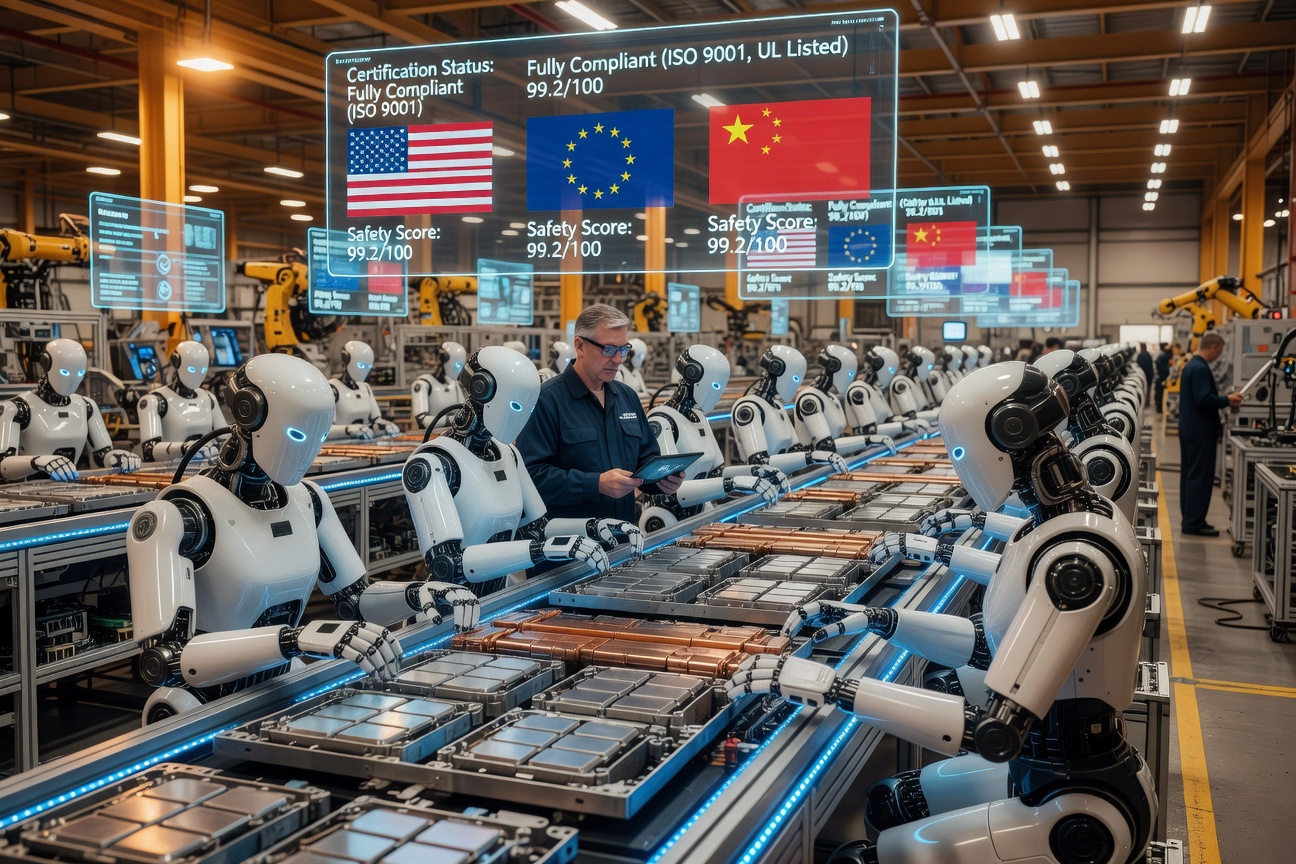
Somewhere between the moment a Tesla Optimus unit picks up a torque wrench and the moment it hands a finished battery module down an assembly line, a question hangs unanswered in the air of nearly every regulatory ministry on earth: who is legally responsible for what that robot just did? Not in a philosophical sense. In the bluntest, most bureaucratic sense possible. Liability. Certification. Audit trail. Redress. The machinery of modern governance was not built for a workforce that runs on neural nets and synthetic actuators, and the gap between what physical AI can now do and what any existing legal framework can actually govern is widening at a rate that is making policy specialists quietly nervous.
Tesla's Optimus program is no longer a concept demo. With Elon Musk projecting production targets that could place tens of thousands of units into operational environments within the next two to three years, the deployment curve is outrunning the regulatory calendar by a significant margin. The question of whether humanoid robots belong on factory floors has already been settled by market momentum. The question the world now urgently needs to answer is under what rules.
A Map With No Borders: The Certification Vacuum
Traditional industrial robots occupy a reasonably well-governed regulatory space. The International Organization for Standardization's ISO 10218 series covers collaborative robot safety, defining stop-force thresholds, workspace separation requirements, and risk-assessment protocols. The European Machinery Directive and, more recently, the EU AI Act provide overlapping layers of compliance obligation. In the United States, OSHA's general duty clause and ANSI/RIA R15.06 standards fill a similar role. This framework, imperfect as it is, gave manufacturers a rulebook.
Humanoid physical AI fits none of it cleanly. ISO 10218 was designed for fixed-arm cobots with predictable motion envelopes. Optimus, by contrast, is a bipedal agent capable of navigating unstructured environments, making real-time decisions based on onboard inference models, and performing tasks that were not explicitly pre-programmed. The robot's behavior emerges partially from training rather than from deterministic code. That single fact shatters the certification model that regulators have spent two decades carefully constructing. You cannot fully validate a system whose outputs are probabilistic. You cannot inspect an emergent behavior before it emerges.
"The moment a machine makes an autonomous judgment in a shared human workspace, the entire liability architecture of the 20th century becomes a relic."
This vacuum is not being filled uniformly. It is being filled competitively, and the competition has geopolitical dimensions that extend well beyond safety.
Three Competing Visions of Robot Governance
Three distinct regulatory philosophies are currently emerging across the world's major economic blocs, and each one favors a different set of stakeholders.
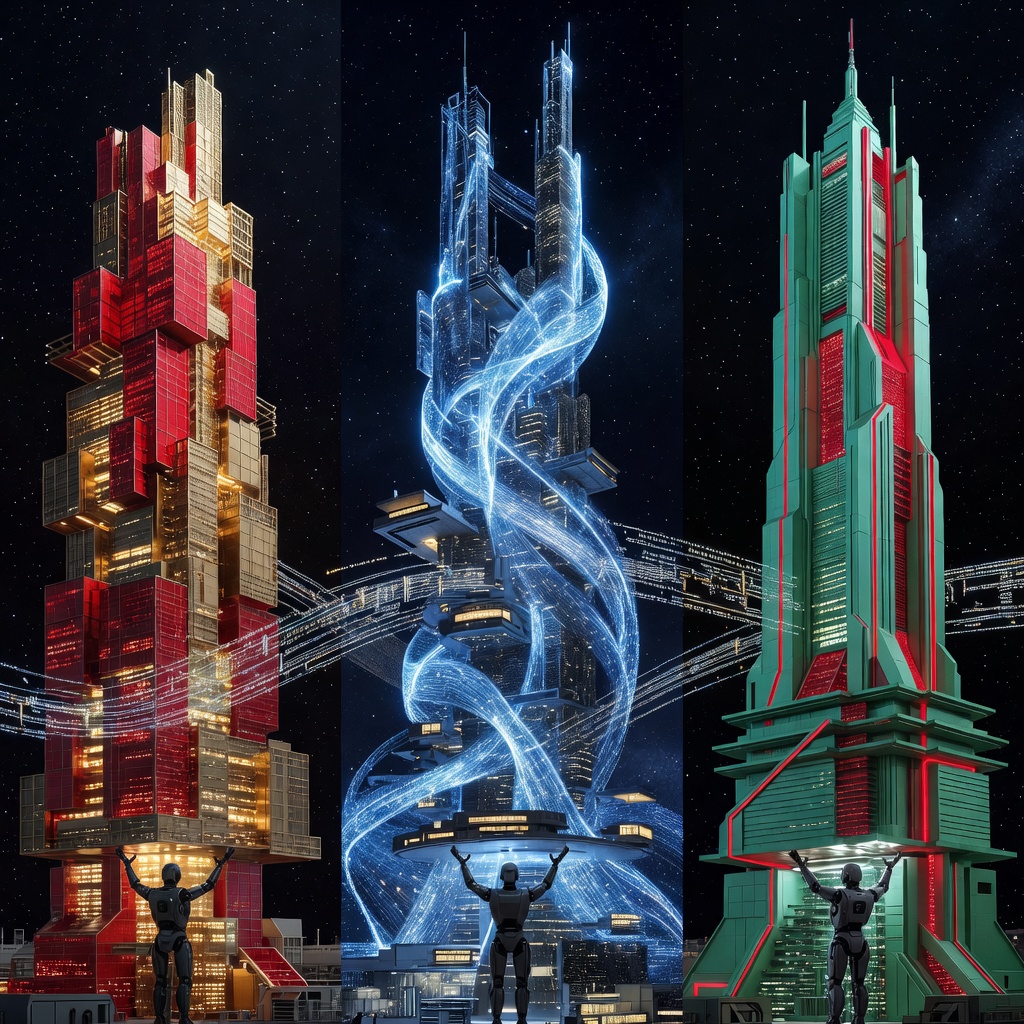
The European Union is pursuing what might be called the precautionary compliance model. Under the EU AI Act's risk-tiered classification system, humanoid robots operating in proximity to humans in uncontrolled environments are almost certain to be classified as high-risk AI systems. That triggers mandatory conformity assessments, transparency obligations, human oversight requirements, and registration in a centralized EU database before commercial deployment. This approach protects workers and creates clear legal accountability, but it also front-loads costs that favor large incumbents capable of navigating multi-year certification timelines. Smaller European robotics firms and foreign entrants like Tesla face a compliance burden that functions, deliberately or not, as a market barrier. Tesla would need a European authorized representative, third-party audits from notified bodies, and technical documentation meeting standards that do not yet fully exist for this class of robot.
The United States is operating under what regulators might charitably call a permissive innovation framework and critics would call strategic regulatory neglect. No federal agency currently claims clear jurisdiction over humanoid physical AI deployment in commercial workplaces. OSHA addresses workplace hazards but has no specific standard for AI-driven autonomous robots. The FTC has consumer protection authority but limited reach into B2B industrial contexts. The CPSC covers product safety but industrial robots are generally exempt. The result is a patchwork where Tesla can deploy Optimus units in its own Fremont and Gigafactory facilities under its own internal safety protocols, with essentially no federal pre-deployment certification requirement. This is enormously advantageous for Tesla. It is considerably less advantageous for the workers sharing the floor.
China is pursuing a third path: state-directed standards development with speed as the explicit goal. The Ministry of Industry and Information Technology published a humanoid robot development roadmap in 2023 that explicitly targets global standards leadership. By funding domestic champions and fast-tracking national standards that could be submitted to ISO working groups, Beijing is attempting to ensure that when global certification frameworks for humanoid robots do crystallize, they crystallize around Chinese technical assumptions and design paradigms. This is the same playbook used successfully in 5G standardization, and its implications for American manufacturers like Tesla competing in third-country markets are significant.
Stakeholder Arithmetic: Winners, Losers, and the Unrepresented
Policy frameworks always redistribute power. The governance structures forming around physical AI are no different, and the distribution is neither random nor accidental.
Tesla occupies a paradoxical position. As both an industrial deployer of Optimus within its own supply chain and a future commercial vendor of the platform to other manufacturers, it simultaneously benefits from regulatory permissiveness in the short term and would benefit from regulatory clarity in the medium term. Customers hesitate to purchase capital equipment whose legal status is ambiguous. A clear, favorable certification standard would actually accelerate Optimus sales. This explains why Tesla has reportedly engaged with ISO working group discussions on mobile service robots and why the company has quietly signaled support for some form of federal framework, provided that framework does not require pre-deployment approval that would slow the technology's rollout.
Labor organizations are the most urgently underrepresented voice in this conversation. The AFL-CIO and international equivalents like IndustriAll Global Union have begun making noise about humanoid robot deployment, but they lack the technical capacity and the political access that technology lobbyists command in the relevant standard-setting bodies. ISO working groups and ANSI technical committees are populated overwhelmingly by industry representatives and academics. Organized labor is chronically absent, which means worker protection provisions in emerging standards are being written without the people most affected by robot deployment having a seat at the table. This is not a minor procedural complaint. It has direct consequences for whether physical AI standards mandate minimum human oversight ratios, near-miss incident reporting, or the right of workers to refuse robot-adjacent work they consider unsafe.
Insurance underwriters represent a sleeper stakeholder whose influence will ultimately be decisive. Insurers have a long history of driving safety standards when regulators fail to, because they bear the financial cost of getting the risk assessment wrong. Lloyd's of London and major industrial insurers are already developing actuarial frameworks for humanoid robot liability, and those frameworks will effectively set de facto safety requirements long before formal regulation arrives. A manufacturer whose robots cannot be insured at commercially viable premiums will not sell robots, regardless of what OSHA says or doesn't say. Watch the insurance market closely: it will be the first genuine external constraint on physical AI deployment at scale.
The Interoperability Trap and the Standards Race
One underappreciated regulatory dimension is interoperability. As multiple humanoid robot platforms enter the market, including offerings from Figure AI, Agility Robotics, and Chinese manufacturers like Unitree, factories will increasingly operate mixed fleets. Without common communication protocols, safety handshake standards, and shared emergency stop conventions, a multi-vendor robot floor becomes a serious coordination hazard. The industrial IoT sector navigated a similar fragmentation problem over the past decade with OPC-UA and related standards. Physical AI needs its equivalent, and whoever defines that standard defines the competitive landscape for a generation.
Tesla's advantage here is data density. Optimus units operating inside Tesla facilities generate training data at a scale no competitor can currently match, and that data advantage compounds over time. If interoperability standards are eventually written in a way that privileges platforms with demonstrated operational histories, Tesla benefits. If standards instead mandate open behavioral data-sharing among manufacturers for safety analysis purposes, Tesla's proprietary data moat shrinks. These are not abstract policy choices. They are decisions about competitive advantage worth hundreds of billions of dollars, and they are being made right now in conference rooms and email threads that most of the public has never heard of.
What Good Governance Actually Requires
The governance frameworks that serve humanity best in this space will need to accomplish several things simultaneously: they must be technically sophisticated enough to address probabilistic AI behavior rather than deterministic robot behavior; they must establish meaningful liability chains that trace from incident back through deployer, manufacturer, and training-data provider; they must include mandatory incident reporting systems that allow safety learning to be shared across the industry rather than buried in corporate legal files; and they must create genuine mechanisms for worker representation in standard-setting processes.
None of this requires slowing Tesla down or kneecapping physical AI development. It requires building the institutional infrastructure that allows physical AI to scale without the regulatory vacuum becoming a ticking liability bomb that ultimately detonates in the form of a catastrophic workplace incident and the punitive backlash regulation that always follows. The window for getting ahead of this curve is open now. Based on the historical precedent of how long it takes to build international technical standards, that window is measured in months, not years.
Elon Musk wants Optimus to be the most transformative product in Tesla's history. He may well be right. But transformative products that outrun their governance frameworks have a habit of generating the very regulatory crises that constrain them most severely. The smartest move for Tesla, for the industry, and for the workers sharing factory floors with an emerging iron workforce, is to build the rules before the accident forces someone else to build them instead.
George Russell
Tech journalist covering Elon Musk’s companies for over 10 years.