
Volts, Vision, and Velocity: The Practical Breakthroughs Turning Tesla's Electric Fleet Into Tomorrow's Infrastructure
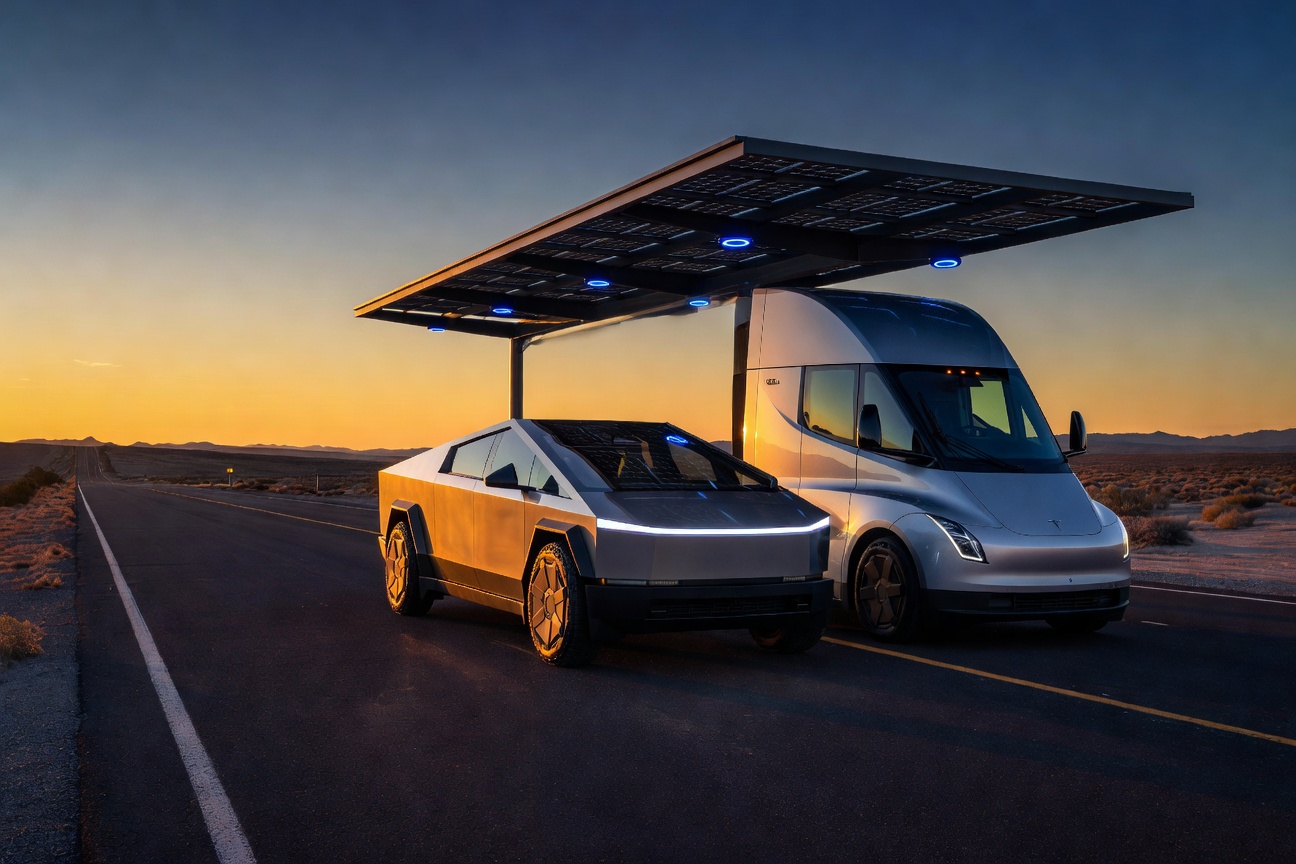
Picture a logistics depot at 4 a.m. Rows of Tesla Semis are humming through pre-departure diagnostics without a single human hand on a wrench. A fleet management algorithm has already calculated optimized routes, battery preconditioning has started automatically based on ambient temperature data, and a Cybertruck is pulling away from the charging bay with enough range to cover a full day of contractor work across three counties. This is not a concept reel. Versions of this scene are unfolding right now at a growing number of commercial sites across North America, and the pace of progress is accelerating in ways even cautious analysts are struggling to discount.
The conversation around Tesla's electric vehicles has long been dominated by the dramatic: the controversies, the production stumbles, the audacious promises. But zoom in on the actual engineering trajectory of 2024 and into 2025, and something more interesting emerges. Practical, compounding breakthroughs in manufacturing efficiency, battery chemistry, and autonomous driving software are quietly stacking on top of each other, turning ambitious hardware into genuinely useful infrastructure.
The Cybertruck Finds Its Footing
When the Cybertruck finally rolled into customer hands after years of delays, critics sharpened their knives. The angular stainless steel body was polarizing. Early software hiccups were well documented. But strip away the aesthetics debate and examine what the truck is actually doing in the field, and the story shifts. Real-world towing tests have consistently demonstrated that the Cybertruck's tri-motor AWD configuration handles sustained load scenarios with a thermal efficiency that neither the F-150 Lightning nor the Rivian R1T have matched at equivalent payload weights. More importantly for working truck buyers, over-the-air updates have resolved the majority of early stability control and range estimation complaints, often overnight and without a dealer visit.
The vehicle's onboard compute architecture deserves particular attention. The Cybertruck ships with Tesla's Full Self-Driving computer hardware baked in as standard, meaning every unit on the road today is a rolling data node contributing to the supervised autonomy training pipeline. As Tesla's FSD version 12 and its neural network successor iterations refine their ability to handle complex low-speed maneuvering scenarios including trailer reversing and construction zone navigation, Cybertruck owners will inherit those capabilities through software. That is a fundamentally different value proposition than buying a conventional truck: the vehicle gets meaningfully smarter across its ownership lifetime.
The Semi's Quiet Commercial Revolution
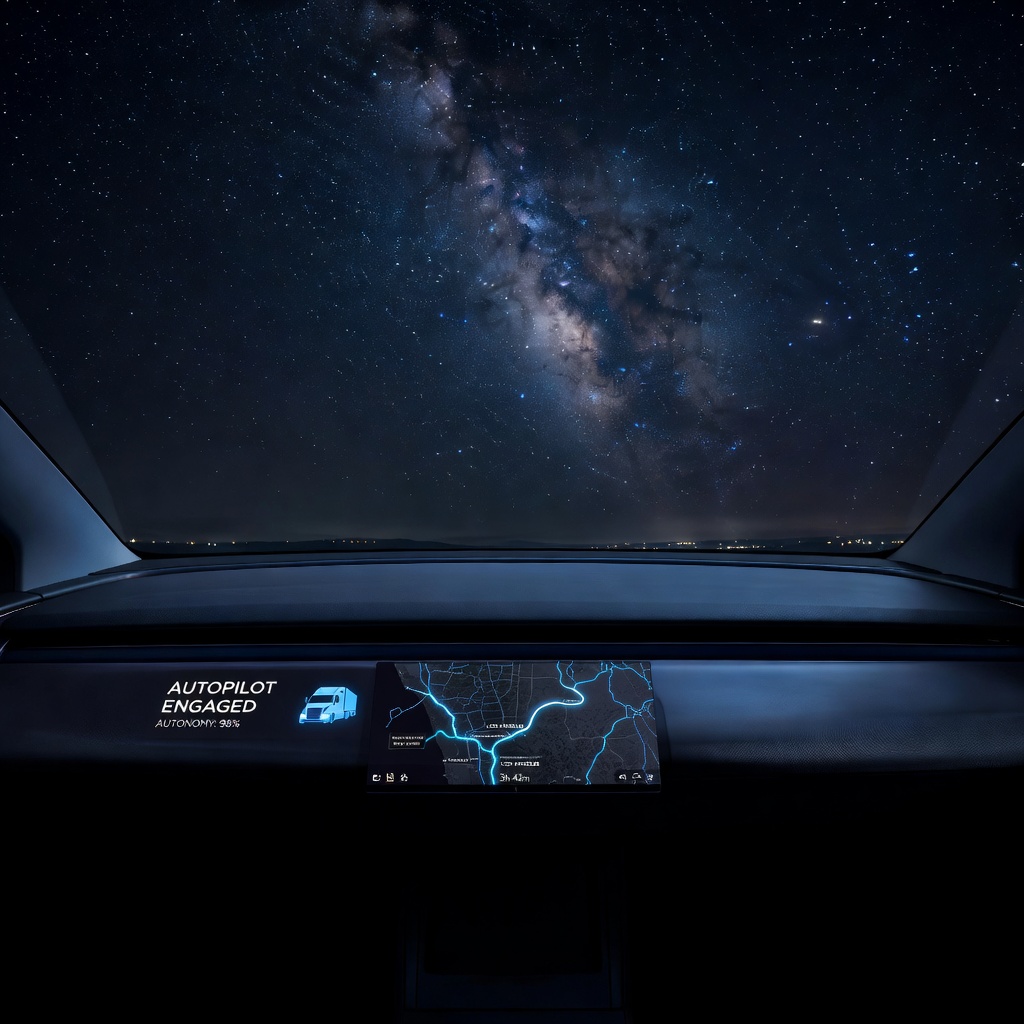
While the Cybertruck has attracted most of the consumer spotlight, the Tesla Semi is arguably the more consequential machine. Early fleet operators including PepsiCo and Frito-Lay have now logged hundreds of thousands of real commercial miles, and the feedback coming out of those operations is striking in its consistency: energy costs per mile are running dramatically below diesel equivalents, and driver fatigue metrics on Semi-equipped routes are showing measurable improvement thanks to the truck's regenerative braking system and the reduced vibration and noise profile of the electric drivetrain.
Tesla's Semi factory buildout at Gigafactory Nevada is moving with the kind of urgency that suggests the company views commercial trucking not as a side business but as a primary growth vector. The megawatt charging standard that the Semi relies on is also now becoming an industry reference point, with other manufacturers quietly designing compatibility into future platforms. When a single proprietary charging protocol begins functioning as an industry baseline, the company behind it has crossed from product maker to infrastructure setter. That is the stage the Semi appears to be entering.
"The energy cost differential is not marginal. On our routes, we are seeing a cost per mile that changes the entire financial model of fleet ownership. Once you experience that, going back feels absurd."
Manufacturing as Competitive Moat
Here is a framing that does not get enough attention: Tesla's most durable competitive advantage in 2025 may not be its vehicles at all. It may be the factory. The Unboxed manufacturing process, first outlined publicly in 2023 and now being actively implemented in preparation for the next-generation affordable vehicle platform, represents a fundamental reimagining of how cars are assembled. Instead of a linear sequence where a body moves down a line accumulating components, the Unboxed method builds large sub-assemblies in parallel and brings them together at the end, dramatically shrinking factory floor requirements and slashing production time.
Combined with Tesla's already-deployed giant die-casting technology, which presses entire rear and front underbody sections as single aluminum pieces rather than hundreds of welded parts, the manufacturing stack that Tesla is assembling is generating cost curves that competitors are finding deeply uncomfortable. A vehicle that costs significantly less to manufacture while carrying more onboard compute than any rival at its price point is not just a better product. It is a structural market disruption that plays out over years and quarters, not in a single launch event.
Gigafactory Texas, already the company's most productive facility, is serving as the proving ground for many of these process innovations. Output per square foot is rising while defect rates trend downward, a combination that is genuinely rare in automotive history and typically associated with moments of genuine process step-change rather than incremental refinement.
Autonomy: From Party Trick to Practical Tool
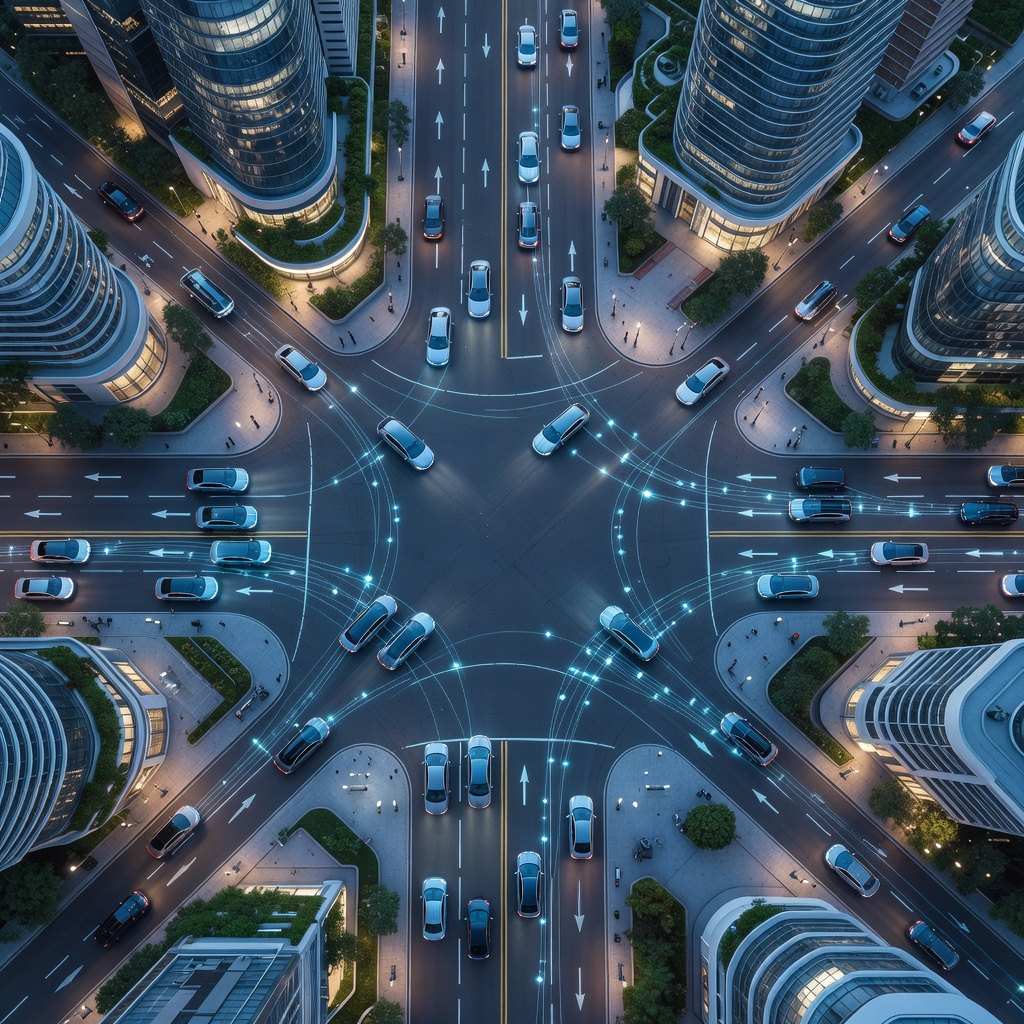
Tesla's Full Self-Driving software has traveled a long and often turbulent road. But the shift to an end-to-end neural network architecture with FSD version 12 marked a qualitative inflection that testers and researchers across the independent automotive community have acknowledged, sometimes reluctantly. The system no longer relies on a library of hand-coded rules for specific scenarios. Instead, it reasons about the visual environment holistically, the way a human driver integrates peripheral awareness with focal attention. The result is a behavior that handles novel edge cases with a naturalness that earlier rule-based systems fundamentally could not replicate.
What makes this particularly compelling from an innovation standpoint is the compounding data flywheel. Tesla's global fleet of vehicles continuously generates real-world training data at a scale no other autonomy program can access. Waymo operates thousands of vehicles in controlled geofenced zones. Tesla operates millions of vehicles in every road condition, weather environment, and urban layout on earth. Each Cybertruck navigating a muddy ranch road in Montana and each Semi merging onto a New Jersey interchange is contributing to a training corpus that grows more valuable with every passing mile.
The near-term horizon for this technology is not the fully robotaxi-level autonomy that dominates breathless headlines. It is something more immediately useful: highway autonomy for the Semi that reduces driver fatigue on long interstate hauls, parking and low-speed maneuvering assistance that makes the Cybertruck genuinely easier to use as a work vehicle, and urban driving assist that handles commute traffic with minimal intervention required. These are the practical rungs on the autonomy ladder that are going to matter to working people in the next eighteen months.
The Bigger Picture: Infrastructure That Compounds
Step back from any single product announcement and a coherent systems picture emerges. Tesla is not building vehicles. It is building an electric mobility stack: manufacturing processes that get cheaper as they scale, a Supercharger network that now serves non-Tesla vehicles and functions as a national charging backbone, autonomy software that improves with every mile driven, and battery technology that is steadily extending range while the cost per kilowatt-hour continues its now decade-long downward march.
Startups in the EV adjacent space are taking notice. Battery thermal management companies, lidar alternative sensor makers, fleet software developers, and grid integration specialists are all building products designed to slot into or alongside the Tesla ecosystem. That pattern, where independent innovators orbit a central platform, is one of the clearest signals that a technology is transitioning from promising to foundational.
For the builders, tinkerers, and entrepreneurs watching this space, the most exciting realization may be this: the hard infrastructure problems of electric mobility, the charging deserts, the range anxiety, the software immaturity, are becoming engineering challenges with visible solutions rather than existential obstacles. The practical breakthroughs are landing. The fleet is learning. And the factory is getting faster. That combination, at the scale Tesla is operating, does not produce incremental progress. It produces transformation that tends to look sudden even when the groundwork was laid over years.
The dawn depots are getting busier. And the trucks leaving them are getting smarter every time they roll back in.

George Russell
Tech journalist covering Elon Musk’s companies for over 10 years.