One Launch Every 37 Hours: The Quiet Revolution Turning SpaceX Into Earth's Logistics Backbone
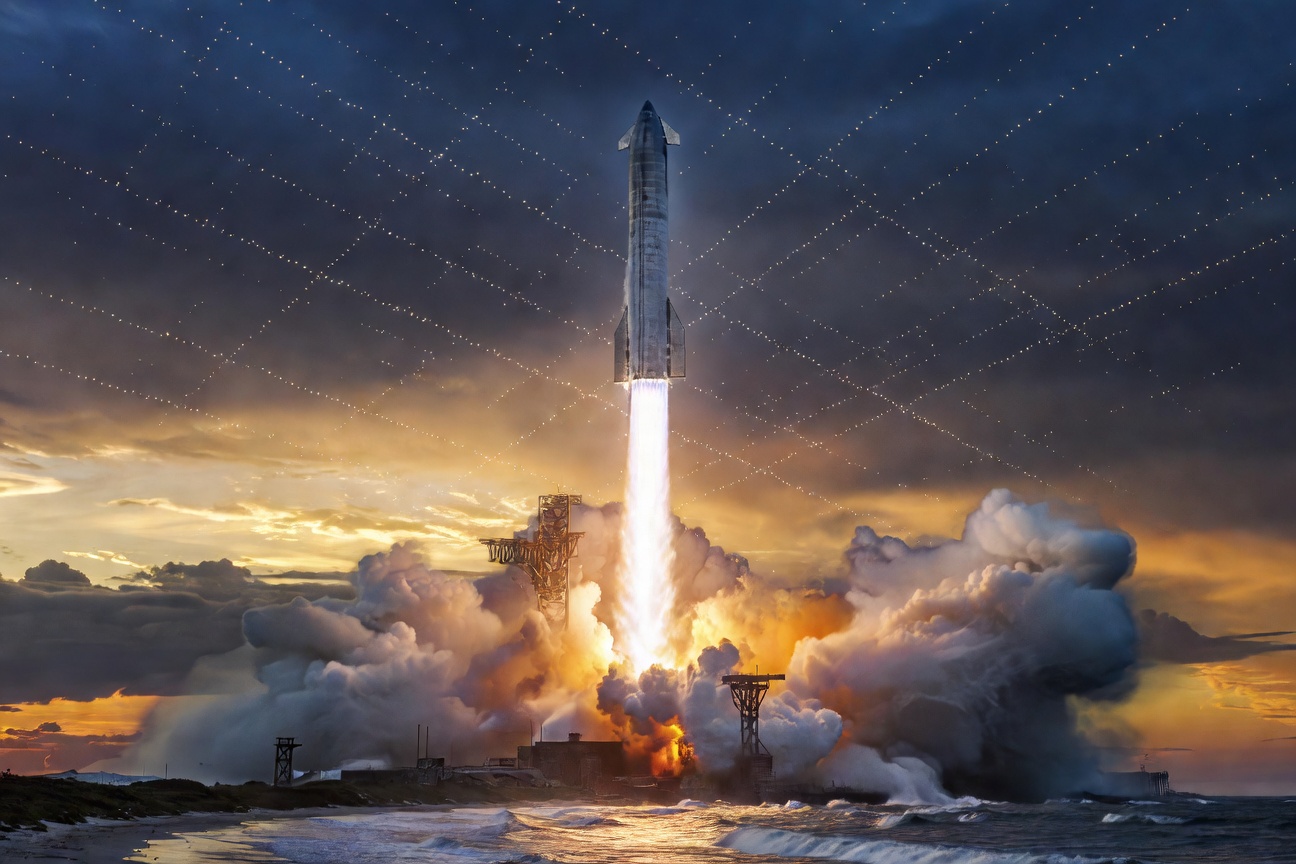
One launch every thirty-seven hours. That is not a projection or a press-release ambition. That is SpaceX's actual averaged cadence entering 2025, a number so far outside historical norms that even veteran aerospace engineers pause when they hear it. For context, NASA's entire Saturn V program completed thirteen launches across nearly a decade. SpaceX is outpacing that total in a single fortnight. "We are no longer operating in the paradigm of spaceflight as event," said one senior SpaceX propulsion engineer during a public panel at a recent aerospace conference. "We're operating in the paradigm of spaceflight as infrastructure." That sentence, spare and almost casual, may be the most consequential framing of the current technological moment.
The Cadence Machine: What Falcon 9's Reliability Has Unlocked
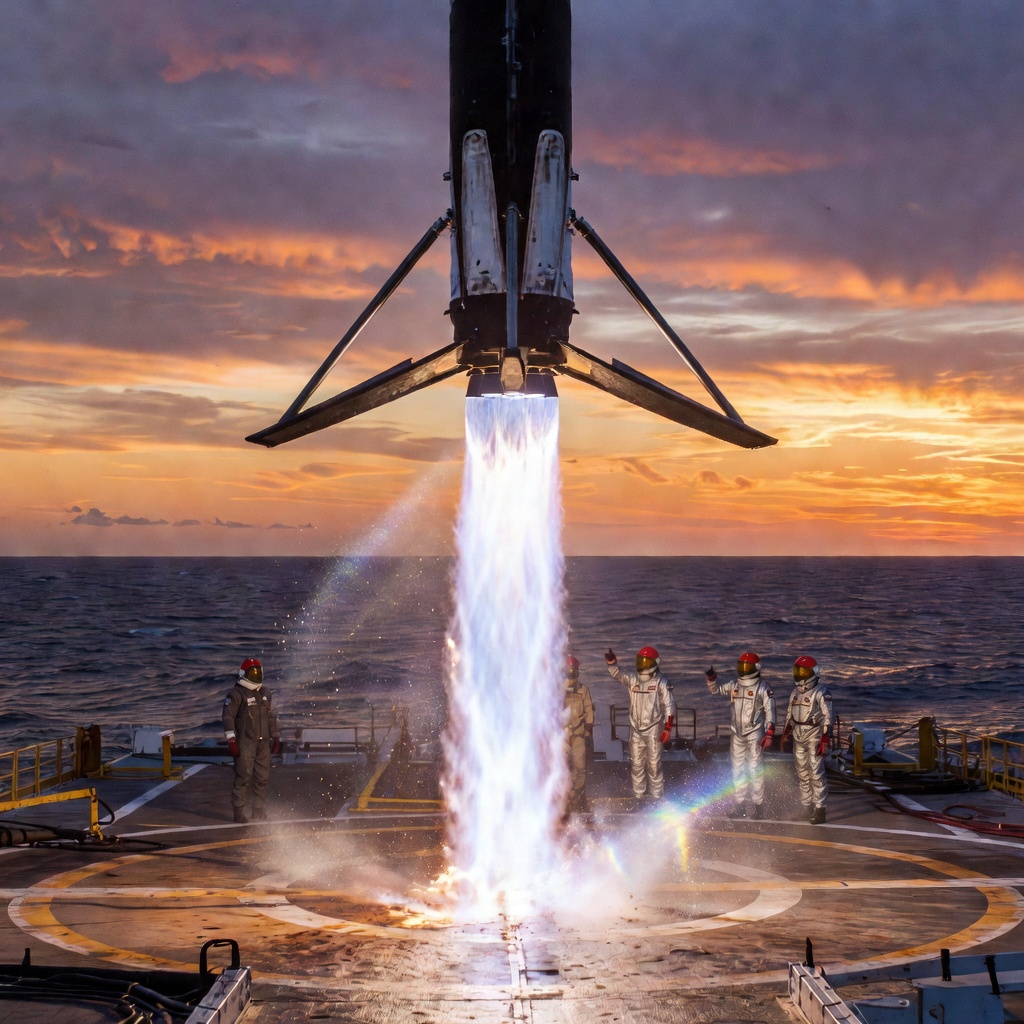
Behind every Starlink broadband subscriber, every NASA cargo delivery, and every commercial satellite tucked into a sun-synchronous orbit, there is a single workhorse performing miracles through sheer repetition: the Falcon 9. Having surpassed 350 successful missions, the vehicle has achieved a reliability record that commercial aviation engineers quietly envy. Individual booster cores are now flying their twentieth and twenty-first missions, a number that would have been dismissed as fantasy when the first reusable booster landing occurred less than a decade ago.
This maturity is not incidental to SpaceX's broader program ambitions. It is load-bearing. The cash flow generated by commercial launch contracts and Starlink subscriptions is what finances the R&D appetite that would otherwise be impossible to sustain at this scale. Every Falcon 9 that rides an already-flown booster back to a drone ship landing effectively writes a check to the Starship development program. The economics are vertically integrated in a way no government space program has ever been permitted to be.
Starlink at Scale: The Satellite Web Grows Teeth
The Starlink constellation is approaching a figure that would have read as science fiction in 2018: well over 7,000 active satellites, with the next-generation Starlink V3 design waiting in the wings. Each V3 spacecraft is expected to carry roughly four times the bandwidth capacity of its predecessors, meaning the effective throughput of the constellation is about to undergo a nonlinear jump even if the physical satellite count grows modestly.
What this means in practical terms extends well beyond suburban households getting fast internet. Maritime operators, airlines, military logistics units, and remote scientific stations are all rewiring their communications architectures around Starlink as a primary, not backup, connectivity layer. The Pentagon's expanding use of Starlink in operational theaters has forced NATO allies to reckon with a privately operated piece of critical communications infrastructure that no treaty formally governs. That tension, between the utility of the network and the accountability gaps around it, is becoming one of the defining geopolitical friction points of the decade.
Starship's role in this picture is pivotal. The vehicle's cavernous payload bay and projected cost-per-kilogram metrics, targeting numbers somewhere below two hundred dollars at full operational tempo, would allow SpaceX to deploy V3 satellites in constellations so large and so quickly that no competitor could realistically close the gap. The Starlink business is not just a revenue stream. It is a strategic moat being dug with a very large shovel.
Starship: The Machine That Refuses to Stop Evolving
The story of Starship in 2025 is not one of a vehicle finally arriving at a finished form. It is the story of a vehicle that is deliberately never finished. SpaceX's philosophy of iterating through hardware rather than through simulation has produced a ship that looks recognizably different from what flew a year ago. The ship's heat shield tile matrix has been substantially revised following data gathered from prior reentries. The engine cluster on the Super Heavy booster continues to be tuned for reliability at the extreme mass-flow rates demanded during max-Q.
"The vehicle you see on the pad today is not the vehicle that will land on the Moon, and it's certainly not the vehicle that will land on Mars. But each version teaches us something the simulation never could."
The mechanical catch system at Starbase, nicknamed "Mechazilla" in the popular press, has proven to be more than a theatrical flourish. Catching the Super Heavy booster mid-air with the launch tower's robotic arms removes the need for landing legs entirely, saving mass and simplifying the turnaround process. If the system continues to perform, it represents a genuine paradigm shift in how reusable rockets are designed: build them lighter and let the ground infrastructure absorb the landing loads.
Looking ahead, the next major Starship milestones center on propellant transfer demonstrations in orbit, a technical prerequisite for both the Artemis lunar mission profile and any serious Mars architecture. Transferring cryogenic propellants between vehicles in microgravity involves fluid dynamics challenges that are deceptively nasty, and SpaceX's window for proving out this capability is narrowing relative to NASA's Artemis timeline.
Artemis and the Moon: A Partnership Under Pressure
NASA's selection of Starship as the Human Landing System for Artemis III remains one of the most consequential procurement decisions in modern aerospace history, and one of the most contested. The decision essentially bet America's return to the lunar surface on a vehicle that had not yet reached orbit at the time of selection. That bet is looking increasingly credible, but the timeline continues to flex.
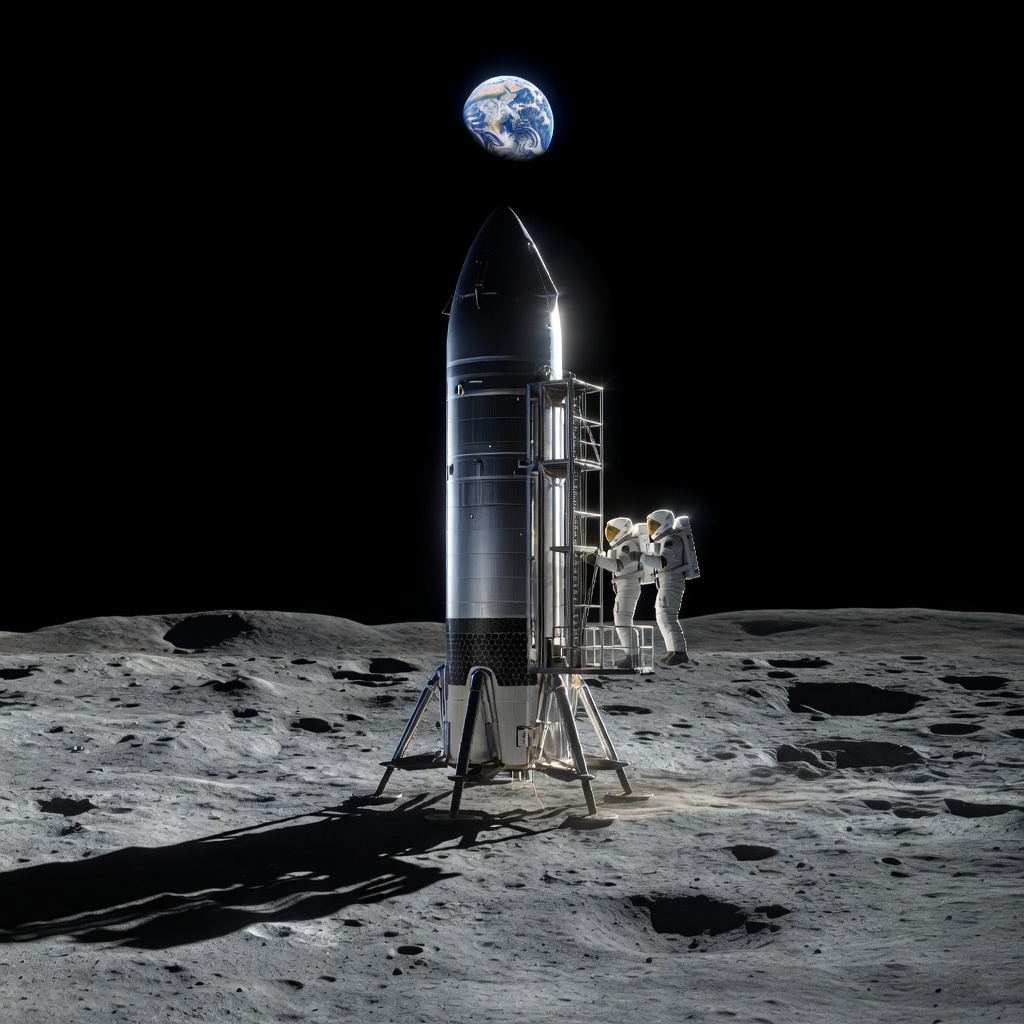
The lunar Starship variant is a substantially different beast from the point-to-point or orbital versions. It needs no aerodynamic control surfaces because there is no atmosphere to push against. It requires a dedicated elevator system to lower astronauts from the cabin to the lunar surface, given the vehicle's extraordinary height. And it must perform an engine-down landing on terrain that nobody has driven a rover across in preparation. The engineering details here are not trivial, and the margin for error on a crewed lunar landing is, definitionally, zero.
NASA, for its part, is threading a difficult needle: maintaining public and congressional confidence in Artemis while managing a hardware dependency on a commercial partner that operates on its own development clock. The relationship works as long as SpaceX's cadence and ambition run ahead of the program's needs. The moment that changes, the political dynamics get uncomfortable very quickly.
Mars Is Not a Destination. It Is a Design Constraint.
Perhaps the most underappreciated aspect of SpaceX's current engineering culture is how seriously Mars functions as an actual specification, not a marketing horizon. Vehicle decisions that seem puzzling in an Earth-orbital context make immediate sense when evaluated against a Mars mission profile. The choice to use methane as propellant, for instance, was driven in significant part by the fact that methane and liquid oxygen can be synthesized on Mars using the Sabatier reaction with locally available carbon dioxide and subsurface water ice. No other practical rocket fuel offers that option.
The life support, radiation shielding, closed-loop agriculture, and power generation systems that a Mars colony requires are being incubated in parallel through a web of vendor relationships, internal projects, and academic partnerships that rarely make headlines. The vision is not that SpaceX builds a complete Mars civilization itself, but that Starship becomes the shipping container that makes it possible for others to do so. Think less of a government colonization program and more of the conditions that allowed a gold rush: provide reliable, affordable access to the frontier, and watch what humans do with it.
The first uncrewed Starship Mars missions, carrying demonstration payloads and proving out the entry, descent, and landing sequence in Martian atmospheric conditions, are discussed internally for the latter part of this decade. The crewed mission timeline remains fluid, tied as it is to both technical milestones and the broader question of what level of risk humanity is prepared to accept in exchange for becoming a multiplanetary species.
The Number That Changes Everything
Return to that opening figure: one launch every thirty-seven hours. Sustain that cadence, improve it incrementally with Starship in the mix, and the math of human space exploration changes at a structural level. Cislunar economy, asteroid resource extraction, permanent lunar bases, and eventually Martian settlements all share a common prerequisite: access to space must be cheap enough and reliable enough that it ceases to be the binding constraint on ambition.
SpaceX has not solved all of the hard problems. Radiation biology, long-duration human physiology, closed-loop life support, and deep-space communication latency are all still very much open questions. But the company has done something arguably more important: it has taken the launch problem off the table as the primary blocker. What happens next, in the Moon's craters and eventually in the rust-colored canyons of Mars, depends on what humanity decides to do with the door that a rocket company in South Texas just kicked open.