The Architects of Abundance: Inside the Teams Wiring Tomorrow's Grid

Somewhere between a chemistry lab in Fremont and a sun-scorched transformer yard in the Mojave Desert, a quiet revolution is being authored by people whose names you almost certainly do not know. They hold titles like Senior Electrochemical Systems Engineer, Grid Integration Architect, and Distributed Energy Resource Coordinator. They argue about state-of-charge curves at midnight and lose sleep over millisecond-level frequency deviations. And together, they are dismantling a century-old energy paradigm with the focused patience of surgeons.
Portrait of a Grid Architect
The stereotype of the lone genius inventor has never fit the energy transition well. What is actually happening inside Tesla Energy, at independent virtual power plant startups, and within the engineering divisions of major solar developers is closer to a relay race than a solo sprint. Teams hand off problems. Software engineers inherit constraints set by battery chemists who in turn work within limits established by grid regulators. The result is an enormously complex human machine, and understanding who drives it illuminates why progress looks the way it does.
At Tesla Energy, the Megapack program represents one of the most ambitious manufacturing and deployment challenges in the history of electrical infrastructure. Each Megapack unit stores up to 3.9 megawatt-hours of energy, and Tesla's Lathrop Gigafactory in California now produces them at a pace that would have seemed implausible five years ago. The engineers overseeing this output are not simply building batteries. They are designing thermal management architectures that keep lithium iron phosphate cells within razor-thin temperature tolerances across desert summers and arctic winters, writing the firmware that decides in real time whether to absorb grid energy or release it, and stress-testing enclosures that must survive decades of daily cycling without catastrophic failure.
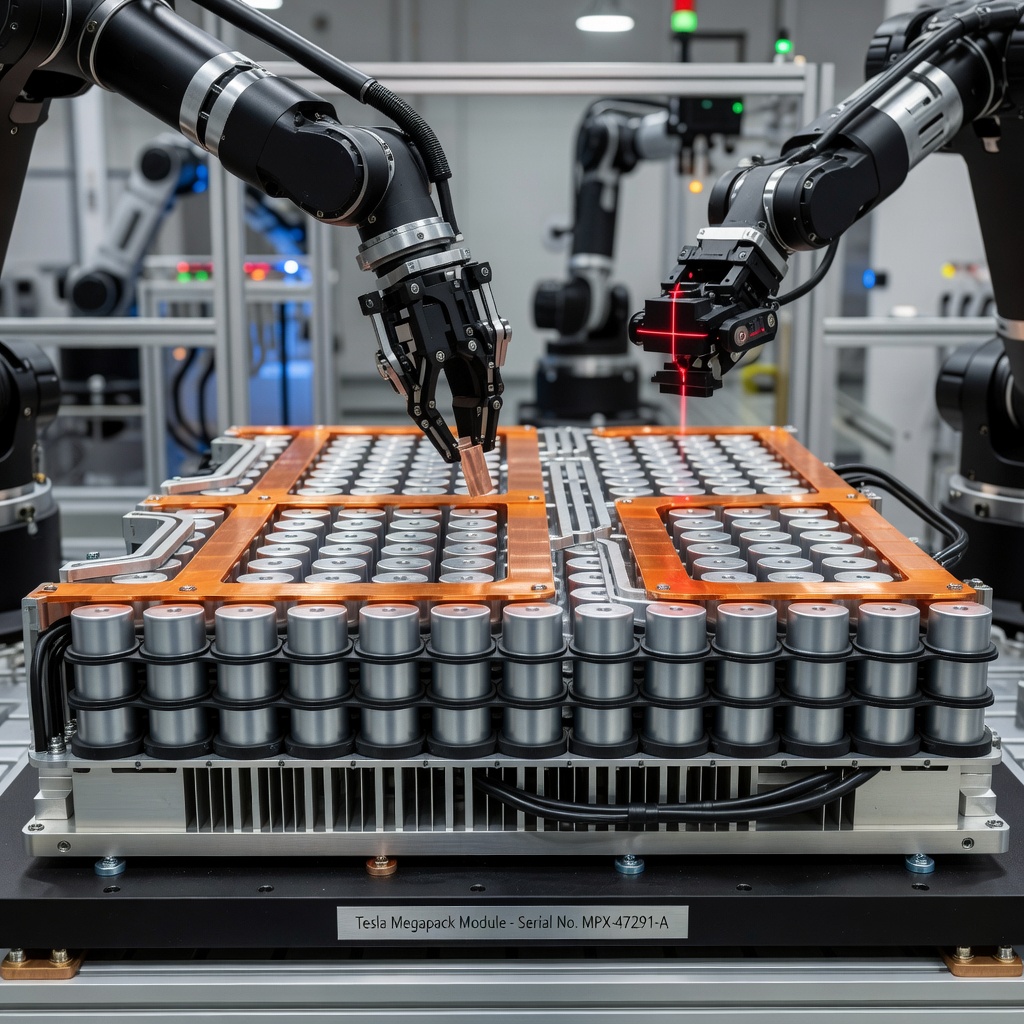
One engineering philosophy that has gained traction inside these teams is what practitioners informally call "grid empathy" -- the design discipline of building storage systems that do not merely respond to grid signals but anticipate them. Predictive dispatch algorithms trained on weather forecasts, historical load curves, and real-time pricing data allow Megapack installations to pre-charge before a heatwave peak or hold reserves ahead of a predicted solar ramp-down. The humans who build these algorithms sit at a crossroads of atmospheric science, machine learning, and power systems theory, a combination of disciplines that barely existed as a coherent career path a decade ago.
The Solar Side of the Equation
Paired with storage, utility-scale solar has become the fastest-growing electricity source in human history. But the engineering teams behind large photovoltaic installations are fighting a different set of battles than their battery colleagues. The central challenge is no longer panel efficiency, which has reached mature and highly competitive levels, but rather integration: how do you connect hundreds of megawatts of inherently variable generation to a grid that was designed around predictable, dispatchable power plants?
The answer has drawn in a generation of power electronics engineers whose work sits mostly invisible beneath the gleaming panels. Inverter design teams spend years refining the devices that convert direct current from solar panels into the alternating current the grid demands, while simultaneously managing reactive power, harmonic distortion, and ride-through behavior during voltage sags. When a cloud passes over a large solar field and output drops by 40 percent in thirty seconds, it is the inverter firmware -- crafted by engineers working in close collaboration with transmission system operators -- that determines whether that event causes a flicker on a hospital monitor or passes completely unnoticed.
Some of the most consequential work in this space is happening at the intersection of solar and storage co-location. Projects that pair large photovoltaic arrays with Megapack installations require teams from both disciplines to develop unified control strategies. The resulting hybrid systems can do something neither asset can accomplish alone: deliver firm, scheduled power that behaves, from the grid's perspective, almost identically to a traditional gas turbine plant, except that it produces zero emissions and has no fuel cost.
Virtual Power Plants and the Human Network
Perhaps the most sociologically interesting corner of the energy transition belongs to the teams building virtual power plants. If Megapack engineers work at the scale of steel and industrial chemistry, VPP architects work at the scale of human behavior. Their raw material is the aggregated flexibility of millions of individual devices: rooftop solar inverters, home battery systems, electric vehicle chargers, smart water heaters, and climate control systems enrolled by homeowners who have agreed to let algorithms occasionally nudge their energy consumption.
"We are not building a power plant. We are building a relationship between a grid operator and ten thousand living rooms."
That sentiment, expressed informally by a VPP program manager at a major California utility, captures why this work requires a skill set that power engineering schools have historically not taught. The engineers who design enrollment platforms must think like product designers. The data scientists who model aggregate dispatch capacity must account for human unpredictability in ways that turbine operators never had to. And the grid integration specialists who broker agreements with independent system operators must speak the arcane language of balancing authority markets while also explaining the system to a homeowner in plain English.
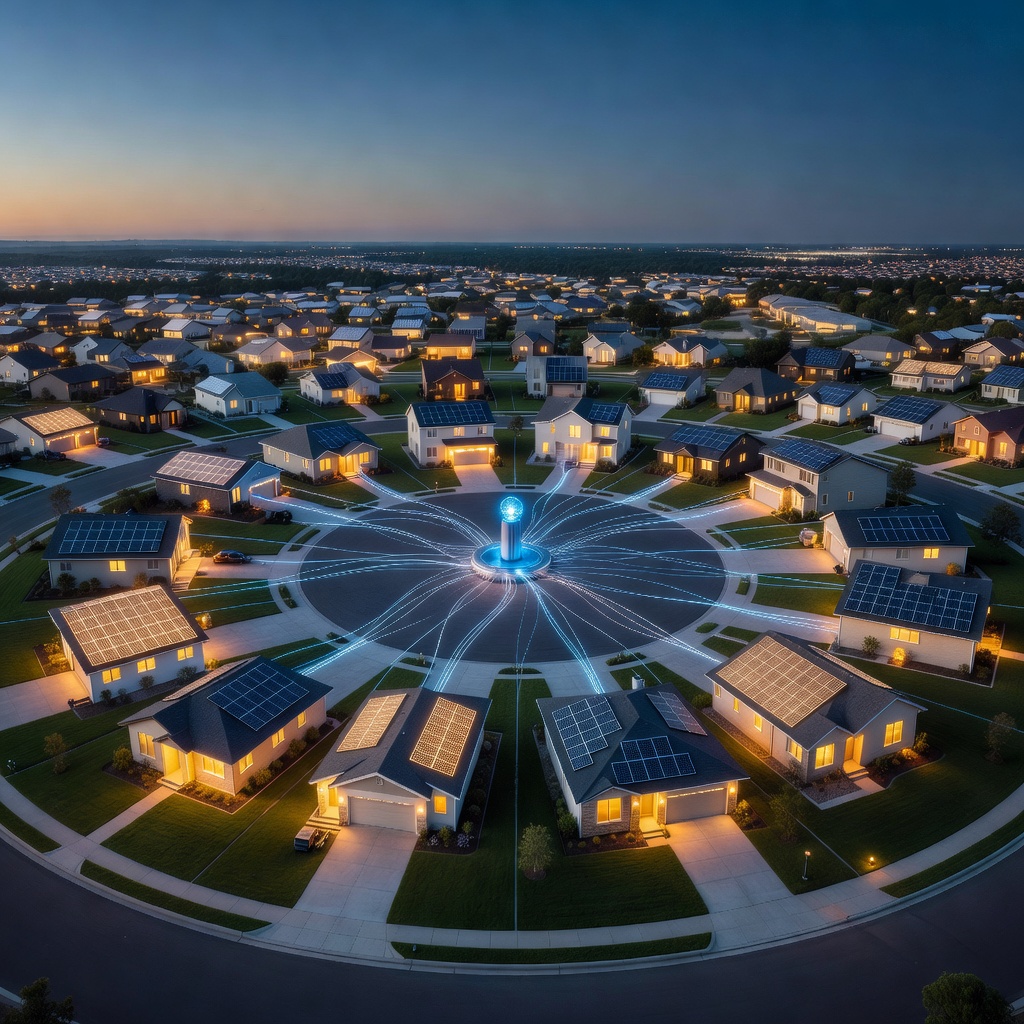
Tesla's own Powerwall Virtual Power Plant programs, active across multiple US states and notably in South Australia where the world's largest residential VPP has operated since 2018, have served as a proving ground for these cross-disciplinary teams. The South Australia project alone has enrolled thousands of homes, and the engineering insights generated by managing that distributed fleet in real-world conditions have fed directly back into product development cycles for both the Powerwall hardware and the Autobidder software platform that manages commercial and utility-scale storage portfolios.
The Next Problem on the Whiteboard
Ask any of the engineers working across these domains what keeps them occupied and the answers converge on a handful of persistent challenges. Long-duration storage remains an unsolved problem at commercial scale: lithium-based systems are economical for two to four hours of storage, but the grid increasingly needs assets that can store and dispatch energy across twelve, twenty-four, or even seventy-two hour windows to manage multi-day weather events. Iron-air batteries, compressed air systems, and gravity-based storage are all attracting serious engineering talent, though none has yet achieved the cost and reliability profile that lithium iron phosphate delivers in the two-to-four hour window.
Transmission bottlenecks present another frontier. Even the most sophisticated storage and solar portfolios are constrained by aging and insufficient transmission infrastructure. A growing cohort of engineers is applying optimization algorithms to squeeze more capacity out of existing transmission lines through dynamic thermal ratings, while a separate community advocates vigorously for accelerated permitting and construction of new high-voltage corridors. The irony that some of the cleanest energy projects in history are stalled by decades-old bureaucratic processes is not lost on the people who navigate them daily.
Grid-forming inverter technology, which allows battery storage and solar systems to actively establish voltage and frequency on sections of the grid rather than merely following signals set by large spinning generators, is another area of intense development. As conventional thermal generation retires, grids lose the inertia that has historically made them self-stabilizing. The engineers developing grid-forming controls are, in a very literal sense, teaching software to mimic the physics of a spinning turbine, and the stakes of getting it right cannot be overstated.
What They Are Really Building
Elon Musk has described Tesla's energy business as potentially larger than its automotive business over the long term, a projection that sounds ambitious until you map the scale of global electricity infrastructure against the pace at which storage deployment is accelerating. Megapack shipments have grown dramatically year over year, and the pipeline of contracted projects stretches years into the future. The engineers executing this vision are not building products. They are building infrastructure at a civilizational scale, the kind of work that will still be running, cycling, and dispatching energy decades after the people who designed it have retired.
There is something almost paradoxical about the anonymity of these contributors. The grid, when it works perfectly, is invisible. No one calls their utility to report that the lights stayed on. No news alert arrives to announce that a Megapack cluster in Texas absorbed a grid disturbance so cleanly that three million households never felt a thing. The engineers who make that invisibility possible have built careers around a success metric that looks, from the outside, like nothing at all. And yet the architecture they are assembling, brick by electrochemical brick, algorithm by algorithm, neighborhood by neighborhood, is the most consequential infrastructure project of the twenty-first century. The lights staying on, everywhere, for everyone, powered by sunlight and managed by software, is the whole point. And the people making it happen are just getting started.