
Why Elon Musk Does What He Does: The Civilizational Wager Hiding in Plain Sight
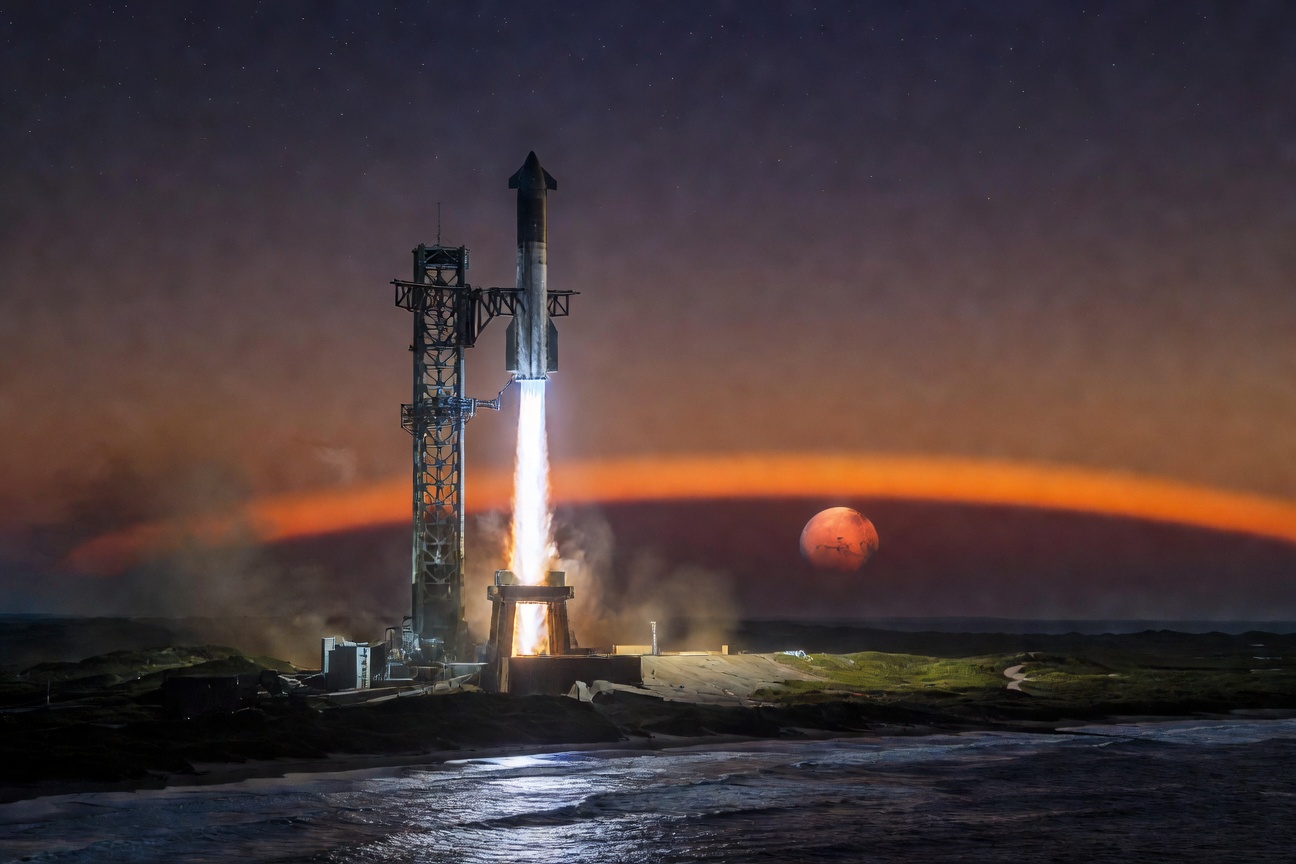
Somewhere between the spectacle of a booster the size of a skyscraper catching itself on robotic arms and the quiet hum of a Tesla navigating rain-slicked streets at midnight, there is a question most people forget to ask: not what Elon Musk is doing, but why. The answer, when you trace it carefully across every venture he has funded, built, and relentlessly iterated on, is both simpler and more unsettling than most observers admit. He believes — with the conviction of someone who has done the math and found the result frightening — that without deliberate, engineered intervention, the long-term odds for human civilization are not good. And he has decided, with characteristic immodesty, to do something about it.
The Threat Model That Built an Empire
Most tech founders optimize for market share. Musk optimizes for what he has called "existential risk reduction" — a phrase that sounds abstract until you map it to his actual portfolio. SpaceX exists because a single-planet species is, in his framing, a single point of failure. Tesla and its energy division exist because fossil fuel dependency is a slow-motion catastrophe that markets alone will not solve fast enough. xAI exists because artificial intelligence developed without a commitment to truth-seeking and transparency could become the most destabilizing force in human history. Neuralink exists because the cognitive bandwidth between humans and the machines they are building is becoming a civilizational bottleneck. Each company is not a business bet. Each is a hedge against a specific category of existential or civilizational failure.
That framing changes how you read the news. When SpaceX conducted its seventh Starship integrated flight test in 2025, achieving new milestones in heat shield performance and booster reusability, the story was not just about rocket engineering. It was about the iterative compression of a timeline that Musk has publicly set at roughly twenty years to achieve a self-sustaining city on Mars. Each test that ends in data rather than debris shortens that window. Each shortening is, in his worldview, a small but measurable reduction in the probability that a pandemic, an asteroid, a war, or a slow civilizational decay takes humanity down to zero before it learns to back itself up.
Starship and the Weight of "Why"
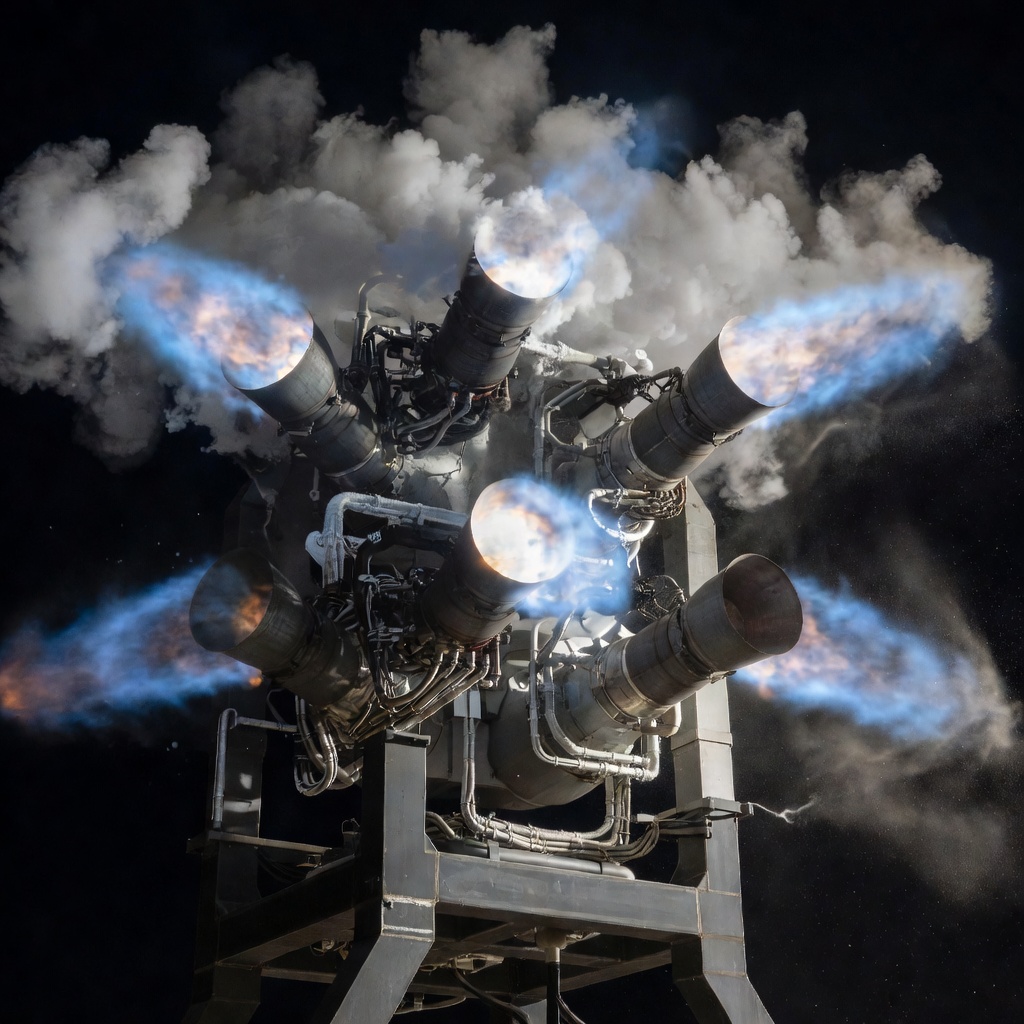
It is worth sitting with the engineering ambition for a moment, because it is genuinely staggering. Starship is designed to be fully and rapidly reusable, to carry one hundred or more passengers on interplanetary trajectories, and to be refueled in orbit using a fleet of tanker vehicles. The heat shield alone involves thousands of ceramic hexagonal tiles that must survive entry temperatures exceeding 1,400 degrees Celsius. The engines, the Raptor series, burn methane and liquid oxygen in a full-flow staged combustion cycle that was considered near-impossible to build reliably just a decade ago. SpaceX is now manufacturing them at a rate that would have seemed like science fiction to the engineers who wrote the original feasibility studies.
The hurdles, however, remain formidable. Orbital refueling at scale has never been demonstrated. Long-duration human spaceflight still carries radiation exposure risks that have no cheap engineering solution. The life support, agriculture, and resource extraction systems required for a genuinely self-sustaining Martian settlement are not even in prototype stages. Musk knows this. His teams know this. The honest version of the Starship story is not "we are going to Mars" but rather "we are systematically eliminating the reasons why going to Mars was previously impossible, one terrifyingly expensive test flight at a time." That distinction matters. It is what separates inspiration from delusion.
Tesla's Quiet Revolution and Its Unfinished Business
While Starship commands the imagination, Tesla's contribution to Musk's civilizational thesis may ultimately prove more immediately consequential. The global energy transition is not a metaphor. It is an engineering and logistics problem of almost incomprehensible scale, and Tesla has positioned itself at the intersection of three of its most critical components: vehicle electrification, grid-scale energy storage, and autonomous transportation efficiency.
The Full Self-Driving system, now rebranded under the Autopilot AI umbrella and trained on an enormous fleet-generated dataset, is approaching a capability threshold that, if crossed, would reshape urban planning, reduce traffic fatalities, and dramatically increase the utilization efficiency of the existing vehicle fleet. Musk has stated that the robotaxi rollout, beginning in limited markets, will expand aggressively through 2025 and 2026. The Megapack energy storage business is scaling to meet demand from utilities building renewable-heavy grids that require buffer storage to remain stable. Neither of these developments is frictionless. Regulatory approval processes for autonomous vehicles move at government speed, not startup speed. Grid infrastructure investment cycles are measured in decades. But the direction of travel is clear, and Tesla has established a technical and data lead that competitors are struggling to close.
Intelligence as Infrastructure: The xAI Gambit
Perhaps the most intellectually provocative of Musk's current moves is xAI, the artificial intelligence company he founded with the stated goal of building AI that is "maximally curious about the universe" rather than optimized purely for user engagement or commercial output. The Grok large language model, now in its third major iteration and integrated across the X platform, is being positioned not just as a product but as a research instrument. Musk has spoken about using AI to accelerate scientific discovery at a pace that human researchers working alone could never achieve — compressing decades of materials science, drug discovery, and physics research into years.
The vision is compelling. The risks are real. AI systems that operate at civilizational scale without robust alignment mechanisms could amplify existing societal fractures rather than heal them. Musk has been vocal about this tension, arguing that his approach of building a "truth-seeking" AI is itself a safety strategy. Critics, including former colleagues, dispute whether the architecture choices at xAI reflect that commitment in practice. This is a debate worth having loudly and publicly, because the stakes are not commercial. They are structural.
Neuralink and the Symbiosis Question
Neuralink occupies a peculiar place in Musk's portfolio. Its near-term clinical mission is clear and genuinely moving: restoring communication and motor function to people with paralysis. The early human trials have produced results that, even when assessed conservatively, represent a meaningful advance in neural interface technology. A patient unable to speak or move has, using the implant, controlled a computer cursor with thought alone. That is not hype. That is a working prototype of something that did not exist before.
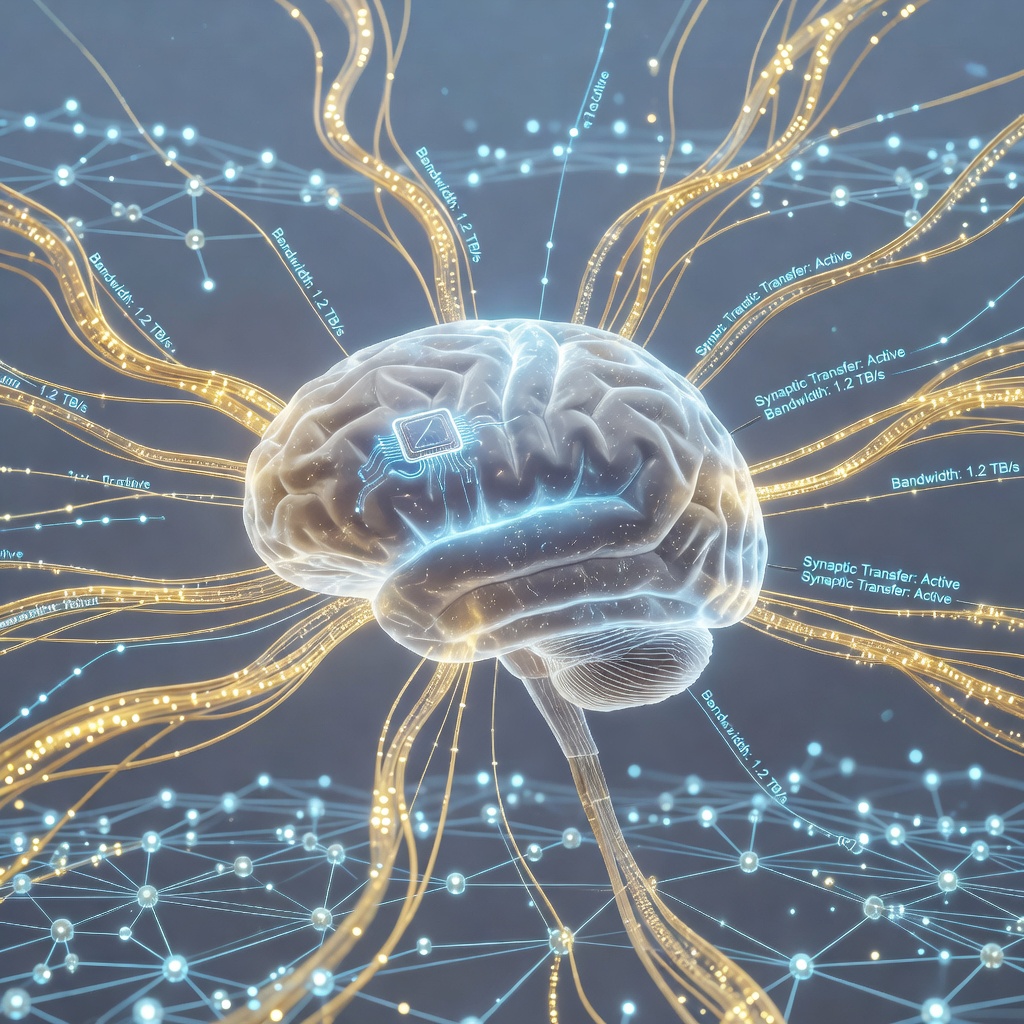
The longer arc of the technology, however, points toward a more disruptive horizon. Musk has spoken openly about a future in which the bandwidth between human cognition and AI systems is increased by orders of magnitude, creating a form of augmented intelligence that could allow humans to remain meaningful participants in a world increasingly shaped by machine intelligence. Whether that future is desirable, achievable, or ethically navigable is a conversation that society is only beginning to have. Neuralink's progress will force that conversation to become urgent faster than most people expect.
The Cost of Thinking This Big
None of this is free, and not merely in financial terms. The organizational intensity required to simultaneously push the frontiers of rocketry, autonomous vehicles, artificial intelligence, and neuroscience generates friction. Deadlines slip. Employees burn out. Public promises outpace delivery timelines. These are not trivial criticisms, and they deserve honest acknowledgment rather than dismissal as the inevitable cost of greatness. The engineering teams inside these companies are producing extraordinary work. They deserve management structures and cultural environments that sustain their output over the long haul, not just through heroic sprints.
And yet. When you step back and look at what has actually been built, tested, and shipped in the last five years across SpaceX, Tesla, xAI, and Neuralink, the aggregate is remarkable by any historical measure. The first orbital-class fully reusable rocket is no longer theoretical. The global EV market has been fundamentally restructured. A large language model trained with different philosophical priorities is in the hands of hundreds of millions of users. A paralyzed human being moved a cursor with their mind. These are not press releases. They are data points in a trajectory.
The Wager, Plainly Stated
Elon Musk's underlying bet is this: that the window in which humanity has both the technological capability and the societal stability to make itself multi-planetary, to decarbonize its energy systems, to navigate the AI transition safely, and to augment rather than replace human cognition is finite and not guaranteed to remain open. He believes that moving fast, accepting failure as data, and funding the hard problems that no quarterly earnings cycle would otherwise justify is not recklessness. It is the only rational response to the timeline he sees.
You do not have to agree with every decision he makes, every political position he holds, or every management choice that shapes life inside his companies, to recognize that the civilizational problems he has chosen to work on are real, that the engineering progress is measurable, and that the why behind the work is, at its core, worth taking seriously. The question humanity is really being asked, watching all of this unfold, is not whether Musk will succeed. It is whether the problems he is trying to solve matter enough for the rest of us to engage with them just as urgently, regardless of who leads the charge.
"The first step is to establish that something is possible; then probability will occur." The engineering logs of every SpaceX test flight are, in their way, a running argument that this sentence is not philosophy. It is method.
George Russell
Tech journalist covering Elon Musk’s companies for over 10 years.