
Musk in Motion: The Executive Briefing on Where the World's Most Consequential Technologist Stands Right Now
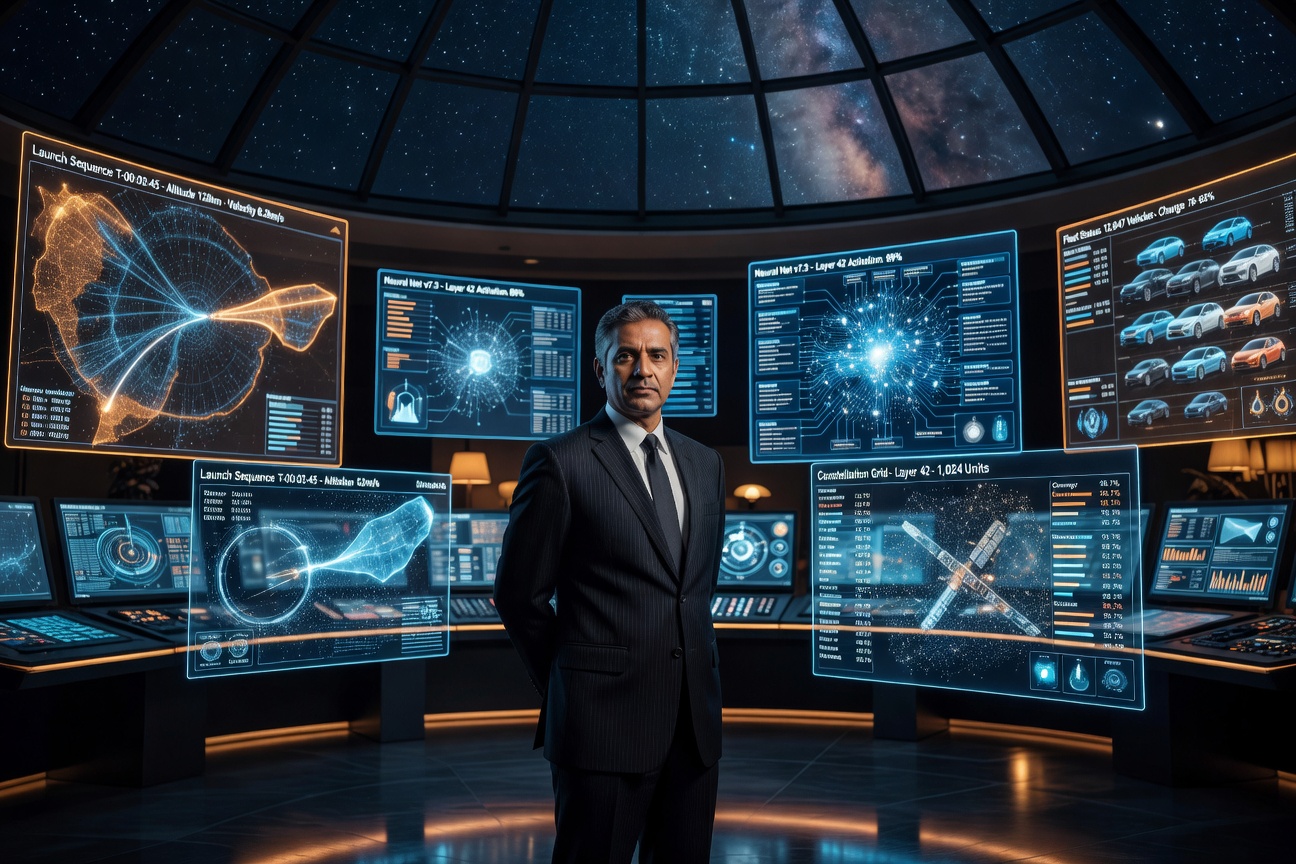
If you have only three minutes, here is what matters: Elon Musk is simultaneously accelerating across more high-stakes technological fronts than any single organization has ever attempted, and the velocity is increasing, not plateauing. Starship is moving toward operational flight frequency. Grok, the AI model born inside xAI, is gaining users and capability at a pace that is rattling established players at OpenAI and Google. Tesla's Full Self-Driving software stack is inching closer to a regulatory approval threshold that could unlock a robotaxi network overnight. And X, the platform formerly known as Twitter, is being quietly repositioned as the financial and communications backbone for all of it. The noise is loud. The signal is louder.
The second thing to understand is context. Musk's advisory role within the U.S. government, specifically his stewardship of the Department of Government Efficiency initiative widely known as DOGE, has reshuffled his public profile in ways that are still reverberating. His political proximity to Washington has generated friction with some of his own consumer bases in Europe and coastal America, yet his companies' fundamental metrics remain largely insulated from the reputational turbulence. Tesla deliveries, Starlink subscriber numbers, and xAI's funding rounds have not buckled. That resilience is itself a data point worth studying.
Third, and most strategically significant: the interconnections between Musk's ventures are hardening into something that looks less like a portfolio and more like a unified operating system for the future. Starlink provides the connectivity backbone. Tesla's energy division stores the power. xAI's Grok processes the intelligence layer. X distributes the narrative. Neuralink sits at the human interface. SpaceX handles the escape valve. Understanding any one of these in isolation is, increasingly, a mistake. What follows is the deeper analysis.
Starship's Operational Pivot: From Spectacle to Infrastructure
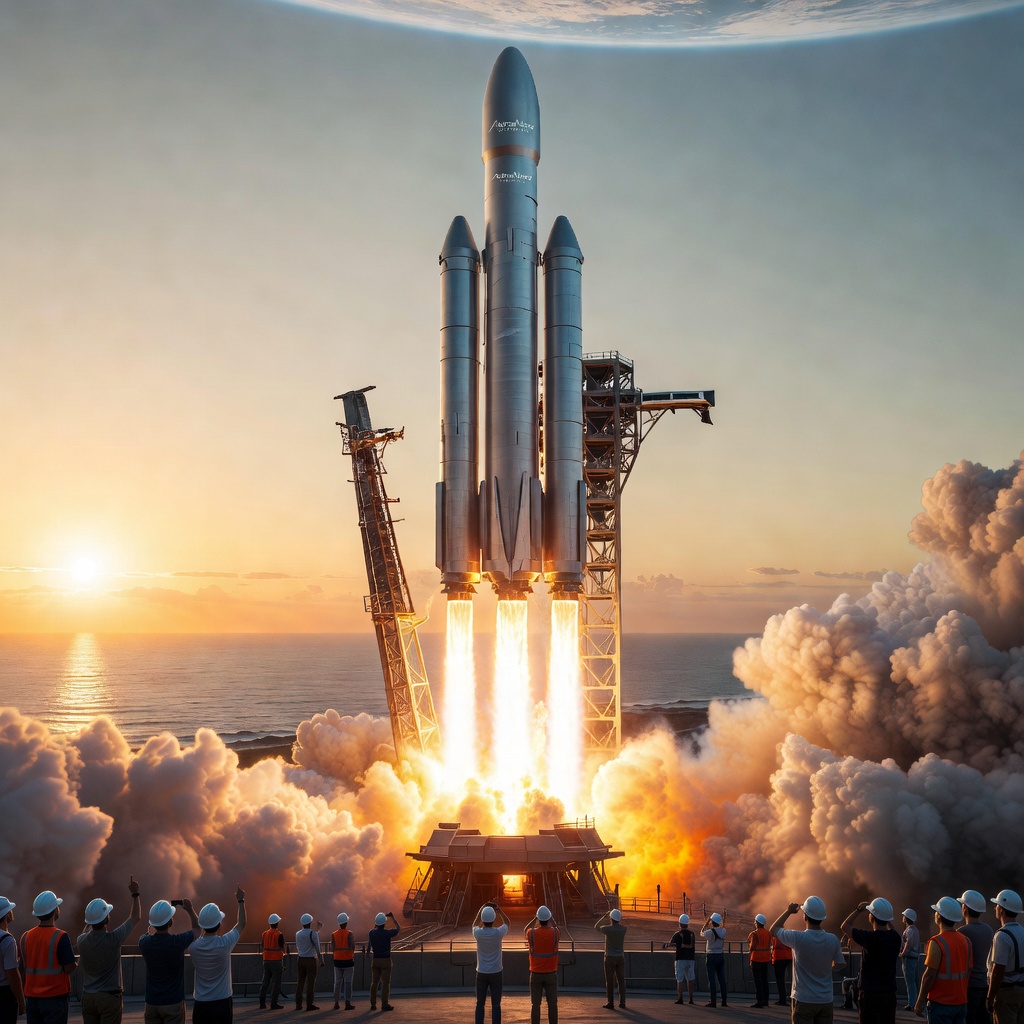
SpaceX's Starship program has graduated from being a demonstration of audacity to functioning as an active infrastructure project. With multiple integrated flight tests now behind it and a launch cadence that SpaceX intends to dramatically compress, the vehicle is being treated internally less like a prototype and more like a production asset in its final tuning phase. Musk has been explicit in recent communications that Starship's primary near-term commercial purpose is not Mars, at least not yet. It is Starlink. The ability to deploy next-generation Starlink satellites in massive batches per launch fundamentally changes the economics of the constellation, allowing coverage density and latency improvements that would take years longer using Falcon 9 alone.
The longer arc remains Mars colonization, and Musk has sharpened his public framing around this with notable urgency in recent months. In interviews and on X, he has returned repeatedly to the idea that humanity needs a self-sustaining multi-planetary presence before some undefined civilizational risk window closes. Whether one reads that as visionary strategy or theatrical urgency, the engineering decisions being made inside SpaceX reflect genuine commitment: Starship's payload capacity, its full reusability design, and its in-orbit refueling architecture make no economic sense unless Mars is the actual destination.
Grok and the AI Arms Race: xAI's Unexpected Momentum
When Musk launched xAI and introduced Grok as its flagship model, the initial reaction from the AI research community was skeptical. The company was late to a crowded field, building on talent poached from established labs, and its integration with X felt more like a distribution shortcut than a product strategy. That skepticism is aging poorly. Grok's most recent iterations have demonstrated benchmark performance that is genuinely competitive, and the model's integration across X's massive user base has given xAI a real-world data feedback loop that most competitors cannot replicate at equivalent scale.
Musk has been vocal about what he sees as the philosophical failures of competing AI labs, particularly around what he characterizes as politically constrained training regimes. He frames Grok as a "truth-maximizing" model, one trained to engage with uncomfortable or contested questions rather than deflect them. That positioning is controversial and has attracted both enthusiastic adopters and pointed critics, but it is also a clear product differentiation strategy in a market where every major model is under scrutiny for perceived ideological bias. Whether Grok's approach proves sustainable or provokes regulatory attention remains an open question, but xAI's infrastructure investment, including a Memphis supercomputing cluster built with extraordinary speed, signals that Musk is not treating this as a side project.
"The thing that keeps me up at night is not competition. It is building something that is genuinely good for humanity and not accidentally creating the thing that ends it."
Tesla's Inflection Point: Autonomy or Atrophy
Tesla finds itself at one of the most pivotal junctures in its history. The electric vehicle market, which the company effectively created for the mass consumer segment, has become genuinely competitive. Legacy automakers and aggressive Chinese manufacturers are eroding Tesla's market share in ways that would have seemed implausible three years ago. The company's response, under Musk's direction, has not been to double down on hardware differentiation. It has been to bet the table on software, specifically on Full Self-Driving and the robotaxi model it enables.
The strategic logic is clean: if FSD achieves regulatory approval and public trust, every Tesla on the road becomes a potential revenue-generating asset operating autonomously. The hardware margins that have compressed under EV competition become less relevant because the software margin is theoretically enormous. Musk has been projecting robotaxi deployment timelines with his characteristic optimism, which has historically meant reality arrives later than promised but does eventually arrive. The critical variable now is not engineering capability but regulatory cadence, and the current U.S. regulatory environment, partly shaped by the administration Musk has been advising, appears more favorably disposed toward autonomous vehicle approvals than at any previous point.
X as Infrastructure: The Underestimated Pivot
Most analysis of X focuses on its chaotic post-acquisition period: the advertiser exodus, the content moderation controversies, the staff reductions, the ongoing brand confusion. That framing misses what Musk has been quietly building underneath the turbulence. X is being architected as an "everything app" in the model of WeChat, with payments infrastructure, long-form content, live audio and video, and eventually, according to Musk's own stated vision, a comprehensive financial services layer that would allow users to store and transfer money without traditional banking intermediaries.
The payments component, X Money, is already in early deployment. If it scales, X stops being a social media platform with a complicated history and becomes a financial utility with a social layer. That is a fundamentally different asset class, and it would transform the acquisition's economics retroactively. The integration with Grok, which is now embedded across the X experience, means the platform also functions as a live AI interface for hundreds of millions of users, generating proprietary behavioral data that feeds back into xAI's training pipelines. The flywheel, once spinning, is difficult to interrupt.
The DOGE Chapter: Political Capital and Its Costs
Musk's involvement with the Department of Government Efficiency has been the most polarizing chapter of his recent public life. Depending on one's vantage point, it represents either a genuine effort to excise bureaucratic inefficiency from a bloated federal apparatus, or an alarming consolidation of private-sector influence over public institutions. What is empirically true is that DOGE has accelerated conversations about federal spending and workforce structure that had been politically untouchable for decades, regardless of whether every specific cut proves defensible.
The cost to Musk personally, in terms of public perception, has been measurable. European Tesla sales data in early 2025 showed softening correlated with political backlash, and several corporate partners have navigated their associations with him more carefully. Yet Musk appears to have calculated that the long-term benefits, including regulatory goodwill for SpaceX launches, autonomous vehicle approvals, and Neuralink's clinical expansion, outweigh the reputational friction. It is a bet that assumes policy access compounds over time in ways that consumer sentiment does not. History will adjudicate that wager.
What the Signals Actually Mean
Step back from any single headline and the pattern becomes visible. Every major Musk initiative is at an inflection point simultaneously. That is not coincidence; it reflects a decade-long investment cycle that is now maturing across multiple fronts at once. Starship is crossing from development to deployment. FSD is crossing from capability to approval. Grok is crossing from novelty to competition. X is crossing from media platform to financial infrastructure. Neuralink is crossing from laboratory to clinical reality, with its first human patients already demonstrating results that would have been classified as science fiction a decade ago.
The strategic implication for observers, whether investors, policymakers, competitors, or simply curious technologists, is that the next 18 to 24 months represent a compression zone. Multiple bets are resolving simultaneously. The outcomes will not be uniformly positive; some timelines will slip, some regulatory barriers will hold, some products will underperform their ambitions. But the aggregate probability that nothing significant changes is essentially zero. Musk himself, in characteristically blunt terms, has framed this period as the point at which the theories either prove out or they do not. The executive summary is this: they are proving out faster than most people expected, and slower than Musk promised. That middle ground is where history is being made.
George Russell
Tech journalist covering Elon Musk’s companies for over 10 years.