The Inconvenient Math Behind SpaceX's Grand Vision: Why the Numbers Don't Quite Add Up Yet
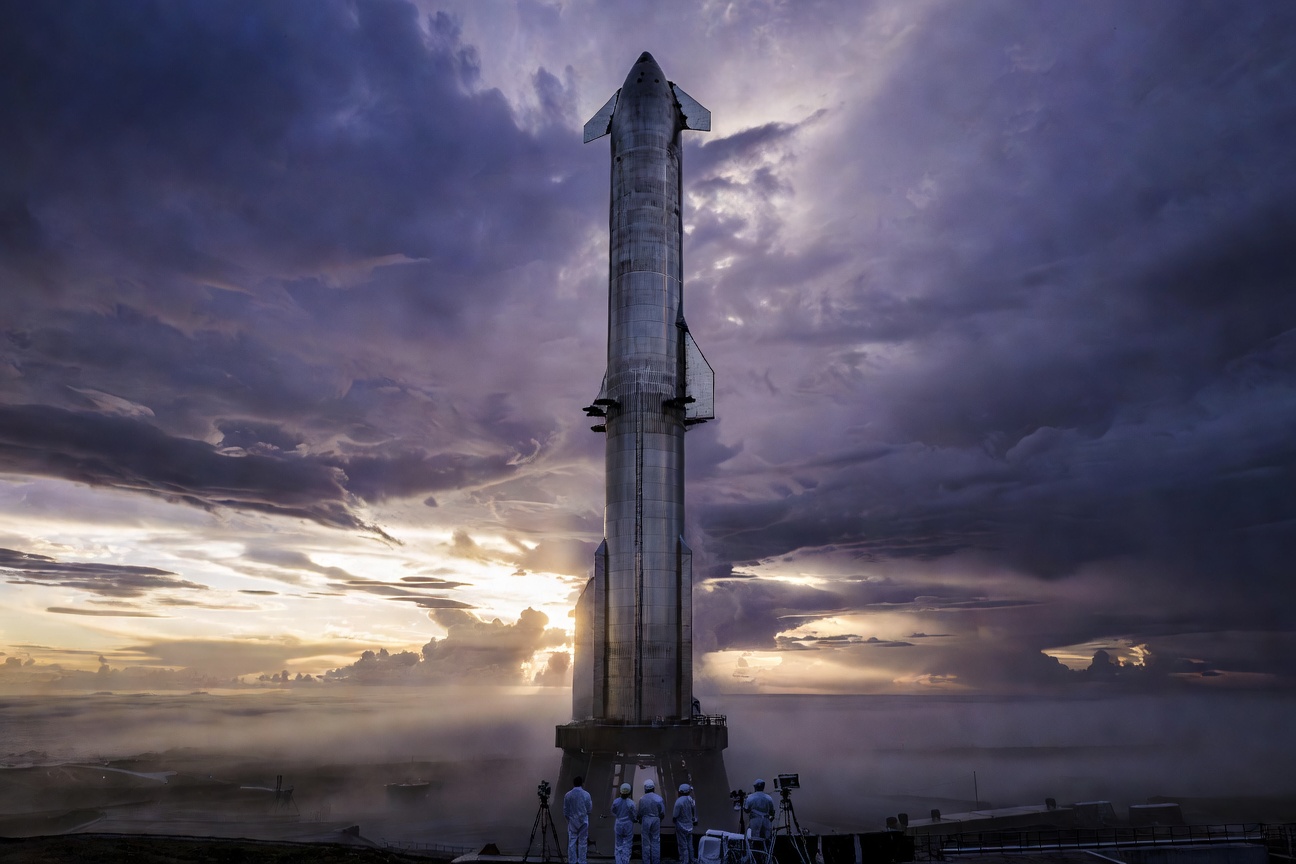
Everybody loves a rocket. The fire, the thunder, the almost theological sense that humanity is reaching beyond itself into something vast and indifferent. SpaceX has become extraordinarily good at producing that feeling, and at producing actual rockets, which is far harder. But somewhere between the genuine engineering achievement and the breathless commentary, a set of critical technical assumptions has gone almost entirely unexamined. The math that underlies SpaceX's most audacious programs, from Starship's reusability claims to Starlink's capacity ceiling to the sheer biological absurdity of sending humans to Mars, deserves more skepticism than it typically receives, not because failure is inevitable, but because uncritical enthusiasm is the enemy of real progress.
Reusability Is Not a Binary Condition
The word "reusable" has done enormous rhetorical work in the SpaceX narrative, and it is worth pausing to interrogate what it actually means in an operational context. Falcon 9's first-stage recovery is a genuine, world-altering accomplishment. Booster 1067 has flown more than twenty times, which represents a staggering engineering achievement. But Starship, SpaceX's next-generation vehicle, is pitching something categorically more ambitious: a fully reusable system where both the Super Heavy booster and the upper stage Ship return, are refurbished in hours rather than weeks, and fly again at a cost SpaceX has loosely pegged at under ten million dollars per launch.
Here is where the contrarian view becomes uncomfortable. The thermal protection system on Ship's belly, a mosaic of hexagonal ceramic tiles, has already proven brittle in ways that surprised even SpaceX engineers. Each tile is a bespoke heat shield that must endure reentry temperatures exceeding 1,400 degrees Celsius, mechanical vibration during ascent, and acoustic loads that would shatter most materials. Replacing even a fraction of those tiles between flights consumes man-hours that do not fit neatly into a forty-eight-hour turnaround narrative. The honest benchmark is not whether Starship can survive a single reentry. It is whether the vehicle can complete fifty flights in a calendar year with economically viable refurbishment costs. That number has never been demonstrated, and it cannot simply be assumed.
"Reusability" is one of the most load-bearing words in the commercial space industry, yet the term is applied with a looseness that would embarrass an accountant or a structural engineer in almost any other field.
Starlink's Ceiling Is Closer Than It Appears
Starlink now operates more than six thousand active satellites and serves several million subscribers globally, numbers that represent a legitimate commercial triumph. SpaceX has licensed shells up to roughly 12,000 satellites under current FCC approvals, with filings suggesting eventual constellations approaching 42,000 spacecraft. The prevailing narrative treats this as a straightforward scaling exercise. It is not.

Radio frequency spectrum is a finite physical resource governed by the laws of electromagnetism, not by corporate ambition. The Ka and Ku bands that Starlink predominantly uses are increasingly contested by OneWeb, Amazon's Project Kuiper, Telesat Lightspeed, and a growing roster of national operators. ITU coordination processes are not bureaucratic foot-dragging; they exist because simultaneous transmissions across overlapping orbital shells produce interference that degrades service for everyone. SpaceX has applied for V-band operations to add capacity, but V-band signals attenuate severely in rain, the very atmospheric condition in which rural and maritime users most desperately need reliable connectivity.
Then there is the orbital debris question, which is neither hypothetical nor politically motivated. At low Earth orbit altitudes between 340 and 560 kilometers, Starlink satellites have an operational lifespan of roughly five years before atmospheric drag deorbits them naturally. That sounds benign until you calculate the replacement cadence required to sustain a 40,000-satellite constellation indefinitely. SpaceX would need to launch approximately 8,000 replacement satellites annually, a figure that strains even Starship's projected capacity. The Kessler cascade, the self-perpetuating chain reaction of collision debris generating more debris, is not science fiction. It is a documented risk that grows nonlinearly with constellation density, and the mitigation hardware on current Starlink satellites, while functional, is not infallible.
Artemis and the Starship HLS Paradox
SpaceX won NASA's Human Landing System contract for the Artemis program, a selection that was genuinely surprising to many industry observers and triggered protests from Blue Origin that were ultimately unsuccessful. The Starship HLS architecture is elegant on a whiteboard: a dedicated lunar variant of Starship, launched into low Earth orbit, refueled via multiple tanker flights, then dispatched to the lunar surface where it operates as a standalone lander. The elegance evaporates when you count the tanker flights.
SpaceX's own early estimates suggested somewhere between eight and sixteen propellant transfer flights per lunar mission, each requiring successful orbital rendezvous and cryogenic methane and liquid oxygen transfer in microgravity. Cryogenic fluid transfer in space has never been demonstrated at operational scale. The boil-off rate of liquid methane and especially liquid oxygen in the thermal environment of low Earth orbit is non-trivial. Parking a fully fueled Starship in orbit while waiting for tanker after tanker is not a static situation; it is a dynamic thermodynamic problem with compounding uncertainties. NASA's own internal risk assessments, released in redacted form through public records requests, flagged propellant transfer as a critical path item requiring early flight demonstration. That demonstration program is behind schedule relative to the original Artemis III timeline.
None of this means Starship HLS will fail. It means the architecture is significantly more operationally complex than the public narrative acknowledges, and complexity is where mission risk lives.
Mars Colonization and the Biology Veto
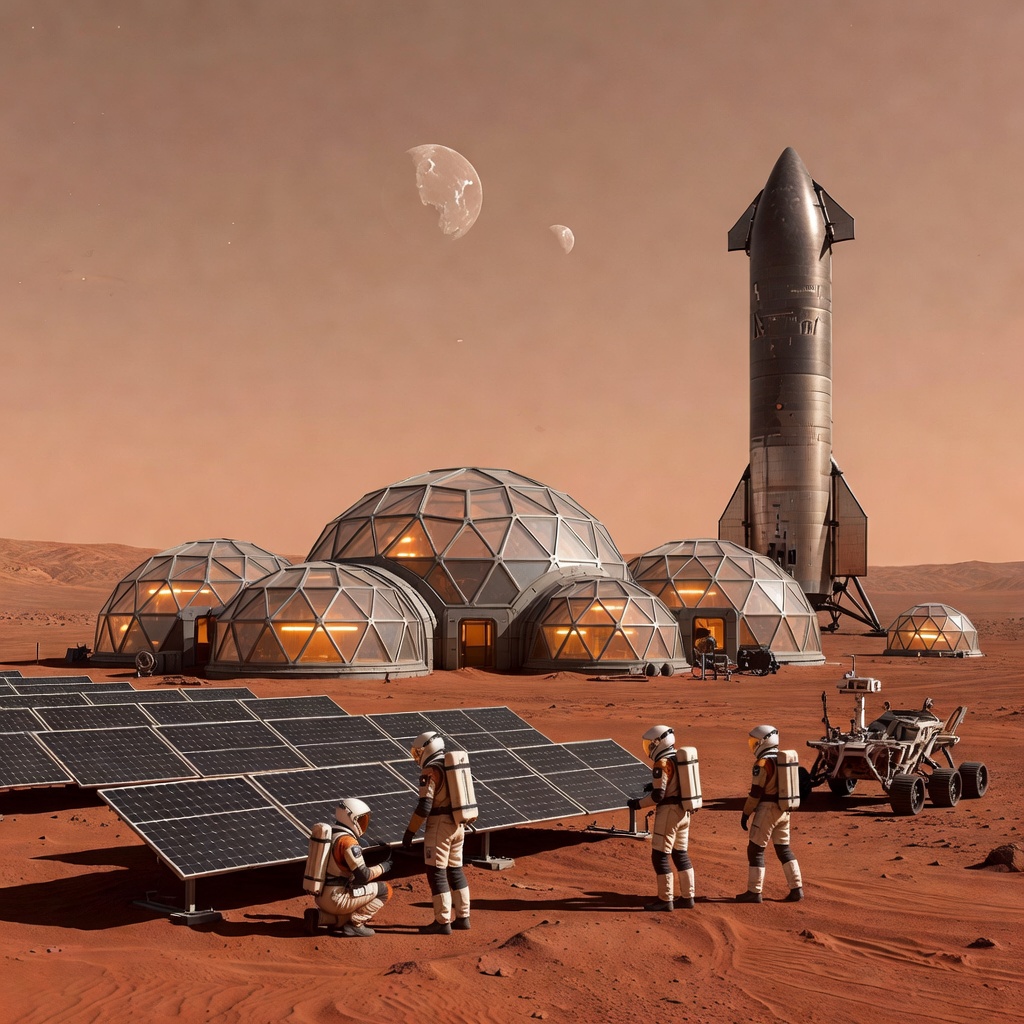
Elon Musk's stated goal is a self-sustaining city of one million people on Mars within this century. The transportation argument, that Starship can reduce the cost per kilogram to Mars to a level that makes mass migration economically conceivable, is actually the strongest part of the proposal. The part that receives far less rigorous scrutiny is what happens to the human body once it arrives.
Mars sits outside Earth's magnetosphere and possesses only a vestigial magnetic field of its own. Galactic cosmic rays and solar energetic particles bombard the Martian surface with an annual radiation dose approximately forty times higher than what an average person receives on Earth, and roughly equivalent to what astronauts aboard the ISS absorb, with far less shielding available at the surface. The epidemiological data from long-duration spaceflight is still limited, but what exists suggests significantly elevated lifetime cancer risk, measurable cognitive impairment from radiation exposure to white matter in the brain, and cardiovascular inflammation that compounds with microgravity-induced fluid redistribution.
The transit itself is a six-to-nine-month one-way journey through deep space, outside the magnetospheric protection that shields ISS occupants from the worst of the radiation environment. Shielding a Starship cabin against galactic cosmic rays to acceptable long-term exposure limits would require meters of water or polyethylene mass that fundamentally conflicts with the vehicle's payload architecture. SpaceX has not published a credible radiation shielding solution for interplanetary transit, because no credible lightweight solution currently exists.
The Uncomfortable Truth About Iterative Progress
None of the above is an argument that SpaceX is failing, or that these problems are unsolvable. The company's track record of solving problems that were declared unsolvable is, at this point, historically documented. The point is precisely the opposite: the culture of uncritical celebration that surrounds SpaceX's announcements actively harms the company and the field it is transforming.
When the prevailing conversation assumes that reusability is solved, that Starlink scaling is straightforward, that Artemis will proceed on schedule, and that Mars colonization is merely a logistics challenge, the engineering teams doing the actual work are deprived of the adversarial intellectual pressure that produces the best outcomes. The greatest single advantage of SpaceX's internal culture is its willingness to declare failure loudly and iterate aggressively. The external conversation should adopt the same discipline.
Starship is arguably the most impressive aerospace engineering project in human history. Starlink is the largest and most commercially successful satellite constellation ever operated. The Artemis partnership represents a genuine strategic bet on commercial spaceflight that NASA's own culture could never have generated internally. And Mars, absurd and lethal as it currently is for human habitation, may one day host a functioning human presence because of the infrastructure SpaceX is building today.
But the gap between "may one day" and "will definitely" is where rigorous engineering lives. That gap deserves more honesty than it currently gets. The numbers are not yet adding up. Acknowledging that is not pessimism. It is the precondition for closing the gap.