
The Last Driver: How Tesla's Converging Technologies Could Make Human Steering a Historical Footnote
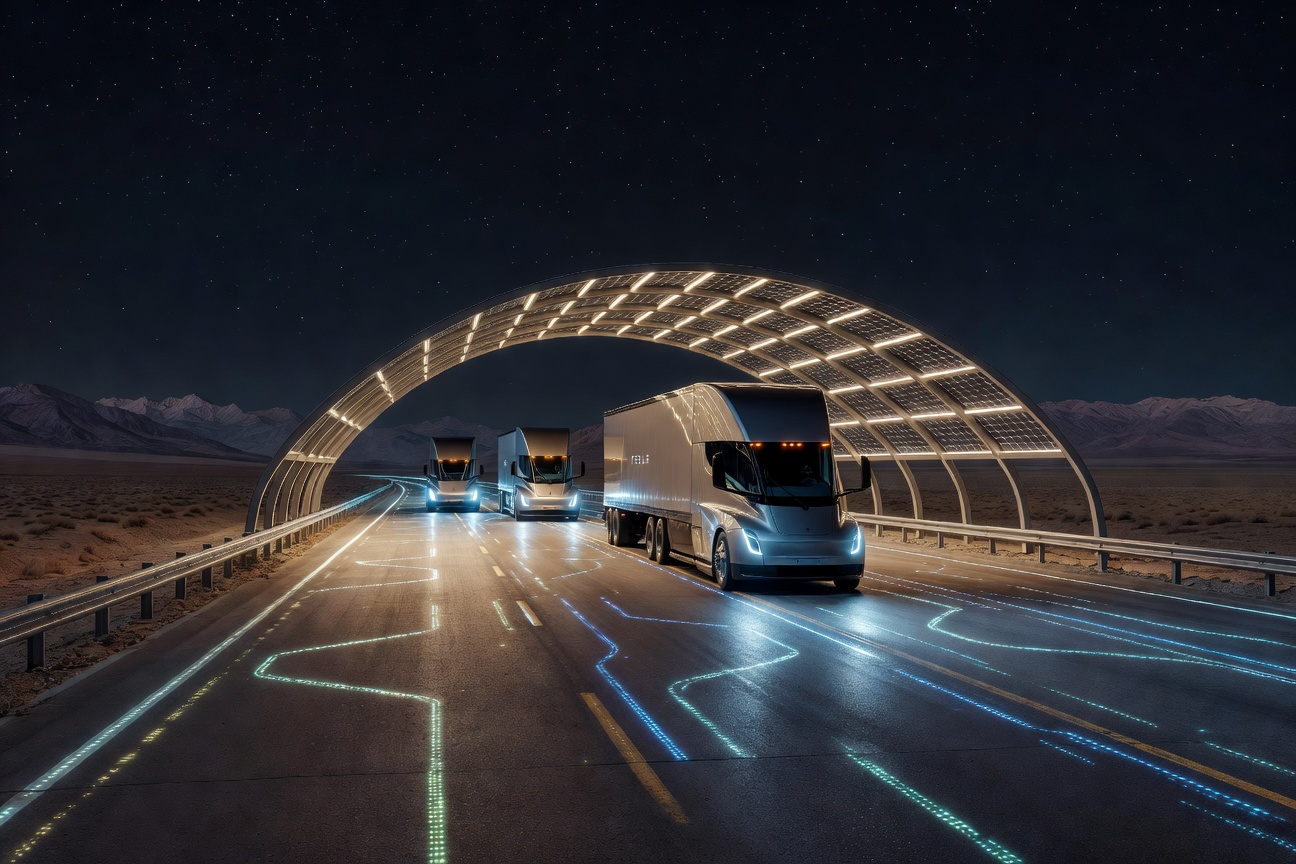
Picture a Tuesday morning in 2031. A fleet of Tesla Semis departs a Gigafactory somewhere in the Nevada high desert before sunrise, their electric motors spinning in near-total silence, their cameras and neural processors reading road conditions fifteen decisions per second. No drivers. No dispatcher. No fuel stop. Just cargo, kilowatts, and an algorithm that has logged more collective road miles than every human trucker alive today combined. It sounds speculative. The uncomfortable truth is that Tesla is not building toward this scenario; it is already assembling its pieces in real time, and the joints are beginning to lock together with remarkable precision.
The question worth asking right now is not whether Tesla can manufacture electric vehicles at scale. That debate is settled. The more provocative, more consequential question is: what happens to transportation, labor, urban planning, and even human identity when the last meaningful reason to put your hands on a steering wheel quietly disappears?
Cybertruck as a Platform, Not a Product
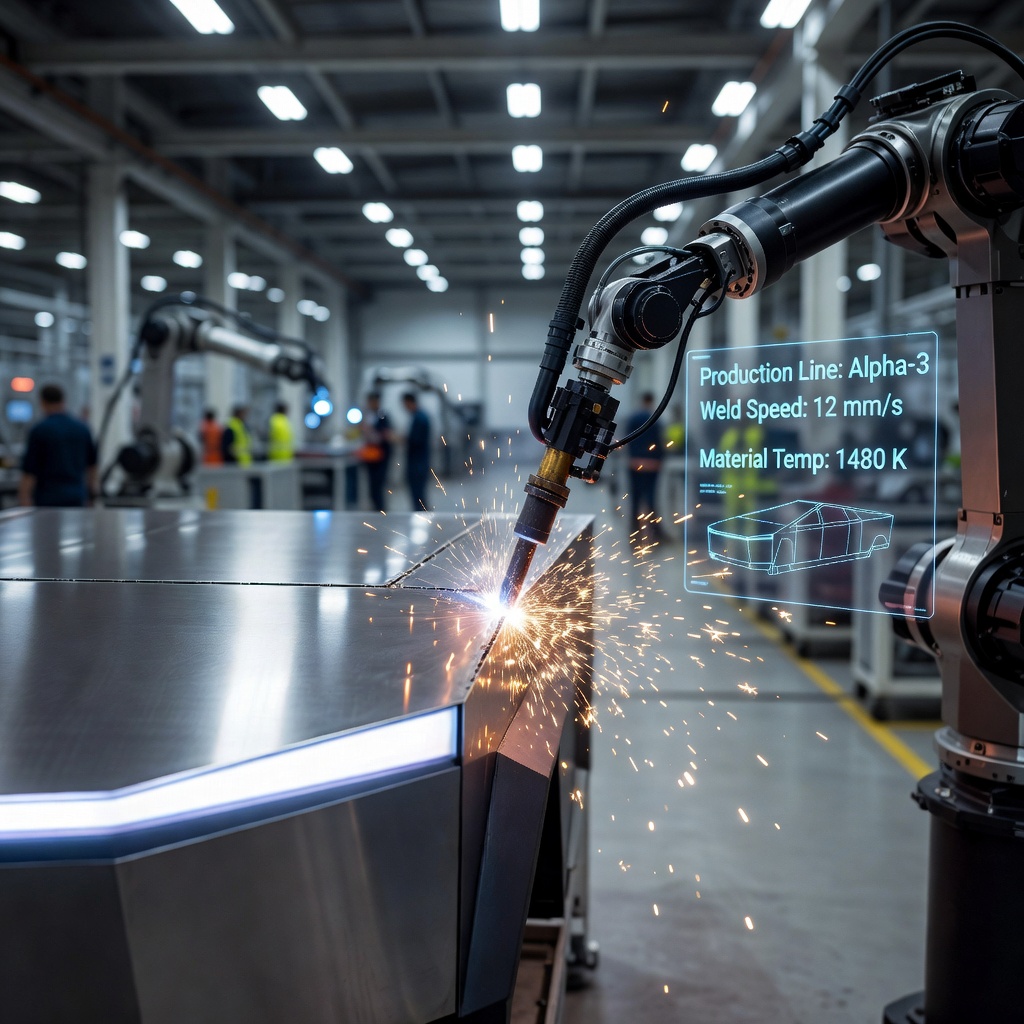
Most analysts still evaluate the Cybertruck as a truck. That framing misses the point almost entirely. With its steer-by-wire architecture, over-the-air software update pipeline, and 48-volt electrical system that effectively turns the vehicle into a rolling power grid, the Cybertruck is better understood as a mobile computing node that happens to carry cargo and passengers. The structural exoskeleton of cold-rolled stainless steel was never primarily about aesthetics; it was about eliminating a traditional stamped-panel production line in favor of something closer to aerospace fabrication, producing a body rigid enough to carry advanced sensor arrays without acoustic or vibrational interference.
Tesla's ongoing refinements to Cybertruck production at Gigafactory Texas have focused heavily on reducing the number of distinct components per unit, a philosophy directly inherited from the structural battery pack design pioneered in the Model Y. Fewer parts mean faster assembly, but they also mean fewer failure nodes for autonomous systems to worry about. Every simplification at the manufacturing layer translates into reliability gains at the autonomy layer. This is not coincidence; it is deliberate systems engineering working forward from a post-human-driver assumption.
When Tesla ships a Cybertruck software update that improves its automatic trailer sway correction or expands its off-road autonomous crawl capability, it is not patching a product. It is training a platform. The hardware was built with headroom; the software is slowly filling that headroom. By the time full unsupervised autonomy is legally permitted in most U.S. states, the Cybertruck's physical architecture will have been waiting patiently for the regulatory environment to catch up.
The Semi's Quiet Revolution in Long-Haul Logistics
If the Cybertruck is the proof of concept, the Tesla Semi is the economic weapon. Long-haul trucking in the United States moves roughly 72 percent of all freight by value. It is also an industry facing a structural driver shortage that no hiring incentive has been able to solve. The median age of a commercial truck driver in America is climbing steadily past 55. Autonomous electric trucking does not merely offer a cheaper alternative to human drivers; it offers the only realistic solution to a supply chain that is demographically running out of road.
Tesla's Semi, currently in limited production and deployed in customer trials with partners including PepsiCo, has demonstrated real-world range figures that exceeded its own advertised specifications under certain load conditions. The vehicle's efficiency stems partly from its remarkably low aerodynamic drag coefficient and partly from regenerative braking systems sophisticated enough to recover meaningful energy on mountain descents. But the more transformative development is happening in software. Each Semi unit operating in customer fleets is feeding driving data back into Tesla's training infrastructure, contributing to what may eventually be the most comprehensive autonomous long-haul driving dataset ever assembled.
"The goal was never just a truck that doesn't need diesel. The goal was a truck that doesn't need a driver."
The implications cascade outward in unexpected directions. Ports, distribution centers, and cross-docking facilities are already beginning to redesign loading bay infrastructure in anticipation of autonomous arrivals. Real estate developers in logistics corridors are factoring driver rest stop obsolescence into their 10-year projections. Insurance actuaries are quietly building new risk models for fleets that carry no biological occupants. An entire support economy built around human truckers, from truck stops to CB radio manufacturers to per-diem meal reimbursement policies, is facing slow-motion structural displacement.
Manufacturing Intelligence as the Hidden Multiplier
The throughline connecting Cybertruck ambition and Semi scale is Tesla's increasingly AI-driven manufacturing infrastructure. The Gigafactories are not simply large factories. They are environments where production data is captured at a granularity that would have been computationally impossible five years ago, then fed into optimization loops that adjust robot arm positioning, weld timing, paint curing cycles, and component sequencing in near-real time.
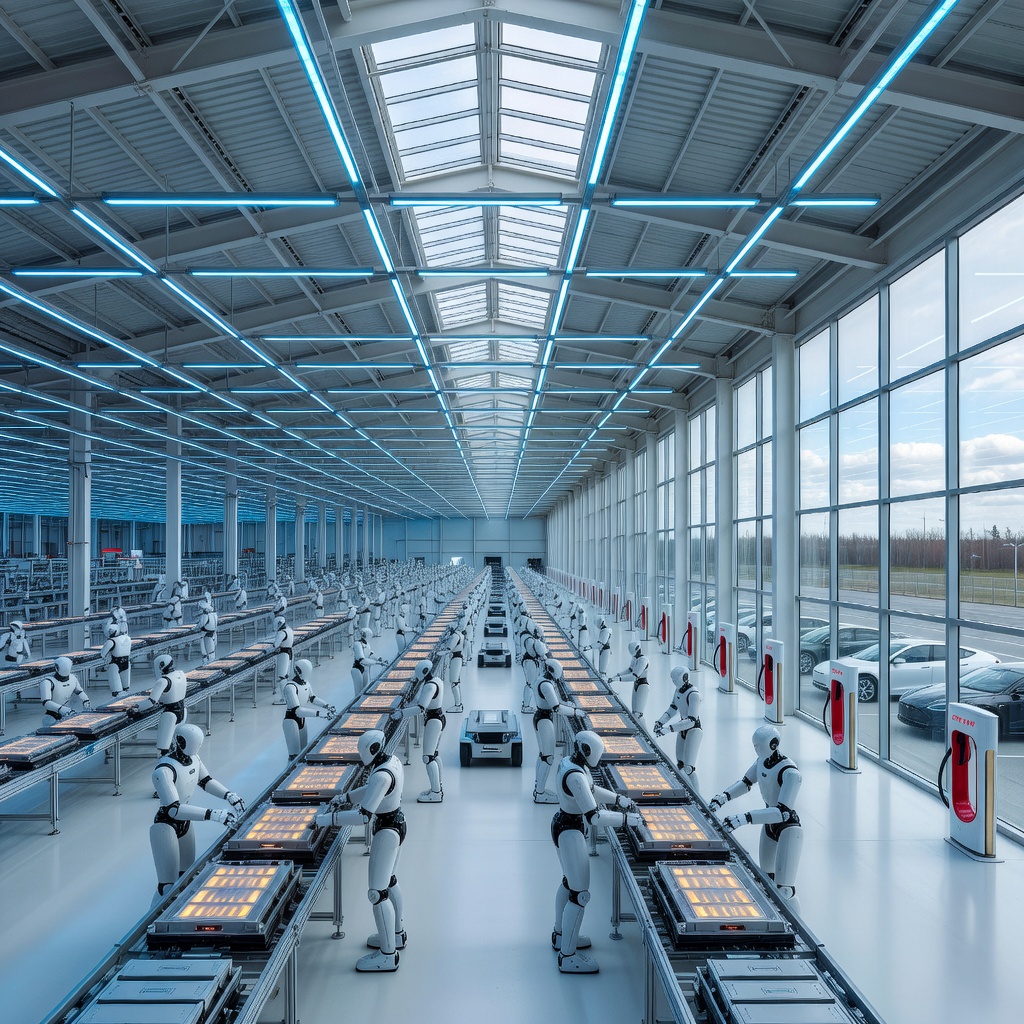
There is a striking philosophical recursion here: the AI being refined inside Tesla's vehicles is closely related to the AI being used to manufacture those same vehicles. The neural networks learning to parse a foggy highway interchange share architectural DNA with the systems learning to identify a misaligned battery cell on an assembly line. Tesla is not building two separate AI programs. It is building one program with two applications, and each application makes the other smarter.
This convergence has a practical production consequence that rarely gets enough attention. As manufacturing AI improves, defect rates fall, warranty costs decline, and per-unit production time shrinks. Those savings compound directly into the ability to price autonomous hardware at mass-market levels rather than luxury premiums. Full self-driving capability is not a feature that will remain expensive forever; the manufacturing intelligence that produces the hardware is actively working to make it affordable enough for commercial fleet operators to mandate it across every vehicle they own.
The Civilization-Scale Ripple Effects
Zoom out far enough and the picture becomes genuinely strange. A world in which Tesla Semi convoys autonomously shuttle goods between production hubs while Cybertrucks handle last-mile rural delivery without drivers is not simply a world with cheaper shipping. It is a world where the physical movement of goods becomes almost entirely a software problem. Rerouting a delivery around a storm system or a road closure would require no human dispatcher, no driver radio chatter, no paper manifest adjustment. It would require a parameter update and a recalculated path.
Urban architecture responds to this too. Parking minimums in zoning codes exist because humans need to store their vehicles near where they live and work. Autonomous electric vehicles that operate continuously and park themselves at remote charging depots eliminate much of that calculus. Cities that began tentatively redesigning their cores around reduced car ownership will face pressure to accelerate those plans as the utilization math for personally owned vehicles shifts against them.
There is even a plausible argument that autonomous EV freight networks could meaningfully affect carbon accounting in ways that grid-level electrification alone cannot. A human driver's biological need for sleep imposes mandatory idle periods on combustion freight. An autonomous electric vehicle operating on a 23-hours-per-day schedule with one hour for rapid charging moves dramatically more freight per unit of infrastructure investment. The efficiency gain is not linear; the same vehicle, freed from human operational constraints, could do the climate work of three conventionally operated trucks.
What Remains Genuinely Uncertain
Intellectual honesty requires acknowledging where this trajectory could still fracture. Regulatory approval for fully driverless commercial vehicles at interstate scale remains a multivariable puzzle involving federal agencies, state legislatures, union lobbying power, and public trust built through thousands of incident-free autonomous miles. Tesla's FSD software, despite its impressive recent progress on urban edge cases, has not yet faced the full gauntlet of adversarial weather, construction zone chaos, and emergency vehicle interactions that long-haul autonomy demands.
There is also the question of cybersecurity. A fleet of autonomous Semis is also a fleet of networked computers moving at highway speed carrying millions of dollars of cargo. The attack surface is novel and the consequences of exploitation are physical, not merely informational. Security architecture for autonomous freight is an unsolved problem that deserves far more public scrutiny than it currently receives.
And yet, despite every legitimate caveat, the trajectory is visible and the momentum is real. Tesla is not the only company working on autonomous electric vehicles, but it is the only company simultaneously redesigning the vehicle, the factory, the software stack, and the energy infrastructure underneath all of it. When a company controls that many variables at once, the question of whether transformation occurs becomes secondary to the more interesting question of how fast. The last human driver is not a myth or a marketing slogan. It is a scheduled event. The only honest debate left is about the date on the calendar.

George Russell
Tech journalist covering Elon Musk’s companies for over 10 years.