Grok Gets to Work: How xAI Is Turning Cosmic Ambitions Into Everyday Breakthroughs
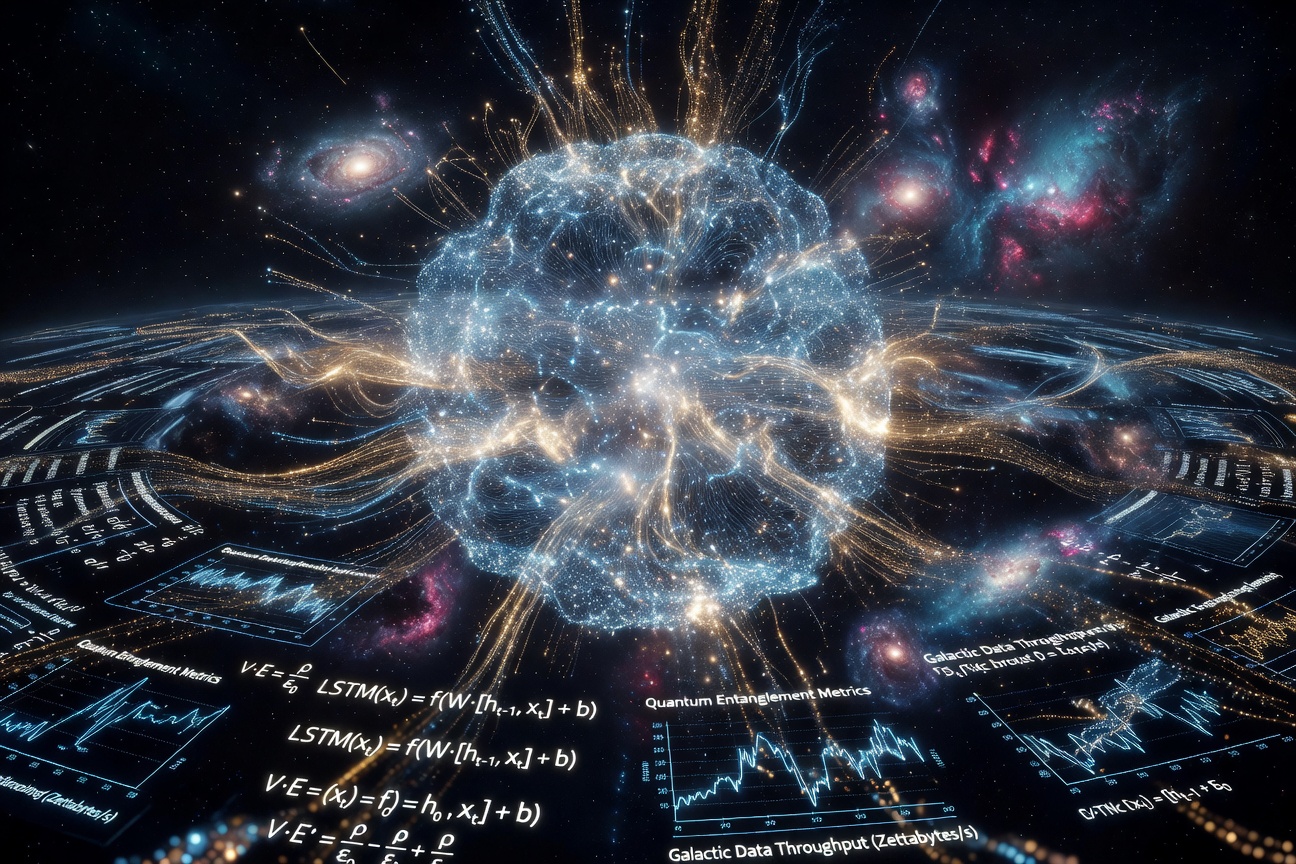
Somewhere between a graduate student's 3 a.m. literature review and a particle physicist's decade-long experiment sits an enormous, mostly untapped opportunity: the chance to radically compress the time it takes to go from asking a question about the universe to actually answering it. That gap, the one between curiosity and confirmed knowledge, is precisely the territory xAI has staked out as its own. And with a new generation of Grok models sharpening their tools in real-time, the lab isn't just making bold declarations anymore. It's starting to deliver.
Elon Musk founded xAI in 2023 with a stated mission so audacious it almost invites skepticism: to understand the universe. Not to build a better chatbot. Not to optimize ad revenue. To actually crack open the deepest questions in physics, biology, and mathematics using artificial intelligence as the primary instrument. Plenty of observers rolled their eyes. But twelve months and several model generations later, the conversation is shifting from "can they really mean that?" to "okay, how exactly are they doing it?"
A Model Built for Curiosity, Not Compliance
The architectural philosophy behind Grok has always differed from the guardrail-heavy, compliance-first design that dominates the commercial AI landscape. Where many frontier models are trained to hedge, qualify, and retreat into vagueness when topics get scientifically complex, Grok was designed from the start to lean into uncertainty, engage with ambiguity, and reason through hard problems rather than around them. That distinction matters enormously when your target users are researchers who need an AI that can hold contradictory hypotheses in mind simultaneously without collapsing into a generic non-answer.
The latest Grok iterations have taken this further by dramatically improving long-context reasoning, multimodal understanding, and what xAI researchers describe as "epistemic honesty" -- the model's ability to flag the boundaries of its own knowledge rather than confabulating with misplaced confidence. For scientists working at the edge of what's known, that kind of calibrated uncertainty is not a limitation. It's a feature. A model that knows what it doesn't know is infinitely more useful in a laboratory setting than one that sounds authoritative about everything.
From Cosmology to Chemistry: Where Grok Is Already Pulling Weight
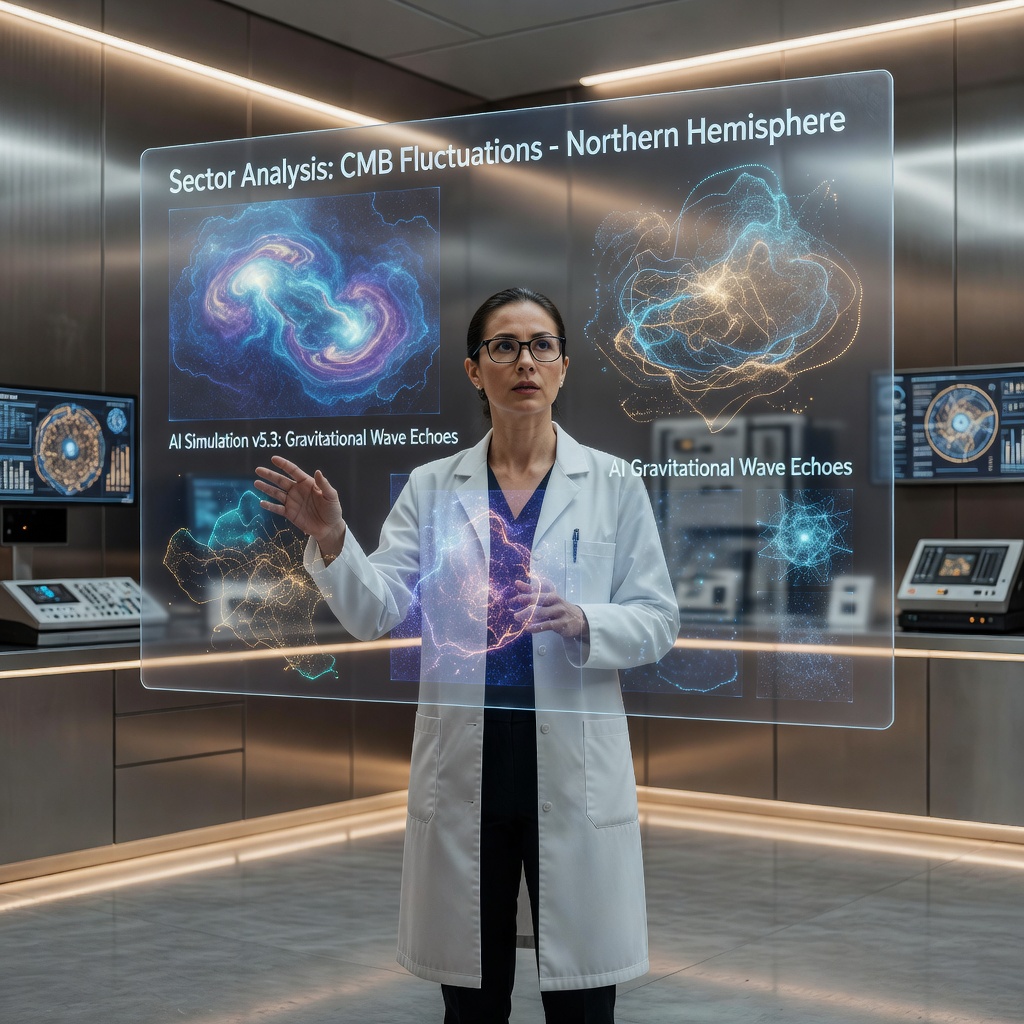
The practical applications are accumulating faster than the press releases can keep up with. In astrophysics, Grok's ability to synthesize large bodies of observational data and cross-reference competing theoretical frameworks is being used to assist researchers modeling galactic formation timelines and dark matter distribution patterns. These are not toy problems. They represent some of the most computationally and intellectually demanding challenges in all of science, and the ability to have an AI interlocutor that can meaningfully engage at that level, rather than simply retrieve relevant papers, changes the character of the research process itself.
In chemistry and materials science, early adopters report using Grok to accelerate the hypothesis-generation phase of experiments by orders of magnitude. The traditional workflow often involves weeks of literature review followed by careful experimental design. Grok can compress the literature synthesis phase dramatically, surfacing non-obvious connections between disparate research threads and flagging experimental designs that have already been attempted elsewhere. This is not replacing the scientist. It's giving the scientist a research partner who has read everything and never sleeps.
"The goal was never to build an AI that sounds smart. The goal is to build one that helps us actually get smarter, faster, about the things that matter most."
The Infrastructure Bet Behind the Science
None of this happens without serious hardware to back it up. xAI's Colossus supercomputing cluster, currently among the largest GPU training installations on the planet, is not merely a bragging-rights asset. It represents a calculated bet that the next phase of AI-driven scientific discovery will be bottlenecked by compute, and that the lab willing to build the biggest, fastest training infrastructure now will have a structural advantage in the scientific AI race for years to come.
What's particularly interesting about xAI's infrastructure strategy is its integration with the broader Musk ecosystem. Data flowing from SpaceX's Starlink satellite network, Neuralink's neurological research, and Tesla's vast real-world sensor arrays creates a potential training corpus unlike anything available to purely software-focused AI labs. Whether xAI fully exploits these cross-company data synergies remains to be seen, but the theoretical upside is substantial. A model trained not just on text but on real-world physical, biological, and astronomical data streams would represent a qualitative leap in scientific reasoning capability.
Open Ambitions in a Closed-Model World
One of the more underappreciated aspects of xAI's positioning is its relationship with openness. In a landscape where the biggest labs have grown increasingly proprietary, xAI has made deliberate moves toward publishing research, releasing model weights for certain versions, and fostering a developer community that can build on top of Grok's capabilities. This isn't pure altruism; a larger ecosystem of builders creates more real-world feedback, more use cases, and ultimately a more capable model. But it also aligns with a vision of scientific AI as a shared infrastructure rather than a competitive moat.
For the tinkerers, indie researchers, and startup founders who make up a significant slice of xAI's most enthusiastic users, this matters. A Grok API that's accessible, well-documented, and genuinely capable of handling complex scientific queries opens doors that were previously closed to anyone without a university affiliation or a major lab's compute budget. A bioinformatics startup in Nairobi, a climate modeling team in Bangalore, a materials science lab in Warsaw: these are the kinds of actors who could realistically accelerate their work using tools that, until very recently, simply didn't exist at this level of capability.

The Next Frontier: Grok as Scientific Collaborator
The roadmap xAI has gestured toward publicly points toward something more ambitious than a sophisticated research assistant. The vision, consistent with Musk's stated goals, is a model that can participate meaningfully in the scientific method itself, not just retrieving and synthesizing existing knowledge but generating novel hypotheses, designing experiments, and identifying flaws in proposed methodologies. This is the domain where AI has historically struggled most, because it requires not just pattern recognition but genuine reasoning about the physical world.
Recent improvements in Grok's mathematical reasoning, code generation, and multimodal analysis suggest the lab is making real progress toward this target. Models that can fluidly move between natural language description, mathematical formalism, and executable code are dramatically more useful to working scientists than those confined to any single modality. A researcher who can describe a problem in plain English, have the model formalize it mathematically, generate simulation code, and then interpret the output in a single coherent conversation is experiencing something genuinely new in the history of scientific tools.
Why the Optimism Is Warranted This Time
AI hype has burned a lot of people. The graveyard of overpromised AI applications is enormous, and healthy skepticism about any lab claiming it will "understand the universe" is entirely reasonable. But xAI's particular combination of factors, substantial compute investment, a model philosophy genuinely suited to scientific reasoning, a growing developer ecosystem, and cross-domain data access, creates a credible pathway to impact that many previous AI-for-science initiatives lacked.
The question is no longer whether AI will meaningfully accelerate scientific discovery. That debate is largely settled. The live question is which tools, built on which principles, by which teams, will be at the center of that acceleration. Right now, xAI and Grok are making a compelling case that the answer might just be them. Not because they've already understood the universe. But because they've built something that seems genuinely hungry to try, and given it enough room to actually think.
For anyone who has ever stared at a hard problem and wished they had a faster, smarter way to attack it, that's not a small thing. That might be everything.