The Universe Doesn't Care About Your Context Window: A Hard Look at What Grok Actually Can't Do
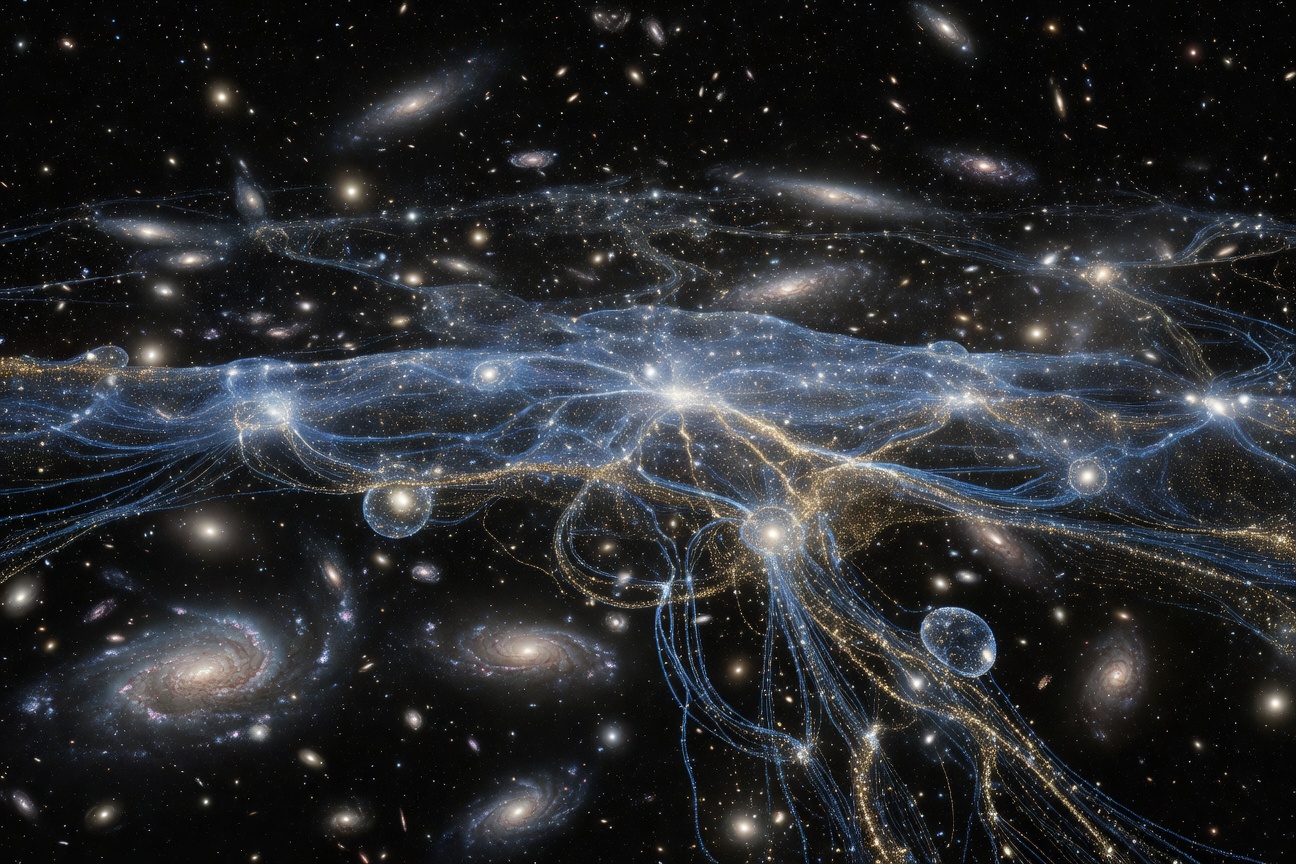
Let's be precise about something that almost nobody in the AI press wants to admit: the phrase "understand the universe" is not a product roadmap. It is a philosophical aspiration with no agreed-upon success criteria, no falsifiable benchmark, and no finish line. Yet xAI has planted that flag at the center of its identity, embedding it into the founding mission statement and using it as the gravitational core around which Grok's public narrative orbits. This matters enormously, not because the mission is silly, but because when an engineering organization substitutes poetic ambition for technical specificity, it becomes nearly impossible to distinguish genuine progress from extremely well-funded storytelling.
Before the outrage arrives in the comments: Grok is a legitimately capable system. Grok 3, released in early 2025, demonstrated benchmark performance that placed it in genuine contention with the top-tier models from OpenAI and Anthropic. Its reasoning scores on mathematics and coding tasks are not manufactured. The Colossus supercluster in Memphis, reportedly among the densest concentrations of NVIDIA H100 GPUs ever assembled, is a real and extraordinary piece of infrastructure. xAI is not a vaporware operation. These facts are not in dispute.
What is in dispute is the interpretive layer draped over those facts, specifically the claim that scaling a next-token predictor to impressive benchmark performance brings us meaningfully closer to "understanding" physical reality in any scientifically operational sense.
The Compression Problem That Nobody Talks About
Modern large language models, including Grok, operate through a process that can be loosely described as learned statistical compression. During training, the model is exposed to vast quantities of text and encodes patterns of co-occurrence into a high-dimensional parameter space. At inference, it generates outputs by sampling from probability distributions conditioned on an input sequence. This process is remarkable engineering. It is not, however, anything like the mechanistic forward simulation that physicists use when they say they "understand" a system.
When a physicist understands projectile motion, they possess a compressed causal model, a set of differential equations that can generate accurate predictions for novel initial conditions never encountered during learning. The model generalizes because the underlying mechanism is encoded, not just the surface statistics of outcomes. When Grok answers a question about projectile motion, it is drawing on the statistical regularities of how physicists wrote about projectile motion. In a huge fraction of practical cases, the outputs are indistinguishable. But the internal representation is categorically different, and that difference becomes brutally apparent at the frontier of knowledge, exactly where "understanding the universe" is supposed to be most useful.
Ask Grok to verify a known derivation and it performs admirably. Ask it to navigate a genuinely novel proof in, say, non-commutative geometry or to generate a physically self-consistent hypothesis about quantum gravity that is not a recombination of existing literature, and the cracks in the foundation appear quickly. The model does not fail obviously or loudly. It fails politely, generating plausible-sounding text that can pass casual inspection but does not survive contact with a specialist. This is arguably the more dangerous failure mode.
Colossus Is Impressive. Physics Is Harder.
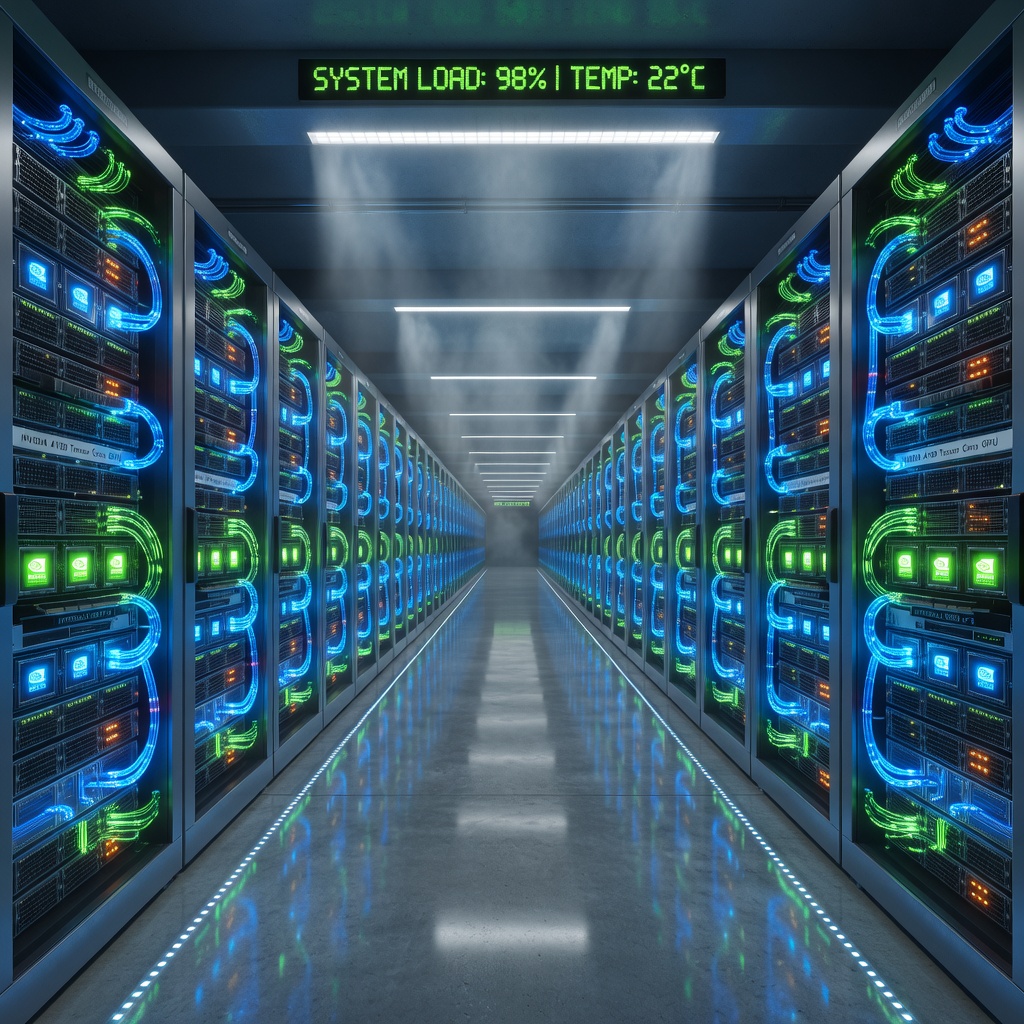
The engineering feat of Colossus deserves genuine respect. Assembling over 100,000 H100 GPUs in a facility in Memphis within roughly a year is a logistical and financial achievement that few organizations on earth could replicate. It speaks to an execution velocity that is distinctive even by the already-hyperbolic standards of the AI industry. The problem is that raw compute is not the bottleneck for the kind of scientific understanding xAI says it is chasing.
The bottleneck is architectural and epistemological. Transformer-based language models, the foundation of every Grok release to date, were designed for sequence prediction. Their attention mechanisms are extraordinarily powerful for that task. They were not designed for, and do not naturally implement, the kinds of constrained symbolic manipulation and long-chain formal reasoning that characterize frontier mathematics and theoretical physics. Scaling the number of parameters and the volume of training data extends the capability curve in sequence prediction. It does not automatically translate into the kind of structured, verifiable causal reasoning that scientific discovery demands.
Researchers who have examined the internal activations of large language models during mathematical problem-solving have found that the models frequently arrive at correct answers through pattern-matching shortcuts that would not generalize to structurally similar but superficially different problems. The correct answer emerges not because the underlying logic was executed faithfully but because the training distribution contained enough similar problems that the statistical shortcut was sufficient. In a homework context, this is fine. At the frontier of cosmology or particle physics, it is the epistemic equivalent of a student who always gets the right answer on familiar problem types but cannot explain why, and collapses entirely when the exam contains a genuinely new question.
What xAI Gets Right (And Why That Makes the Hype More Problematic)
Here is the uncomfortable nuance that makes this critique harder to dismiss as simple pessimism: xAI is doing several things that are genuinely promising and technically interesting. The integration of Grok with real-time data streams through its X platform connection gives it access to a recency advantage that most closed models lack. The investment in agentic frameworks, where Grok can execute multi-step tasks with access to external tools and code execution environments, is the correct direction for AI-assisted scientific work. Tool-augmented reasoning, where the model delegates formal computation to verified symbolic solvers rather than attempting it natively, is a legitimate path toward more reliable scientific assistance.
The Grok 3 reasoning models, which employ chain-of-thought techniques to work through problems in extended intermediate steps before producing a final answer, do show genuine improvement on structured reasoning tasks compared to base models. These are not trivial advances. They represent a meaningful shift in how the system processes complex inputs.
But these advances remain squarely within the domain of "better tool for human scientists" and have not yet crossed into the territory of "system capable of independent scientific discovery." The distinction matters because xAI's mission framing consistently implies the latter, recruiting public imagination and investment sentiment around a vision that the current architecture does not technically support. That gap between framing and reality is not a minor marketing flourish. It shapes how researchers, policymakers, and the broader public allocate attention, funding, and trust.
The Measurement Problem at the Heart of the Mission

There is a deeper problem here that no amount of engineering can currently solve: we do not have a rigorous definition of what it means for an AI system to "understand" anything. This is not a philosophical nicety. It is an operational crisis for any organization that has made understanding the core deliverable of its mission.
When DeepMind's AlphaFold solved protein folding prediction, the scientific community could evaluate the claim directly: predicted structures were compared against experimentally determined structures, the RMSD values were calculated, the generalization to novel proteins was tested. The benchmark was physical and verifiable. "Understand the universe" has no equivalent operational test. Does Grok understand the universe when it can answer 90% of physics questions on a graduate-level benchmark? 99%? When it generates a hypothesis that a human then validates experimentally? When it produces a paper that passes peer review? Each of these is a meaningful bar, but none of them is the bar implied by the mission statement.
This measurement vacuum creates a situation where xAI can perpetually claim progress without ever being falsifiable. Every Grok release will be better than the last. Every benchmark improvement will be cited as evidence of motion toward the mission. The absence of a defined destination means the journey can never be declared complete or failed, which is extraordinarily convenient for the people doing the marketing and deeply unhelpful for the scientists who might otherwise calibrate their expectations and research strategies around a more honest accounting of what the technology actually delivers.
What a More Honest Mission Would Look Like
None of this is an argument for pessimism about AI and science. The combination of capable language models, robust tool-use frameworks, massive compute, and genuinely talented researchers at xAI represents a real and potentially transformative resource for the scientific community. Grok, used correctly, is already accelerating certain categories of literature review, hypothesis generation, and code-writing for scientific computing. These are meaningful contributions.
A more technically honest version of xAI's mission might read something like: "Build AI systems that dramatically accelerate human scientific reasoning by handling the high-bandwidth, pattern-matching, and synthesis tasks that slow down expert researchers, thereby compressing the timelines between observational data and theoretical insight." That mission is harder to print on a t-shirt. It is also achievable, falsifiable, and would generate more productive alignment between the tool being built and the expectations of the scientists being asked to rely on it.
The universe, for its part, will not adjust its complexity to fit a context window. Dark energy does not become more explicable because a transformer model trained on physics papers can write fluently about it. The hard problems of quantum gravity, consciousness, and the origin of physical constants remain exactly as hard as they were before Colossus came online. Progress on them will require not just better pattern recognition but new mathematical formalisms, new experimental designs, and conceptual leaps that, so far, remain stubbornly human in their origin.
Grok may one day help a physicist make one of those leaps. That would be extraordinary and worth celebrating. But it would be the physicist making the leap, with Grok as a powerful instrument. Conflating the instrument with the discovery is not just imprecise. In a field as consequential as AI, it is a habit the industry urgently needs to break.